, to see if you have full access to this publication.
Monograph No access
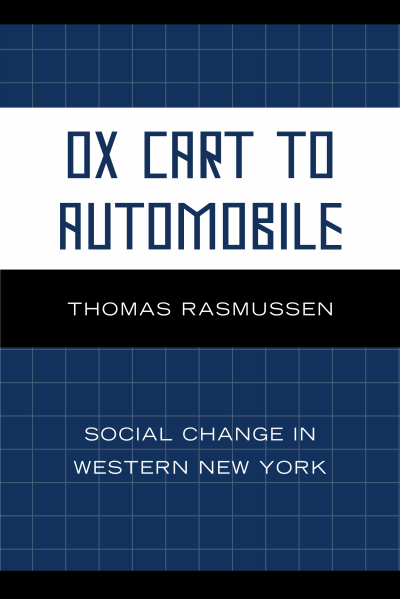
Ox Cart to Automobile
Social Change in Western New York
Authors:
Publisher:
2009
Summary
This book explores changes in economic fortunes, social life, and political issues over 200 years in western New York. Why did villages spring up in particular locations in 1820? Why did dairy farming expand during the 1850s and then contract in the 1920? Why have so many factories in western New York closed their doors since World War II? As the ox cart was replaced by the railroad, which in turn was replaced by the automobile, men and women in western New York were faced with the option to choose to farm in new ways or live and work in new places. In this book, Native Americans and early settlers, dairy farmers and milk factories, husbands and wives on the farm, shopkeepers and customers in the villages are viewed as players in a social game, each trying to score well.
Search publication
Bibliographic data
Edition
1/2009
Copyright Year
2009
ISBN-Print
978-0-7618-4588-1
ISBN-Online
978-0-7618-4589-8
Publisher
Hamilton Books, Lanham
Language
English
Pages
196
Product Type
Monograph
Table of contents
ChapterPages
Contents No access
Preface No access
Chapter 01. Organizing Ideas: Central Place and Prisoner’s Dilemma No access Pages 1 - 12
Chapter 02. Distance, Elevation and Early Settlement Decisions No access Pages 13 - 33
Chapter 03. Making Farms and Raising Crops 1810–1850 No access Pages 34 - 67
Chapter 04. The Western New York Farm at Mid-Century No access Pages 68 - 98
Chapter 05. Dairy Farming, Commerce and Rural Industry 1865–1900 No access Pages 99 - 125
Chapter 06. The Automobile and Rural Decline: 1900–1950 No access Pages 126 - 145
Chapter 07. Life in a Barely Agricultural Western New York: 1950–Present No access Pages 146 - 182