, to see if you have full access to this publication.
Monograph No access
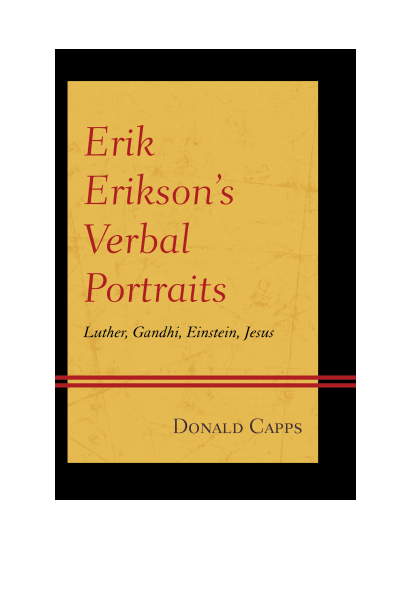
Erik Erikson’s Verbal Portraits
Luther, Gandhi, Einstein, Jesus
Authors:
Publisher:
2014
Summary
In his late teens and early twenties Erik H. Erikson, the widely acclaimed psychoanalyst and developmental theorist, aspired to be an artist. In Erik Erikson’s Verbal Portraits: Luther, Gandhi, Einstein, Jesus, Donald Cappscontends that Erikson’s portraits of respective historical figures not only reflect his artistic gifts but also make a highly creative contribution to psychoanalytic discourse. Moreover, his verbal portraits are vivid and compelling representations of his multifaceted conception of identity. His emphasis on the formative role of the mutual recognition of mother and infant in human portraiture, the importance he attaches to the Self and the sense of “I,” and his use of psychoanalysis as a means to experience the living presence of noteworthy historical figures are especially noted. In addition to his portraits of the four men, his brief verbal portrait of Ruth Benedict is presented, and his personal identification with a fifteenth century painting of Mary, the mother of Jesus, is also explored.
Keywords
Search publication
Bibliographic data
Copyright Year
2014
ISBN-Print
978-1-4422-4151-0
ISBN-Online
978-1-4422-4153-4
Publisher
Rowman & Littlefield, Lanham
Language
English
Pages
153
Product Type
Monograph
Table of contents
ChapterPages
Contents No access
ACKNOWLEDGMENTS No access
INTRODUCTION No access
Chapter One: THE IDENTITY CONCEPT AND THE VERBAL PORTRAIT No access Pages 1 - 20
Chapter Two: CREATIVE RECOVERY No access Pages 21 - 50
Chapter Three: MUTUAL RECOGNITION No access Pages 51 - 78
Chapter Four: RADIANT INTELLIGENCE No access Pages 79 - 100
Chapter Five: SELF-RECONCILIATION No access Pages 101 - 134