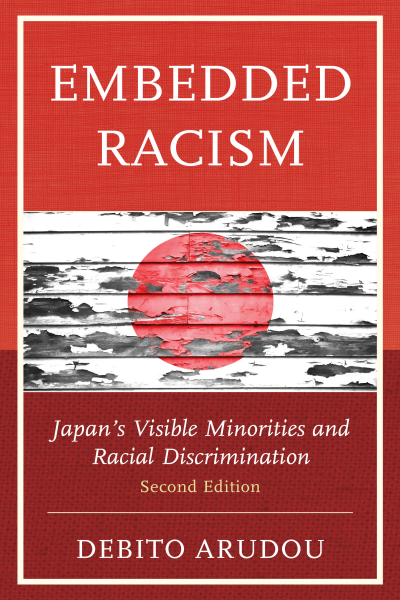
Embedded Racism
Japan’s Visible Minorities and Racial Discrimination- Authors:
- Publisher:
- 2021
Summary
Despite domestic constitutional provisions and international treaty promises, Japan has no law against racial discrimination. Consequently, businesses around Japan display “Japanese Only” signs, denying entry to all 'foreigners' on sight. Employers and landlords routinely refuse jobs and apartments to foreign applicants. Japanese police racially profile “foreign-looking” bystanders for invasive questioning on the street. Legislators, administrators, and pundits portray foreigners as a national security threat and call for their segregation and expulsion. Nevertheless, Japan’s government and media claim there is no discrimination by race in Japan, therefore no laws are necessary.
How does Japan resolve the cognitive dissonance of racial discrimination being unconstitutional yet not illegal? Embedded Racism untangles Japan's complex narrative on race. Starting with case studies of hundreds of “Japanese Only" exclusionary businesses, it carefully analyzes the social construction of Japanese identity through laws, public policy, jurisprudence, and media messages. It reveals how the concept of a “Japanese" has been racialized to the point where one must look “Japanese" to have equal civil and human rights in Japan.
Completely revised and updated for this Second Edition (including landmark events like the 2020 Tokyo Olympics, the Covid Pandemic, and the Carlos Ghosn Case), Embedded Racism is the product of three decades of research and fieldwork by a scholar living in Japan as a naturalized Japanese citizen. It offers a perspective into how Japan's entrenched, misunderstood, and deliberately overlooked racial discrimination not only undermines Japan's economic future but also emboldens white supremacists worldwide who see Japan as their template ethnostate.
Keywords
Search publication
Bibliographic data
- Edition
- 2/2021
- Copyright Year
- 2021
- ISBN-Print
- 978-1-7936-5395-6
- ISBN-Online
- 978-1-7936-5396-3
- Publisher
- Lexington, Lanham
- Language
- English
- Pages
- 502
- Product Type
- Monograph
Table of contents
- Contents No access
- Note No access
- Why Such a Long Introduction? No access
- Why “Racism” Is an Issue of Social Power Relations, Not Biology No access
- “Race” and the Processes of “Racialization” as a Social Construct No access
- Overview of the Debate Regarding Racism in Japan No access
- Japan’s Under-Researched Visible Minorities: “Blind Spots” within Japanese Studies No access
- Notes No access
- A Hypothetical and a Concrete Example of Prejudice and Unequal Treatment No access
- Scope and Contributions of This Book No access
- What Is a “Visible Minority”? No access
- Disclaimer: This Book Is a Critical Analysis of Japanese Society But Not a Polemic No access
- Introducing a Theory of “Embedded Racism” No access
- Outline of This Book No access
- Notes No access
- The Historical Roots of Japan’s Endogenous Racialized Approach to “Outsiders”—as a Colonizer, Not a Copycat No access
- Postwar Minorities in Japan: Creating a Narrative of Invisibility through “Homogeneity” No access
- Present-Day Treatment of “Foreigners” in Japan: The Discourse of Differentiating “Japanese” from Gaijin and Not Calling It “Racial Discrimination” No access
- Summary No access
- Notes No access
- A Note about the Case Studies No access
- Wakkanai, Hokkaidō6 No access
- Monbetsu, Hokkaidō No access
- Sapporo, Hokkaidō8 No access
- Misawa, Aomori11 No access
- Akita No access
- Fukushima No access
- Shinjuku, Tōkyō No access
- Shinjuku, Tōkyō No access
- Shibuya, Tōkyō No access
- Asakusa, Tōkyō25 No access
- Ogikubo, Tōkyō No access
- Azabu, Tōkyō No access
- Akihabara, Tōkyō No access
- Kōfu, Yamanashi No access
- Azuma-mura, Gunma No access
- Koshigaya, Saitama No access
- Central Japan No access
- Nonoichi, Ishikawa No access
- Nagasaki, Nagasaki Prefecture No access
- Miscellaneous Places No access
- Online Exclusions No access
- Case Studies of Civil Court Lawsuits against Discriminatory Businesses in Japan No access
- Summary of Findings No access
- Themes of Discrimination within Chapter 3’s Findings No access
- Postscript for the Second Edition No access
- Summary and Conclusion No access
- Notes No access
- The Components of a “National Discourse” No access
- Defining “Wajin” and “Gaijin” No access
- Japan’s Nationality Law (kokuseki hō) No access
- Japan’s Family Registry System (Koseki)36 No access
- Japan’s Jūminhyō Residency Registration System (1947–2012) No access
- “Nationality Clauses” and “Kokumin Conceits” No access
- Registry Systems and Policing No access
- Expanding the Policing of Noncitizens beyond the Immigration Control Act No access
- The General Public Officially Encouraged to Spy on “Foreigners” as Agents of Crime No access
- “Embedded Racism” Mindsets behind Official Racial Profiling: The National Research Institute of Police Science’s “Foreign DNA Index” No access
- The Pernicious Consequences of Linking Biology to Nationality: Unscientific, Inhumane, and Nonsensical Border Policies during the COVID-19 Pandemic No access
- Summary and Conclusions No access
- Notes No access
- The Basic Act on Education: Overt and Embedded Exclusionism No access
- Other Embedded Exclusionary Practices in the Japanese Education System No access
- Dual Nationality and “Japan Claiming” No access
- “Status of Residence” (Visa) Regimes43 No access
- Visa Regimes and Unstable Employment: Japan’s “Revolving Door” Work Market for Non-Wajin No access
- Noncitizens as a Public Security Issue: Targeting Visible Minorities No access
- Conclusions No access
- Notes No access
- Civil Cases: Lax Standards of Jurisprudence If Claimant Is a Noncitizen No access
- Criminal Cases: Lax Standards of Jurisprudence If Crime Victim Is a Noncitizen No access
- Criminal Cases: Harsh Standards of Jurisprudence If the Crime Suspect Is a Noncitizen No access
- Other Juridical Disadvantages for Noncitizens in the Japanese Criminal Justice System No access
- Summary and Conclusions No access
- Notes No access
- A Brief Overview of Japan’s Media Milieu and Minority Voices Within No access
- GOJ Depictions of “Foreigners” as Criminals in the Media No access
- The Effect of NPA Propaganda: Media “Blame Games” Enter the Political Sphere No access
- Unsuccessful Attempts to Establish Legislation against Racial Discrimination in Japan89 No access
- The Complicity of Japan’s Media in Generating, Not Just Disseminating, Racialized Xenophobic Propaganda No access
- Gaijin as “Evil”: Examples of Racialized Hate Speech in Japan’s Media No access
- Gaijin as Commodity: Racialized Differences as a Marketing Tool No access
- Consequences of a Racialized Media: “Walling in the Wajin” No access
- The Long-Term Social Damage Caused by Sustained Racialized Propaganda: Dehumanization No access
- Coda: Exclusionary Extremes of Differentiation, “Othering,” and Subordination: A Few Outstanding Examples Redux No access
- Conclusions No access
- Notes No access
- Domestic Challenges to the Status Quo No access
- Updates for the Second Edition No access
- Maintenance of the Status Quo No access
- Official Arguments Defending the Status Quo, as Expressed to the UN No access
- The UN-GOJ Debates 1999–2001 No access
- The UN-GOJ Debates of 2008 No access
- The 2010 Debates between the GOJ and the Human Rights Council Reach an Impasse No access
- The 2018 Human Rights Council CERD Committee Report on Japan No access
- Official Administrative Negligence toward Noncitizens and Visible Minorities: The Mandate of the MOJ, Bureau of Human Rights No access
- Let’s Respect the Human Rights of Foreigners No access
- The GOJ’s Historical “Lack of National Stake” in the World Narrative on Racial Discrimination No access
- Conclusions No access
- Notes No access
- Introduction: Why This Chapter No access
- Conceptual Maps of Kokumin vs. Gaikokujin, Wajin vs. Gaijin No access
- Performative Interpretations and Power Relations No access
- How the Lens of Embedded Racism Enhances Analytical Focus No access
- Conclusion: Ramifications of Chapter 9: Whiteness Studies and “Wajin Privilege” No access
- Notes No access
- Quick Review of the Book for Readers Who Skipped to the Concluding Chapter No access
- Embedded Racism and Demographic Self-Strangulation No access
- What Japan Must Do to Avoid Economic Crisis: Immigration and Assimilation No access
- Suggestions for the GOJ to Make Japan More Appealing to Outsiders No access
- Final Thoughts: Japan’s Bleak Future on Its Present Course No access
- Notes No access
- Notes No access
- Definitions of Terms Not Discussed Elsewhere in the Text (in Alphabetical Order) No access
- Notes No access
- Appendix 1 Sakanaka’s “Big Japan” vs. “Small Japan” No access Pages 453 - 458
- Notes No access
- References No access Pages 463 - 482
- Index No access Pages 483 - 500
- About the Author No access Pages 501 - 502