, to see if you have full access to this publication.
Monograph No access
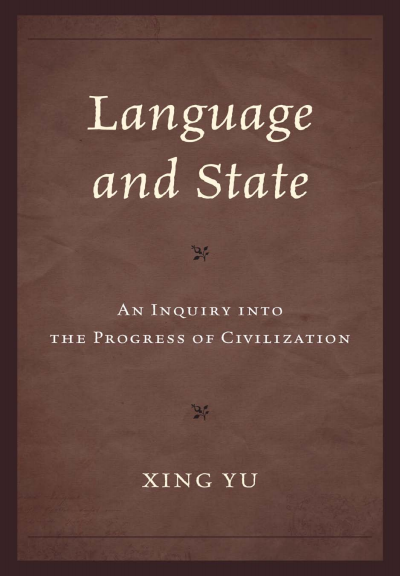
Language and State
An Inquiry into the Progress of Civilization
Authors:
Publisher:
2013
Summary
This book argues that a primitive society is formed on the basis of kinship ties while a civilized society is formed on the basis of linguistic communication. When humans communicate with each other through language, they extend the distance of communication. The extension of communication distance helps expand communities. States are gradually formed. This means that as these communities grow, they become too large to be supported only by the ties of kinship. The use of language and the development of linguistic communication underlies the establishment of governments, the introduction of laws, the holding of elections, and the flourishing of history, philosophy, literature, art, religion, etc. This book presents a new theory about the importance of language in the growth of the states.
Keywords
Search publication
Bibliographic data
Edition
1/2013
Copyright Year
2013
ISBN-Print
978-0-7618-6200-0
ISBN-Online
978-0-7618-6201-7
Publisher
Hamilton Books, Lanham
Language
English
Pages
441
Product Type
Monograph
Table of contents
ChapterPages
Contents No access
Prologue No access
Introduction No access
1. People Using Language No access
2. The People Using Native Language No access
3. The People Using Written Language No access
1. Political Community No access
2. Economic Community No access
3. Cultural Community No access
1. Advocates No access
2. Symbols No access
3. Behavior Communication No access
1. Language Policy No access
2. Mass Education No access
3. Public Media No access
Introduction No access
1. Names Adopted by the State No access
2. Address Forms of Leaders, Officials and Citizens No access
3. Designations of Politicians and Political Parties No access
1. A Description of Contract in Mind No access
2. The Making of Constitution No access
3. Constitution and State Building No access
1. The Reason for Election No access
2. Election that Expresses Opinions No access
3. Election and State Building No access
1. Representative No access
2. Political Party No access
3. State Leader No access
1. Administrative Body No access
2. Legislative Body No access
3. Judicial Body No access
Introduction No access
1. The Presentation of History No access
2. The Consciousness of History No access
3. The Time of History No access
1. The Interpretation of Philosophy No access
2. The Value of Philosophy No access
3. The Time and Space of Philosophy No access
1. The Language of Literature and Art No access
2. The Charm of Literature and Art No access
3. The Time and Space of Literature and Art No access