, to see if you have full access to this publication.
Monograph No access
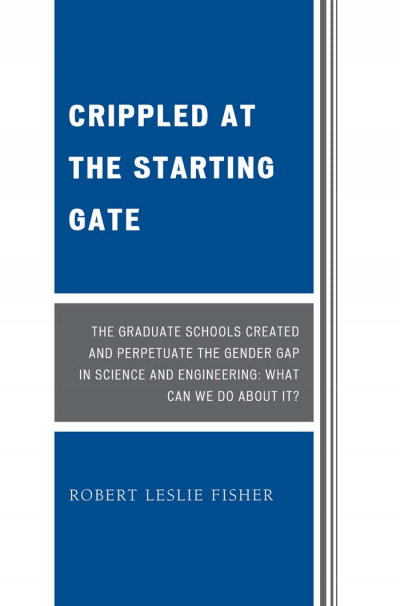
Crippled at the Starting Gate
The Graduate Schools Created and Perpetuate the Gender Gap in Science and Engineering
Authors:
Publisher:
2009
Summary
In Crippled at the Starting Gate, Robert Leslie Fisher argues that the United States needs an education bill, much like the G.I. Bill passed after World War II, to send more Americans to graduate school in the sciences and engineering. Equally important, the graduate schools need to change their culture not only to recruit more women, African-Americans, and Latinos into science, but to promote them to senior faculty positions. Accomplishing these changes in university science and engineering departments will be challenging since the institutions have a strong propensity to recruit white males similar to the overwhelmingly white male senior faculty. In Making Science Fair (2007), Fisher urged new productivity metrics to assure that more women can advance in science. Now Fisher urges ending burdensome educational practices including requiring women and foreign graduate students to teach under-graduates, which adversely affects both the graduate students and the undergraduates.
Search publication
Bibliographic data
Edition
1/2009
Copyright Year
2009
ISBN-Print
978-0-7618-4911-7
ISBN-Online
978-0-7618-4912-4
Publisher
Hamilton Books, Lanham
Language
English
Pages
205
Product Type
Monograph
Table of contents
ChapterPages
Contents No access
List of Tables No access
Preface No access
Acknowledgements No access
Introduction No access Pages 1 - 10
Chapter One: Hypotheses and Study Plan No access Pages 11 - 30
Chapter Two: Cosseted White Male Students No access Pages 31 - 50
Chapter Three: The Less Favored Graduate Students No access Pages 51 - 82
Chapter Four: What Do Women and Asian Students Need and Want (And May Not Be Getting) from Their Graduate School? No access Pages 83 - 104
Chapter Five: Schools and School Atmosphere No access Pages 105 - 134
Chapter Six: Summary and Conclusions No access Pages 135 - 146
Appendix One: Questionnaire No access Pages 147 - 152
Appendix Two: Additional Tables No access Pages 153 - 186