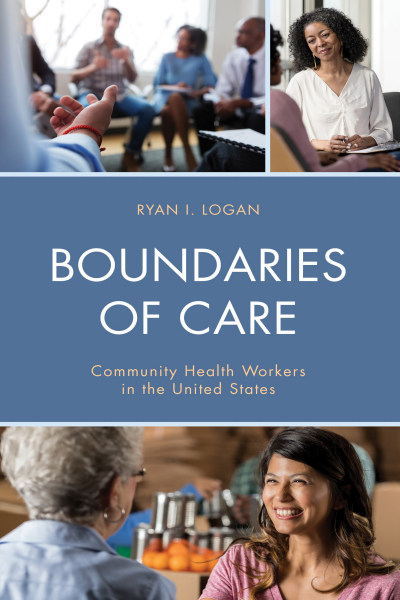
Boundaries of Care
Community Health Workers in the United States- Authors:
- Publisher:
- 2022
Summary
In Boundaries of Care, Ryan I. Logan details the lived experience of community health workers (CHWs) – a present yet often invisible facet of the healthcare workforce. These workers participate in nonclinical services to enhance the health and well-being of their communities outside the walls of the clinic and social service agencies. Logan examines the boundaries of and barriers to care present in the experiences of CHWs, their relationships with clients, issues of professionalization, impacts of burnout and self-care, and the critical impacts of CHW advocacy. Told through first-hand accounts and interwoven with theory, Logan presents the key challenges facing this workforce and their potential to foster even greater well-being within their communities. The findings and recommendations from participants found within Boundaries of Care can inform and shape CHW programs both in the United States and abroad.
Keywords
Search publication
Bibliographic data
- Edition
- 1/2022
- Copyright Year
- 2022
- ISBN-Print
- 978-1-7936-2946-3
- ISBN-Online
- 978-1-7936-2947-0
- Publisher
- Lexington, Lanham
- Language
- English
- Pages
- 208
- Product Type
- Monograph
Table of contents
- Contents No access
- List of Figures and Tables No access
- List of Figures and Tables No access
- Figures No access
- Tables No access
- Preface No access
- Acknowledgments No access
- Present Yet Invisible No access
- The Boundaries of (and Barriers to) Care No access
- A Brief Overview of CHWs No access
- The Context of Care: CHWs in Indiana No access
- Framing the Lived Experiences of CHWs in Indiana No access
- The Field Site: Indiana No access
- The Study No access
- Overview of Chapters No access
- Notes No access
- “The Needs Are Great”: Structural Factors Shaping the Moral Economy of Care No access
- Laws and Policies No access
- Causes versus Symptoms and “Journeying” with Clients No access
- Religiosity, Compassion, and Understanding No access
- Extending or Softening the Medical Gaze? No access
- “Like an Octopus”: CHWs and the Landscape of Resources No access
- Access to Resources No access
- Access to Transportation No access
- Structural and Organizational Barriers No access
- Summarizing the Moral Economy of Care No access
- Notes No access
- Compassion, Empathy, and Trustworthiness: Essential Qualities and Factors in Becoming a CHW No access
- Trust, Rapport, and Understanding: Building and Maintaining the CHW-Client Relationship No access
- A Critique and a Response to Engendering Empowerment No access
- Analyzing Race and Ethnic Concordance in the CHW-Client Relationship No access
- The Issue of Gender in the CHW-Client Relationship No access
- Moral Division in the CHW-Client Relationship No access
- Challenges in the CHW-Client Relationship No access
- Motivating for Change: The Moral Economy of Care and the CHW-Client Relationship No access
- Notes No access
- Professional Citizenship No access
- The Trouble with Titles No access
- “The Lack of Knowledge”: Issues for CHWs Working within the Biomedical Realm No access
- Professional Citizenship as a Medical Interpreter But Not as a CHW No access
- Challenges in Social Service and Community-Based Organizations No access
- CHWs as Volunteers No access
- Building Professional Citizenship No access
- Opening the Door: Certification as a Means to Provide Legitimacy and Inclusion No access
- Medicaid Reimbursement as a Legitimizing Mechanism No access
- Moving Forward: CHWs as Members of the Multidisciplinary Healthcare Team No access
- Uncloaking the Role of CHWs in the Workforce No access
- Notes No access
- The Patient Protection and Affordable Care Act of 2010 (ACA) No access
- Challenges in Care: HIPAA, HIP 2.0, and Other Laws No access
- Establishing Boundaries through Scope of Care No access
- Going Outside the Scope of Care No access
- Complications of Funding No access
- Breaking Barriers through Evaluating the Cost-Effectiveness of CHW Programs No access
- The Issue of Remuneration No access
- CHWs and the Framing of Boundaries, Barriers, and Caregiving No access
- Notes No access
- Analyzing the “Levels” of CHW Advocacy No access
- Advocacy at the Micro Level No access
- Advocacy at the Macro Level No access
- Advocacy at the Professional Level No access
- Challenges in Advocacy No access
- Advocacy as Caregiving No access
- Notes No access
- Burnout and Compassion Fatigue No access
- “I’ve Neglected to Take Care of Myself”: Experiences with Burnout and Compassion Fatigue No access
- Systems of Support to Prevent (or Reduce) Burnout and Compassion Fatigue No access
- Self-Care at Work No access
- The Connection between Self-Care and Caregiving No access
- Challenges in Practicing Self-Care No access
- Staying in or Getting Off the Boat: Tough Love as Promoting Self-Care? No access
- Supporting Self-Care No access
- Steps Forward: Diminishing Burnout and Compassion Fatigue and Institutionalizing Self-Care No access
- Notes No access
- Synthesizing Care, Relationships, and Policy within the Moral Economy of Care No access
- Difficulties in Engendering Empowerment and Self-Sufficiency in the Moral Economy of Care No access
- Considerations for Policy Development and CHW Leadership No access
- Enhancing Professional Citizenship: Certification, Medicaid Reimbursement, Terminology, and Ramifications No access
- Establishing Healthy Boundaries: Laws, Policies, Scope of Care, and Funding No access
- Recognizing and Preserving Advocacy as Caregiving No access
- Combating Burnout and Compassion Fatigue and Promoting Self-Care No access
- Envisioning the Future of the CHW Model in Indiana and the United States No access
- Dilemmas and Unanswered Questions No access
- Future Research Directions No access
- “People Need to Be Seen”: A Final Word No access
- Notes No access
- References No access Pages 185 - 202
- Index No access Pages 203 - 206
- About the Author No access Pages 207 - 208