, to see if you have full access to this publication.
Monograph No access
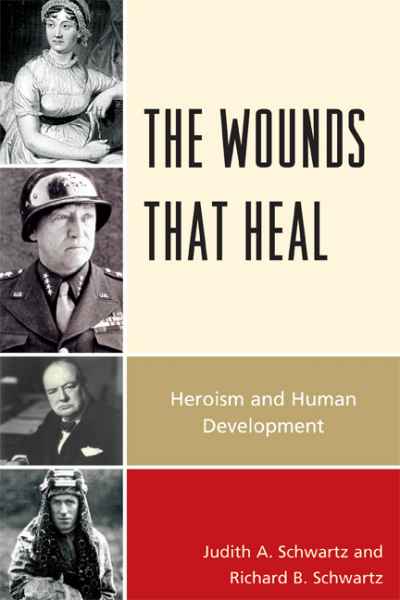
The Wounds That Heal
Heroism and Human Development
Authors:
|
Publisher:
2010
Summary
Theories of human development characteristically include a series of stages through which individuals are expected to pass if they are to achieve wholeness and happiness. Whether explicitly or not, such theories privilege 'normalcy.' Heroes, on the other hand, are commonly wounded individuals whose developmental 'disabilities' are ultimately the source of their personal success and heroism. The Wounds that Heal examines developmental theory in the light of the heroic narrative and argues that such theory should be adjusted to accommodate the experience of those who are, in many ways, our principal role models. Four individuals are examined in depth: Jane Austen, T. E. Lawrence, Winston Churchill, and George S. Patton, Jr. The study draws on the experience of a host of other individuals, both historic and fictional, and includes materials designed to aid readers in defining their own views of the heroic as well as to become heroes or heroines in their own lives.
Search publication
Bibliographic data
Edition
1/2010
Copyright Year
2010
ISBN-Print
978-0-7618-5179-0
ISBN-Online
978-0-7618-5180-6
Publisher
Hamilton Books, Lanham
Language
English
Pages
190
Product Type
Monograph
Table of contents
ChapterPages
Contents No access
List of Figures No access
Preface No access
Acknowledgments No access
Chapter I. Introduction No access Pages 1 - 11
Chapter II. Defining the Hero No access Pages 12 - 38
Chapter III. Heroism and Human Development Theory No access Pages 39 - 54
Chapter IV. Heroes Real and Imagined No access Pages 55 - 103
Chapter V. Summation No access Pages 104 - 126
Chapter VI. Becoming a Hero No access Pages 127 - 142