, to see if you have full access to this publication.
Monograph No access
Private Anti-Piracy Navies
How Warships for Hire are Changing Maritime Security
Authors:
|
Publisher:
2013
Summary
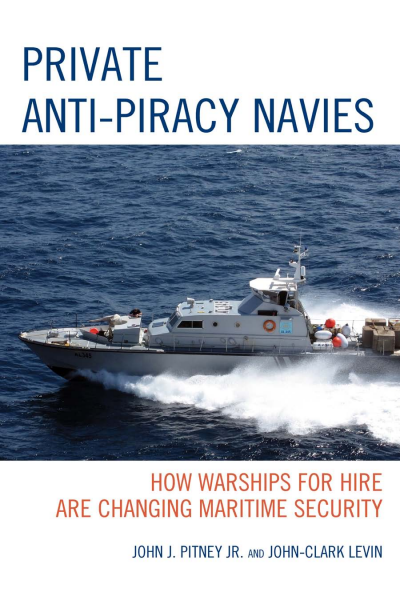
The twenty-first century has seen a sharp rise in privatization of the military, especially of logistics and security functions during the U.S.-led wars in Iraq and Afghanistan. The outbreak of Somali piracy that started in 2008 has prompted a similar revolution in maritime security. Private security companies began operating armed escort vessels to protect merchant shipping against pirates off the Horn of Africa. Private Anti-Piracy Navies is intended to provide a contextualized understanding of the historical origins, current state, and future prospects of this fast-changing sector. Centuries ago, the British East India Company used a private navy against piracy in the same waters with much success. Yet since then, international law has evolved to more tightly regulate the use of force by civilians, and to afford greater protections to suspected pirates. Thus, the development of what are in effect private warships has presented numerous legal and regulatory problems. How can the companies that operate these vessels be effectively licensed? Under what circumstances should they be allowed to use lethal force? This book explains how regulators in industry and government have attempted to answer such questions, and highlights the remaining areas of uncertainty. It also addresses the economic factors that drive the struggle between pirates and anti-piracy forces. Of equal concern are operational considerations such as defensive tactics, logistics, and rules of engagement. Security companies must carefully balance rights concerns against the need to defend ships effectively.
Partly due to the contribution of private security, piracy in the Indian Ocean has dropped significantly over the past two years, leading to widespread overconfidence. Governments under severe budget pressure may withdraw their naval task forces from the region prematurely, leading to a resurgence of Somali piracy. At the same time, pirates are wreaking havoc in the Gulf of Guinea off West Africa. The book concludes with an assessment of private naval forces’ prospects in these conflicts over the short term, as well as the implications for wider naval privatization in the long run.
Search publication
Bibliographic data
Edition
1/2013
Copyright Year
2013
ISBN-Print
978-0-7391-7332-9
ISBN-Online
978-0-7391-7333-6
Publisher
Lexington, Lanham
Language
English
Pages
274
Product Type
Monograph
Table of contents
ChapterPages
Contents No access
1. Introduction No access Pages 1 - 6
2. Historical Lessons No access Pages 7 - 26
3. The Somali Piracy Epidemic No access Pages 27 - 50
4. Current and Proposed Forces No access Pages 51 - 74
5. Economic Considerations No access Pages 75 - 90
6. Legal and Regulatory Issues No access Pages 91 - 136
7. Operational and Tactical Challenges No access Pages 137 - 176
8. Costs, Benefits, and Results No access Pages 177 - 194
9. Prospects and Implications No access Pages 195 - 226