, to see if you have full access to this publication.
Monograph No access
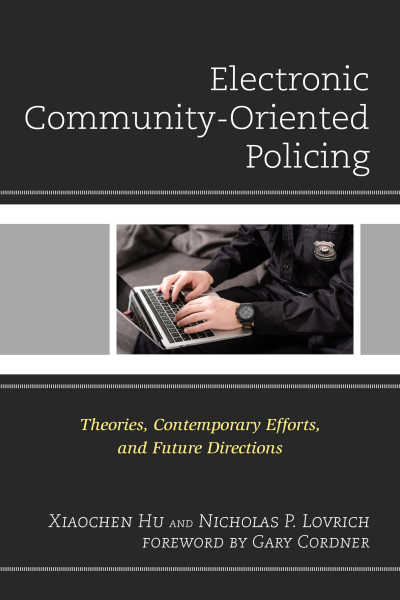
Electronic Community-Oriented Policing
Theories, Contemporary Efforts, and Future Directions
Authors:
|
Publisher:
2020
Summary
Hu and Lovrich introduce the "electronic community-oriented policing (E-COP)," concept to explore how social media can impact police strategies on improving and maintaining police-public relation. Using empirical evidence and theoretical foundations, this book demonstrates the importance of this timely refinement to traditional community-oriented policing strategies as we move further into the twentieth century. E-COP represents a systematic approach to policing that applies knowledge derived from theories of individual behavior, social behavior, and mass communication dynamics to contemporary policing practice. This book would be of interest to policing researchers, scholars, and students as well as police practitioners wishing to improve their use of social media resources to connect to the public they serve in the digital age.
Keywords
Search publication
Bibliographic data
Edition
1/2020
Copyright Year
2020
ISBN-Print
978-1-7936-0786-7
ISBN-Online
978-1-7936-0785-0
Publisher
Lexington, Lanham
Language
English
Pages
222
Product Type
Monograph
Table of contents
ChapterPages
Contents No access
Foreword No access
Preface No access
Introduction No access
Chapter 1 Media, the Criminal Justice System, and the Police No access
Chapter 2 New Media and Police No access
Chapter 3 Theories on Individual, Social, Mass Communication, and Organizational Behavior No access
Chapter 4 Community-Oriented Policing and the President’s Task Force on Twenty-First-Century Policing No access
Chapter 5 Electronic Community-Oriented Policing No access
Chapter 6 What Do the Police Do on Social Media? No access
Chapter 7 Public Preferences Regarding Police Use of Social Media No access
Chapter 8 Outliers No access
Chapter 9 Case Study No access
Chapter 10 Improving Electronic Community-Oriented Policing No access
Chapter 11 Implementing and Evaluating Electronic Community-Oriented Policing No access
Conclusion and Future Research No access Pages 177 - 186
Bibliography No access Pages 187 - 212
Index No access Pages 213 - 220
About the Authors No access Pages 221 - 222
Similar publications
from the topics "Soziologie allgemein"
Edited Book Full access
Karen Kastenhofer, Marius Albiez, Pauline Riousset, Constanze Scherz, Michael Decker