, to see if you have full access to this publication.
Monograph No access
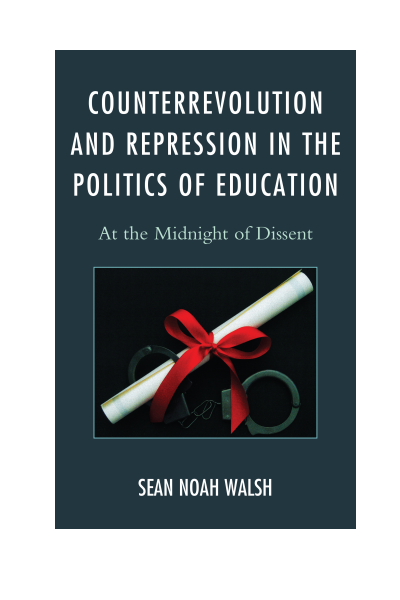
Counterrevolution and Repression in the Politics of Education
At the Midnight of Dissent
Authors:
Publisher:
2013
Summary
Counterrevolution and Repression in the Politics of Education revisits the ideas of Herbert Marcuse in order to examine how his observations on counterrevolution are applicable to present conditions in politics, particularly those pertaining to the politics of education. While Marcuse’s influence in the academy has noticeably waned since its zenith in the late 1960’s, his observations seem more relevant than ever, especially in the current context of economic crises, ideological polarization, and a heightened disaffection with capitalism. In particular, this book focuses on how counterrevolution functions within the field of ideology, manipulating the acquisition, representation, and exercise of reason in order to diminish the faculties of dissent and render utopian projects as the paramount political obscenity. While we are most familiar with counterrevolution in its guise of bloodstained battlefields and ditches filled with the bodies of dissidents, Marcuse alerts us to the decidedly ideological character of counterrevolution in late capitalism. In advanced industrial society, counterrevolution functions by converting the needs of the working class, turning a potentially revolutionary segment of society into clients and supporters of the very system that oppresses them. Furthermore, the counterrevolution in the advanced industrial society is purely preemptive—there is no revolution to be undone or turned back.
Starting from the foundation provided by Marcuse, this book demonstrates how the tactics of counterrevolution have been applied in the present for the purpose of undermining criticism and dissent and how counterrevolution has intervened within the politics of reason. In the last several years alone, we have witnessed attempts by state powers to reorganize college and university curricula, a heightened denigration of intellectuals and academics within political discourse, pervasive encroachment of consumerism in the collegiate experience, and the rapid expansion of online teaching. By using Marcuse’s ideas, this book demonstrates that rather than unconnected and isolated, these phenomena are unified by the counterrevolutionary strategy of limiting and obstructing the acquisition of reason for the final aim of narrowing the possibilities for dissent.
Keywords
Search publication
Bibliographic data
Edition
1/2013
Copyright Year
2013
ISBN-Print
978-0-7391-8672-5
ISBN-Online
978-0-7391-8673-2
Publisher
Lexington, Lanham
Language
English
Pages
115
Product Type
Monograph
Table of contents
ChapterPages
Contents No access
Acknowledgments No access
1 On the Obsolescence of Critical Theory No access Pages 1 - 10
2 Abortion of the Intellect No access Pages 11 - 30
3 Inhuman Minds No access Pages 31 - 50
4 Degrees of Vulgarity No access Pages 51 - 66
5 The Art of Teaching in the Age of Electronic Reproduction No access Pages 67 - 82