, to see if you have full access to this publication.
Edited Book No access
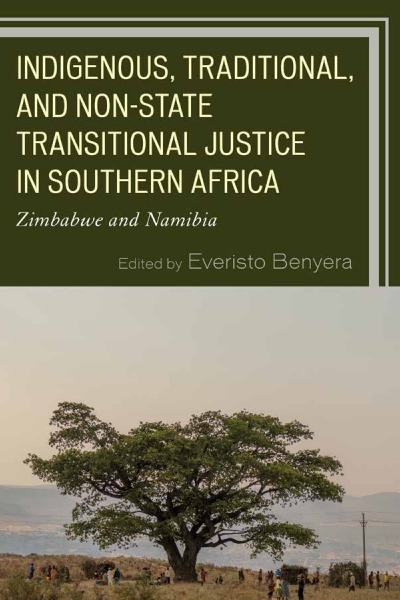
Indigenous, Traditional, and Non-State Transitional Justice in Southern Africa
Zimbabwe and Namibia
Editors:
Publisher:
2019
Summary
The book investigates the use of bottom-up, community based healing and peacebuilding approaches, focusing on their strengths and suggesting how they can be enhanced. The main contribution of the book is an ethnographic investigation of how post-conflict communities in parts of Southern Africa use their local resources to forge a future after mass violence. The way in which Namibia’s Herero and Zimbabwe’s Ndebele dealt with their respective genocides is a major contribution of the book.
The focus of the book is on two Southern African countries that never experienced institutionalized transitional justice as dispensed in post-apartheid South Africa via the famed Truth and Reconciliation Commission. We answer the question: how have communities healed and reconciled after the end of protracted violence and gross human rights abuses in Zimbabwe and Namibia? We depart from statetist, top-down, one-size fits all approaches to transitional justice and investigate bottom-up approaches.