, to see if you have full access to this publication.
Monograph No access
Tally's Corner
A Study of Negro Streetcorner Men
Authors:
Publisher:
2003
Summary
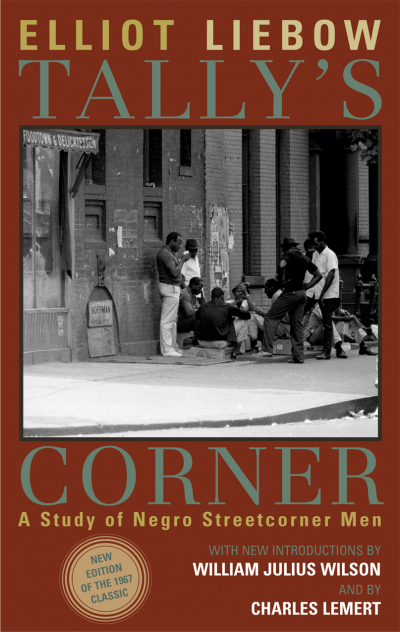
The first edition of Tally's Corner, a sociological classic selling more than one million copies, was the first compelling response to the culture of poverty thesis—that the poor are different and, according to conservatives, morally inferior—and alternative explanations that many African Americans are caught in a tangle of pathology owing to the absence of black men in families. The debate has raged up to the present day. Yet Liebow's shadow theory of values—especially the values of poor, urban, black men—remains the single most parsimonious account of the reasons why the behavior of the poor appears to be at odds with the values of the American mainstream.
While Elliot Liebow's vivid narrative of "street-corner" black men remains unchanged, the new introductions to this long-awaited revised edition bring the book up to date. Wilson and Lemert describe the debates since 1965 and situate Liebow's classic text in respect to current theories of urban poverty and race. They account for what Liebow might have seen had he studied the street corner today after welfare has been virtually ended and the drug economy had taken its toll. They also take stock of how the new global economy is a source of added strain on the urban poor. Discussion of field methods since the 1960s rounds out the book's new coverage.
Search publication
Bibliographic data
Edition
1/2003
Copyright Year
2003
ISBN-Print
978-0-7425-2896-3
ISBN-Online
978-0-585-47919-4
Publisher
Rowman & Littlefield, Lanham
Language
English
Pages
179
Product Type
Monograph
Table of contents
ChapterPages
CONTENTS No access
Foreword to the 2003 Edition Charles Lemert, Series Editor No access
Foreword to the 1967 Edition Hylan Lewis No access
Introduction to the 2003 Edition William Julius Wilson No access
Acknowledgments No access
1 Introduction No access Pages 1 - 18
2 Men and Jobs No access Pages 19 - 46
3 Fathers without Children No access Pages 47 - 66
4 Husbands and Wives No access Pages 67 - 88
5 Lovers and Exploiters No access Pages 89 - 104
6 Friends and Networks No access Pages 105 - 134
7 Conclusion No access Pages 135 - 150
Appendix: A Field Experience in Retrospect No access Pages 151 - 166