, to see if you have full access to this publication.
Monograph No access
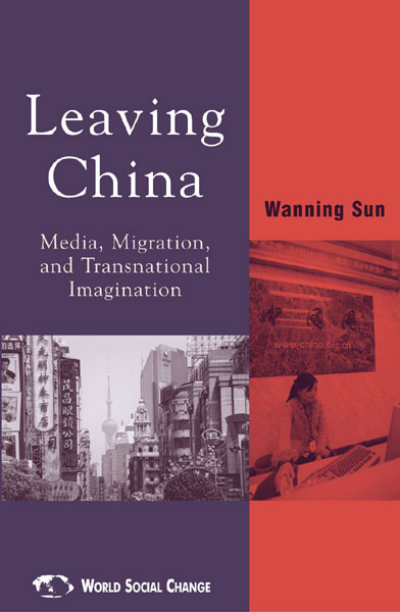
Leaving China
Media, Migration, and Transnational Imagination
Authors:
Publisher:
2002
Summary
More than ever before, China is on the move. When the flow of people and images is fused, meanings of self, place, space, community, and nation become unstable and contestable. This fascinating book explores the ways in which movement within and across the national borders of the PRC has influenced the imagination of the Chinese people, both those who remain and those who have left. Travelers or no, all participate in the production and consumption of images and narratives of travel, thus contributing to the formation of transnational subjectivities. Wanning Sun offers a fine-grained analysis of the significant narrative forms and discursive strategies used in representing transnational space in contemporary China. This includes looking at how stay-at-homes fantasize about faraway or unknown places, and how those in the diaspora remember experiences of familiar places. She considers the ways in which mobility-of people, capital, and images-affects localities through individuals' constructions of a sense of place. Relatedly, the author illustrates how economic, social, and political forces either facilitate or inhibit the formation of a particular kind of transnational subjectivity.
Search publication
Bibliographic data
Edition
1/2002
Copyright Year
2002
ISBN-Print
978-0-7425-1797-4
ISBN-Online
978-1-4616-3878-0
Publisher
Rowman & Littlefield, Lanham
Language
English
Pages
243
Product Type
Monograph
Table of contents
ChapterPages
Contents No access
Preface No access
Introduction: Leaving China No access Pages 1 - 20
1 Going Home or Going Places: Television in the Village No access Pages 21 - 42
2 Going Abroad or Staying Home: Cinema, Fantasy, and the World City No access Pages 43 - 66
3 Arriving at the Global City: Television Dramas and Spatial Imagination No access Pages 67 - 90
4 Haggling in the Margin: Videotapes and Paradiasporic Audiences No access Pages 91 - 112
5 Fantasizing the Homeland: The Internet, Memory, and Exilic Longings No access Pages 113 - 136
6 Eating Food and Telling Stories: From Horne(land) to Homepage No access Pages 137 - 158
7 Fragmenting the National Time-Space: Media Events in the Satellite Age No access Pages 159 - 182
8 Chinese in the Global Village: Olympics and an Electronic Nation No access Pages 183 - 210
Conclusion: Toward a Transnational China? No access Pages 211 - 218