, to see if you have full access to this publication.
Edited Book No access
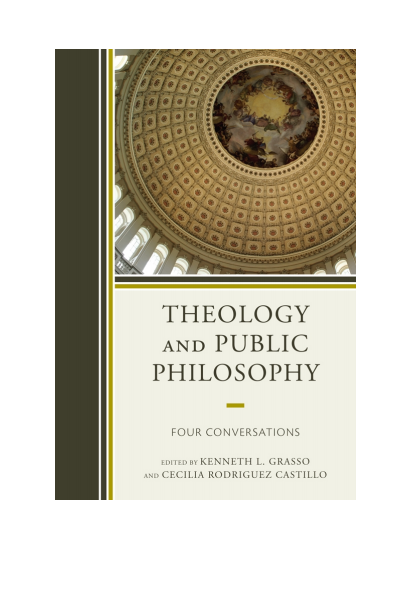
Theology and Public Philosophy
Four Conversations
Editors:
|
Publisher:
2012
Summary
This volume brings together eminent theologians, philosophers and political theorists to discuss the relevance of theology and theologically grounded moral reflection to contemporary America’s public life and argument. Avoiding the focus on hot-button issues, shrill polemics, and sloganeering that so often dominate discussions of religion and public life, the contributors address such subjects as how religious understandings have shaped the moral landscape of contemporary culture, the possible contributions of theologically-informed argument to contemporary public life, religious and moral discourse in a pluralistic society, and the proper relationship between religion and culture.
Indeed, in the conviction that serious conversation about the type of questions being explored in this volume is in short supply today, this volume is organized in a manner designed to foster authentic dialogue. Each of the book’s four sections consists of an original essay by an eminent scholar focusing on a specific aspect of the problem that is the volume’s focus followed by three responses that directly engage its argument or explore the broader problematic it addresses. The volume thus takes the form of a dialogue in which the analyses of four eminent scholars are each engaged by three interlocutors.
Keywords
Search publication
Bibliographic data
Edition
1/2012
Copyright Year
2012
ISBN-Print
978-0-7391-6663-5
ISBN-Online
978-0-7391-6665-9
Publisher
Lexington, Lanham
Language
English
Pages
187
Product Type
Edited Book
Table of contents
ChapterPages
Contents No access
Acknowledgments No access
Introduction: Theology and the American Civil Conversation No access
Chapter One: Perils of Moralism No access
Chapter Two: Ockham’s Children: Nomolatry, Nominalism, and Contemporary Moral Culture No access
Chapter Three: Nomolatry and Fidelity No access
Chapter Four: Moralism and Its Traps No access
Chapter Five: "The Authorities Are God’s Servants": Is a Theistic Account of Political Authority Still Viable or Have Humanist Accounts Won the Day? No access
Chapter Six: Two Theories, Not One No access
Chapter Seven: On the Origin and Nature of Political Authority: A Response to Nicholas Wolterstorff No access
Chapter Eight: Is Consent a Theological Category? No access
Chapter Nine: Consensus and Commitment: Real People, Religious Reasons, and Public Discourse No access
Chapter Ten: Re-framing the Conversation No access
Chapter Eleven: Why We Can Talk to Each Other: A Response to Robin Lovin No access
Chapter Twelve: Liberal Democracy: An Alternative to the Idolotry of the Nation State? No access
Chapter Thirteen: Moral Traditions No access
Chapter Fourteen: Adjudicating Moral Inquiry: Scientific Reason and/or Dialogical Encounters No access
Chapter Fifteen: Alasdair MacIntyre: Closet Liberal No access
Chapter Sixteen: Taking the American Moral Tradition Seriously No access
Chapter Seventeen: Epilogue No access
Index No access Pages 181 - 184
About the Contributors and Editors No access Pages 185 - 187