, to see if you have full access to this publication.
Monograph No access
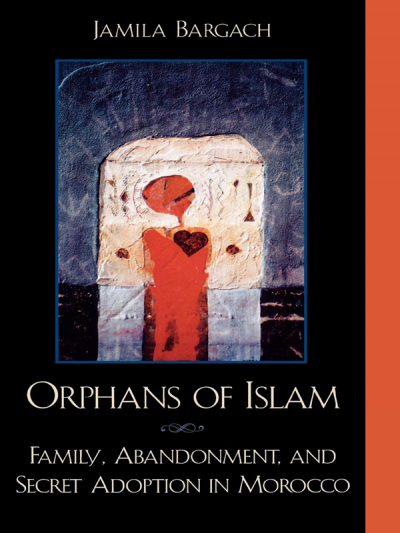
Orphans of Islam
Family, Abandonment, and Secret Adoption in Morocco
Authors:
Publisher:
2002
Summary
Orphans of Islam portrays the abject lives and 'excluded body' of abandoned and bastard children in contemporary Morocco, while critiquing the concept and practice of 'adoption,' which too often is considered a panacea. Through a close and historically grounded reading of legal, social, and cultural mechanisms of one predominantly Islamic country, Jamila Bargach shows how 'the surplus bastard body' is created by mainstream society. Written in part from the perspectives of the children and single mothers, intermittently from the view of 'adopting' families, and employing bastardy as a haunting and empowering motif with a potentially subversive edge, this ethnography is composed as an intricate, open-ended, and arabesque-like evocation of Moroccan society and its state institutions. It equally challenges received sociological and anthropological tropes and understandings of the Arab world.
Search publication
Bibliographic data
Edition
1/2002
Copyright Year
2002
ISBN-Print
978-0-7425-0027-3
ISBN-Online
978-1-4616-4043-1
Publisher
Rowman & Littlefield, Lanham
Language
English
Pages
291
Product Type
Monograph
Table of contents
ChapterPages
Contents No access
Note on Transliteration and Transcription No access
Preface and Acknowledgments No access
Introduction(s): Object/Subject, Discipline/Argument No access Pages 1 - 20
1. Legal Throes: Genealogies and Debates on Kafala, Adoption, and Abandoned Children No access
2. Counterpoints: The Idiom of Adoption between Theological Interpretation, the Rise ofthe Nation-State and the 'Real' No access
3. Of Anthropology: Nature, Nurture, and Kinship No access
4. Of Rituals: Names, Affiliation, and Identity No access
5. Of Culture: Loci, Lore, and Stereotypes No access
6. News from the Art, Intellectual, and Media Fronts: Reflections on and Representations of Marginality No access
7. Social Work at Work: Or What Politics for What Help? No access
8. Civil Society and Social Work: Or the Politics of What Help? No access