, to see if you have full access to this publication.
Monograph No access
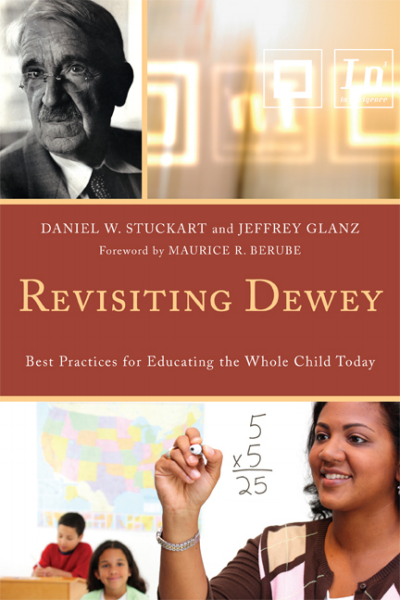
Revisiting Dewey
Best Practices for Educating the Whole Child Today
Authors:
|
Publisher:
2010
Summary
Since the passage of the No Child Left Behind Act of 2001, high-stakes testing has become a ubiquitous feature of public school children's daily rituals. Reform advocates argue that testing leads to greater alignment of the curriculum with teaching and learning, teacher and student accountability, and in some cases, a preservation of our cultural heritage. Opponents contend that testing results in prolific cheating, higher drop-out rates, and a narrowing curriculum with emphases on teaching to the test. Moreover, some evidence suggests that a singular focus on passing the test at all costs leads to neglect in other areas including attending to students' spiritual and ethical needs as well as developing abilities to collaborate with others, communicate effectively, and innovatively solve problems. Nearly a century ago, Dewey proposed a philosophy of education addressing the needs of the whole student. He provided insights into the development of intelligence, the importance of socially useful skills, and the healthy growth of the individual. In the context of high-stakes testing and best practices, his insights may be more prescient than ever.
Search publication
Bibliographic data
Edition
1/2010
Copyright Year
2010
ISBN-Print
978-1-60709-028-1
ISBN-Online
978-1-60709-030-4
Publisher
Rowman & Littlefield, Lanham
Language
English
Pages
266
Product Type
Monograph
Table of contents
ChapterPages
Contents No access
Foreword No access
Preface No access
Chapter 01. Creating a Curriculum for Teaching the Whole Child No access
Chapter 02. Changing Demographics: Promoting the New Democracy, Education, and the Whole Child No access
Chapter 03. Subverting the Whole Child through Narrowing of the Curriculum and Teaching to the Test No access
Chapter 04. Critiquing Scientific Dogmatism in Education with Implications for Current Supervisory and Administrative Practice within a Standards-based Environment No access
Chapter 05. Implementing Inquiry, Holistic Learning through Technology No access
Chapter 06. Advocating for the Disenfranchised Exceptional Child in an Era of High-Stakes Education No access
Chapter 07. Realizing Our Ethical Responsibilities as Educators No access
Chapter 08. The Relevance of Dewey’s Work No access
Chapter 09. School Reform in New York City: The Impact of NCLB No access
Chapter 10. Combating Poverty in Light of the Attack on Deweyan Democracy No access
Chapter 11. Democracy and Education for All Children No access