, to see if you have full access to this publication.
Edited Book No access
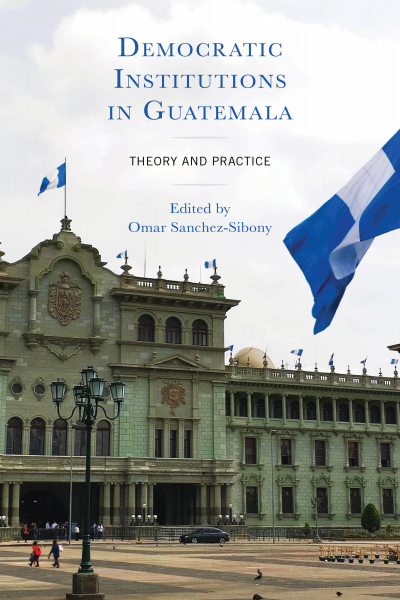
Democratic Institutions in Guatemala
Theory and Practice- Editors:
- Publisher:
- 2025
Search publication
Bibliographic data
- Edition
- 1/2025
- Copyright Year
- 2025
- ISBN-Print
- 978-1-6669-1006-3
- ISBN-Online
- 978-1-6669-1007-0
- Publisher
- Lexington, Lanham
- Language
- English
- Pages
- 478
- Product Type
- Edited Book
Table of contents
ChapterPages
- Contents No access
- Acknowledgments No access
- The “Democratization via Elections” Thesis No access
- Undemocratic Political Culture No access
- Low Electoral Turnouts No access
- Open Door to Narco Money No access
- Guatemalan Electoral Vehicles as Rent-Seeking Actors No access
- Corollary: The Impotence and Degradation of the Guatemalan Left in Power No access
- Undemocratic Presidential Leadership No access
- Opacity of Political Supply: Guatemala as a Complex Political Environment No access
- A Captured State and a Captured Economy: Foreclosing Policy Alternatives No access
- Conclusion No access
- Plan of the Book No access
- Note No access
- References No access
- The Linzian Pessimistic Outlook on Presidentialism and Its Critics No access
- Presidential Instability and Party Institutionalization No access
- Guatemala’s Nonexistent Parties (i): Ruling versus Opposition Forces No access
- Guatemala’s Nonexistent Parties (II): The Relevance of Non-Party Players No access
- Guatemala’s Semi-Democratic Period and the “Serranazo” (1985–1996) No access
- Presidential Stability and Virtually Nonexistent Parties (1993–2012) No access
- The Scandal-Ridden Presidency of Otto Pérez Molina and His Fall from Office No access
- Jimmy Morales: A True Outsider No access
- Government Stability and Parties’ Perceived Behavior toward Presidents No access
- Theoretical Lessons from the Guatemalan Case No access
- Conclusion No access
- Notes No access
- References No access
- Corruption No access
- Clientelism No access
- Impunity No access
- Traditional Parties and First Generation No access
- The Second Generation No access
- The Third Generation: Electoral Vehicles No access
- Next Generation? No access
- Party Generations and Illicit Networks (RPEIs) No access
- Guatemala’s Congress and Illicit Networks No access
- Accumulation of Political Power No access
- Accumulation of Economic Power No access
- Impunity No access
- Illicit Activities No access
- Pursuing Impunity No access
- Theoretical Lessons from the Guatemalan Case No access
- Conclusion No access
- Notes No access
- References No access
- The Correlates of Congruence No access
- Ideological and Policy Congruence No access
- Priority Congruence No access
- Ideological Congruence No access
- Policy Congruence No access
- Priority Congruence No access
- The Broader Implications of Studying Congruence in Guatemala No access
- Conclusion No access
- Notes No access
- References No access
- In Guatemala, Judicialization Has Occurred in Waves No access
- The First Wave: The Conflict over Fiscal Reform in 1987–1988 No access
- The Second Wave: Consolidation of the Constitutional Court After the Serranazo No access
- The Third Wave: Elite Conflict over Economic Policy No access
- The Fourth Wave: Lots of Cases, but No Unifying Theme No access
- The Fifth Wave: Judicialization Against the Establishment No access
- Who Are the Actors that Drive the Constitutional Court to Action? No access
- Why Does the Court’s Activity Vary over Time? No access
- The Guatemalan Case: Theoretical Implications No access
- Conclusion No access
- Notes No access
- References No access
- Theoretical Perspectives on Institutional Weakness and Institutional Reform No access
- Institutional Instability: The Guatemalan Judiciary and the Rule of Law No access
- Noncompliance with Institutions: Anti-Corruption Efforts and Impunity No access
- Institutional “Window Dressing?” The Femicide Courts No access
- Theoretical Lessons from Guatemala No access
- Conclusion No access
- Note No access
- References No access
- What Is Political Culture and How Is It Assessed? No access
- The Dependent Variable: Political Culture No access
- The Independent Variable: Education No access
- Diffuse Support for Democracy and Its Institutions No access
- Specific Support for Institutions of Representative Democracy No access
- Support for Authoritarian Measures No access
- Integration into the Political Process No access
- Knowledge of the Political System No access
- Respect Toward the Rights and Beliefs of Other Citizens No access
- The Statistical Regression Model No access
- Analysis and Findings No access
- Discussion of Results No access
- Other Relevant Variables No access
- Conclusion No access
- Notes No access
- References No access
- Insights from the Criminal Subversion of Democracy in Mexico No access
- Regional Context and Narcotrafficking No access
- Candidate Selection and Deterrence No access
- Decisiveness of Elections No access
- Narrowing the Public Debate No access
- Voter Intimidation No access
- The Role of Gang Violence in Guatemala No access
- Public Disillusionment with Democracy No access
- Structural Factors No access
- The Rise and Fall of CICIG No access
- The Giammattei Administration and the 2023 Election No access
- Lessons from the Criminal Threat to Democracy in Guatemala No access
- Conclusion No access
- Notes No access
- References No access
- INTRODUCTION: Key Features of the Guatemalan Party Universe No access
- Political Personal Brands in Guatemala No access
- Organizational Cohesion: The Logic of Factionalism and Splits No access
- Authoritarian Successor Parties in Guatemala No access
- A Failed Insurgent Successor Party: The UNRG No access
- Party Entropy and Self-Destruction No access
- The Role of Uncertainty No access
- Legacies of Conflict and the Counterinsurgency Regime No access
- State Weakness and Incumbent Disadvantage No access
- Attitudinal Landscape: A Negative Legitimacy Environment No access
- Conclusion No access
- References No access
- Theories About the Electoral Rise of the Latin American left No access
- Encounter for Guatemala No access
- Movement for the Liberation of Peoples No access
- Movimiento Semilla No access
- The UNE on the Campaign Trail No access
- The UNE in Government (2008–2012) No access
- Applying the Levitsky-Roberts and Cleary’s Frameworks to Guatemala No access
- Structural Explanations: Disadvantages in Political Financing No access
- Structural Explanations: Lawfare No access
- Structural Explanations: Regime Legacies No access
- Agential Explanations: Candidate Selection No access
- Agential Explanations: Failure to Advance Indigenous Concerns No access
- The Guatemalan left in 2024 No access
- References No access
- The Theory: Standard Strategies in the Repertoire of the Political Right No access
- The Right and Democracy in Contemporary Guatemala No access
- The PAN: The “Modernizing” Right in Office (1995–1999) No access
- The Frente Republicano Guatemalteco (FRG): The Populist Right Confronting the Oligarchy (2000–2003) No access
- The Partido Patriota: A Right-Wing Criminal Enterprise No access
- Oscar Berger (2003–2007): The Oligarchy in Office No access
- Jimmy Morales FCN: Military Officers and Emergent Capital Behind a Political Outsider No access
- The 1985 Constitution: Protecting the Oligarchy No access
- The Constitutional Court No access
- Theoretical Lessons from the Case of Guatemala No access
- Conclusion No access
- References No access
- Matching Surveys to Measure Congruence No access
- Ideological Congruence No access
- Issue Congruence No access
- Priority Congruence No access
- Issue Priorities Congruence in Guatemala No access
- Index No access Pages 453 - 472
- About the Contributors No access Pages 473 - 478