, to see if you have full access to this publication.
Monograph No access
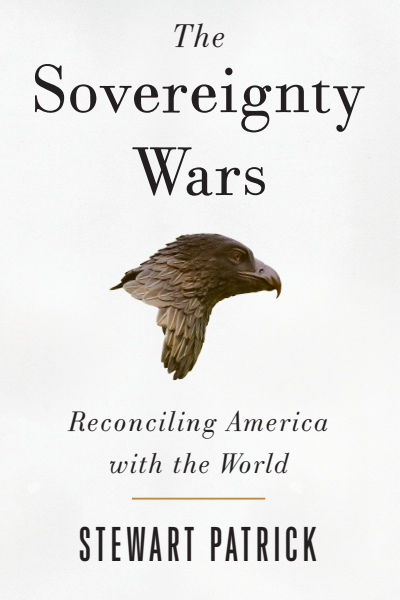
The Sovereignty Wars
Reconciling America with the World
Authors:
Publisher:
2017
Summary
Protecting sovereignty while advancing American interests in the global age
Americans have long been protective of the country’s sovereignty—beginning when George Washington retired as president with the admonition for his successors to avoid “permanent” alliances with foreign powers. Ever since, the nation has faced persistent, often heated debates about how to maintain that sovereignty, and whether it is endangered when the United States enters international organizations, treaties, and alliances about which Washington warned.
As the recent election made clear, sovereignty is also one of the most frequently invoked, polemical, and misunderstood concepts in politics—particularly American politics. The concept wields symbolic power, implying something sacred and inalienable: the right of the people to control their fate without subordination to outside authorities. Given its emotional pull, however, the concept is easily highjacked by political opportunists. By playing the sovereignty card, they can curtail more reasoned debates over the merits of proposed international commitments by portraying supporters of global treaties or organizations as enemies of motherhood and apple pie.
Such polemics distract Americans from what is really at stake in the sovereignty debate: namely, the ability of the United States to shape its destiny in a global age. The United States cannot successfully manage globalization, much less insulate itself from cross-border threats, on its own. As global integration deepens and cross-border challenges grow, the nation’s fate is increasingly tied to that of other countries, whose cooperation will be needed to exploit the shared opportunities and mitigate the common risks of interdependence.
The Sovereignty Wars is intended to help today's policymakers think more clearly about what is actually at stake in the sovereignty debate and to provide some criteria for determining when it is appropriate to make bargains over sovereignty—and how to make them.
Keywords
Search publication
Bibliographic data
Copyright Year
2017
ISBN-Print
978-0-8157-3159-7
ISBN-Online
978-0-8157-3160-3
Publisher
Rowman & Littlefield, Lanham
Language
English
Pages
337
Product Type
Monograph
Table of contents
ChapterPages
Table of Contents No access
Acknowledgments No access
Abbreviations No access
Introduction: The Sovereignty Wars No access Pages 1 - 27
There's No Place Like Home: Sovereignty, American Style No access Pages 28 - 58
Power and Interdependence: U.S. Sovereignty in the American Century No access Pages 59 - 96
Do as I Say, Not as I Do: American Sovereignty and International Law No access Pages 97 - 141
Don't Fence Me In: The Use of Force, Arms Control, and U.S. National Security No access Pages 142 - 171
Stop the World, I Want to Get Off: Globalization and American Sovereignty No access Pages 172 - 195
Good Fences Make Good Neighbors: Immigration and Border Security No access Pages 196 - 216
Don't Tread on Me: The United States and International Organizations No access Pages 217 - 251
Conclusion: American Sovereignty and International Cooperation No access Pages 252 - 264