, to see if you have full access to this publication.
Edited Book No access
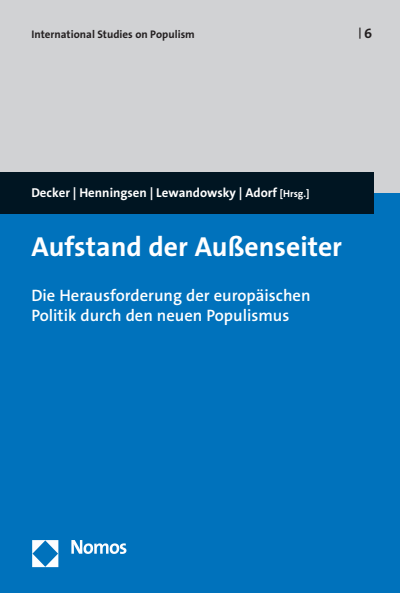
Aufstand der Außenseiter
Die Herausforderung der europäischen Politik durch den neuen Populismus- Editors:
- | | |
- Series:
- International Studies on Populism, Volume 6
- Publisher:
- 2022
Keywords
Search publication
Bibliographic data
- Edition
- 1/2022
- Copyright Year
- 2022
- ISBN-Print
- 978-3-8487-5624-7
- ISBN-Online
- 978-3-8452-9799-6
- Publisher
- Nomos, Baden-Baden
- Series
- International Studies on Populism
- Volume
- 6
- Language
- German
- Pages
- 690
- Product Type
- Edited Book
Table of contents
ChapterPages
- Titelei/Inhaltsverzeichnis No access Pages 1 - 10
- Vorwort zur Neuausgabe No access Pages 11 - 12
- Populismusbegriff und Populismusforschung No access Pages 13 - 14
- Erklärungsansätze No access Pages 15 - 16
- Internationale der Nationalisten No access Pages 17 - 20
- Klimapolitik und Coronapandemie No access Pages 21 - 23
- Die Herausforderung durch die neuen Medien No access Pages 24 - 25
- Anpassung oder Abschottung? No access Pages 26 - 27
- Gefährdung der Demokratie? No access Pages 28 - 29
- Zu diesem Band No access Pages 30 - 32
- Authors:
- Neue und ältere Definitionsversuche No accessAuthors:
- Forschungsagenda No accessAuthors:
- Was tun? No accessAuthors:
- Literatur No accessAuthors:
- Authors:
- Definition der „extremen Rechten“ und Ansätze der Forschung No accessAuthors:
- Historischer Überblick No accessAuthors:
- Ausgewählte Typologien der extremen Rechten in Europa No accessAuthors:
- Ideologische Strömungen, Strategien und Wirkungen No accessAuthors:
- Schlussbetrachtung No accessAuthors:
- Literatur No accessAuthors:
- Authors:
- Was ist Euroskeptizismus? No accessAuthors:
- Ursprung des Begriffs No accessAuthors:
- Wissenschaftliche Konzeptualisierungen No accessAuthors:
- Erscheinungsformen, Ursachen und Auswirkungen des Euroskeptizismus No accessAuthors:
- Euroskeptizismus – (k)eine Begleiterscheinung des Populismus No accessAuthors:
- Literatur No accessAuthors:
- Authors: |
- Einleitung No accessAuthors: |
- Populismus als machtstrategisches Konzept No accessAuthors: |
- Machtstrategische Erschließung des Populismus No accessAuthors: |
- Machtstrategische Grundzüge des Unternehmerpopulismus No accessAuthors: |
- Wirtschaftliches Krisenszenario und unternehmerische Umgestaltungsvorstellungen No accessAuthors: |
- Unternehmererfolg als Machtressource No accessAuthors: |
- Wirtschaftskompetenz vor moralischer Integrität No accessAuthors: |
- Die organisatorische Machtbasis des Unternehmerpopulismus No accessAuthors: |
- Fazit No accessAuthors: |
- Literatur No accessAuthors: |
- Authors:
- Zwei Begriffe des Volkes No accessAuthors:
- Was sagt die Wissenschaft? No accessAuthors:
- Populismus missversteht Demokratie No accessAuthors:
- Ursachen des Populismus No accessAuthors:
- Wird die Demokratie populistisch? Ist die Demokratie populistisch? No accessAuthors:
- Literatur No accessAuthors:
- Authors:
- Einleitung No accessAuthors:
- Entstehungsgeschichte: Jean-Marie Le Pen (1972 bis 2011), Marine Le Pen (seit 2011) No accessAuthors:
- Programm: Immigration, Europäische Union, Laizismus No accessAuthors:
- Organisation: dünne Basis No accessAuthors:
- Wählerschaft: wenig Zukunftsoptimismus, verklärte Vergangenheit No accessAuthors:
- Fazit No accessAuthors:
- Literatur No accessAuthors:
- Authors:
- Etappen der Parteigeschichte No accessAuthors:
- Wahlergebnisse und Wählerschaft No accessAuthors:
- Programmatik No accessAuthors:
- Organisation No accessAuthors:
- Schluss No accessAuthors:
- Literatur No accessAuthors:
- Authors:
- Gründung der Partei No accessAuthors:
- Erfolgsbedingungen der Freiheitlichen Partei Österreichs No accessAuthors:
- Parteiorganisation und die Rolle des Parteiobmanns No accessAuthors:
- Themen, Programme und Strategien No accessAuthors:
- Regierungsbeteiligung und ihre Konsequenzen No accessAuthors:
- Rückkehr zur radikalen Oppositionspolitik No accessAuthors:
- Zurück an die Regierung und Signale der Regierungsfähigkeit No accessAuthors:
- Die FPÖ tritt in die Regierung ein: Die „türkis-blaue“ Koalition und ihre Bilanz No accessAuthors:
- Zusammenfassung und Ausblick No accessAuthors:
- Literatur No accessAuthors:
- Authors:
- Introduction No accessAuthors:
- Regional support and voters’ profile No accessAuthors:
- Endogenous resources and political opportunities No accessAuthors:
- Socio-cultural uncertainty No accessAuthors:
- Campaign modernisation No accessAuthors:
- Opponent within the government coalition No accessAuthors:
- National identity and liberalism No accessAuthors:
- Tradition and modernity No accessAuthors:
- The intra-party dynamic No accessAuthors:
- A party system shift No accessAuthors:
- Conclusion No accessAuthors:
- Bibliography No accessAuthors:
- Authors:
- Introduction No accessAuthors:
- From Fortuyn to Wilders to Baudet No accessAuthors:
- The characteristics of Dutch right-wing populism No accessAuthors:
- The electoral appeal of right-wing populism in the Netherlands No accessAuthors:
- Conclusion No accessAuthors:
- Bibliography No accessAuthors:
- Authors:
- Relevanz des Vlaams Belang No accessAuthors:
- Warum Belgien zum Föderalstaat wurde No accessAuthors:
- Wie sich der Rechtspopulismus aus der Flämischen Bewegung heraus entfaltete No accessAuthors:
- Ein „Schwarzer Sonntag“ No accessAuthors:
- Kampfansage an den Rechtspopulismus No accessAuthors:
- Ideologie und Strategie des Rechtspopulismus No accessAuthors:
- Feindbild Islam No accessAuthors:
- Aussichten No accessAuthors:
- Literatur No accessAuthors:
- Authors:
- Irland No accessAuthors:
- Vereinigtes Königreich No accessAuthors:
- Der rechte Rand No accessAuthors:
- Wählerschaft der populistischen Parteien No accessAuthors:
- Ausblick No accessAuthors:
- Literatur No accessAuthors:
- Authors:
- Einleitung No accessAuthors:
- Entstehungsgeschichte: von der Fortschrittspartei zur Dänischen Volkspartei No accessAuthors:
- Dänische Volkspartei: Etablierungsphase und Machtfaktor unter Fogh und Løkke Rasmussen No accessAuthors:
- Stabwechsel von Kjærsgaard zu Thulesen Dahl und Krise No accessAuthors:
- Wählerschaft No accessAuthors:
- Fazit und Ausblick No accessAuthors:
- Literatur No accessAuthors:
- Authors:
- Einleitung No accessAuthors:
- 40 Jahre Protest? No accessAuthors:
- Wer wählt die Fortschrittspartei – und warum? No accessAuthors:
- Partei der Bildungsverlierer No accessAuthors:
- Auf dem Weg zur Mitte? No accessAuthors:
- Schluss No accessAuthors:
- Nachtrag 2021 No accessAuthors:
- Literatur No accessAuthors:
- Authors:
- Einleitung No accessAuthors:
- Rechtspopulismus in Skandinavien – Sonderfall Schweden No accessAuthors:
- Der Durchbruch in Südschweden No accessAuthors:
- Politische Gelegenheitsstrukturen No accessAuthors:
- Deradikalisierung und Modernisierung der SD No accessAuthors:
- Organisationsausbau und Mitgliederzuwachs No accessAuthors:
- Die Wählerschaft der SD No accessAuthors:
- Zwischen Ethnonationalismus, Wohlfahrtschauvinismus und Volksheimnostalgie No accessAuthors:
- Legitimitätsgewinn der Schwedendemokraten durch rot-grüne Regierungskrise No accessAuthors:
- Fazit und Ausblick No accessAuthors:
- Literatur No accessAuthors:
- Authors: |
- Einleitung No accessAuthors: |
- Der Aufstieg und die populistische Grundidee der Partei No accessAuthors: |
- Regierungsbeteiligung und Spaltung No accessAuthors: |
- Ideologische Eckpfeiler und Kontext des PS-Erfolges No accessAuthors: |
- Fazit No accessAuthors: |
- Literatur No accessAuthors: |
- Authors:
- Introduction No accessAuthors:
- National identity No accessAuthors:
- Populist politics No accessAuthors:
- The new Progressive Party No accessAuthors:
- Nationalist discourse No accessAuthors:
- Anti-Muslim turn No accessAuthors:
- Tried and tested anti-immigrant themes No accessAuthors:
- The Centre and People’s Parties’ recent results No accessAuthors:
- Conclusion No accessAuthors:
- Bibliography No accessAuthors:
- Authors:
- Einleitung No accessAuthors:
- Entstehungs- und Erfolgsgeschichte No accessAuthors:
- Die Wählerschaft No accessAuthors:
- Organisation No accessAuthors:
- Programmatik No accessAuthors:
- Die Lega: eine rechtspopulistische Partei No accessAuthors:
- Literatur No accessAuthors:
- Authors:
- No accessAuthors:
- Introduction No accessAuthors:
- The M5S: From protest to persistence No accessAuthors:
- Descriptive analysis: The perfect breeding ground No accessAuthors:
- Relevant issues and the M5S electorate No accessAuthors:
- Representing European citizens: M5S in Brussels and Strasbourg No accessAuthors:
- Conclusion: Rising and Waning No accessAuthors:
- Bibliography No accessAuthors:
- Interviews No accessAuthors:
- Appendix No accessAuthors:
- Authors:
- Einleitung No accessAuthors:
- Vox – eine rechtspopulistische Partei nach „klassischem“ Vorbild No accessAuthors:
- „Es reicht“ – das Ende der rechtspopulistischen Immunität Portugals? No accessAuthors:
- Fazit: Gut positioniert für höhere Aufgaben No accessAuthors:
- Literatur No accessAuthors:
- Authors:
- Die parteipolitischen Rechte in ihren Anfängen (1974 bis 2000): Schwach und einflusslos No accessAuthors:
- Die „Ära LAOS“ und ihr jähes Ende bei den Erdrutschwahlen von 2012 No accessAuthors:
- Die Goldene Morgenröte (XA): Eine rechtextreme Partei mit langer Vorgeschichte No accessAuthors:
- Gründe für den Aufstieg der XA No accessAuthors:
- Der Umgang mit der XA No accessAuthors:
- Neuordnung des rechten Lagers 2019: Niedergang der ANEL und der XA, Aufstieg der EL No accessAuthors:
- Perspektiven No accessAuthors:
- Literatur No accessAuthors:
- Authors:
- Introduction No accessAuthors:
- Attempts to conceptualize populism No accessAuthors:
- The populist right’s practice of enemy and identity construction No accessAuthors:
- Fidesz’ populism as the inverse of Laclau’s populism concept No accessAuthors:
- Conclusion No accessAuthors:
- Bibliography No accessAuthors:
- Authors:
- Introduction No accessAuthors:
- The emergence of PiS No accessAuthors:
- The “Fourth Republic” No accessAuthors:
- Return to power No accessAuthors:
- PiS in government No accessAuthors:
- Conclusion No accessAuthors:
- Bibliography No accessAuthors:
- Authors:
- Einleitung No accessAuthors:
- Kurze Geschichte des Rechtsextremismus und des Populismus in der Tschechischen Republik No accessAuthors:
- Gegenwärtiger Populismus in der Tschechischen Republik No accessAuthors:
- Freiheit und Direkte Demokratie: Hauptrepräsentant des Rechtspopulismus in der Tschechischen Republik No accessAuthors:
- Kurze Geschichte des Rechtsextremismus und des Populismus in der Slowakischen Republik No accessAuthors:
- Gegenwärtiger Populismus in der Slowakischen Republik No accessAuthors:
- Die Partei Kotlebas – Volkspartei Unsere Slowakei: Hauptrepräsentant des Rechtsextremismus in der Slowakei No accessAuthors:
- Vergleich und Fazit No accessAuthors:
- Literatur No accessAuthors:
- Authors:
- Einleitung No accessAuthors:
- Litauen No accessAuthors:
- Lettland No accessAuthors:
- Estland No accessAuthors:
- Diskussion No accessAuthors:
- Fazit No accessAuthors:
- Literatur No accessAuthors:
- Authors:
- Einleitung No accessAuthors:
- Populismus und Medien No accessAuthors:
- Medien und Populismus No accessAuthors:
- Soziale Medien No accessAuthors:
- Fazit No accessAuthors:
- Literatur No accessAuthors:
- Authors:
- Einleitung No accessAuthors:
- Von analog zu digital No accessAuthors:
- Medienwandel: Historischer Rückblick No accessAuthors:
- Der Fall Anders Behring Breivik No accessAuthors:
- Ein Terrorist wächst heran No accessAuthors:
- Eine kritische Durchsicht No accessAuthors:
- Die Rolle von Staat, Medien und Zivilgesellschaft im Kampf gegen Terror und Extremismus No accessAuthors:
- Fazit No accessAuthors:
- Literatur No accessAuthors:
- Authors:
- Die Erstürmung von Kapitol und Reichstag No accessAuthors:
- Der Schatten des Holocaust No accessAuthors:
- Zweifel an der Vergangenheitsbewältigung No accessAuthors:
- Die Transformation der deutschen Gesellschaft No accessAuthors:
- Die linke Farbenblindheit No accessAuthors:
- Literatur No accessAuthors:
- Authors:
- Einleitung No accessAuthors:
- Haben die Medien die AfD erst groß gemacht? No accessAuthors:
- Strukturelle Gemeinsamkeiten zwischen populistischen Diskursen und Mechanismen der Massenmedien No accessAuthors:
- Mediatisierung der Politik No accessAuthors:
- Medien im Umbruch No accessAuthors:
- Das Medium radikalisiert die Botschaft No accessAuthors:
- Literatur No accessAuthors:
- Authors:
- Populismus als politische Kommunikation No accessAuthors:
- Populistische Kommunikation No accessAuthors:
- Messung populistischer Kommunikation No accessAuthors:
- Fallauswahl, Quellen und Methodik No accessAuthors:
- Ergebnisse No accessAuthors:
- Resümee No accessAuthors:
- Literatur No accessAuthors:
- Authors:
- Einleitung No accessAuthors:
- Europa in nationalen Medienblasen No accessAuthors:
- Europas digitale Öffentlichkeit(en) No accessAuthors:
- Europäische Öffentlichkeit der Rechtspopulisten? No accessAuthors:
- Potenziale für eine demokratische digitale Öffentlichkeit für Europa No accessAuthors:
- Fazit No accessAuthors:
- Literatur No accessAuthors:
- Authors: |
- Einleitung No accessAuthors: |
- Arenen der Auseinandersetzung: Parlament, Medien und Parteienwettbewerb No accessAuthors: |
- Die Fälle AfD und PVV No accessAuthors: |
- Parlament No accessAuthors: |
- Medien No accessAuthors: |
- Parteienwettbewerb No accessAuthors: |
- Zusammenfassung: Unterschiede zwischen Arenen, Parteien und Ländern No accessAuthors: |
- Literatur No accessAuthors: |
- Authors: | |
- Einleitung No accessAuthors: | |
- Führungs- und Stabilisierungsfunktion – Wichtigkeit der Fraktionsvorsitzenden und scheinbarer Bedeutungsverlust der Landesebene No accessAuthors: | |
- Partei sui generis: Aktivitäten, Strukturen und Erfolgsfaktoren No accessAuthors: | |
- Inhalte – zwischen Breite und Verengung No accessAuthors: | |
- Folgen, Reaktionen, Perspektiven – zwischen Ausgrenzung und Abgrenzung No accessAuthors: | |
- Literatur No accessAuthors: | |
- Authors:
- No accessAuthors:
- No accessAuthors:
- Einleitung: Die Gesellschaft als Raum No accessAuthors:
- Neue Akteur:innen, neue Konfliktlinien No accessAuthors:
- Identitätspolitik von und gegen „weiße Männer“ No accessAuthors:
- Gesellschaftlicher Zusammenhalt geht verloren No accessAuthors:
- Was bedeutet dann der Begriff „Integration“? No accessAuthors:
- Dreiklang der Überhitzung: Teilhabezuwachs, neue Medien, Tabubrüche No accessAuthors:
- Die neue politische Achse No accessAuthors:
- Literatur No accessAuthors:
- Authors:
- Definitionsprobleme No accessAuthors:
- Kommunikationsebenen No accessAuthors:
- Akzentuierung No accessAuthors:
- Autoritarismus No accessAuthors:
- Segregation No accessAuthors:
- Strategien für die Integration von Risikogruppen No accessAuthors:
- Diskurskultur No accessAuthors:
- Literatur No accessAuthors:
- Authors:
- Der Bedeutungsgehalt des Terrorismusbegriffs No accessAuthors:
- Von Weimar nach Bonn No accessAuthors:
- Anfänge in den 1960er und 1970er Jahren No accessAuthors:
- Die zweite Welle Anfang der 1980er Jahre No accessAuthors:
- Die dritte Welle seit Mitte der 1990er Jahre und der Nationalsozialistische Untergrund (NSU) No accessAuthors:
- Die zunehmende Bedeutung eines lone-wolf-Rechtsterrorismus No accessAuthors:
- Was tun? No accessAuthors:
- Literatur No accessAuthors:
- Authors:
- Einleitung No accessAuthors:
- Rechtspopulismus als Herausforderung für die politische Bildung No accessAuthors:
- Ursachen des Rechtspopulismus und Prävention No accessAuthors:
- Strategien der primären und sekundären Prävention No accessAuthors:
- Strategien der tertiären Prävention im Spannungsfeld pädagogischer Antinomien No accessAuthors:
- Fazit – Ein schwieriger Balanceakt No accessAuthors:
- Literatur No accessAuthors:
- Authors: |
- Introduction No accessAuthors: |
- Prevention – a look at what we are trying to achieve No accessAuthors: |
- The objectives of education and training No accessAuthors: |
- What do we want to prevent? No accessAuthors: |
- Prevention strategies No accessAuthors: |
- Conclusion No accessAuthors: |
- Bibliography No accessAuthors: |
- Authors:
- Literatur No accessAuthors:
- Autoren und Autorinnen No access Pages 689 - 690