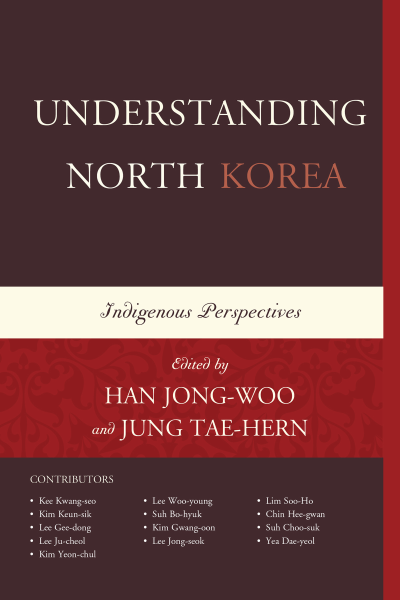
Understanding North Korea
Indigenous Perspectives- Editors:
- |
- Publisher:
- 2013
Summary
Why does North Korea want to possess nuclear capabilities? In order to find the answer to this question, we must have an accurate understanding of the history and structure of the North Korean regime. So far, we have only formed conjectures and predictions regarding North Korea based on our own perspectives; we now need to deal with and consider North Korea “as is” to reach viable solutions to the issues North Korea presents. This volume contains analyses of the most salient, critical issues pertinent to understanding the North Korean regime, penned by representative Korean scholars of North Korea. As such, the book examines the historical formation of North Korea, the identities of those power elite, and the relative stability (or instability, as the case may be) of the new regime under Kim Jong-un.
Also an important aspect to consider is the possibility of socio-economic change in North Korea. Though North Korea has remained relatively static vis-à-vis its political and military systems, it is in the process of becoming rapidly marketized, having continued various attempts to modify its economic policy. In the social realm, said economic shift has elicited the polarization of the disparate classes and the expansion of individualism. Such social transformations, obscured by the easily visible political reality of North Korea, can provide solid grounds for determining the future of the North Korea regime. Moreover, it is imperative that we accurately understand the motivation behind North Korea’s intention to develop nuclear weapons—namely, the expansion of deterrence. We must recognize the reasons for the North Korean hostility toward the United States from the very beginning of the DPRK formation and the North Korean fixation on nuclear weapons development. Further, we need to understand the nature of relations between China and North Korea—relations on which the international community has focused since North Korea began its nuclear testing—as well as the history and structure of relations between North and South Korea.
Only when we accurately understand North Korea can we reach solutions to the North Korean nuclear issue. The studies in this volume by Korean scholars will reveal the veiled background of the visible phenomena and thereby help the readers to correctly understand the North Korean behaviors hitherto misunderstood (or even those that were impossible to understand).
Keywords
Search publication
Bibliographic data
- Edition
- 1/2013
- Copyright Year
- 2013
- ISBN-Print
- 978-0-7391-7920-8
- ISBN-Online
- 978-0-7391-7921-5
- Publisher
- Lexington, Lanham
- Language
- English
- Pages
- 414
- Product Type
- Edited Book
Table of contents
- Contents No access
- List of Tables, Figures, and Diagrams No access
- List of Appendixes No access
- Acknowledgments No access
- Chapter One: Is US Policy toward North Korea Actually Beneficial to the United States? No access Pages 1 - 10
- Chapter Two: The Historical Origins and Formation of the Monolithic Political System in North Korea No access
- Chapter Three: The Stability of the Monolithic System under Kim Jong-un No access
- Chapter Four: The Power Elite of North Korea’s Monolithic System No access
- Chapter Five: Potential for Economic Reform in North Korea No access
- Chapter Six: North Korean Economy in Transition No access
- Chapter Seven: The Process of Social Change in North Korea No access
- Chapter Eight: Surviving in the Face of Hegemony: No access
- Chapter Nine: The Formation and Development of North Korea’s Understanding of the United States No access
- Chapter Ten: The Transformation of China-North Korea Relations and Its Implications1 No access
- Chapter Eleven: Twenty Years of the North Korean Nuclearization Problem: No access
- Chapter Twelve: Change in North Korea’s Policy toward South Korea and Its Implications No access
- Chapter Thirteen: Understanding Conflict on the Korean Peninsula: No access
- Chapter Fourteen: Economic Cooperation between the Two Koreas: No access
- Chapter Fifteen: The Irony of US Policy toward North Korea: No access
- Chapter Sixteen: Comprehensive Summary and Prospects for a Better Future No access
- Bibliography No access Pages 333 - 334
- Appendix 1: North Korea at a Glance No access Pages 335 - 336
- Appendix 2: North Korean Population No access Pages 337 - 338
- Appendix 3: Reunions of Separated Families No access Pages 339 - 340
- Appendix 4: North Korea’s Underground Resources No access Pages 341 - 342
- Appendix 5: North Korea’s Trading Nations (Unit: $1 million) No access Pages 343 - 344
- Appendix 6: South Korea and North Korea Side-by-Side Comparison No access Pages 345 - 348
- Appendix 7: Ten Years of the North Korean Economy Under Kim Jong-il No access Pages 349 - 352
- Appendix 8: Chronology of Major Economic and Legal Policies in North Korea No access Pages 353 - 356
- Appendix 9: North-South Personal and Material Exchange by Year No access Pages 357 - 360
- Appendix 10: North-South Economic Exchange No access Pages 361 - 364
- Appendix 11: Economic Development in Gaeseong Industrial Complex No access Pages 365 - 366
- Appendix 12: TSR TCP Map No access Pages 367 - 368
- Appendix 13: North-South Korea Talks No access Pages 369 - 370
- Appendix 14: North-South Korea Statements No access Pages 371 - 384
- Appendix 15: North Korean Proposals for a Peace Agreement No access Pages 385 - 388
- Appendix 16: Major Chronology of North Korea’s Nuclear and Missile Tests No access Pages 389 - 390
- Appendix 17: North Korea-US Statements No access Pages 391 - 400
- Appendix 18: Chronology of Six-Party Talks No access Pages 401 - 404
- Index No access Pages 405 - 410
- Contributors No access Pages 411 - 414