, to see if you have full access to this publication.
Monograph No access
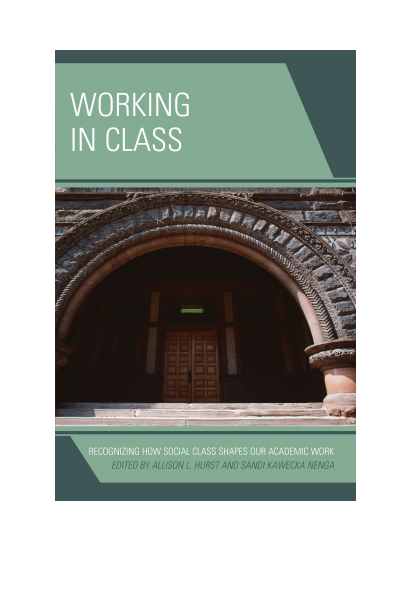
Working in Class
Recognizing How Social Class Shapes Our Academic Work
Authors:
|
Publisher:
2016
Summary
More students today are financing college through debt, but the burdens of debt are not equally shared. The least privileged students are those most encumbered and the least able to repay. All of this has implications for those who work in academia, especially those who are themselves from less advantaged backgrounds. Warnock argues that it is difficult to reconcile the goals of facilitating upward mobility for students from similar backgrounds while being aware that the goals of many colleges and universities stand in contrast to the recruitment and support of these students. This, combined with the fact that campuses are increasingly reliant on adjunct labor, makes it difficult for the contemporary tenure-track or tenured working-class academic to reconcile his or her position in the academy.
Search publication
Bibliographic data
Edition
1/2016
Copyright Year
2016
ISBN-Print
978-1-4758-2253-3
ISBN-Online
978-1-4758-2254-0
Publisher
Rowman & Littlefield, Lanham
Language
English
Pages
211
Product Type
Monograph
Table of contents
ChapterPages
Contents No access
Acknowledgments No access
Introduction No access Pages 1 - 10
1 Class as a Force of Habit No access
2 Controlling for Class No access
3 Class, Academia, and Ontologies of Global Selfhood No access
4 Survival Strategies for Working-Class Women as Junior Faculty Members No access
5 Boundary Crossing No access
6 Lessons Learned No access
7 Making Class Salient in the Sociology Classroom No access
8 Witnessing Social Class in the Academy No access
9 The Classroom Crucible No access
10 Working-Class, Teaching Class, and Working Class in the Academy No access