, to see if you have full access to this publication.
Monograph No access
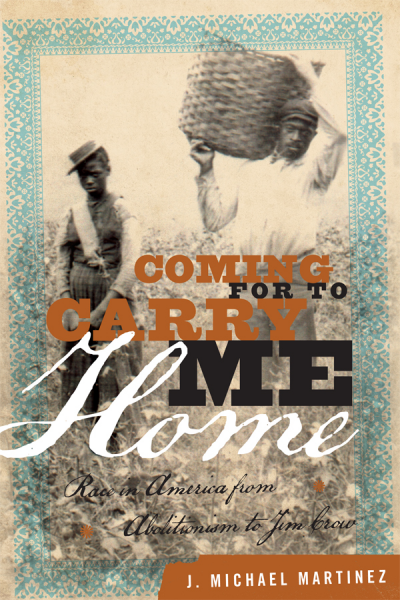
Coming for to Carry Me Home
Race in America from Abolitionism to Jim Crow
Authors:
Publisher:
2011
Summary
Coming for to Carry Me Home examines the history of the politics surrounding U.S. race relations during the half century between the rise of the abolitionist movement in the 1830s and the dawn of the Jim Crow era in the 1880s. J. Michael Martinez argues that Abraham Lincoln and the Radical Republicans in Congress were the pivotal actors, albeit not the architects, that influenced this evolution. To understand how Lincoln and his contemporaries viewed race, Martinez first explains the origins of abolitionism and the tumultuous decade of the 1830s, when that generation of political leaders came of age. He then follows the trail through Reconstruction, Redemption, and the beginnings of legal segregation in the 1880s. This book addresses the central question of how and why the concept of race changed during this period.
Search publication
Bibliographic data
Edition
1/2011
Copyright Year
2011
ISBN-Print
978-1-4422-1498-9
ISBN-Online
978-1-4422-1500-9
Publisher
Rowman & Littlefield, Lanham
Language
English
Pages
320
Product Type
Monograph
Table of contents
ChapterPages
Contents No access
Illustrations No access
Preface and Acknowledgments No access
Prologue: “We Have the Wolf by the Ear” No access Pages 1 - 14
Chapter One. “The Crimes of This Guilty Land Will Never Be Purged Away but with Blood” No access Pages 15 - 56
Chapter Two. “Mr. President, You Are Murdering Your Country by Inches” No access Pages 57 - 86
Chapter Three. “The Bondsman’s Two Hundred and Fifty Years of Unrequited Toil Shall Be Sunk” No access Pages 87 - 118
Chapter Five. “The Progress of Evolution from President Washington to President Grant Was Alone Evidence Enough to Upset Darwin” No access Pages 155 - 178
Chapter Six. “Radicalism Is Dissolving—Going to Pieces, but What Is to Take Its Place Does Not Clearly Appear” No access Pages 179 - 202
Chapter Seven. “We Have Been, as a Class, Grievously Wounded,Wounded in the House of Our Friends” No access Pages 203 - 232
Epilogue: “We Wear the Mask That Grins and Lies” No access Pages 233 - 242