, to see if you have full access to this publication.
Monograph No access
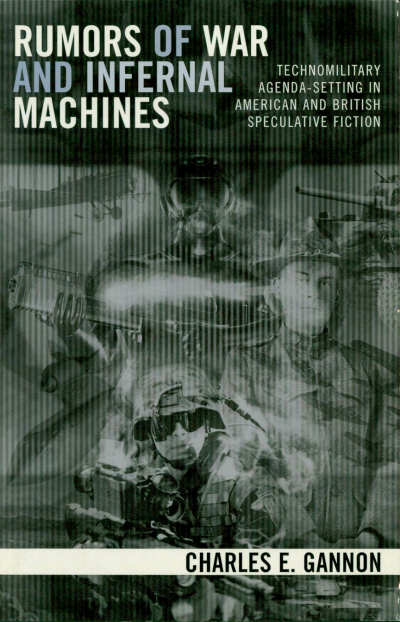
Rumors of War and Infernal Machines
Technomilitary Agenda-setting in American and British Speculative Fiction
Authors:
Publisher:
2005
Summary
This provocative and unique work reveals the remarkably influential role of futuristic literature on contemporary political power in America. Tracing this phenomenon from its roots in Victorian Britain, Rumors of War and Infernal Machines offers a fascinating exploration of how fictional speculations on emergent or imaginary military technologies profoundly influence the political agendas and actions of modern superpower states. Gannon convincingly demonstrates that military fiction anticipated and even influenced the evolution of the tank, the development of the airplane, and also the bitter political battles within Britain's War Office and the Admiralty. In the United States, future-fictions and Cold-War thrillers were an officially acknowledged factor in the Pentagon's research and development agendas, and often gave rise_and shape_to the nation's strategic development of technologies as diverse as automation, atomic weaponry, aerospace vehicles, and the Strategic Defense Initiative ('Star Wars'). His book reveals a striking relationship between the increasing political influence of speculative military fiction and the parallel rise of superpower states and their technocentric ideologies. With its detailed political, historical, and literary analysis of U.S. and British fascination with hi-tech warfare, this lively and revealing study will appeal to students, literary and cultural scholars, military and history enthusiasts, and general readers.
Search publication
Bibliographic data
Edition
1/2005
Copyright Year
2005
ISBN-Print
978-0-7425-4035-4
ISBN-Online
978-0-7425-6871-6
Publisher
Rowman & Littlefield, Lanham
Language
English
Pages
312
Product Type
Monograph
Table of contents
ChapterPages
Contents No access
Acknowledgements No access
Introduction Assessing Rumors—of War and Infernal Machines No access Pages 1 - 7
1 Armageddon by Gaslight: Victorian Visions of Apocalypse No access Pages 8 - 31
2 Opportunistic Anticipations and Accidental Insights: William Le Queux's Exploitation of Edwardian Invasion Anxieties No access Pages 32 - 61
3 Promoters of the Probable, Prophets of the Possible: Technological Innovation and Edwardian Near-Future War Fiction No access Pages 62 - 90
4 H.G. Wells: The Far-Future War Prophet of Edwardian England No access Pages 91 - 111
5 Hard Numbers, Hard Cases, Hard Decisions: Politics and Future-War Fiction in America No access Pages 112 - 127
6 An Imperfect Future Tense(d) : Anticipations of Atomic Annihilation in Post-War American Science Fiction No access Pages 128 - 145
7 Nuclear Fiction and Silo Psychosis: Narratives of Life in the Shadow of a Mushroom Cloud No access Pages 146 - 172
8 Radio Waves, Death Rays, and Transgressive (Sub)Texts: Future-War Fiction in the Wide Black Yonder No access Pages 173 - 207
9 Making Man-Machines of Mass Destruction: Future-War Authors as Seers in an Age of Cyborg Soldiers No access Pages 208 - 238
10 Cultural Casualties as Collateral Damage: The Fragment-ing/-ation Effects of Future-War Fantasies vs. Fictions No access Pages 239 - 255
Afterword On Conducting a Literary Reconnaissance in Force—and in Earnest No access Pages 256 - 258