, to see if you have full access to this publication.
Edited Book No access
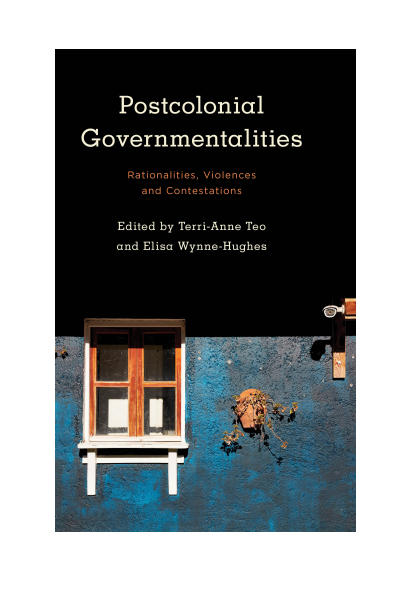
Postcolonial Governmentalities
Rationalities, Violences and Contestations
Editors:
|
Publisher:
2020
Summary
This edited volume asks how governmentality and postcolonial approaches can be brought together to help us better understand specific sites and practices of contemporary postcolonial governance. The framework/approach was inspired by the recent use of governmentality approaches that emphasize how governance functions not solely through states but through multiple tactics and means that regulate the conduct of individuals and institutions through both freedom and constraint.
A postcolonial approach to governance exposes the role of postcolonial sites and practices in shaping governance and the inequalities embedded within it, insofar as standards of conduct determine which subjects are privileged and excluded.Postcolonial perspectives show how governance can be both productive and repressive, functioning to impose a fixed code of conduct that objectifies (gendered, racialized, sexualized) ‘others’ as part of its project of improvement. In discussing governance, we must also consider how power is negotiated and challenged through forms of resistance and counter-conduct.
This volume argues that we need to incorporate postcolonial theories and carefully examine postcolonial practices and sites, to understand how contemporary governance shapes various transnational inequalities and social divisions. The authors in this edited volume illustrate the value of postcolonial governance as a conceptual framework through empirical examples from Asia, Australia, Africa, and Europe. These cases unpack practices of governance operating within complex political landscapes.
Keywords
Search publication
Bibliographic data
Edition
1/2020
Copyright Year
2020
ISBN-Print
978-1-78660-682-2
ISBN-Online
978-1-78660-684-6
Publisher
Rowman & Littlefield, Lanham
Language
English
Pages
271
Product Type
Edited Book
Table of contents
ChapterPages
Contents No access
Acknowledgements No access
Chapter One: Introduction No access Pages 1 - 42
Chapter Two: Hierarchies, Erasures and Appropriations of Knowledge No access
Chapter Three: Governmentality, Postcolonialism and Hybrid Subjectivities No access
Chapter Four: “Governing without the Politics” No access
Chapter Five: Affect and Postcolonial Governmentality No access
Chapter Six: Governing West Papua No access
Chapter Seven: Governmental Logics of an Assassin State No access
Chapter Eight: Temporalising Postcolonial Governmentality for Studies in Forced Migration No access
Chapter Nine: The Rights of Mother Earth No access