, to see if you have full access to this publication.
Monograph No access
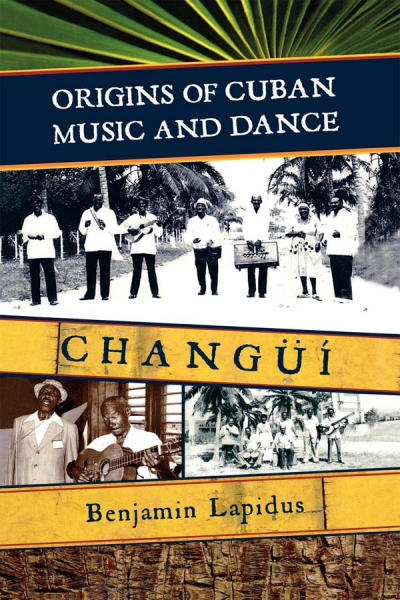
Origins of Cuban Music and Dance
Changüí
Authors:
Publisher:
2008
Summary
Origins of Cuban Music and Dance: Changüí is the first in-depth study of changüí, a style of music and dance in Guantánamo, Cuba. Changüí is analogous to blues in the United States and is a crucible of Cuban Creole culture. Benjamin Lapidus describes changüí and its relationship to the roots of son, Cuba's national genre and the style of music that contributed to the development of salsa, in Eastern Cuba. He also highlights the connections between Afro-Haitian music and Cuban popular music through changüí, connections with the Caribbean that have been largely overlooked in the past.
After an initial historical discussion about the region of Guantánamo and the inter-connectedness of its various musical styles with a focus on changüí, Lapidus discusses the technical aspects of the genre as practiced within the region and beyond. He considers the socio-historical importance of its lyrics, presenting numerous musical transcriptions that explain how the music is structured, as well as providing background stories to songs. In a chapter unique to this book and a first in Cuban musicology and ethnography, Lapidus describes years of festivals and musical competitions to show how local musical identity takes shape, particularly when encountering national narratives of music history. The volume concludes with a comparison between changüí and son, as well as a bibliography, discography, and videography.
Search publication
Bibliographic data
Edition
1/2008
Copyright Year
2008
ISBN-Print
978-0-8108-6204-3
ISBN-Online
978-1-4616-7029-2
Publisher
Rowman & Littlefield, Lanham
Language
English
Pages
199
Product Type
Monograph
Table of contents
ChapterPages
Table of Contents No access
Foreword No access
Preface No access
Acknowledgments No access
Introduction No access
1. Guantánamo and the Greater Oriente Region No access Pages 1 - 14
2. Como Se Toca Se Baila, Como Se Baila Se Toca: The Instruments and their Roles in the Changiii Ensemble No access Pages 15 - 38
3. Styles of Tres Improvisation No access Pages 39 - 60
4. Historicity and Self-Referencing in Changüí Songs No access Pages 61 - 94
5. The Changüí Complex in Guantanamo No access Pages 95 - 108
6. Variations of Changüí outside of Guantanamo No access Pages 109 - 122
7. The Afro-Haitian Presence in Eastern Cuba and Its Significance in the Development of the Cuban Son No access Pages 123 - 148
8. Cultural Festivals and Musical Competitions in Guantanamo and Oriente No access Pages 149 - 168
Conclusion: Changüí, Son, and the Pan-Caribbean Perspective No access Pages 169 - 184