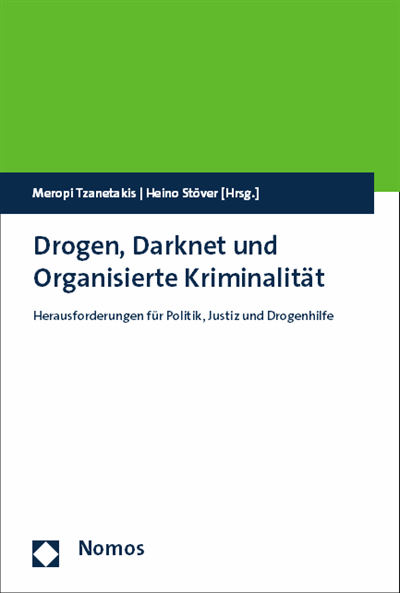
Drogen, Darknet und Organisierte Kriminalität
Herausforderungen für Politik, Justiz und Drogenhilfe- Herausgeber:innen:
- |
- Verlag:
- 2019
Zusammenfassung
Die Beiträge dieses Bandes basieren auf politikwissenschaftlichen, soziologischen und kriminologischen Forschungserkenntnissen, juristischen Analysen sowie Erfahrungen aus der Praxis. Sie stellen die erste umfassende Publikation zur komplexen Thematik „Drogen, Darknet und Organisierte Kriminalität“ dar und beinhalten deutsch- und englischsprachige Beiträge. Die multidisziplinäre Ausrichtung macht deutlich, dass das neuartige Phänomen der anonymen Drogenmärkte im Internet eine vielschichtige Herausforderung darstellt. Klassische Konzepte wie das der „Organisierten Kriminalität“ müssen erweitert werden und benötigen neue Erklärungsansätze. Organisationsstrukturen auf Online-Drogenmärkten müssen neu analysiert werden. Ebenso hat die Entwicklung der Kryptomärkte drogenpolitische Implikationen und erfordert neue Angebote der Drogenprävention und -beratung sowie Ansätze der Strafermittlung und Justiz. Schließlich stellt sich die Frage nach einer möglichen Regulierung von Online-Drogenmärkten. Angesichts dieser Problemanzeige beleuchten die Beiträge dieses Sammelbandes AkteurInnen, strukturelle Gegebenheiten und ökonomische Transaktionen auf anonymen Drogenmärkten.
Mit Beiträgen von
Meropi Tzanetakis | Heino Stöver | Klaus von Lampe | Frank Neubacher | Anja P. Jakobi | Jasmin Haunschild | Gergana Bulanova-Hristova | Karsten Kasper | Andreas Zaunseder | Angus Bancroft | Gerrit Kamphausen | Bernd Werse | James Martin | Benjamin Löhner | Sandro Rösler | Christian Mader | Stefan Mey
Schlagworte
Publikation durchsuchen
Bibliographische Angaben
- Auflage
- 1/2019
- Copyrightjahr
- 2019
- ISBN-Print
- 978-3-8487-3998-1
- ISBN-Online
- 978-3-8452-8283-1
- Verlag
- Nomos, Baden-Baden
- Sprache
- Deutsch
- Seiten
- 280
- Produkttyp
- Sammelband
Inhaltsverzeichnis
- Titelei/Inhaltsverzeichnis Kein Zugriff Seiten 1 - 10
- Autor:innen:
- 1. Zum ersten Kryptomarket Silk Road Kein ZugriffAutor:innen:
- 2. Zur Nutzung digitaler Technologien auf Drogenmärkten Kein ZugriffAutor:innen:
- 3. Strukturelle Bedingungen für Kryptomärkte Kein ZugriffAutor:innen:
- 4. Chancen und Risiken der anonymen Drogenmarktplätze Kein ZugriffAutor:innen:
- Literatur Kein ZugriffAutor:innen:
- Autor:innen:
- Die Geschichte des Begriffs ‚organisierte Kriminalität‘ Kein ZugriffAutor:innen:
- Mafia-Ängste: Die amerikanische Diskussion um ‚organized crime‘ als Impulsgeber Kein ZugriffAutor:innen:
- Wahrgenommene Veränderungen der Kriminalitätslage in der Bundesrepublik Kein ZugriffAutor:innen:
- Organisierte Kriminalität als ein in der Bundesrepublik gegenwärtiges Phänomen Kein ZugriffAutor:innen:
- Die Politisierung des Themas in den 1980er Jahren Kein ZugriffAutor:innen:
- Die offizielle Sprachregelung seit 1990 Kein ZugriffAutor:innen:
- Drei Grundannahmen über das Wesen ‚organisierter Kriminalität‘ Kein ZugriffAutor:innen:
- Klischee und Realität Kein ZugriffAutor:innen:
- ‚Organisierte‘ Kriminelle als Problemlöser Kein ZugriffAutor:innen:
- Kriminelle Strukturen Kein ZugriffAutor:innen:
- Kriminelle Organisationen, kriminelle Netzwerke und „OK-Einzeltäter“ Kein ZugriffAutor:innen:
- Erklärungsansätze und Bedrohungsszenarien Kein ZugriffAutor:innen:
- Literatur Kein ZugriffAutor:innen:
- Autor:innen:
- 1. Einleitung: Gefährdungen durch die organisierte Kriminalität Kein ZugriffAutor:innen:
- 2. Kriminalpolitische Entwicklung Kein ZugriffAutor:innen:
- 3. Begriff und Tätigkeitsbereiche der Organisierten Kriminalität Kein ZugriffAutor:innen:
- 4. Das Lagebild „Organisierte Kriminalität“ Kein ZugriffAutor:innen:
- 5. Überblick über wissenschaftliche Befunde Kein ZugriffAutor:innen:
- 6. Schluss Kein ZugriffAutor:innen:
- Literatur Kein ZugriffAutor:innen:
- Autor:innen: |
- Autor:innen: |
- 1.1 The Emergence of Global Crime Governance Institutions Kein ZugriffAutor:innen: |
- 1.2 Existing Instruments in Global Crime Governance Kein ZugriffAutor:innen: |
- Autor:innen: |
- 2.1 Types of Illegal Markets Kein ZugriffAutor:innen: |
- 2.2 Governance Instruments and Actors linked to Global Illegal Markets Kein ZugriffAutor:innen: |
- 3. Conclusions: What consequences for governing crime and illegal markets in cyberspace? Kein ZugriffAutor:innen: |
- References Kein ZugriffAutor:innen: |
- Autor:innen: |
- 1. Vorbemerkung zum Projekt Kein ZugriffAutor:innen: |
- 2. Arbeitsdefinition Kein ZugriffAutor:innen: |
- Autor:innen: |
- 3.1. Erste Abfrage – Fokus auf Tätergruppierungen Kein ZugriffAutor:innen: |
- 3.2. Zweite Abfrage – Fokus auf Cybercrime Kein ZugriffAutor:innen: |
- 3.3. Stichprobenziehung und Aktenanalyse Kein ZugriffAutor:innen: |
- Autor:innen: |
- 4.1. Gruppenkategorisierung Kein ZugriffAutor:innen: |
- 4.2. Erfassung der Gruppenmitgliedschaft Kein ZugriffAutor:innen: |
- Autor:innen: |
- Kategorie 1: Cyberentering-Gruppen (N = 5) Kein ZugriffAutor:innen: |
- Kategorie 2: Offlineborn-Gruppen (N = 9) Kein ZugriffAutor:innen: |
- Kategorie 3: Cyberborn-Gruppen (N = 4) Kein ZugriffAutor:innen: |
- Autor:innen: |
- Gruppengröße Kein ZugriffAutor:innen: |
- Entstehung, Zweck und OK-Relevanz Kein ZugriffAutor:innen: |
- Gruppenstruktur – Hierarchieebenen, Rollen und Arbeitsteilung Kein ZugriffAutor:innen: |
- Vertrauens- und Sanktionsmechanismen Kein ZugriffAutor:innen: |
- 4.5 Modi Operandi Kein ZugriffAutor:innen: |
- 5. Mehrwert der Studie Kein ZugriffAutor:innen: |
- Literatur Kein ZugriffAutor:innen: |
- Autor:innen:
- 1. Die Sichtbarkeit der Handelnden Kein ZugriffAutor:innen:
- 2. Das Feedbacksystem der Kund_innen Kein ZugriffAutor:innen:
- 3. Konfliktlösung über Treuhandverfahren Kein ZugriffAutor:innen:
- 4. Die Vermarktung von Drogen Kein ZugriffAutor:innen:
- 5. Grenzenloser Zugang zu Darknet-Plattformen Kein ZugriffAutor:innen:
- 6. Die lokale Drogenzustellung Kein ZugriffAutor:innen:
- 7. Strukturelle Effizienz Kein ZugriffAutor:innen:
- 8. Schlussfolgerungen Kein ZugriffAutor:innen:
- Literatur Kein ZugriffAutor:innen:
- Autor:innen: |
- 1 Introduction Kein ZugriffAutor:innen: |
- 2 Agorism Kein ZugriffAutor:innen: |
- 3 Cryptomarkets – a fuzzy and interconnected layer in the supply chain of drugs Kein ZugriffAutor:innen: |
- 4 A conceptual framework for going backstage – supply chains, gender, unpaid digital labour Kein ZugriffAutor:innen: |
- 5 Conclusion Kein ZugriffAutor:innen: |
- References Kein ZugriffAutor:innen: |
- Autor:innen: |
- Einleitung Kein ZugriffAutor:innen: |
- Methode Kein ZugriffAutor:innen: |
- Beispielthread Kein ZugriffAutor:innen: |
- Vertrauen und Risiko Kein ZugriffAutor:innen: |
- Logistik Kein ZugriffAutor:innen: |
- Konflikt Kein ZugriffAutor:innen: |
- Diskussion Kein ZugriffAutor:innen: |
- Literatur Kein ZugriffAutor:innen: |
- Autor:innen: |
- 1. Einleitung, Ziele der Untersuchung Kein ZugriffAutor:innen: |
- 2. Methode und Stichprobe Kein ZugriffAutor:innen: |
- Autor:innen: |
- 3.1 Soziodemographische Daten Kein ZugriffAutor:innen: |
- 3.2 Prävalenzraten für ausgewählte Drogen in der gesamten Stichprobe Kein ZugriffAutor:innen: |
- 3.3 Allgemeine Verteilung von Bezugswegen für illegale Drogen Kein ZugriffAutor:innen: |
- 3.4 Erfahrungen mit ‚konventionellen‘ Dealenden Kein ZugriffAutor:innen: |
- 3.5 Charakteristika der Befragten mit Erfahrungen im Online-Kauf Kein ZugriffAutor:innen: |
- 3.6 Häufigkeiten und Modalitäten von Online-Bestellungen Kein ZugriffAutor:innen: |
- 3.7 Sicherheit und negative Erfahrungen bei Online-Bestellungen Kein ZugriffAutor:innen: |
- 4. Diskussion Kein ZugriffAutor:innen: |
- Literatur Kein ZugriffAutor:innen: |
- Autor:innen:
- Introduction Kein ZugriffAutor:innen:
- Conventional drug distribution networks Kein ZugriffAutor:innen:
- How cryptomarkets influence network structure Kein ZugriffAutor:innen:
- Cryptomarket-facilitated distribution networks Kein ZugriffAutor:innen:
- Consumers and harm Kein ZugriffAutor:innen:
- Harms from law enforcement Kein ZugriffAutor:innen:
- Violence, threats and doxing Kein ZugriffAutor:innen:
- User trajectories regarding frequency and variety of drug use Kein ZugriffAutor:innen:
- Drug quality and safer usage practices Kein ZugriffAutor:innen:
- Conclusion Kein ZugriffAutor:innen:
- References Kein ZugriffAutor:innen:
- Autor:innen: |
- Drogenbezugsquellen der Klient_innen Kein ZugriffAutor:innen: |
- Motive für die Nutzung von Kryptomarktplätzen Kein ZugriffAutor:innen: |
- Herausforderungen für die Drogenberatung Kein ZugriffAutor:innen: |
- Online-basierte Beratungsangebote Kein ZugriffAutor:innen: |
- Hilfsangebote im Darknet Kein ZugriffAutor:innen: |
- Literatur Kein ZugriffAutor:innen: |
- Autor:innen:
- Einleitung Kein ZugriffAutor:innen:
- Autor:innen:
- 1) Entkriminalisierung der Konsument_innen Kein ZugriffAutor:innen:
- 2) Bereichsspezifisches Opportunitätsprinzip Kein ZugriffAutor:innen:
- 3) Kommunale Modellprojekte zur Cannabisabgabe Kein ZugriffAutor:innen:
- 4) eine verbindlichere Fassung von § 31 a BtMG Kein ZugriffAutor:innen:
- 5) Drug-Checking ermöglichen Kein ZugriffAutor:innen:
- 6) Forschungsförderung, insbesondere hinsichtlich Internet Kein ZugriffAutor:innen:
- 7) Entwicklung von gesamtgesellschaftlichen Strategien gegen öffentlichen Straßenhandel Kein ZugriffAutor:innen:
- Literatur Kein ZugriffAutor:innen:
- Autor:innen:
- Literatur Kein ZugriffAutor:innen:
- Autor:innen:
- Darknet: ein abgeschirmtes Netz Kein ZugriffAutor:innen:
- Falsche Attribute Kein ZugriffAutor:innen:
- Dem Darknet in die Schuhe geschoben Kein ZugriffAutor:innen:
- „Normale“ Internetkriminalität Kein ZugriffAutor:innen:
- Schwierigkeiten mit der Berichterstattung Kein ZugriffAutor:innen:
- Legale vs. illegale Nutzung Kein ZugriffAutor:innen:
- Das Schweigen des Tor Projects Kein ZugriffAutor:innen:
- Hidden Wikis: die trügerischen Wegweiser Kein ZugriffAutor:innen:
- Was ist das Darknet? Kein ZugriffAutor:innen:
- Literatur Kein ZugriffAutor:innen:
- Autor:innen: |
- 1. Wie die Digitalisierung Drogenmärkte verändert Kein ZugriffAutor:innen: |
- 2. Drogenverbot als Lösung? Kein ZugriffAutor:innen: |
- 3. Schadensminimierung als Chance begreifen Kein ZugriffAutor:innen: |
- 4. Organisierter Kriminalität und Kriminalisierung von Nutzer_innen Kein ZugriffAutor:innen: |
- Literatur Kein ZugriffAutor:innen: |
- Autorinnen und Autoren Kein Zugriff Seiten 277 - 280
Literaturverzeichnis (402 Einträge)
Es wurden keine Treffer gefunden. Versuchen Sie einen anderen Begriff.
- Anderson, A. (1979). The Business of Organized Crime. Stanford: Hoover Institution Press. Google Scholar öffnen doi.org/10.5771/9783845282831-21
- Bauer, G. (1970). Auto-Diebstähle und Ihre Bekämpfung. In: Kriminalpolizeiliche Tagespraxis, 3, S. 129-132. Google Scholar öffnen doi.org/10.5771/9783845282831-21
- Bauer, G. (1971). Erscheinungsformen und Bekämpfung überörtlicher und internationaler Räuber. In: Kriminalpolizeiliche Tagespraxis, 5, S. 161-164. Google Scholar öffnen doi.org/10.5771/9783845282831-21
- Baum, G.R. (1982). Eröffnungsansprache. In: Bundeskriminalamt, Hrsg., Bestandsaufnahme und Perspektiven der Verbrechensbekämpfung: Arbeitstagung des Bundeskriminalamtes Wiesbaden vom 9. bis 12. November 1981. Wiesbaden: Bundeskriminalamt, S. 7-15. Google Scholar öffnen doi.org/10.5771/9783845282831-21
- Becker, W. (1972). Drogen-Kriminalität. In: Kriminalistik, 26(1), S. 9-13. Google Scholar öffnen doi.org/10.5771/9783845282831-21
- Best, J., Luckenbill, D.F. (1994). Organizing Deviance. Englewood Cliffs: Prentice Hall. Google Scholar öffnen doi.org/10.5771/9783845282831-21
- Beuys, W. (1967). Gefahren durch organisiertes Verbrechertum? In: Kriminalpolizeiliche Tagespraxis, Nr. 5 (November), S. 65-68. Google Scholar öffnen doi.org/10.5771/9783845282831-21
- Boettcher, O. (1975). Definition und Entwicklung des organisierten Verbrechens in der Bundesrepublik - Konsequenzen für die Bekämpfung. In: Bundeskriminalamt, Hrsg., Organisiertes Verbrechen. Wiesbaden: Bundeskriminalamt, S. 181-197. Google Scholar öffnen doi.org/10.5771/9783845282831-21
- Boge, H. (1982). Perspektiven der Verbrechensbekämpfung aus der Sicht des Bundeskriminalamtes. In: Bundeskriminalamt, Hrsg., Bestandsaufnahme und Perspektiven der Verbrechensbekämpfung. Wiesbaden: Bundeskriminalamt, S. 145-165. Google Scholar öffnen doi.org/10.5771/9783845282831-21
- Bulanova Hristova, G., Flach, G., Poerting, P. (2015). Verbrechen 4.0 - im Griff der Organisierten Kriminalität? Kriminalistik, 69(1), S. 3-8. Google Scholar öffnen doi.org/10.5771/9783845282831-21
- Busch, H. (1991). Die Debatte um Organisierte Kriminalität in der BRD. In: CILIP-Bürgerrechte & Polizei, 39, S. 6-16. Google Scholar öffnen doi.org/10.5771/9783845282831-21
- Busch, H. (1992). Organisierte Kriminalität - Vom Nutzen eines unklaren Begriffs. In: Demokratie und Recht, 20(4), S. 374-395. Google Scholar öffnen doi.org/10.5771/9783845282831-21
- Busch, H., Funk, A., Kauß, U., Narr, W.-D. (1985). Die Polizei in der Bundesrepublik. Frankfurt am Main: Campus. Google Scholar öffnen doi.org/10.5771/9783845282831-21
- Bux (1966). Intensivere Bekämpfung der Hehlerei. In: Die Polizei, 57(7), S. 215-218. Google Scholar öffnen doi.org/10.5771/9783845282831-21
- Decker, S., Townsend Chapman, M. (2008). Drug smugglers on drug smuggling. Philadelphia: Temple University Press. Google Scholar öffnen doi.org/10.5771/9783845282831-21
- Eisenberg, U., Ohder, C. (1990). Über Organisiertes Verbrechen. In: Juristenzeitung, 45(12), S. 574-579. Google Scholar öffnen doi.org/10.5771/9783845282831-21
- Gamella, J.F., Jimenez Rodrigo, M.L. (2008). Multinational export-import ventures. In: S. Rödner Sznitman et al., Hrsg., A Cannabis Reader. Lissabon: EMCDDA, S. 263-289. Google Scholar öffnen doi.org/10.5771/9783845282831-21
- Gambetta, D. (1996). The Sicilian Mafia. Cambridge: Harvard University Press. Google Scholar öffnen doi.org/10.5771/9783845282831-21
- Gemmer, K.-H. (1975).Organisierte Kriminalität - eine Gefahr für die innere Sicherheit? In: Bundeskriminalamt, Hrsg., Organisiertes Verbrechen. Wiesbaden: Bundeskriminalamt, S. 9-15. Google Scholar öffnen doi.org/10.5771/9783845282831-21
- Heinhold, F. (1974). Seminar: Die Organisierte Kriminalität. In: Die Polizei, 65(8), S. 235-237. Google Scholar öffnen doi.org/10.5771/9783845282831-21
- Heitmann, H. (1962). Der kriminalpolizeiliche Meldedienst braucht neue Impulse. In: Die Polizei, 53(1), S. 1-7. Google Scholar öffnen doi.org/10.5771/9783845282831-21
- Henninger, M. (2002). ‚Importierte Kriminalität’ und deren Etablierung. In: Kriminalistik, 56(12), S. 714-729. Google Scholar öffnen doi.org/10.5771/9783845282831-21
- Hoeveler, H.J. (1965). Camorra, Mafia und Cosa Nostra: Verbrecherische Geheimbünde in Vergangenheit und Gegenwart, II. Teil. In: Kriminalistik, 19(7), S. 363-366. Google Scholar öffnen doi.org/10.5771/9783845282831-21
- Karremann, M. (2007). Es geschieht am hellichten Tag. Köln: DuMont. Google Scholar öffnen doi.org/10.5771/9783845282831-21
- Kerner, H.-J. (1973). Professionelles und organisiertes Verbrechen. Wiesbaden: Bundeskriminalamt. Google Scholar öffnen doi.org/10.5771/9783845282831-21
- Kinzig, J. (2004). Die rechtliche Bewältigung von Erscheinungsformen organisierter Kriminalität. Berlin: Duncker & Humblot. Google Scholar öffnen doi.org/10.5771/9783845282831-21
- Kollmar, H. (1974). „Organisierte Kriminalität“: Begriff oder Bezeichnung eines Phänomens. In: Kriminalistik, 28(1), S. 1-7. Google Scholar öffnen doi.org/10.5771/9783845282831-21
- Lach, K. (1967). Technik und Betrugskriminalität. In: Kriminalistik, 21(7), S. 341-344. Google Scholar öffnen doi.org/10.5771/9783845282831-21
- von Lampe, K. (1999). Organized Crime: Begriff und Theorie organisierter Kriminalität in den USA. Frankfurt am Main: Lang. Google Scholar öffnen doi.org/10.5771/9783845282831-21
- von Lampe, K. (2016). Organized Crime: Analyzing illegal activities, criminal structures, and extra-legal governance. Thousand Oaks: Sage. Google Scholar öffnen doi.org/10.5771/9783845282831-21
- Lissy, H. (1970). Kraftfahrzeugverschiebungen - Versuch einer Analyse der Kraftfahrzeugkriminalität des Jahres 1969 im Lande Nordrhein-Westfalen. In: Kriminalistik, 24(7), S. 339-342. Google Scholar öffnen doi.org/10.5771/9783845282831-21
- Mätzler, A. (1968). Wehret den Anfängen - aber wie? Ein Kapitel organisierten Verbrechertums in der Bundesrepublik. In: Kriminalistik, 22(8), S. 405-407. Google Scholar öffnen doi.org/10.5771/9783845282831-21
- Matthes, I. (1969). Der Zuhälterparagraph und die Polizei. In: Kriminalistik, 23(9), S. 475-476. Google Scholar öffnen doi.org/10.5771/9783845282831-21
- Morselli, C., Tremblay, P. (2004). Criminal achievement, offender networks and the benefits of low self-control. In: Criminology, 42(3), S. 773-804. Google Scholar öffnen doi.org/10.5771/9783845282831-21
- Morton, J. (1992). Gangland: London’s Underworld. London: Little, Brown and Company. Google Scholar öffnen doi.org/10.5771/9783845282831-21
- Neubacher, F., Meier, J., Bögelein, N., et al. (2017). Handlungsempfehlungen des Forschungsverbundes „Drogen und Organisierte Kriminalität“ (DROK). In: Neue Kriminalpolitik, 29(2), S. 113-122. Google Scholar öffnen doi.org/10.5771/9783845282831-21
- Niggemeyer, B. (1967). Kriminalpolizei und Technik - ein Überblick. In: Bundeskriminalamt, Hrsg., Kriminalpolizei und Technik. Wiesbaden: Bundeskriminalamt, S. 7-15. Google Scholar öffnen doi.org/10.5771/9783845282831-21
- Ochs, S. (1964). Die betrügerische Kfz-Anmietung als internationales Delikt und ihre repressive und präventive Bekämpfung. In: Die Polizei, 55(10), S. 289-294. Google Scholar öffnen doi.org/10.5771/9783845282831-21
- Palitzsch, F.H. (1952). Reisendes und internationales Verbrechertum der Vorkriegszeit. In: Kriminalistik, 6(5), S. 212-213. Google Scholar öffnen doi.org/10.5771/9783845282831-21
- Paoli, L. (2003). Mafia Brotherhoods. New York: Oxford University Press. Google Scholar öffnen doi.org/10.5771/9783845282831-21
- Quinn, J., Koch, D.S. (2003). The nature of criminality within one-percent motorcycle clubs. In: Deviant Behavior, 24(3), S. 281-305. Google Scholar öffnen doi.org/10.5771/9783845282831-21
- Pütter, N. (1998). Der OK-Komplex. Münster: Westfälisches Dampfboot. Google Scholar öffnen doi.org/10.5771/9783845282831-21
- Rebscher, E., Vahlenkamp, W. (1988). Organisierte Kriminalität in der Bundesrepublik Deutschland. Wiesbaden: Bundeskriminalamt. Google Scholar öffnen doi.org/10.5771/9783845282831-21
- Reuter, P. (1987). Racketeering in legitimate industries. Santa Monica: Rand. Google Scholar öffnen doi.org/10.5771/9783845282831-21
- Rupprecht, R. (1972). Kriminalität in den USA (Teil 2). In: Die Polizei, 63(7), S. 211-214. Google Scholar öffnen doi.org/10.5771/9783845282831-21
- Schäfer, H. (1974). Die organisierten Zuhälter. In: Die Polizei, 65(1), S. 25-26. Google Scholar öffnen doi.org/10.5771/9783845282831-21
- Schaefer, K. (1973). Internationale Verbrechensbekämpfung - ein allgemeiner Beitrag auf nationalem Hintergrund. In: Die Polizei, 64(8), S. 225-229. Google Scholar öffnen doi.org/10.5771/9783845282831-21
- Schenk, D. (1968). Rauschgiftgefahren in der BRD? In: Die Polizei, 59(10), S. 298-304. Google Scholar öffnen doi.org/10.5771/9783845282831-21
- Sexton, R.L., Carlson, R.G., Leukefeld, C.G., Booth, B.M. (2006). Patterns of Illicit Methamphetamine Production (“Cooking”) and Associated Risks in the Rural South. In: Journal of Drug Issues, 36(4), 853-876. Google Scholar öffnen doi.org/10.5771/9783845282831-21
- Skaperdas, S. (2001). The political economy of organized crime. In: Economics and Governance, 2(3), S. 173-202. Google Scholar öffnen doi.org/10.5771/9783845282831-21
- Steinke, R. (1966). Die Mafia: Geißel der Vergangenheit oder Schrecken der Zukunft? In: H. Hoeveler, Hrsg., Internationale Bekämpfung des Verbrechens. Hamburg: Verlag Deutsche Polizei, S. 128-150. Google Scholar öffnen doi.org/10.5771/9783845282831-21
- Steinke, W. (1982). Das organisierte Verbrechen. In: Kriminalistik, 34(2), S. 78-80, 97-100. Google Scholar öffnen doi.org/10.5771/9783845282831-21
- Stümper, A. (1974). Maßnahmen zur wirksamen Bekämpfung der Zuhälterei. In: Kriminalistik, 28(3), S. 97-104. Google Scholar öffnen doi.org/10.5771/9783845282831-21
- Stümper, A. (1980). Wende im Lagebild Innere Sicherheit: Neuorientierung der staatlichen Sicherheitsinstrumentarien? In: Die Polizei, 71(10), S. 297-301. Google Scholar öffnen doi.org/10.5771/9783845282831-21
- Stümper, A. (1983). Die Polizei im Jahre 1983 - Standort und Ausblick. In: Die Polizei, 74(1), S. 1-9. Google Scholar öffnen doi.org/10.5771/9783845282831-21
- Walther, R. (1967). Wege zur Bekämpfung reisender Diebesbanden. In: Die Polizei, 58(12), S. 38-41. Google Scholar öffnen doi.org/10.5771/9783845282831-21
- Wehner, B. (1966). Analyse der Kriminalitätsentwicklung. In: Die Polizei, 57(11), S. 337-344. Google Scholar öffnen doi.org/10.5771/9783845282831-21
- Wenzky, O. (1967). Verbrechensbekämpfung in den USA. In: Die Polizei, 58(2) S. 49-54. Google Scholar öffnen doi.org/10.5771/9783845282831-21
- Westphal, K.-H. (1969). Der Zuhälterparagraph und die Polizei. In: Kriminalistik, 23(9), S. 476. Google Scholar öffnen doi.org/10.5771/9783845282831-21
- Bögelein, N., Meier, J., Neubacher, F. (2016). „Ist ja nur Cannabis“? Experten über den Cannabishandel inner- und außerhalb von Gefängnissen. In: Monatsschrift für Kriminologie und Strafrechtsreform, 99(4), S. 251-268. Google Scholar öffnen doi.org/10.5771/9783845282831-51
- Bundeskriminalamt (2016). Organisierte Kriminalität, Bundeslagebild 2015. Wiesbaden: BKA. Verfügbar unter: https://www.bka.de/DE/AktuelleInformationen/StatistikenLagebilder/Lagebilder/OrganisierteKriminalitaet/organisiertekriminalitaet_node.html [abgerufen am 13.2.2017]. Google Scholar öffnen doi.org/10.5771/9783845282831-51
- Bundesministerium des Innern, Bundesministerium der Justiz (2006). Zweiter Periodischer Sicherheitsbericht. Berlin. Verfügbar unter: https://www.bmi.bund.de/SharedDocs/Downloads/DE/Veroeffentlichungen/2_periodischer_sicherheitsbericht_langfassung_de.pdf?__blob=publicationFile [abgerufen am 13.2.2017]. Google Scholar öffnen doi.org/10.5771/9783845282831-51
- Dessecker, A. (2009). Zur Konkretisierung des Bandenbegriffs im Strafrecht. In: Neue Zeitschrift für Strafrecht, 29(4), S. 184-189. Google Scholar öffnen doi.org/10.5771/9783845282831-51
- European Monitoring Centre for Drugs and Drug Addiction (2000). Scientific Report, Pilot Project to Describe and Analyse Local Drug Markets, First Phase Final Report: Illegal Drug Markets in Frankfurt and Milan, Lisbon: EMCDDA. Verfügbar unter: http://www.emcdda.europa.eu/attachements.cfm/att_67957_EN_EMCDDA-local_drug_report.pdf [abgerufen am 13.2.2017]. Google Scholar öffnen doi.org/10.5771/9783845282831-51
- Gilinsky, Y. (2006). Crime in Contemporary Russia. In: European Journal of Criminology, 3(3), 259-292. Google Scholar öffnen doi.org/10.5771/9783845282831-51
- Kinzig, J. (2004). Die rechtliche Bewältigung von Erscheinungsformen organisierter Kriminalität. Tübingen: Mohr Siebeck. Google Scholar öffnen doi.org/10.5771/9783845282831-51
- von Lampe, K. (2004). Measuring Organised Crime: A Critique of Current Approaches. In: van Duyne, P. C., Jager, M., von Lampe, K., Newell, J. L., eds.. Threats and Phantoms of Organised Crime, Corruption and Terrorism: Critical European perspectives. Nijmegen: Wolf Legal Publishers, 85-116. Google Scholar öffnen doi.org/10.5771/9783845282831-51
- von Lampe, K. (1999). Organized Crime. Begriff und Theorie organisierter Kriminalität in den USA. Frankfurt am Main: Peter Lang. Google Scholar öffnen doi.org/10.5771/9783845282831-51
- Lindlau, D. (1989). Der Mob. Recherchen zum organisierten Verbrechen, München: Deutscher Taschenbuch-Verlag. Google Scholar öffnen doi.org/10.5771/9783845282831-51
- Meier, J., Bögelein, N. (2016). Illegale Drogenmärkte in Justizvollzugsanstalten - Erkenntnisse von Experten in Bezug auf Cannabis. In: Neubacher, F., Bögelein, N., Hrsg.. Krise - Kriminalität - Kriminologie, Mönchengladbach: Forum Verlag Godesberg, S. 245-256. Google Scholar öffnen doi.org/10.5771/9783845282831-51
- Möhn, H.-J. (2008). Organisierte Kriminalität - Terminologische Klarstellung und Begriffs-bestimmung. Hamburg: Kovač. Google Scholar öffnen doi.org/10.5771/9783845282831-51
- Neubacher, F. (2017). Kriminologie. 3. Auflage. Baden-Baden: Nomos. Google Scholar öffnen doi.org/10.5771/9783845282831-51
- Neubacher, F. (2013). Le mafie italiane. Percezione del fenomeno in Germania. In: Sicurezza e Scienze Sociali, 1(3), 33-54. Google Scholar öffnen doi.org/10.5771/9783845282831-51
- Paoli, L. (1999). Die italienische Mafia. Paradigma oder Spezialfall organisierter Kriminalität? In: Monatsschrift für Kriminologie und Strafrechtsreform, 82(6), S. 425-440. Google Scholar öffnen doi.org/10.5771/9783845282831-51
- Sterling, C. (1990). Die Mafia. Der Griff nach der weltweiten Macht. Bern: Scherz. Google Scholar öffnen doi.org/10.5771/9783845282831-51
- Töttel, U., Büchler, H., Hrsg. (2011). Research Conferences on Organised Crime at the Bundeskriminalamt in Germany 2008 - 2010, Köln: Luchterhand. Google Scholar öffnen doi.org/10.5771/9783845282831-51
- United Nations Office on Drugs and Crime (UNODC) (2010). The Globalization of Crime, A Transnational Organized Crime Threat Assessment. Vienna: United Nations publication. Verfügbar unter: https://www.unodc.org/documents/data-and-analysis/tocta/TOCTA_Report_2010_low_res.pdf [abgerufen am 13.2.2017]. Google Scholar öffnen doi.org/10.5771/9783845282831-51
- Andreas, P. (2009). Symbiosis between Peace Operations and Illicit Business in Bosnia. International Peacekeeping 16(1), pp. 33-46. Google Scholar öffnen doi.org/10.5771/9783845282831-63
- Andreas, P. (2015). International Politics and the Illicit Global Economy. Perspectives on Politics 13(3), pp. 782-788. Google Scholar öffnen doi.org/10.5771/9783845282831-63
- Andreas, P., Nadelmann, E. (2006). Policing the Globe. Criminalization and Crime Control in International Relations. Oxford and others: Oxford University Press. Google Scholar öffnen doi.org/10.5771/9783845282831-63
- Avant, D.D. (2005). The Market of Force. The Consequences of Privatizing Security. Cambridge: Cambridge University Press. Google Scholar öffnen doi.org/10.5771/9783845282831-63
- Bassiouni, M.C. (1992). Policy considerations on interstate cooperations in criminal matters. Pace International Law Review. 4(1), pp. 123-145. Google Scholar öffnen doi.org/10.5771/9783845282831-63
- Beckert, J., Wehinger, F. (2012). In the Shadow: Illegal Markets and Economic Sociology. Socio-Economic Review. Google Scholar öffnen doi.org/10.5771/9783845282831-63
- Benz, A. (2004). Multilevel governance-governance in Mehrebenensystemen. In Governance-Regieren in komplexen Regelsystemen, pp. 125-146. Springer. Google Scholar öffnen doi.org/10.5771/9783845282831-63
- Calderoni, F. (2010). The European Legal Framework on Cybercrime: Striving for an Effective Implementation. Crime, Law and Social Change 54, pp. 339-357. Google Scholar öffnen doi.org/10.5771/9783845282831-63
- DeNardis, L., Hackl. A.M. (2015). Internet governance by social media platforms. Telecommunications Policy 39(9), pp. 761-770. Google Scholar öffnen doi.org/10.5771/9783845282831-63
- Efrat, A. (2012). Governing Guns, Preventing Plunder. International Cooperation Against Illicit Trade. Oxford: Oxford University Press. Google Scholar öffnen doi.org/10.5771/9783845282831-63
- Engwicht, N. (2017). Illegale Märkte in Postkonfliktgesellschaften. Der sierra-leonische Diamantenmarkt. Frankfurt: Campus. Google Scholar öffnen doi.org/10.5771/9783845282831-63
- Forest Stewardship Council (2017). Website. Available at: https://ic.fsc.org/ [Accessed October 2017 2014]. Google Scholar öffnen doi.org/10.5771/9783845282831-63
- Friesendorf, C. ed. (2009). Strategies against Human Trafficking: The Role of the Security Sector. Vienna and Geneva: Austrian Ministry of Defence and Geneva Center for Democratic Control of the Armed Forces. Google Scholar öffnen doi.org/10.5771/9783845282831-63
- Frimann, H. R. ed. (2015). The Politics of Leverage in International Relations. Name, Shame and Sanction. London: Palgrave. Google Scholar öffnen doi.org/10.5771/9783845282831-63
- Haufler, V. (2009). The Kimberley Process Certification Scheme: An Innovation in Global Governance and Conflict Prevention. Journal of Business Ethics 89(4), pp. 403-416. Google Scholar öffnen doi.org/10.5771/9783845282831-63
- Idler, A.I., Forest, J.J.F. (2015). Behavioral Patterns among (Violent) Non-State Actors: A Study of Complementary Governance. Stability 4 (1). Available at: http://www.stabilityjournal.org/articles/10.5334/sta.er/ [Accessed October 2017] Google Scholar öffnen doi.org/10.5771/9783845282831-63
- International Telecommunication Union (2017). Global Cybersecurity Index (GCI) 2017. Available at: https://www.itu.int/dms_pub/itu-d/opb/str/D-STR-GCI.01-2017-PDF-E.pdf [Accessed October 2017]. Geneva: ITU. Google Scholar öffnen doi.org/10.5771/9783845282831-63
- Jakobi, A.P. (2013a). Common Goods and Evils?: The Formation of Global Crime Governance. Oxford University Press. Google Scholar öffnen doi.org/10.5771/9783845282831-63
- Jakobi, A.P. (2013b). Non-State Actors All Around: The Governance of Cybercrime. In: The Transnational Governance of Violence and Crime, pp. 129-148. Springer. Google Scholar öffnen doi.org/10.5771/9783845282831-63
- Jakobi, A.P. (2016). Non-State Actors in Global Crime Governance. Explaining the Variance in Public Private Interaction. British Journal of Politics and International Relations 18(1), pp. 72-89. Google Scholar öffnen doi.org/10.5771/9783845282831-63
- Jojarth, C. (2009). Crime, War and Global Trafficking. Designing International Cooperation. Cambridge: Cambridge University Press. Google Scholar öffnen doi.org/10.5771/9783845282831-63
- Krahmann, E. (2010). States, Citizens and the Privatization of Security. Cambridge: Cambridge University Press. Google Scholar öffnen doi.org/10.5771/9783845282831-63
- Martin, J. (2014). Lost on the Silk Road: Online Drug Distribution and the ‘Cryptomarket’. Criminology and Criminal Justice 14(3), pp.351-367. Google Scholar öffnen doi.org/10.5771/9783845282831-63
- Risse, T. (2011). Governance in Areas of Limited Statehood: Introduction and Overview. In: Governance Without a State: Policies and Politics in Areas of Limited Statehood, edited by Thomas Risse, pp. 1-35. New York: Columbia University Press. Google Scholar öffnen doi.org/10.5771/9783845282831-63
- Sharman, J.C. (2011). The Money Laundry. Regulating Criminal Finance in the Global Economy. Ithaca: Cornell University Press. Google Scholar öffnen doi.org/10.5771/9783845282831-63
- Shearer, I.A. (1971). Extradition in international law. (Manchester University Press/Oceana Press. Google Scholar öffnen doi.org/10.5771/9783845282831-63
- Svedberg Helgesson, K. (2011). Public-Private Partners Against Crime: Governance, Surveillance and the Limits of Corporate Accountability. Surveillance & Society 8(4), pp. 471-484. Google Scholar öffnen doi.org/10.5771/9783845282831-63
- Twitter, PublicPolicy (2017). New Data, New Insights: Twitter’s Latest #Transparency Report. Google Scholar öffnen doi.org/10.5771/9783845282831-63
- Tzanetakis, M., Kamphausen, G., Werse, B., von Laufenberg, R. (2016). The Transparency Paradox. Building Trust, respolving Disputes and optimising Logistics on conventional and online Drug Markets. International Journal of Drug Policy 35, pp. 58-68. Google Scholar öffnen doi.org/10.5771/9783845282831-63
- United Nations (2000). United Nations Convention against Transnational Organized Crime. Available at: www.unodc.org/unodc/crime_cicp_signatures_convention.html [Accessed September 2006] Google Scholar öffnen doi.org/10.5771/9783845282831-63
- UNODC (2017). Study on the Effects of New Information Technologies on the Abuse and Exploitation of Children. Available at: https://www.unodc.org/documents/Cybercrime/Study_on_the_Effects.pdf [Accessed October 2017]. Vienna: UNODC. Google Scholar öffnen doi.org/10.5771/9783845282831-63
- von Lampe, K. (2016). Organized Crime: Analyzing Illegal Activities, Criminal Structures, and Extra-legal Governance. Thousand Oaks: Sage. Google Scholar öffnen doi.org/10.5771/9783845282831-63
- Wall, D. (2007). Cybercrime: The Transfromation of Crime in the Information Age. Cambridge: Polity Press Google Scholar öffnen doi.org/10.5771/9783845282831-63
- Wehinger, F. (2011). Illegale Märkte. Stand der Sozialwissenschaftlichen Forschung. Köln: Max Planck Institute for the Study of Societies. Google Scholar öffnen doi.org/10.5771/9783845282831-63
- Bulanova-Hristova, G., Kasper, K., Odinot, G., Verhoeven, M., Pool, R., De Poot, C., Werner, Y., Korsell, L. (2016). Cyber-OC - Scope and manifestations in selected EU member states. Bundeskriminalamt Wiesbaden: Polizei + Forschung. verfügbar unter: https://www.bka.de/SharedDocs-/Downloads/DE/Publikationen/Publikationsreihen/PolizeiUndForschung/1_50_Cyber-OC-ScopeAndManifestationsInSelectedEUMemberStates.html [abgerufen am 10.3.2017]. Google Scholar öffnen doi.org/10.5771/9783845282831-85
- Bundeskriminalamt (2013). Cybercrime - Bundeslagebild 2013. Wiesbaden: Bundeskriminalamt. verfügbar unter: https://www.bka.de/SharedDocs/Downloads/DE/Publikationen-/JahresberichteUndLagebilder/Cybercrime/cybercrimeBundeslagebild2013.html [abgerufen am 10.3.2017]. Google Scholar öffnen doi.org/10.5771/9783845282831-85
- Bundeskriminalamt (2014). Polizeiliche Kriminalstatistik Bundesrepublik Deutschland - Jahrbuch 2013. Wiesbaden: Bundeskriminalamt. Google Scholar öffnen doi.org/10.5771/9783845282831-85
- Bundeskriminalamt (2015). Organisierte Kriminalität. verfügbar unter: https://www.bka.de/DE-/UnsereAufgaben/Deliktsbereiche/OrganisierteKriminalitaet/organisiertekriminalitaet_node.html [abgerufen am 10.3.2017]. Google Scholar öffnen doi.org/10.5771/9783845282831-85
- Council of Europe (2001). Übereinkommen über Computerkriminalität - Budapest, 23.XI.2001. verfügbar unter: http://www.coe.int/en/web/conventions/full-list/-/conventions/rms-/090000168008157a [abgerufen am 10.3.2017]. Google Scholar öffnen doi.org/10.5771/9783845282831-85
- Council of the European Union (1997). Doc. 6204/2/97. Enfopol 35 rev. 2, adopted by the Council on 21 April 1997. Google Scholar öffnen doi.org/10.5771/9783845282831-85
- Martin, J. (2013). Lost on the Silk Road - Online drug distribution and the ‘cryptomarket’. In: Criminology & Criminal Justice, 14(3), S. 351 - 367. Google Scholar öffnen doi.org/10.5771/9783845282831-85
- Schnorr-Bäcker, S. (2006). Moderne Informations- und Kommunikationstechnologien in Deutschland - Entwicklung in Wirtschaft und Gesellschaft. In: Statistisches Bundesamt: Wirtschaft und Statistik 1/2006, S. 33 - 44. verfügbar unter: https://www.destatis.de/DE/Publikationen/WirtschaftStatistik-/Informationsgesellschaft/Moderneinfokommunikation.pdf?__blob=publicationFile [abgerufen am 10.3.2017]. Google Scholar öffnen doi.org/10.5771/9783845282831-85
- Wall, D. S. (2007). Cybercrime - The Transformation of Crime in the Information Age. Cambridge: Polity Press. Google Scholar öffnen doi.org/10.5771/9783845282831-85
- Aldridge, J., Askew, R. (2017). Delivery Dilemmas: How drug cryptomarket users identify and seek to reduce their risk of detection of law enforcement. International Journal of Drug Policy, 41, 101-104. Google Scholar öffnen doi.org/10.5771/9783845282831-111
- Akerlof, G.A. (1970). The market for “lemons”: Quality uncertainty and the market mechanisms. Quarterly Journal of Economics, 84, 488-500. Google Scholar öffnen doi.org/10.5771/9783845282831-111
- Bakken, S., Moeller, K., Sandberg, S. (2017). Coordination problems in cryptomarkets: Changes in cooperation, competition and valuation. European Journal of Criminology. doi: 10.1177/1477370817749177. Google Scholar öffnen doi.org/10.5771/9783845282831-111
- Beckert, J. (2007). Die soziale Ordnung von Märkten. In: J. Beckert, R. Diaz-Bone, H. Ganßmann, Hrg., Märkte als soziale Strukturen, Frankfurt a. Main: Campus, S.43-62. Google Scholar öffnen doi.org/10.5771/9783845282831-111
- Beckert, J. (2009). The social order of markets. Theory and Society, 38(3), 245-269. Google Scholar öffnen doi.org/10.5771/9783845282831-111
- Beckert, J., Wehinger, F. (2013). In the shadow: Illegal markets and economic sociology. Socio-Economic Review, 11, 5-30. Google Scholar öffnen doi.org/10.5771/9783845282831-111
- Bourdieu, P. (2005). Social Structures of the Economy. Cambridge: Polity Press. Google Scholar öffnen doi.org/10.5771/9783845282831-111
- Buxton, J., Bingham, T. (2015). The rise and challenge of dark net drug markets. Policy Brief 7. Global Drug Policy Observatory. Swansea: Swansea University Retrieved from http://www.drugsandalcohol.ie/23274 Google Scholar öffnen doi.org/10.5771/9783845282831-111
- Castells, M. (2010). The Information Age: Economy, Society and Culture. The Rise of the Network Society, Vol. 1, 2nd ed., Oxford: Blackwell. Google Scholar öffnen doi.org/10.5771/9783845282831-111
- Christin, N. (2013). Traveling the Silk Road: A Measurement Analysis of a Large Anonymous Online Marketplace. In Proceedings of the 22nd international conference on World Wide Web (WWW '13), 213-224. Rio de Janeiro. Google Scholar öffnen doi.org/10.5771/9783845282831-111
- Coleman, E.G. (2010). Ethnographic approaches to digital media. Annual Review of Anthropology, 39, 487-505. Google Scholar öffnen doi.org/10.5771/9783845282831-111
- Coomber, R. (2015). A Tale of Two Cities Understanding Differences in Levels of Heroin/Crack Market-Related Violence-A Two City Comparison. Criminal Justice Review 40: 7-31. Google Scholar öffnen doi.org/10.5771/9783845282831-111
- Coomber, R., Moyle, L., South N. (2016). Reflections on three decades of research on social supply in the UK. In B. Werse, C. Bernard, Eds., Friendly Business. International views on social supply, self-supply and small-scale drug dealing, Wiesbaden: Springer VS., S.13-28. Google Scholar öffnen doi.org/10.5771/9783845282831-111
- Darknet Stats (2018). https://dnstats.net/ (Accessed 30 January 2018). Google Scholar öffnen doi.org/10.5771/9783845282831-111
- Décary-Hétu, D., Paquet-Clouston, M., Aldridge, J. (2016). Going international? Risk taking by cryptomarket drug vendors. International Journal of Drug Policy, 35, 69-76. Google Scholar öffnen doi.org/10.5771/9783845282831-111
- Desroches, F. (2005). The crime that pays: Drug trafficking and organized crime in Canada. Toronto: Canadian Scholar's Press. Google Scholar öffnen doi.org/10.5771/9783845282831-111
- Diekmann, A., Wyder, D. (2002). Vertrauen und Reputationseffekte bei Internet-Auktionen. Kölner Zeitschrift für Soziologie und Sozialpsychologie, 54, 674-693. Google Scholar öffnen doi.org/10.5771/9783845282831-111
- Dorn, N., Murji, K., South N. (1992). Traffickers: Drug Markets and Law Enforcement. London: Routledge. Google Scholar öffnen doi.org/10.5771/9783845282831-111
- Dorn, N., Levy, M., King L. (2005). Literature Review on Upper Level Drug Trafficking. Home Office Online Report 22/5. London: Home Office. Google Scholar öffnen doi.org/10.5771/9783845282831-111
- Duxbury, S.W., Haynie, D.L. (2018). Building them up, breaking them down. Topology, vendor selection patterns, and a digital drug market’s robustness to disruption. Social Networks, 52, 238-250. Google Scholar öffnen doi.org/10.5771/9783845282831-111
- European Monitoring Centre for Drugs and Drug Addiction and Europol (2017). Drugs and the darknet: Perspectives for enforcement, research and policy, EMCDDA-Europol Joint publications, Publications Office of the European Union, Luxembourg. Google Scholar öffnen doi.org/10.5771/9783845282831-111
- Fligstein, N.D. (2001). The architecture of markets. Princeton: Princeton University Press. Google Scholar öffnen doi.org/10.5771/9783845282831-111
- Gambetta, D. (2009). Codes of the Underworld: How Criminals Communicate. Princeton, NJ: Princeton University Press. Google Scholar öffnen doi.org/10.5771/9783845282831-111
- Gwern, B. (2017). Darknet Market mortality risks. Retrieved from https://www.gwern.net/DNM-survival (Accessed 14 October 2017) Google Scholar öffnen doi.org/10.5771/9783845282831-111
- Hough, M., Natarajan M. (2000). Introduction: Illegal Drug Markets, Research and Policy. In: Natarajan, M., Hough, M., Eds., Illegal Drug Markets: From Research to Prevention Policy, Crime Prevention Studies, Monsey, NY: Criminal Justice Press, 1-17. Google Scholar öffnen doi.org/10.5771/9783845282831-111
- Martin, J. (2014). Drugs on the Dark Net. How Cryptomarkets are Transforming the Global Trade in Illicit Drugs. Basingstoke: Palgrave Macmillan. Google Scholar öffnen doi.org/10.5771/9783845282831-111
- May, T., Hough, M. (2004). Drug markets and distribution systems. Addiction Research & Theory, 12, 549-563. Google Scholar öffnen doi.org/10.5771/9783845282831-111
- Moeller, K., Sandberg, S. (2015). Credit and trust management of network ties in illicit drug distribution. Journal of Research in Crime and Delinquency, 52 (5), 691-716. Google Scholar öffnen doi.org/10.5771/9783845282831-111
- Moeller, K., Sandberg, S. (2017). Debts and threats: Managing inability to repay credits in illicit drug distribution. Justice Quarterly, 34(2), 272-296. Google Scholar öffnen doi.org/10.5771/9783845282831-111
- Paoli, L. (2002). Flexible Hierarchies and Dynamic Disorder: the Drug Distribution System in Frankfurt and Milan, Drugs: Education, Prevention and Policy, 9, 143-151. Google Scholar öffnen doi.org/10.5771/9783845282831-111
- Paoli, L. (2004). Die unsichtbare Hand des Marktes. Illegaler Drogenhandel in Deutschland, Italien und Russland. In: D. Oberwittler, S. Karstedt, Hrg., Soziologie der Kriminalität, Wiesbaden: Springer VS, S.356-383. Google Scholar öffnen doi.org/10.5771/9783845282831-111
- Pink, S., Horst, H., Postill, J., Hjorth, L., Lewis, T., Tacchi, J. (2016). Digital Ethnography: Principles and Practice. London: Sage Publications. Google Scholar öffnen doi.org/10.5771/9783845282831-111
- Prensky M. (2001). Digital natives, digital immigrants Part 1, On the Horizon, 9 (5), 1-6. doi: 10.1108/10748120110424816 Google Scholar öffnen doi.org/10.5771/9783845282831-111
- Przepiorka, W., Norbutas, L., Corten, R. (2017). Order without Law: Reputation Promotes Cooperation in a Cryptomarket for Illegal Drugs. European Sociological Review, 33 (6), 752-764. Google Scholar öffnen doi.org/10.5771/9783845282831-111
- Resnick, P., Zeckhauser, R. (2002). Trust among strangers in internet transactions: empirical analysis of eBay’s reputation system. In: M.R. Baye, Ed., The Economics of the Internet and E-Commerce, Amsterdam: Elsevier, 127-157. Google Scholar öffnen doi.org/10.5771/9783845282831-111
- Reuter, P. (1983). Disorganized crime: the economics of the visible hand. Cambridge, MA: MIT Press. Google Scholar öffnen doi.org/10.5771/9783845282831-111
- Reuter, P., Kleinman, M.A. (1986). Risks and prices: an economic analysis of drug enforcement. Crime and Justice, 7, 289-340. Google Scholar öffnen doi.org/10.5771/9783845282831-111
- Sandberg, S. (2012). The Importance of Culture for Cannabis Markets Towards an Economic Sociology of Illegal Drug Markets. British Journal of Criminology, 52, 1133-1151. Google Scholar öffnen doi.org/10.5771/9783845282831-111
- Satz, D. (2010) What do markets do? In: Satz, D.: Why Some Things Should Not be For Sale: The Moral Limits of Markets, Oxford: University Press, 15-35. Google Scholar öffnen doi.org/10.5771/9783845282831-111
- Soska, K., Christin, N. (2015). Measuring the Longitudinal Evolution of the Online Anonymous Marketplace Ecosystem. In Proceedings of the 24th USENIX Security Symposium, August 12-14, 2015, 33-48. Washington, DC. Google Scholar öffnen doi.org/10.5771/9783845282831-111
- Thompson, G. (2003). Between Hierarchies and Markets: The Logic and Limits of Network Forms of Organization. Oxford: Oxford University Press. Google Scholar öffnen doi.org/10.5771/9783845282831-111
- Tzanetakis, M. (2015). Online drug distribution: alternatives to physical violence in conflict resolution. In: M. Wouters, J. Fountain, Eds., Between street and screen. Traditions and innovations in the drugs field, Lengerich: Pabst Science Publishers, 41-56. Google Scholar öffnen doi.org/10.5771/9783845282831-111
- Tzanetakis, M. (2017a). Drogenhandel im Darknet. Gesellschaftliche Auswirkungen von Kryptomärkten. Aus Politik und Zeitgeschichte, 67, 41-46. Google Scholar öffnen doi.org/10.5771/9783845282831-111
- Tzanetakis, M. (2017b). Zur globalen Ökonomie von digitalen Drogenmärkten. Rausch - Wiener Zeitschrift für Suchttherapie, 6, 190-199. Google Scholar öffnen doi.org/10.5771/9783845282831-111
- Tzanetakis, M. (2018a). Comparing cryptomarkets for drugs. A characterisation of sellers and buyers over time, International Journal of Drug Policy, 56, 176-186. doi: https://doi.org/10.1016/j.drugpo.2018.01.022 Google Scholar öffnen doi.org/10.5771/9783845282831-111
- Tzanetakis, M. (2018b). Digitalisierung von illegalen Märkten. Folgen, Grenzen und Perspektiven, In: Feustel, R, Bröckling, U., Schmidt-Semisch H. Hrg. Handbuch Drogen in sozial- und kulturwissenschaftlicher Perspektive, Wiesbaden: Springer VS, 477-492. Google Scholar öffnen doi.org/10.5771/9783845282831-111
- Tzanetakis M. (2018c). Social order of anonymous digital markets. Towards an economic sociology of cryptomarkets, In: Potter, G., Fountain, J., Korf, D., eds.: Place, space and time in European drug use, markets and policy. Lengerich: Pabst Science Publishers, 61-80. Google Scholar öffnen doi.org/10.5771/9783845282831-111
- Tzanetakis, M., G. Kamphausen, B. Werse , R. v. Laufenberg (2016). The transparency paradox. Building trust, resolving disputes and optimising logistics on conventional and online drugs markets. International Journal of Drug Policy, 35, 58-68. doi: https://doi.org/10.1016/j.drugpo.2015.12.010 Google Scholar öffnen doi.org/10.5771/9783845282831-111
- Van Hout, M.C., Bingham, T. (2014). Responsible vendors, intelligent consumers: Silk Road, the online revolution in drug trading. International Journal of Drug Policy, 25, 183-189. Google Scholar öffnen doi.org/10.5771/9783845282831-111
- Weber, M. (1978). Economy and society. An Outline of Interpretive Sociology. Berkeley: University of California Press. Google Scholar öffnen doi.org/10.5771/9783845282831-111
- Werse, B., Bernard, C., Eds. (2016a). Friendly Business - International Views on Social Supply, Self-Supply, and small-scale Drug Dealing. Wiesbaden: Springer VS. Google Scholar öffnen doi.org/10.5771/9783845282831-111
- Zaitch, D. (2005). The ambiguity of violence, secrecy, and trust among Colombian drug entrepreneurs. Journal of Drug Issues, 35, 201-228. Google Scholar öffnen doi.org/10.5771/9783845282831-111
- Zucker, L.G. (1986). Production of Trust: Institutional Sources of Economic Structure, 1840-1920. Research in Organizational Behavior, 8, 53-111. Google Scholar öffnen doi.org/10.5771/9783845282831-111
- Aldridge, J., Décary-Hétu, D., 2016a. Cryptomarkets and the Future of Illicit Drug Markets, In The Internet and Drug Markets. Publications Office of the European Union, Luxembourg, 23-30. Google Scholar öffnen doi.org/10.5771/9783845282831-137
- Aldridge, J. Décary-Hétu, D., 2016b. Hidden wholesale: The drug diffusing capacity of online drug cryptomarkets, International Journal of Drug Policy 35, 7-15. Google Scholar öffnen doi.org/10.5771/9783845282831-137
- Aldridge, J., Décary-Hétu, D., 2014. Not an “Ebay for Drugs”: The Cryptomarket “Silk Road” as a Paradigm Shifting Criminal Innovation (SSRN Scholarly Paper No. ID 2436643). Social Science Research Network, Rochester, NY. Google Scholar öffnen doi.org/10.5771/9783845282831-137
- Aristotle. 1998. Politics. transl. by Ernest Barker. Oxford University Press, Oxford. Google Scholar öffnen doi.org/10.5771/9783845282831-137
- Bancroft, A., Scott Reid, P., 2016. Concepts of illicit drug quality among darknet market users: Purity, embodied experience, craft and chemical knowledge. International Journal of Drug Policy 35, 42-49. Google Scholar öffnen doi.org/10.5771/9783845282831-137
- Barratt, M.J., Maddox, A. 2016. Active engagement with stigmatised communities through digital ethnography. Qualitative Research 16(6) 701-719. Google Scholar öffnen doi.org/10.5771/9783845282831-137
- Barratt, M.J., Ferris, J.A., Winstock, A.R., 2016. Safer scoring? Cryptomarkets, social supply and drug market violence. International Journal of Drug Policy 35, 24-31. doi:10.1016/j.drugpo.2016.04.019 Google Scholar öffnen doi.org/10.5771/9783845282831-137
- Barratt, M.J., Ferris, J.A., Winstock, A.R., 2014. Use of Silk Road, the online drug marketplace, in the United Kingdom, Australia and the United States. Addiction 109, 774-783. doi:10.1111/add.12470 Google Scholar öffnen doi.org/10.5771/9783845282831-137
- Bauman, Z., 1999. In search of politics. Polity Press, Cambridge. Google Scholar öffnen doi.org/10.5771/9783845282831-137
- Broséus, J., Rhumorbarbe, D., Mireault, C., Ouellette, V., Crispino, F., Décary-Hétu, D., 2016. Studying illicit drug trafficking on Darknet markets: Structure and organisation from a Canadian perspective. Forensic Science International 264, 7-14. doi:10.1016/j.forsciint.2016.02.045 Google Scholar öffnen doi.org/10.5771/9783845282831-137
- Brown, B.A., 2013. Primitive Digital Accumulation: Privacy, Social Networks, and Biopolitical Exploitation. Rethinking Marxism 25, 385-403. doi:10.1080/08935696.2013.798974 Google Scholar öffnen doi.org/10.5771/9783845282831-137
- Caudevilla, F., Ventura, M., Fornís, I., Barratt, M., Vidal, C., Lladanosa, C., Quintana, P., Muñoz, A., Calzada, N., 2016. Results of an international drug testing service for cryptomarket users. The International Journal of Drug Policy 35, 38-41. Google Scholar öffnen doi.org/10.5771/9783845282831-137
- Caulkins, J.P., Baker, D., 2010. Cobweb dynamics and price dispersion in illicit drug markets. Socio-Economic Planning Sciences 44, 220-230. doi:10.1016/j.seps.2010.06.001 Google Scholar öffnen doi.org/10.5771/9783845282831-137
- Chertoff, M. 2017. A public policy perspective of the Dark Web. Journal of Cyber Policy 2(1). 26-38. Google Scholar öffnen doi.org/10.5771/9783845282831-137
- Connell, R., 2005. Masculinities, 2nd ed. Polity Press, Cambridge. Google Scholar öffnen doi.org/10.5771/9783845282831-137
- Coomber, R., Turnbull, P., 2007. Arenas of drug transactions: adolescent cannabis transactions in England--social supply. Journal of Drug Issues 37, 845-866. doi:10.1177/002204260703700406 Google Scholar öffnen doi.org/10.5771/9783845282831-137
- DeepDotWeb, 2016. Interview With Tochka Market Admin. Deep Dot Web. Google Scholar öffnen doi.org/10.5771/9783845282831-137
- Demant, J., Aldridge, J., Décary-Hétu, D., Munksgaard, R. 2018. Going Local on a Global Platform: A Critical Analysis of the Transformative Potential of Cryptomarkets for Organized Illicit Drug Crime. International Criminal Justice Review, 1-20. DOI: 10.1177/1057567718769719. Google Scholar öffnen doi.org/10.5771/9783845282831-137
- Edwards, J., 2013. This Is The Physics Student And Used Book Seller Who Allegedly Ran The “Silk Road” Market For Drugs And Assassins [WWW Document]. Business Insider. URL http://www.businessinsider.com/meet-ross-ulbricht-the-brilliant-alleged-mastermind-of-silk-road-2013-10 (accessed 5.9.17). Google Scholar öffnen doi.org/10.5771/9783845282831-137
- Fish, A., Srinivasan, R., 2012. Digital labor is the new killer app. New Media & Society 14, 137-152. doi:10.1177/1461444811412159 Google Scholar öffnen doi.org/10.5771/9783845282831-137
- Fleetwood, J., 2014. Keeping out of trouble: Female crack cocaine dealers in England. European Journal of Criminology 11, 91-109. doi:10.1177/1477370813491177 Google Scholar öffnen doi.org/10.5771/9783845282831-137
- Friedman, M. 1962. Capitalism and Freedom. University of Chicago Press, Chicago. Google Scholar öffnen doi.org/10.5771/9783845282831-137
- Gambetta, D. 1988. Can We Trust Trust? In Trust: Making and Breaking Cooperative Relations, edited by Diego Gambetta, 213-237. Oxford: Basil Blackwell, 1988. Google Scholar öffnen doi.org/10.5771/9783845282831-137
- Gill, L. 2011. Disorder and everyday life in Barrancabermeja. Colombia Internacional 73(1), 49-70. Google Scholar öffnen doi.org/10.5771/9783845282831-137
- Grundetjern, H., Sandberg, S., 2012. Dealing with a gendered economy: Female drug dealers and street capital. European Journal of Criminology 9, 621-635. doi:10.1177/1477370812453103 Google Scholar öffnen doi.org/10.5771/9783845282831-137
- Hanrahan, J., 2017. From the Mountains to the Mailbox: I Spent a Weekend with a Deep Web Drug Dealer [WWW Document]. Vice. URL https://www.vice.com/en_uk/article/from-the-mountains-to-the-mailbox-i-spent-a-weekend-with-a-deep-web-drug-dealer (accessed 5.7.2017). Google Scholar öffnen doi.org/10.5771/9783845282831-137
- Hansa Market Forum. http://hansamkt2rr6nfg3.onion/forums/ (accessed 02/05/2017) Google Scholar öffnen doi.org/10.5771/9783845282831-137
- Hayek, F. A. 1991. The Road to Serfdom. Routledge, London. Google Scholar öffnen doi.org/10.5771/9783845282831-137
- Hooijdonk, R. van. 2016. The complex, dangerous and disturbing underworld that is the Darknet. Google Scholar öffnen doi.org/10.5771/9783845282831-137
- https://www.richardvanhooijdonk.com/en/blog/complex-dangerous-disturbing-underworld-darknet/ (accessed 30.8.2018). Google Scholar öffnen doi.org/10.5771/9783845282831-137
- Hutton, F., 2005. Risky business: Gender, drug dealing and risk. Addiction Research & Theory, Vol.13(6), p.545-554 13, 545-554. doi:10.1080/16066350500338237 Google Scholar öffnen doi.org/10.5771/9783845282831-137
- Cross, J.C, Johnson, B.D, 2000. Expading dual labour market theory: crack dealers and the informal sector. International Journal of Sociology and Social Policy 20, 96-134. doi:10.1108/01443330010789098 Google Scholar öffnen doi.org/10.5771/9783845282831-137
- Kaye, T., 2013. Agorism’s Tech Triumvirate: Anything Peaceful in the Counter-Economy. Freeman 63, 9-10. Google Scholar öffnen doi.org/10.5771/9783845282831-137
- Konkin, S.E.III., 1983. New Libertarian Manifesto. Koman Publishing. Google Scholar öffnen doi.org/10.5771/9783845282831-137
- Konkin, S.E.III., 1995. The last, whole introduction to agorism. The Agorist Quaterly 1(1), 3-10. Google Scholar öffnen doi.org/10.5771/9783845282831-137
- Ladegaard, I., 2017a. ‘I Pray That We Will Find a Way to Carry on This Dream’: How a Law Enforcement Crackdown United an Online Community. Critical Sociology online early (November 14, 2017). https://doi.org/10.1177/0896920517735670. Google Scholar öffnen doi.org/10.5771/9783845282831-137
- Ladegaard, I., 2017b. We know were you are, what you are and we will catch you. British Journal of Criminology 1-20. doi:https://doi.org/10.1093/bjc/azx021 Google Scholar öffnen doi.org/10.5771/9783845282831-137
- Lewis, S.J., 2016. Untangling the Dark Web: Unmasking Onion Services - Hackfest November 5th 2016 [WWW Document]. mascherari.press - Thoughts, Ideas and Perspectives on Anonymity, Privacy and Security. URL https://mascherari.press/untangling-the-dark-web-hackfest-november-2016/ (accessed 5.9.17). Google Scholar öffnen doi.org/10.5771/9783845282831-137
- Ludwick, M.D., Murphy, S., Sales, P., 2015. Savvy Sellers: Dealing Drugs, Doing Gender, and Doing Difference. Substance Use & Misuse, 2015, 50(6), p.708-720 50, 708-720. doi:10.3109/10826084.2015.978640 Google Scholar öffnen doi.org/10.5771/9783845282831-137
- Maddox, A., Barratt, M.J., Allen, M., Lenton, S., 2015. Constructive activism in the dark web: cryptomarkets and illicit drugs in the digital “demimonde.” Information, Communication & Society 1-16. doi:10.1080/1369118X.2015.1093531 Google Scholar öffnen doi.org/10.5771/9783845282831-137
- Martin, J., 2014a. Lost on the Silk Road: Online drug distribution and the “cryptomarket.” Criminology & Criminal Justice 14, 351-367. doi:10.1177/1748895813505234 Google Scholar öffnen doi.org/10.5771/9783845282831-137
- Martin, J., 2014b. Drugs on the Dark Net. Palgrave Macmillan, Basingstoke. Google Scholar öffnen doi.org/10.5771/9783845282831-137
- Marx, K. 1990. Capital: a critique of political economy Volume One. transl by Fowkes B., Penguin Books, London. Google Scholar öffnen doi.org/10.5771/9783845282831-137
- Masson, K., Bancroft, A. 2018. 'Nice people doing shady things': Drugs and the morality of exchange in the darknet cryptomarkets, International Journal of Drug Policy 58, 78-84. Google Scholar öffnen doi.org/10.5771/9783845282831-137
- McKee, A., 2004. The Public Sphere: An Introduction. Cambridge University Press, Cambridge. Google Scholar öffnen doi.org/10.5771/9783845282831-137
- Moeller, K., Munksgaard, R., Demant, D. 2017. Flow My FE the Vendor Said: Exploring Violent and Fraudulent Resource Exchanges on Cryptomarkets for Illicit Drugs. American Behavioral Scientist early online. https://doi.org/10.1177/0002764217734269. Google Scholar öffnen doi.org/10.5771/9783845282831-137
- Miller, F.D.J., 2005. Property rights in Aristotle, in: Kraut, R., Skultety, S. (Eds.), Aristotle’s Politics: Critical Essays. Rowman and Littlefield Publishers, Lanham, Oxford, p. 256. Google Scholar öffnen doi.org/10.5771/9783845282831-137
- Moore, D., Rid, T. 2016. Cryptopolitik and the Darknet. Survival 58(1), 7-38. Google Scholar öffnen doi.org/10.5771/9783845282831-137
- Morales, E. 1989. Cocaine: white gold rush in Peru. University of Arizona Press, Tucson. Google Scholar öffnen doi.org/10.5771/9783845282831-137
- Munksgaard, R., Demant, J., 2016. Mixing politics and crime - The prevalence and decline of political discourse on the cryptomarket. International Journal of Drug Policy. doi:10.1016/j.drugpo.2016.04.021 Google Scholar öffnen doi.org/10.5771/9783845282831-137
- Ormsby, E., 2014. Doctor to the dark web. The Age 14. Google Scholar öffnen doi.org/10.5771/9783845282831-137
- Plumwood, V., 2008. Shadow Places and the Politics of Dwelling. Australian Humanities Review 139-150. Google Scholar öffnen doi.org/10.5771/9783845282831-137
- Powell, F., 2012. “Think globally, act locally”: sustainable communities, modernity and development. GeoJournal 77, 141-152. doi:10.1007/s10708-009-9330-5 Google Scholar öffnen doi.org/10.5771/9783845282831-137
- Reddit/r/DarkNetMarkets. A day in the life of a dnm vendor. Message posted to Google Scholar öffnen doi.org/10.5771/9783845282831-137
- https://www.reddit.com/r/DarkNetMarkets/comments/531k87/a_day_in_the_life_of_a_dnm_vendor/ [accessed 07/05/2017] Google Scholar öffnen doi.org/10.5771/9783845282831-137
- Redman, J., 2016. Dark Net Markets Are Booming From Better Quality & Safety. Bitcoin News. Google Scholar öffnen doi.org/10.5771/9783845282831-137
- Rey, P., 2012. Alienation, exploitation, and social media. American Behavioral Scientist 56, 399-420. doi:10.1177/0002764211429367 Google Scholar öffnen doi.org/10.5771/9783845282831-137
- Roy, R., 2015. Infinite ways to make profit: Digital labour and surveillance on social networking sites. Rupkatha Journal on Interdisciplinary Studies in Humanities 7, 43-57. Google Scholar öffnen doi.org/10.5771/9783845282831-137
- Smith, A. 2000. The Wealth of Nations. Modern Library, New York. Google Scholar öffnen doi.org/10.5771/9783845282831-137
- Soska, K., Christin, N., 2015. Measuring the Longitudinal Evolution of the Online Anonymous Marketplace Ecosystem, in: USENIX Security 2015. Presented at the 24nd USENIX Security Symposium, USENIX Association, Washington D.C., United States, pp. 33-48. Google Scholar öffnen doi.org/10.5771/9783845282831-137
- Tzanetakis, M., Kamphausen, G., Werse, B., Laufenberg, R. von. 2016. The transparency paradox. Google Scholar öffnen doi.org/10.5771/9783845282831-137
- Building trust, resolving disputes and optimising logistics on conventional and online drug markets. International Journal of Drug Policy 35, 58-68. Google Scholar öffnen doi.org/10.5771/9783845282831-137
- Tzanetakis, M. 2018. Comparing cryptomarkets for drugs. A characterisation of sellers and buyers over time. International Journal of Drug Policy 56, 176-186. Google Scholar öffnen doi.org/10.5771/9783845282831-137
- Van Buskirk, J., Bruno, R., Dobbins, T., Breen, C., Burns, L., Naicker, S., Roxburgh, A., 2017. The recovery of online drug markets following law enforcement and other disruptions. Drug and Alcohol Dependence 173, 159-162. doi:10.1016/j.drugalcdep.2017.01.004 Google Scholar öffnen doi.org/10.5771/9783845282831-137
- Van De Sande, M., 2015. Fighting with Tools: Prefiguration and Radical Politics in the Twenty-First Century. Rethinking Marxism 27, 177-194. doi:10.1080/08935696.2015.1007791 Google Scholar öffnen doi.org/10.5771/9783845282831-137
- Van Hout, M.C.V., Bingham, T., 2014. Responsible vendors, intelligent consumers: Silk Road, the online revolution in drug trading. International Journal of Drug Policy 25, 183-189. doi:10.1016/j.drugpo.2013.10.009 Google Scholar öffnen doi.org/10.5771/9783845282831-137
- Wenzel, R., 2015. A Warning to Libertarians: Please Do Not End Up Like Ross Ulbricht. LewRockwell.com. Google Scholar öffnen doi.org/10.5771/9783845282831-137
- Albrecht, H. J. (1998): Organisierte Kriminalität - Theoretische Erklärungen und empirische Befunde. In: H. J. Albrecht et al. (Hrsg.): Organisierte Kriminalität und Verfassungsstaat. Deutsche Sektion der internationalen Juristen-Kommission. Rechtsstaat in der Bewährung. Band 33, S. 1-40. Heidelberg. Google Scholar öffnen doi.org/10.5771/9783845282831-161
- Aldridge, J. & Décary-Hétu, D. (2014): Not an „Ebay for Drugs“: The cryptomarket „Silk Road“ as a paradigm shifting criminal innovation. 10.2139/ssrn.2436643. Google Scholar öffnen doi.org/10.5771/9783845282831-161
- Aldridge, J. & Décary-Hétu, D. (2016): Hidden wholesale: The drug diffusing capacity of online drug cryptomarkets. In: International Journal of Drug Policy, Volume 35, September 2016, S. 7-15. Google Scholar öffnen doi.org/10.5771/9783845282831-161
- Bancroft, A. & Scott Reid, P. (2016): Concepts of illicit drug quality among darknet market users: Purity, embodied experience, craft and chemical knowledge. In: International Journal of Drug Policy, Volume 35, September 2016, S. 42-49. Google Scholar öffnen doi.org/10.5771/9783845282831-161
- Barratt, M.J., Ferris, J.A. & Winstock, A.R. (2014). Use of Silk Road, the online drug marketplace, in theUnited Kingdom, Australia and the United States. Addiction. 109(5):774-83. Google Scholar öffnen doi.org/10.5771/9783845282831-161
- Barratt, M.J., Ferris, J.A. & Winstock, A.R. (2016): Safer scoring? Cryptomarkets, social supply and drug market violence. In: International Journal of Drug Policy, Volume 35, September 2016, S. 24-31. Google Scholar öffnen doi.org/10.5771/9783845282831-161
- Caudevilla, F., Ventura, M., Fornís, I., Barratt, M.J., Vidal, C., Illadanosa, C.G., Quintana, P., Muñoz, A. & Calzada, N. (2016): Results of an international drug testing service for cryptomarket users. In: International Journal of Drug Policy, Volume 35, September 2016, S. 38-41. Google Scholar öffnen doi.org/10.5771/9783845282831-161
- Dahrendorf, R. (1977): Homo Sociologicus: Ein Versuch zur Geschichte, Bedeutung und Kritik der Kategorie der sozialen Rolle. Opladen. Google Scholar öffnen doi.org/10.5771/9783845282831-161
- Deepdotweb (2105): New Information Regarding The Shiny Flakes Bust. https://www.deepdotweb.com/2015/08/17/new-information-regarding-the-shiny-flakes-bust/ (24.8.2018). Google Scholar öffnen doi.org/10.5771/9783845282831-161
- Elias, N. (1988): Die Gesellschaft der Individuen. Frankfurt a.M. Google Scholar öffnen doi.org/10.5771/9783845282831-161
- Elias, N. (1991): The society of individuals. New York / London. Google Scholar öffnen doi.org/10.5771/9783845282831-161
- Elias, N. (1996): Was ist Soziologie? Weinheim. Google Scholar öffnen doi.org/10.5771/9783845282831-161
- Elias, N. & Scotson (1993): Etablierte und Außenseiter. Frankfurt a.M. Google Scholar öffnen doi.org/10.5771/9783845282831-161
- Hough, M. & Natarajan, M. (2000): Introduction: Illegal drug markets, research and policy. In: M. Natarajan & M. Hough (Hrsg.): Illegal drug markets: From research to prevention policy. Crime prevention studies, Vol. 11, Criminal Justice Press, S. 1-17. Monsey, NY. Google Scholar öffnen doi.org/10.5771/9783845282831-161
- Martin, J. (2014a): Drugs on the dark net: how cryptomarkets are transforming the global trade in illicit drugs. Basingstoke & New York: Palgrave Macmillan. Google Scholar öffnen doi.org/10.5771/9783845282831-161
- Martin, J. (2014b): Lost on the Silk Road: online drug distribution and the ‘cryptomarket’. Criminology and Criminal Justice. 14:351-67. Google Scholar öffnen doi.org/10.5771/9783845282831-161
- Nurmi J., Kaskela T., Perälä J. & Oksanen A. (2017): Seller's reputation and capacity on the illicit drug markets: 11-month study on the Finnish version of the Silk Road. Drug Alcohol Dependence. 178:201-207. doi: 10.1016/j.drugalcdep.2017.05.018. Google Scholar öffnen doi.org/10.5771/9783845282831-161
- Ladegaard, I. (2017): „I Pray That We Will Find a Way to Carry on This Dream“: How a Law Enforcement Crackdown United an Online Community. In: Critical Sociology. http://journals.sagepub.com/doi/full/10.1177/0896920517735670. Google Scholar öffnen doi.org/10.5771/9783845282831-161
- Luhmann, N. (1988): Familiarity, confidence, trust: Problems and alternatives. In: D. Gambetta (Hrsg.), Trust: Making and breaking cooperative relations. S. 94-107. Oxford. Google Scholar öffnen doi.org/10.5771/9783845282831-161
- Morselli, C., Décary-Hétu, D., Paquet-Clouston, M. & Aldridge, J. (2017): Conflict Management in Illicit Drug Cryptomarkets. In: International Criminal Justice Review 2017, Vol. 27(4) 237-254. Google Scholar öffnen doi.org/10.5771/9783845282831-161
- Reuter, P. (1984): Disorganized Crime: Illegal Markets and the Mafia. Cambridge. Google Scholar öffnen doi.org/10.5771/9783845282831-161
- Tzanetakis, M., Kamphausen, G. & Werse, B. (2016): The transparency paradox. Building trust, resolving disputes and optimising logistics on conventional and online drugs markets. In: International Journal of Drug Policy, Volume 35, September 2016, S. 58-68. Google Scholar öffnen doi.org/10.5771/9783845282831-161
- Tzanetakis, M. (2015): Von der visuellen Symbolik zum Vertrauen schaffenden System der virtuellen Währung Bitcoin. In: S. Hartmann & C. Thiel (Hrsg.): Symbolik und Ästhetik von Banknoten, S. 273-299. Regenstauf. Google Scholar öffnen doi.org/10.5771/9783845282831-161
- Welker, M. et al. (2010): Die Online-Inhaltsanalyse: methodische Herausforderung, aber ohne Alternative. In: M. Welker & C. Wünsch: Die Online-Inhaltsanalyse: Forschungsobjekt Internet. S. 9 - 30. Köln. Google Scholar öffnen doi.org/10.5771/9783845282831-161
- Aldridge, J. und Décary-Hétu, D. (2014): Not An «Ebay For Drugs»: The Cryptomarket «Silk Road» As A Paradigm Shifting Criminal Innovation. DOI: www.dx.doi.org/10.2139/ssrn.2436643. Google Scholar öffnen doi.org/10.5771/9783845282831-187
- Barratt, M.J. (2012): Silk Road: eBay for Drugs. Letter to the editor. Addiction 107: S. 683. Google Scholar öffnen doi.org/10.5771/9783845282831-187
- Barratt, M. J., Ferris, J. A. und Winstock, A.R. (2016a): Safer scoring? Cryptomarkets, social supply and drug market violence. International Journal of Drug Policy, 35: S. 24-31. Google Scholar öffnen doi.org/10.5771/9783845282831-187
- Barratt, M. J., Lenton, S., Maddox, A. und Allen, M. (2016b): ‘What if you live on top of a bakery and you like cakes? - Drug use and harm trajectories before, during and after the emergence of Silk Road. International Journal of Drug Policy, 35: S. 50-57. Google Scholar öffnen doi.org/10.5771/9783845282831-187
- Barratt, M. J., Ferris, J. A. und Winstock, A.R. (2014): Use of Silk Road, the online drug marketplace, in the UK, Australia and the USA. Addiction, 109, S. 774-783. Google Scholar öffnen doi.org/10.5771/9783845282831-187
- Benso, V. (2010): User-Dealer, those who have been forgotten by harm-reduction. SuchtMagazin 5/2010: S. 34-36. Google Scholar öffnen doi.org/10.5771/9783845282831-187
- Buxton, J. und Bingham, T. (2015): The rise and challenge of dark net drug markets. Policy Brief 7. Global Drug Policy Observatory, Swansea University, Swansea. Retrieved from http://www.drugsandalcohol.ie/23274/ Google Scholar öffnen doi.org/10.5771/9783845282831-187
- Caulkins, J.P. & Pacula, R.L. (2006): Marijuana Markets: Inferences From Reports by the Household Population. Journal of Drug Issues, 36 (1): 173-200. Google Scholar öffnen doi.org/10.5771/9783845282831-187
- Coomber, R. (2006): Pusher myths: Re-situating the drug dealer. London: Free Association Books. Google Scholar öffnen doi.org/10.5771/9783845282831-187
- Coomber, R. und Turnbull, P. (2007): Arenas of drug transactions: Adolescent cannabis transactions in England-Social supply. Journal of Drug Issues 37: S. 845-866. Google Scholar öffnen doi.org/10.5771/9783845282831-187
- Coomber, R. und Moyle, L. (2013): Beyond drug dealing: developing and extending the concept of ‹social supply› of illicit drugs to ‹minimally commercial supply›. Drugs: Education, Policy and Prevention 21: S. 157-164. Google Scholar öffnen doi.org/10.5771/9783845282831-187
- Coomber, R., Moyle, L. und South, N. (2015): The normalisation of drug supply: The social supply of drugs as the «other side» of the history of normalisation. Drugs: Education, Prevention and Policy 23(3): 255-263. DOI: www.dx.doi.org/10.3109/09687637.2015.1110565. Google Scholar öffnen doi.org/10.5771/9783845282831-187
- Demant, J., Munksgaard, R. & Houborg, E. (2017): Personal use, social supply or redistribution? cryptomarket demand on Silk Road 2 and Agora. In: Trends in Organized Crime. http://dx.doi.org/10.1007/s12117-016-9281-4 Google Scholar öffnen doi.org/10.5771/9783845282831-187
- Gomes de Matos, E., Atzendorf, J., Kraus, L. & Piontek, D. (2016): Substanzkonsum in der Allge-meinbevölkerung in Deutschland. Ergebnisse des Epidemiologischen Suchtsurveys 2015. SUCHT; 62: 271-281. Google Scholar öffnen doi.org/10.5771/9783845282831-187
- Harrison, L.D.; Erickson, P.G.; Korf, D.J.; Brochu, S. & Benschop, A. (2007): How much for a dime bag? An exploration of youth drug markets. Drug and Alcohol Dependence, 90S: 27-39. Google Scholar öffnen doi.org/10.5771/9783845282831-187
- Heise online (2015): Drogenmarktplatz Evolution: Betreiber verschwinden offenbar mit Nutzergeldern. Artikel vom 18.3.2015 (Autor: Axel Kannenberg). Verfügbar unter: https://www.heise.de/newsticker/meldung/Drogenmarktplatz-Evolution-Betreiber-verschwinden-offenbar-mit-Nutzergeldern-2579155.html (8.5.2017). Google Scholar öffnen doi.org/10.5771/9783845282831-187
- Kamphausen, G. und Werse, B. (2017): Drogenerwerb in Deutschland, Österreich und der Schweiz. In: SuchtMagazin 2/2017, S. 55-58. Google Scholar öffnen doi.org/10.5771/9783845282831-187
- Kemmesies, U. (2004): Zwischen Rausch und Realität - Drogenkonsum im bürgerlichen Milieu. Wiesbaden: VS Verlag für Sozialwissenschaften. Google Scholar öffnen doi.org/10.5771/9783845282831-187
- Luhmann, N. (1988): Familiarity, confidence, trust: Problems and alternatives. In: Gambetta, D. (Hrsg.), Trust: Making and breaking cooperative relations, Blackwell, Oxford, S. 94-107. Google Scholar öffnen doi.org/10.5771/9783845282831-187
- Maier, L. J., Barratt, M. J., Ferris, J. A., & Winstock, A. R. (2017): Ausgewählte Tabellen aus dem Global Drug Survey 2017. Persönliche Kommunikation, Larissa J. Maier. Google Scholar öffnen doi.org/10.5771/9783845282831-187
- Potter, G. (2009): Exploring retail-level drug distribution: social supply, «real» dealers and the user/dealer interface. In: Demetrovics, Z./JFountain, J./Kraus, L. (Hrsg.): Old and new policies, theories, research methods and drug users across Europe. Lengerich: Pabst. Google Scholar öffnen doi.org/10.5771/9783845282831-187
- Taylor, M. und Potter, G.R. (2013): From «Social Supply» to «Real Dealing»: Drift, Friendship, and Trust in Drug Dealing Careers. Journal of Drug Issues 43: S. 392-406. Google Scholar öffnen doi.org/10.5771/9783845282831-187
- Tzanetakis, M. (2015): Von der visuellen Symbolik zum Vertrauen schaffenden System der virtuellen Währung Bitcoin. In Hartmann, S./ Thiel, C. (Hrsg.): Symbolik und Ästhetik von Banknoten, Regenstauf: Gietl-Verlag, S. 273-299. Google Scholar öffnen doi.org/10.5771/9783845282831-187
- Tzanetakis, M., Kamphausen, G., Werse, B. und Laufenberg, R. (2016): The transparency paradox. Building trust, resolving disputes and optimising logistics on conventional and online drugs markets. International Journal of Drug Policy. DOI: www.dx.doi.org/doi:10.1016/j.drugpo.2015.12.010. Google Scholar öffnen doi.org/10.5771/9783845282831-187
- Uosukainen, H., Tacke, U. und Winstock, A.R. (2015): Self-reported prevalence of dependence of MDMA compared to cocaine, mephedrone and ketamine among a sample of recreational poly-drug users. International Journal of Drug Policy, 26, S. 78-83. Google Scholar öffnen doi.org/10.5771/9783845282831-187
- Van Hout, M.C. und Bingham, T. (2013a): ‘Silk Road’, the virtual drug marketplace: A single case study of user experiences. International Journal of Drug Policy, 24, S. 385-391. Google Scholar öffnen doi.org/10.5771/9783845282831-187
- Van Hout, M.C. und Bingham, T. (2013b): ‘Surfing the Silk Road’: A study of users’ experiences. International Journal of Drug Policy, 24, S. 524-529. Google Scholar öffnen doi.org/10.5771/9783845282831-187
- Van Hout, M.C. und Bingham, T. (2014): Responsible vendors, intelligent consumers: Silk Road, the online revolution in drug trading. International Journal of Drug Policy, 25, S. 183-189. Google Scholar öffnen doi.org/10.5771/9783845282831-187
- Werse, B. (2008): Retail markets for cannabis - users, sharers, go-betweens and stash dealers. In: Korf, D. J. (Hrsg.) (2008). Cannabis in Europe. Dynamics in Perception, Policy and Markets. Lengerich: Pabst: 106-123. Google Scholar öffnen doi.org/10.5771/9783845282831-187
- Werse, B. und Bernard, C. (Hrsg.) (2016a): Friendly Business - International Views on Social Supply, Self-Supply, and small-scale Drug Dealing. Wiesbaden: Springer VS. Google Scholar öffnen doi.org/10.5771/9783845282831-187
- Werse, B. und Bernard, C. (2016b): „The distribution of illicit drugs“ (TDID) - general results. Quantitative findings from a study on socially inconspicuous drug users and dealers in Germany. In: Werse, B. & Bernard, C. (Hrsg.) Friendly Business - International Views on Social Supply, Self-Supply, and small-scale Drug Dealing. Wiesbaden: Springer VS. S. 71-91. Google Scholar öffnen doi.org/10.5771/9783845282831-187
- Werse, B. und Kamphausen, G. (2016): Drogenkleinhandel und Social Supply. In: von Heyden, M., Jungaberle, H. & Majić, T. (Hrsg.): Handbuch Psychoaktive Substanzen. Onlineausgabe. Berlin: Springer. Google Scholar öffnen doi.org/10.5771/9783845282831-187
- Werse, B. und Morgenstern, C. (2011): Abschlussbericht - Online-Befragung zum Thema "Legal Highs". Im Auftrag des Bundesministeriums für Gesundheit. Frankfurt a.M.: Goethe-Universität, Centre for Drug Research. Google Scholar öffnen doi.org/10.5771/9783845282831-187
- Aldridge, J., & Askew, R. (2017). Delivery dilemmas: How drug cryptomarket users identify and seek to reduce their risk of detection by law enforcement. International Journal of Drug Policy, 41, 101-109. Google Scholar öffnen doi.org/10.5771/9783845282831-209
- Aldridge, J., & Décary-Hétu, D. (2016). Hidden wholesale: The drug diffusing capacity of online drug cryptomarkets. International Journal of Drug Policy, 35, 7-15. Google Scholar öffnen doi.org/10.5771/9783845282831-209
- Aldridge, J. & Décary-Hétu, D. (2014). ‘Not an “eBay for drugs”: the cryptomarket “Silk Road” as a paradigm shifting criminal innovation’. Available at: http://ssrn.com/ abstract=2436643 or http://dx.doi.org/10.2139/ ssrn.2436643 Google Scholar öffnen doi.org/10.5771/9783845282831-209
- Aldridge, J., Stevens, A. & Barratt, M. (2017). Will growth in cryptomarket drug buying increase the harms of illicit drugs? Addiction, 113(5), 789-796. Google Scholar öffnen doi.org/10.5771/9783845282831-209
- Bancroft, A., & Scott Reid, P. (2016). Concepts of illicit drug quality among darknet market users: Purity, embodied experience, craft and chemical knowledge. International Journal of Drug Policy, 35, 42-49. Google Scholar öffnen doi.org/10.5771/9783845282831-209
- Barratt, M. J., Ferris, J. A., & Winstock, A. R. (2014). Use of Silk Road, the online drug marketplace, in the United Kingdom, Australia and the United States. Addiction, 109(5), 774-783. Google Scholar öffnen doi.org/10.5771/9783845282831-209
- Barratt, M. J., Lenton, S. & Allen, M. (2013), ‘Internet content regulation, public drug websites and the growth in hidden internet services’, Drugs: Education, Prevention and Policy 20, 195-202. Google Scholar öffnen doi.org/10.5771/9783845282831-209
- Barratt, M. J. (2012), ‘Silk Road: eBay for drugs’, Addiction 107, 683-684. Google Scholar öffnen doi.org/10.5771/9783845282831-209
- Belackova, V., Ritter, A., Shanahan, M., & Hughes, C. E. (2017). Assessing the concordance between illicit drug laws on the books and drug law enforcement: comparison of three states on the continuum from “decriminalised” to “punitive”. International Journal of Drug Policy, 41, 148-157. Google Scholar öffnen doi.org/10.5771/9783845282831-209
- Bjørnager, J. & Mortensen, M. (2017) Dansk gennembrud: Narkohandlere kan ikke længere gemme sig bag bitcoins, Nationalt, <https://www.b.dk/nationalt/dansk-gennembrud-narkohandlere-kan-ikke-laengere-gemme-sig-bag-bitcoins> [accessed 28/6/16] Google Scholar öffnen doi.org/10.5771/9783845282831-209
- Bouchard, M. & Ouellet, F. (2011). Is Small Beautiful? e Link between Risks and Size in Illegal Drug Markets. Global Crime 12(1), 70-86. Google Scholar öffnen doi.org/10.5771/9783845282831-209
- Branwen, G. (2016) SR1 seller 'Natural Weed' arrested; German buyer prosecuted over seller records + server image, Reddit < https://www.reddit.com/r/SilkRoad/ comments/4l7m4t/sr1_seller_natural_weed_arrested_german_buyer/> [accessed 28/6/16] Google Scholar öffnen doi.org/10.5771/9783845282831-209
- Bright, D. A. & Delaney, J.J. (2013). “Evolution of a Drug Tracking Network: Mapping Changes in Network Structure and Function across Time.” Global Crime 14(2-3), 238-260. Google Scholar öffnen doi.org/10.5771/9783845282831-209
- Caudevilla, F. (2016). The emergence of deep web marketplaces: a health perspective, In The Internet and drug markets, edited by EMCDDA, 69-76. Lisbon: EMCDDA Google Scholar öffnen doi.org/10.5771/9783845282831-209
- Caudevilla, F., Ventura, M., Fornís, I., Barratt, M. J., Vidal, C., Quintana, P. & Calzada, N. (2016). Results of an international drug testing service for cryptomarket users. International Journal of Drug Policy, 35, 38-41. Google Scholar öffnen doi.org/10.5771/9783845282831-209
- Christin, N. (2013). Traveling the Silk Road: a measurement analysis of a large anonymous online marketplace, WWW 2013, International World Wide Web Conference Committee (IW3C2), Rio de Janeiro, preliminary version revised in November 2012. Available at: https://www.cylab.cmu.edu/ les/pdfs/tech_reports/CMUCyLab12018.pdf Google Scholar öffnen doi.org/10.5771/9783845282831-209
- Coomber, R. (2015). A tale of two cities understanding differences in levels of heroin/ crack market-related violence-A two city comparison. Criminal Justice Review, 40, 7-31. Google Scholar öffnen doi.org/10.5771/9783845282831-209
- Cunliffe, J., Martin, J., Décary-Hétu, D. & Aldridge, J. (2017). An island apart? Risks and prices in the Australian cryptomarket drug trade, International Journal of Drug Policy, 50, 64-73. Google Scholar öffnen doi.org/10.5771/9783845282831-209
- Décary-Hétu, D., & Giommoni, L. (2016). Do police crackdowns disrupt drug cryptomarkets? A longitudinal analysis of the effects of Operation Onymous. Crime, Law and Social Change, 67, 55-75. Google Scholar öffnen doi.org/10.5771/9783845282831-209
- Demant, J., Munksgaard, R., & Houborg, E. (2016). Personal use, social supply or redistribution? Cryptomarket demand on Silk Road 2 and Agora. Trends in Organized Crime, 1-20. Google Scholar öffnen doi.org/10.5771/9783845282831-209
- DeepDotWeb (2016). Missing mail, love letters and keeping a clean house, https://www.deepdotweb.com/2016/05/18/missing-mail-love-letters-keeping-clean-house/ Google Scholar öffnen doi.org/10.5771/9783845282831-209
- [accessed 30/6/17] Google Scholar öffnen doi.org/10.5771/9783845282831-209
- Fox-Brewster, T. (2015). Astonishing Images Show $4.2 Million In Seized Dark Market Drugs, Forbes Magazine, https://www.forbes.com/sites/thomasbrewster/2015/03/13/shiny-flakes-bust-pictures/#19feffe86efd [accessed 30/6/17] Google Scholar öffnen doi.org/10.5771/9783845282831-209
- Harocopos, A., & Hough, M. (2005). Drug dealing in open-air markets. New York: Center for Problem Oriented Policing, US Department of Justice. Google Scholar öffnen doi.org/10.5771/9783845282831-209
- Heber, A. (2009). The Networks of Drug Offenders. Trends in Organized Crime 12(1), 1-20. Google Scholar öffnen doi.org/10.5771/9783845282831-209
- Jarvis, N. (2016). What Happens if You're Caught Getting Drugs in the Mail?, VICE, https://www.vice.com/en_au/article/zn8xm3/what-happens-if-youre-caught-receiving-drugs-in-the-mail [accessed 30/6/17] Google Scholar öffnen doi.org/10.5771/9783845282831-209
- Kenney, M. (2007). The Architecture of Drug Trafficking: Network Forms of Organisation in the Colombian Cocaine Trade. Global Crime, 8(3), 233-259. Google Scholar öffnen doi.org/10.5771/9783845282831-209
- Lewman, A. (2016). ‘Tor and links with cryptomarkets.’ In The Internet and drug markets, edited by EMCDDA, 33-40. Lisbon: EMCDDA. Google Scholar öffnen doi.org/10.5771/9783845282831-209
- Locker, T (2015). The Rise and Fall of Shiny Flakes, Germany's Online Drug Market, VICE Motherboard, https://motherboard.vice.com/en_us/article/the-rise-and-fall-of-shiny-flakes-germanys-online-drug-market [accessed 30/6/17] Google Scholar öffnen doi.org/10.5771/9783845282831-209
- Malm, A. & Bichler, G. (2011). Networks of Collaborating Criminals: Assessing the Structural Vulnerability of Drug Markets. Journal of Research in Crime and Delinquency 48(2), 271-297. Google Scholar öffnen doi.org/10.5771/9783845282831-209
- Martin, J. (2014a). Drugs on the dark net: How cryptomarkets are transforming the global trade in illicit drugs. London: Palgrave Macmillan. Google Scholar öffnen doi.org/10.5771/9783845282831-209
- Martin, J. (2014b), Lost on the Silk Road: online drug distribution and the “cryptomarket”, Criminology and Criminal Justice, 14(3), 351-367. Google Scholar öffnen doi.org/10.5771/9783845282831-209
- Martin, J. (2017). Cryptomarkets, systemic violence and the ‘gentrification hypothesis’, Addiction, 113(5), 797-798. Google Scholar öffnen doi.org/10.5771/9783845282831-209
- Morselli, C., Décary-Hétu, D., Paquet-Clouston, M., & Aldridge, J. (2017). Conflict Management in Illicit Drug Cryptomarkets. International Criminal Justice Review, 27(4), 237-254. Google Scholar öffnen doi.org/10.5771/9783845282831-209
- Morselli, C., Giguère, C., & Petit, K. (2007). The efficiency/security trade-off in criminal networks. Social Networks, 29(1), 143-153. Google Scholar öffnen doi.org/10.5771/9783845282831-209
- Nutt, D. (2012). “Drugs Without the Hot Air.” Minimising the Harms of Legal and Illegal Drugs. Cambridge: Cambridge UIT. Google Scholar öffnen doi.org/10.5771/9783845282831-209
- Reuter, P. (2009). Systemic violence in drug markets. Crime, Law and Social Change, 52, Google Scholar öffnen doi.org/10.5771/9783845282831-209
- 275-284. Google Scholar öffnen doi.org/10.5771/9783845282831-209
- Ritter, A., Bright, D., & Gong, W. (2012). Evaluating drug law enforcement interventions directed towards methamphetamine in Australia. National Drug Law Enforcement Research Fund (NDLERF). Google Scholar öffnen doi.org/10.5771/9783845282831-209
- Soska, K., & Christin, N. (2015, August). Measuring the Longitudinal Evolution of the Online Anonymous Marketplace Ecosystem. In USENIX Security Symposium (pp. 33-48). Google Scholar öffnen doi.org/10.5771/9783845282831-209
- Tzanetakis, M., Kamphausen, G., Werse, B., & von Laufenberg, R. (2016). The transparency paradox. Building trust, resolving disputes and optimising logistics on conventional and online drugs markets. International Journal of Drug Policy, 35, 58-68. Google Scholar öffnen doi.org/10.5771/9783845282831-209
- Van Buskirk, J., Roxburgh, A., Bruno, R., Naicker, S., Lenton, S., Sutherland, R., & Burns, L. (2016). Characterising dark net marketplace purchasers in a sample of regular psychostimulant users. International Journal of Drug Policy, 35, 32-37. Google Scholar öffnen doi.org/10.5771/9783845282831-209
- Van der Gouwe, D., Brunt, T. M., Laar, M., & Pol, P. (2017). Purity, adulteration and price of drugs bought on‐line versus off‐line in the Netherlands. Addiction, 112(4), 640-648. Google Scholar öffnen doi.org/10.5771/9783845282831-209
- Van Hout, M. C., & Hearne, E. (2017). New psychoactive substances (NPS) on cryptomarket fora: An exploratory study of characteristics of forum activity between NPS buyers and vendors. International Journal of Drug Policy, 40, 102-110. Google Scholar öffnen doi.org/10.5771/9783845282831-209
- Van Hout, M. C., & Bingham, T. (2013a). ‘Surfing the Silk Road’: A study of users’ experiences. International Journal of Drug Policy, 24(6), 524-529. Google Scholar öffnen doi.org/10.5771/9783845282831-209
- Van Hout, M. C., & Bingham, T. (2013b). ‘Silk Road’, the virtual drug marketplace: A single case study of user experiences. International Journal of Drug Policy, 24(5), 385-391. Google Scholar öffnen doi.org/10.5771/9783845282831-209
- Wright, S., & Butler, R. F. (2001). Technology Takes on Drug Smugglers: Can Drug Detection Technology Stop Drugs From Entering Prisons?. Corrections Today, 63(4), 66-69. Google Scholar öffnen doi.org/10.5771/9783845282831-209
- Barratt, M.J., Maddox, A., Lenton, S., Allen, M. (2016): What if you live on top of a bakery and you like cakes?-Drug use and harm trajectories before, during and after the emergence of Silk Road, International Journal of Drug Policy, 35, 50-57. Google Scholar öffnen doi.org/10.5771/9783845282831-229
- Caudevilla, F., Ventura, M., Fornís, I., Barratt, M.J., lladanosa, C.G., Quintana, P., et al. (2016a): Results of an international drug testing service for cryptomarket users, International Journal of Drug Policy, 35, 38-41. Google Scholar öffnen doi.org/10.5771/9783845282831-229
- Caudevilla, F. (2016b): The emergence of deep web marketplaces: a health perspective. in EMCDDA. (Hrsg.) What is the future for internet drug markets? Luxembourg: Publications Office of the European Union, 69-76. Google Scholar öffnen doi.org/10.5771/9783845282831-229
- May, T.C. (1992): The Cryptoanarchist Manifesto. Online unter https://www.activism.net/cypherpunk/crypto-anarchy.html Google Scholar öffnen doi.org/10.5771/9783845282831-229
- Mounteney, J., Griffiths, P., Vandam, L. (2016): Cryptomarkets And The Future Of Illicit Drug Markets, in EMCDDA. (Hrsg.) What is the future for internet drug markets? Luxembourg: Publications Office of the European Union, 127-133. Google Scholar öffnen doi.org/10.5771/9783845282831-229
- Nestmann, F. (2008): Die Zukunft der Beratung in der sozialen Arbeit, In: Beratung aktuell. Fachzeitschrift für Theorie und Praxis der Beratung, 2-2008, 72-97. Google Scholar öffnen doi.org/10.5771/9783845282831-229
- Tzanetakis, M. & von Laufenberg, R. (2016): Harm Reduction durch anonyme Drogenmärkte und Diskussionsforen im Internet?, in: akzept e.V. Bundesverband für akzeptierende Drogenarbeit und humane Drogenpolitik (Hrsg.): 3. Alternativer Drogen- und Suchtbericht 2016, Lengerich: Pabst Science Publishers, 189-194. Google Scholar öffnen doi.org/10.5771/9783845282831-229
- Van Buskirk, J. et al. (2016): Who sells what? Country specific differences in substance availability on the Agora cryptomarket, International Journal of Drug Policy, 35, 16-23. Google Scholar öffnen doi.org/10.5771/9783845282831-229
- Van Hout, M.C. / Bingham, T. (2014): Responsible Vendors, intelligent consumers: Silk Road, the online revolution in drug trading, in: International Journal of Drug Policy. 25(2), 183-189. Google Scholar öffnen doi.org/10.5771/9783845282831-229
- BKA (2018): Rauschgiftkriminalität. Bundeslagebild 2017. Wiesbaden: Bundeskriminalamt. Google Scholar öffnen doi.org/10.5771/9783845282831-241
- Böllinger, L. (2017): Deformierung der Rechtstaatlichkeit - wie stoppen?. In: akzept e.V. (Hrsg.) 4. Alternativer Drogen- und Suchtbericht. Pabst Science Publishers: Lengerich, S. 37ff Google Scholar öffnen doi.org/10.5771/9783845282831-241
- Böllinger L. (2018): Aufstieg und Fall des Cannabis-Verbots. In: Neue Kriminalpolitik 30, 3/2018, Seite 239ff Google Scholar öffnen doi.org/10.5771/9783845282831-241
- Cousto, H.; Stöver, H. (2017): Repression und kein Ende?! Eine Würdigung der aktuellen polizeilichen Zahlen zur Kriminalisierung von Drogengebrauchern. In: akzept e.V. (Hrsg.): 4. Alternativer Drogen- und Suchtbericht. Pabst Science Publishers: Lengerich, S. 47ff Google Scholar öffnen doi.org/10.5771/9783845282831-241
- Feest, J. (2017): Ersatzfreiheitsstrafe - Ärgernis und Lösungen (mit einem Exkurs über Drogendelikte). In: akzept e.V. (Hrsg.): 4. Alternativer Drogen- und Suchtbericht. Pabst Science Publishers: Lengerich, S. 31ff Google Scholar öffnen doi.org/10.5771/9783845282831-241
- Kalke, J.; Verthein, U (2016): Kontrollierte Abgabe von Cannabis als wissenschaftlicher Modellversuch. In: akzept e.V. et al. (Hrsg.): 3. Alternativer Drogen- und Suchtbericht. Pabst Science Publishers: Lengerich, S. 48ff Google Scholar öffnen doi.org/10.5771/9783845282831-241
- Müller, A. (2015): Kiffen und Kriminalität. Freiburg: Herder Verlag Google Scholar öffnen doi.org/10.5771/9783845282831-241
- Steckhan, S (2017): Rauschkontrolleure und das Legalitätsprinzip. Polizeiliche Perspektiven zu Drogen und Drogenkriminalität. (Baden-Baden: Tectum Verlag) 2017 Google Scholar öffnen doi.org/10.5771/9783845282831-241
- Stöver, H.; Plenert, M. (2013): Entkriminalisierung und Regulierung Evidenzbasierte Modelle für einen alternativen Umgang mit Drogenhandel und -konsum. Friedrich Ebert Stiftung. Google Scholar öffnen doi.org/10.5771/9783845282831-241
- Stöver, H. (2018): Aufruf zu einer Weltweiten Lesung für eine neue Drogenpolitik am 24. November 2018. In: akzept et al. (Hrsg.): 5. Alternativer Drogen- und Suchtbericht. Pabst Science Publishers: Lengerich, S. 212ff Google Scholar öffnen doi.org/10.5771/9783845282831-241
- Stöver, H.; Pfeiffer-Gerschel, T.; Michels, I.I.; Werse, B. (2018): Country Report Germany Within the framework of the project: Comparative analysis of cannabis regulation models in Europe (Manuskript) Google Scholar öffnen doi.org/10.5771/9783845282831-241
- Teuter, L. (2015): „Augen zu und durch“ geht nicht mehr. Eine Reform des BtMG ist mehr als überfällig. In: akzept et al. (Hrsg.): 2. Alternativer Drogen- und Suchtbericht. Pabst Science Publishers: Lengerich, S. 170ff Google Scholar öffnen doi.org/10.5771/9783845282831-241
- Tögel-Lins, K.; Werse, B.; Stöver, H. (Hrsg., 2019): Checking Drug-Checking. Frankfurt: Fachhochschulverlag Google Scholar öffnen doi.org/10.5771/9783845282831-241
- Werse,B.; Bernard, C. (Hrsg.; 2016): Friendly Business. International Views on Social Supply, Self-Supply and Small-Scale Drug Dealing. Springer: Heidelberg Google Scholar öffnen doi.org/10.5771/9783845282831-241
- Wimber, H. (2016): Für eine evidenzbasierte Drogenpolitik in Deutschland - Zur Gründung von LEAP Deutschland. In: akzept et al. (Hrsg.): 3. Alternativer Drogen- und Suchtbericht. Pabst Science Publishers: Lengerich, S. 82ff Google Scholar öffnen doi.org/10.5771/9783845282831-241
- Wimber, H.; Werse, B. (2018): Wem gehört die Stadt? - Null Toleranz gegenüber der Drogenszene. In: akzept et al. (Hrsg.): 5. Alternativer Drogen- und Suchtbericht. Pabst Science Publishers: Lengerich, S. 14ff Google Scholar öffnen doi.org/10.5771/9783845282831-241
- Wurth, G. (2018): Die Zeit ist reif für kommunale Modellprojekte zur Cannabisabgabe. In: akzept et al. (Hrsg.): 5. Alternativer Drogen- und Suchtbericht. Pabst Science Publishers: Lengerich, S. 76ff Google Scholar öffnen doi.org/10.5771/9783845282831-241
- Bergreen, L (1996). Al Capone. Ein amerikanischer Mythos. Herbig: München. Google Scholar öffnen doi.org/10.5771/9783845282831-251
- Bundeskriminalamt (2017). Lagebericht Suchtmittelkriminalität 2017, Wien Google Scholar öffnen doi.org/10.5771/9783845282831-251
- Cañón, L. (1994). Pablo Escobar: Leben und plötzlicher Tod des Kokainkönigs. Berlin: Aufbau-Verlag. Google Scholar öffnen doi.org/10.5771/9783845282831-251
- European Monitoring Centre for Drugs and Drug Addiction and Europol (EMCDDA) (2016). EU drug markets report. In-Depth analysis, Luxembourg: EMCDDA-Europol Joint publications, Publications Office of the European Union. Google Scholar öffnen doi.org/10.5771/9783845282831-251
- Internationales Opium-Abkommen (1912). 23. Januar 1912, Den Haag, In: http://www.eve-rave.net/abfahrer/download/eve-rave/int101.pdf (abgerufen am 15.5.2017). Google Scholar öffnen doi.org/10.5771/9783845282831-251
- U.S. Department of State (2008). Narcotics Rewards Program: Marcos Arturo Beltran-Leyva, In: http://www.state.gov/p/inl/narc/rewards/133310.htm (abgerufen am 15.5.2017) Google Scholar öffnen doi.org/10.5771/9783845282831-251
- Böhm, M. (2017). Darknet-Killer ohne Darknet. In: Spiegel online. 13.3.2017. www.spiegel.de/netzwelt/netzpolitik/herne-die-geschichte-vom-darknet-killer-ohne-darknet-a-1138492.html (abgerufen am 11.9.2018) Google Scholar öffnen doi.org/10.5771/9783845282831-259
- Mey, S. (2018). Darknet - Waffen, Drogen, Whistleblower. Wie die digitale Unterwelt funktioniert. 2. Aufl. C.H.Beck: München. Google Scholar öffnen doi.org/10.5771/9783845282831-259
- Mey, S. (2017) "Tor" in eine andere Welt? Begriffe, Technologien und Widersprüche des Darknets. Aus Politik und Zeitgeschichte, 67, 46-47. Google Scholar öffnen doi.org/10.5771/9783845282831-259
- Solms-Laubach, F. (2015). Mord-Waffen kamen aus Deutschland! In: bild.de. 27.11.2015. https://www.bild.de/politik/ausland/waffen/aus-pariser-terror-nacht-stammen-aus-deutschland-43565470.bild.html (abgerufen am 11.9.2018) Google Scholar öffnen doi.org/10.5771/9783845282831-259
- Soska, K., Christin, N. (2015). Measuring the Longitudinal Evolution of the Online Anonymous Marketplace Ecosystem. In Proceedings of the 24th USENIX Security Symposium, August 12-14, 2015, 33-48. Washington, DC. Google Scholar öffnen doi.org/10.5771/9783845282831-259
- The Tor Project (2018) Tor users statistics. https://metrics.torproject.org/userstats-relay-country.html (abgerufen am 11.9.2018) Google Scholar öffnen doi.org/10.5771/9783845282831-259
- Weimann, G. (2016) Terrorist Migration to the Dark Web. Perspectives on Terrorism, 10, 3, online verfügbar unter: http://www.terrorismanalysts.com/pt/index.php/pot/article/view/513/html (abgerufen am 11.9.2018) Google Scholar öffnen doi.org/10.5771/9783845282831-259
- Aldridge, J., & Décary-Hétu, D. (2016). Hidden wholesale: The drug diffusing capacity of online drug cryptomarkets. International Journal of Drug Policy, 35, 7-15. Google Scholar öffnen doi.org/10.5771/9783845282831-267
- Bancroft, A., & Scott Reid, P. (2016). Concepts of illicit drug quality among darknet market users: Purity, embodied experience, craft and chemical knowledge. International Journal of Drug Policy, 35, 42-49. Google Scholar öffnen doi.org/10.5771/9783845282831-267
- Barratt, M. J., Ferris, J. A., & Winstock, A. R. (2014). Use of Silk Road, the online drug marketplace, in the UK, Australia and the USA. Addiction, 109, 774-783. Google Scholar öffnen doi.org/10.5771/9783845282831-267
- Barratt, M.J., Maddox, A., Lenton, S., Allen, M. (2016a). What if you live on top of a bakery and you like cakes?-Exploring the drug use and harm trajectories before, during and after the emergence of Silk Road. International Journal of Drug Policy, 35, 50-57. Google Scholar öffnen doi.org/10.5771/9783845282831-267
- Barratt, M.J., Ferris, J.A., Winstock, A.R. (2016b) Safer scoring? Cryptomarkets, social supply and drug market violence. International Journal of Drug Policy, 35, 24-31. Google Scholar öffnen doi.org/10.5771/9783845282831-267
- Demant, J., Munksgaard, R. & Houborg, E. (2016). Personal use, social supply or redistribution? Cryptomarket demand on Silk Road 2 and Agora. Trends in Organized Crime, 1-20. Google Scholar öffnen doi.org/10.5771/9783845282831-267
- European Monitoring Centre for Drugs and Drug Addiction and Europol (EMCDDA) (2016). EU drug markets report. In-Depth analysis, Luxembourg: EMCDDA-Europol Joint publications, Publications Office of the European Union. Google Scholar öffnen doi.org/10.5771/9783845282831-267
- MacCoun, R. & Reuter, P. (2001). Drug War Heresies: Learning from Other Vices, Times and Places. Cambridge, Cambridge University Press. Google Scholar öffnen doi.org/10.5771/9783845282831-267
- Mounteney, J., Griffiths, P. & Vandam, L. (2016). What is the future for internet drug markets?, In: EMCDDA (2016). The internet and drug markets, Insights 21, Luxembourg: Publications Office of the European Union. Google Scholar öffnen doi.org/10.5771/9783845282831-267
- Przepiorka, W., Norbutas, L., & Corten, R. (2017). Order without law: Reputation promotes cooperation in a cryptomarket for illegal drugs. European Sociological Review, 33(6), 752-764. Google Scholar öffnen doi.org/10.5771/9783845282831-267
- Reuter, P. & Trautmann, F. eds. (2009). Report on Global Illicit Drug Markets 1998-2007. Full Report. Brussels: European Commission. Google Scholar öffnen doi.org/10.5771/9783845282831-267
- Smyrnaios, N. (2018). Internet Oligopoly: The Corporate Takeover of Our Digital World, Bingley, UK: Emerald Publishing. Google Scholar öffnen doi.org/10.5771/9783845282831-267
- Soska, K. & Christin, N. (2015). Measuring the Longitudinal Evolution of the Online Anonymous Marketplace Ecosystem. In Proceedings of the 24th USENIX Security Symposium, August 12-14, 2015, 33-48. Washington, DC. Google Scholar öffnen doi.org/10.5771/9783845282831-267
- Tzanetakis, M. (2018a). Comparing cryptomarkets for drugs: A characterisation of sellers and buyers over time. International Journal of Drug Policy, 56, 176-186. doi: https://doi.org/10.1016/j.drugpo.2018.01.022 Google Scholar öffnen doi.org/10.5771/9783845282831-267
- Tzanetakis, M. (2018b). Digitalisierung von illegalen Märkten. Folgen, Grenzen und Perspektiven, In: Feustel, R, Bröckling, U., Schmidt-Semisch H. Hrg. Handbuch Drogen in sozial- und kulturwissenschaftlicher Perspektive, Wiesbaden: Springer VS, 477-492. Google Scholar öffnen doi.org/10.5771/9783845282831-267
- Tzanetakis M. (2018c). Social order of anonymous digital markets: Towards an economic sociology of cryptomarkets, In: Potter, G., Fountain, J., Korf, D. (eds.): Place, space and time in European drug use, markets and policy. Lengerich: Pabst Science Publishers, 61-80. Google Scholar öffnen doi.org/10.5771/9783845282831-267
- Tzanetakis, M. & von Laufenberg, R. (2016). Harm Reduction durch anonyme Drogenmärkte und Diskussionsforen im Internet? In 3. Alternativer Drogen- und Suchtbericht, akzept e.V. Bundesverband für akzeptierende Drogenarbeit und humane Drogenpolitik (Eds.), Lengerich: Pabst Science Publishers, 189-194. Google Scholar öffnen doi.org/10.5771/9783845282831-267
- Van Hout, M. C. & T. Bingham. 2013a. ‘Silk Road’, the virtual drug marketplace: A single case study of user experiences. International Journal of Drug Policy, 24, 385-391. Google Scholar öffnen doi.org/10.5771/9783845282831-267
- Van Hout, M. C. & T. Bingham. 2013b. ‘Surfing the Silk Road’: A study of users’ experiences. International Journal of Drug Policy, 24, 524-529. Google Scholar öffnen doi.org/10.5771/9783845282831-267