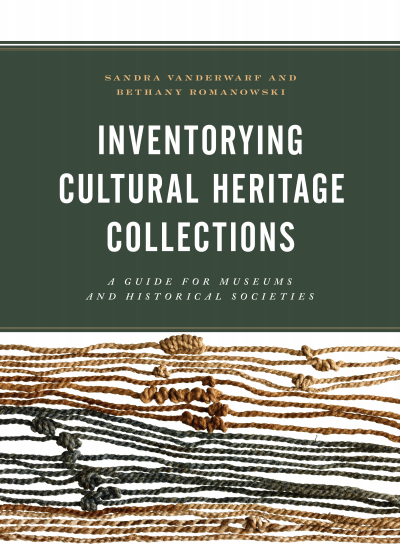
Inventorying Cultural Heritage Collections
A Guide for Museums and Historical Societies- Autor:innen:
- |
- Verlag:
- 2022
Zusammenfassung
This two-part text opens with an argument few collections practitioners would contest: Regular inventories are central to meaningful, sustainable, and ethical collections preservation and access. But Vanderwarf and Romanowski argue that in practice—some 25 years working with diverse collections between them—inventories are uncommon: instead of functioning as a commonplace feature of collections care, they tend to be evoked as a last resort when a museum has lost control of its collection.
Part I offers a flexible project management framework that illustrates strategies for reining in control of collections now. From identifying objectives that best serve the collection in question to securing stakeholder support and planning time and resources, Part I eliminates some guesswork around what may be an unprecedented and intensive project. To maintain the benefits of a project-style inventory, the authors then encourage practitioners to embrace inventory as an ongoing, evolving collections care function that reflects changing professional values and expectations from the communities museums serve. By centering computerized databases, barcoding, and digital collections, the authors further acknowledge these technologies as permanent, evolving features of collections and inventory practice that merit increased resourcing.
Part II gives voice to practitioners around the world through case studies that affirm the vital role of inventories in regaining control of collections. Some of these inventories occurred during the course of everyday work, while others were responses to natural disasters and armed conflict. Still others may be seen as expressions of social justice. As much as the authors offer a guide to performing inventories, thereby filling a longstanding gap in the literature, they invite cultural heritage institutions to rethink how the stories held in collections can be better told and preserved through enhanced inventory practice.
The book will benefit seasoned museum collections practitioners as well as those who lack access to formal museology education and training. The book targets stewards of cultural heritage and material culture collections with varying resources
Schlagworte
Publikation durchsuchen
Bibliographische Angaben
- Copyrightjahr
- 2022
- ISBN-Print
- 978-1-5381-0725-6
- ISBN-Online
- 978-1-5381-0726-3
- Verlag
- Rowman & Littlefield, Lanham
- Sprache
- Englisch
- Seiten
- 226
- Produkttyp
- Monographie
Inhaltsverzeichnis
- Contents Kein Zugriff
- Preface Kein Zugriff
- Chapter 1. Centering Inventories in Museum Practice Kein Zugriff
- Chapter 2. Creating an Inventory Project Road Map Kein Zugriff
- Chapter 3. Identifying Inventory Objectives Kein Zugriff
- Chapter 4. Winning Support for the Inventory Kein Zugriff
- Chapter 5. Defining the Inventory Deliverables Kein Zugriff
- Chapter 6. Deliverables Spotlight: Inventory Data and Databases Kein Zugriff
- Chapter 7. Planning the Activities and Timelines Kein Zugriff
- Chapter 8. Estimating Resource Needs Kein Zugriff
- Chapter 9. Executing the Inventory Kein Zugriff
- Chapter 10. Staying on Track Kein Zugriff
- Chapter 11. Closing the Inventory Kein Zugriff
- Chapter 12. Barcoding to Enhance Inventory Performance Kein Zugriff
- Chapter 13. Inventorying Digital Collections Kein Zugriff
- Case A. A Pan-Institutional Approach to Audiovisual Collection Inventories Kein Zugriff
- Case B. Inventory and Cataloging Project at the Museum of Danish America Kein Zugriff
- Case C. Gazing into the Abyss and Demystifying the First Comprehensive Inventory Kein Zugriff
- Case D. Migrating an Archaeological Collection Catalog to CollectiveAccess Kein Zugriff
- Case E. Bringing It Together: First Institution-Wide Special Collections Inventory at the New York Public Library Research Libraries Kein Zugriff
- Case F. Recapturing Collections: Inventory at the Chicago Academy of Sciences-Peggy Notebaert Nature Museum Kein Zugriff
- Case G. From Hobbyists to Professionals: A Case Study at the National Museum of Toys and Miniatures Kein Zugriff
- Case H. Running from the Wrecking Ball: Inventory in Response to Disaster Kein Zugriff
- Case I. Your History, Your Museum: Bringing Meaning to Chaos at Hennepin History Museum Kein Zugriff
- Case J. Blood, Sweat, and Tears: A Collections Inventory Story at the American Swedish Institute Kein Zugriff
- Case K. From Storage Boxes to Research Options: Cataloging Ancient Mural Fragments at ASU’s Research Lab in Teotihuacan, Mexico Kein Zugriff
- Case L. Helping Heritage Survive: An Inventory Project in Postwar Kosovo Kein Zugriff
- Case M. I’ve Seen It All—Inventory at The Children’s Museum of Indianapolis Kein Zugriff
- Case N. Inventory at the Aanischaaukamikw Cree Cultural Institute Kein Zugriff
- Case O. Inventory Interrupted: Turning a Challenge into an Opportunity Kein Zugriff
- Case P. The First Full Inventory and Cataloging of the Collection of the Daum Museum of Contemporary Art Kein Zugriff
- Case Q. Stealth Inventories at the TECHNOSEUM Kein Zugriff
- Case R. Venturing into New Territory: Inventorying Born-Digital Objects in the AIGA Design Archives at the Denver Art Museum Kein Zugriff
- Index Kein Zugriff Seiten 221 - 224
- About the Authors Kein Zugriff Seiten 225 - 226