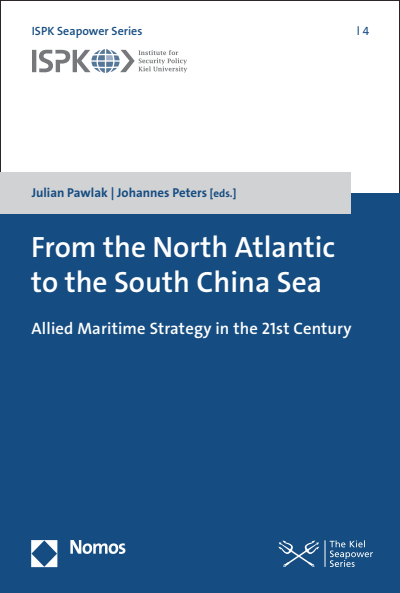
From the North Atlantic to the South China Sea
Allied Maritime Strategy in the 21st Century- Herausgeber:innen:
- |
- Reihe:
- ISPK Seapower Series, Band 4
- Verlag:
- 2021
Zusammenfassung
Das Buch bietet Antworten auf die Frage, wie sich Bündnispartner auf strategische Herausforderungen der maritimen Domäne im 21. Jahrhundert vorbereiten sollten. 24 renommierte internationale AutorInnen aus Wissenschaft und Praxis nehmen auf ausgewählte Operationsgebiete und relevante Entwicklungstrends Bezug; etwa durch eine strategische Betrachtung der NATO „Nordflanke“ oder einem Ausblick auf „Naval Warfare 4.0“. Die prägnanten Kapitel zeichnen sich durch ihren wissenschaftlichen Kern aus, auf dessen Basis Handlungsempfehlungen abgeleitet werden. Der substanzielle Praxisbezug ist von besonderem Wert für Angehörige der Internationalen Beziehungen, Sicherheitspolitik und Strategieforschung in Deutschland, Europa und der NATO. Mit Beiträgen vonJames H. Bergeron, Keith E. Blount, Sebastian Bruns, Jim Fanell, James Goldrick, Niklas Granholm, Tom Guy, Frank Hoffmann, Sidharth Kaushal, Frédéric Lasserre, Kaspar Pajos, Sarandis Papadopoulos, Chris Parry, Julian Pawlak, Johannes Peters, Pauline Pic, Deborah Sanders, John Sherwood, Dirk Siebels, Jeremy Stöhs, Bruce Stubbs, Sarah Tarry und Alix Valenti.
Schlagworte
Publikation durchsuchen
Bibliographische Angaben
- Auflage
- 1/2021
- Copyrightjahr
- 2021
- ISBN-Print
- 978-3-8487-7708-2
- ISBN-Online
- 978-3-7489-2101-1
- Verlag
- Nomos, Baden-Baden
- Reihe
- ISPK Seapower Series
- Band
- 4
- Sprache
- Englisch
- Seiten
- 372
- Produkttyp
- Sammelband
Inhaltsverzeichnis
- Titelei/InhaltsverzeichnisSeiten 1 - 12 Download Kapitel (PDF)
- Autor:innen:Download Kapitel (PDF)
- “Take the long way home”Autor:innen:
- NATO and its “Alliance Maritime Strategy”Autor:innen:
- The EU and its “Maritime Security Strategy”Autor:innen:
- Strategic TakeawaysAutor:innen:
- A Research AgendaAutor:innen:
- EpilogueAutor:innen:
- Autor:innen:Download Kapitel (PDF)
- Setting the sceneAutor:innen:
- Do we need to change?Autor:innen:
- What’s new?Autor:innen:
- What are we doing about it?Autor:innen:
- To concludeAutor:innen:
- Combined and Joint Operations at Sea: Some Reflections from HistorySeiten 41 - 64Autor:innen:Download Kapitel (PDF)
- Facing ThreatsSeiten 65 - 68 Download Kapitel (PDF)
- Autor:innen:Download Kapitel (PDF)
- RussiaAutor:innen:
- Hybrid Threats Out of RegionAutor:innen:
- Chinese Little Blue MenAutor:innen:
- AssessmentAutor:innen:
- ConclusionAutor:innen:
- Autor:innen:Download Kapitel (PDF)
- IntroductionAutor:innen:
- The bear and the dragon — current threatsAutor:innen:
- Traditional ASW and its shortfallsAutor:innen:
- Future ASW technology and tacticsAutor:innen:
- Implications for allied maritime strategiesAutor:innen:
- Autor:innen:Download Kapitel (PDF)
- Autor:innen:
- NATO Green DefenceAutor:innen:
- The Limits of the Green Defence ConceptAutor:innen:
- Strategic ImplicationsAutor:innen:
- Autor:innen:
- The Arctic: Competition in the AirAutor:innen:
- Indo-Pacific: Between HA/DR and Strategic InterestsAutor:innen:
- NATO’s Window of Opportunity in a Changing ClimateAutor:innen:
- Autor:innen:Download Kapitel (PDF)
- IntroductionAutor:innen:
- MSA and MDA—differences between knowledge and insightsAutor:innen:
- Understanding the shipping industryAutor:innen:
- Commercial shipping faces different types of threatsAutor:innen:
- Strategic issue for NATO?Autor:innen:
- Links between NATO and commercial shippingAutor:innen:
- SummaryAutor:innen:
- Autor:innen:Download Kapitel (PDF)
- Operation TritonAutor:innen:
- Operation SophiaAutor:innen:
- New Operations: Irini and ThemisAutor:innen:
- ConclusionsAutor:innen:
- Focussing TheatresSeiten 161 - 162 Download Kapitel (PDF)
- Autor:innen:Download Kapitel (PDF)
- Autor:innen:
- Definition and settingAutor:innen:
- Recent initiatives and cross-theatre challengesAutor:innen:
- Recommendations for a sustainable allied approachAutor:innen:
- ConclusionAutor:innen:
- Autor:innen:Download Kapitel (PDF)
- Introduction and aim—an emerging naval defence and security problemAutor:innen:
- The North Sea, Skagerrak and Kattegat from a maritime and oceanographic perspectiveAutor:innen:
- The Western Seas—maritime-strategic developments and capabilitiesAutor:innen:
- Technology—quantum leaps or slowly maturing?Autor:innen:
- Solutions—systems, combinations and cooperationAutor:innen:
- Autor:innen: |Download Kapitel (PDF)
- IntroductionAutor:innen: |
- Autor:innen: |
- Traditional security: the return of great power competition in the Arctic?Autor:innen: |
- A Changing Arctic EnvironmentAutor:innen: |
- Managing Allied Maritime Challenges in the 21st Century ArcticAutor:innen: |
- ConclusionAutor:innen: |
- Autor:innen:Download Kapitel (PDF)
- China and the BSRAutor:innen:
- China is likely to become an even more important actor in the BSRAutor:innen:
- Opportunities and challenges for NATO in the BSRAutor:innen:
- ConclusionAutor:innen:
- Autor:innen:Download Kapitel (PDF)
- The Evolution of the PLAN and its Role in Chinese Grand StrategyAutor:innen:
- China’s Sea Control ForceAutor:innen:
- The PLAN’s Evolving Blue Water PostureAutor:innen:
- Autor:innen:
- The Impact of a Rising PLAN on the Alliance’s Strategic PrioritiesAutor:innen:
- Strategic Hedging—An Overarching Concept For Managing a Rising PLANAutor:innen:
- The Role of Framework Nations in Supporting Strategic HedgingAutor:innen:
- Autor:innen:Download Kapitel (PDF)
- Australia and Maritime StrategyAutor:innen:
- The Challenges posed by ChinaAutor:innen:
- Evolving National and Maritime StrategyAutor:innen:
- Deterrence and Collective DefenceAutor:innen:
- Crisis ManagementAutor:innen:
- Cooperative SecurityAutor:innen:
- Outreach through partnerships, dialogue and cooperationAutor:innen:
- Australia and Europe in Maritime StrategyAutor:innen:
- ConclusionAutor:innen:
- Autor:innen: |Download Kapitel (PDF)
- Autor:innen: |
- Strategic importance of the maritime domainAutor:innen: |
- NATO’s evolving roleAutor:innen: |
- Threats and challengesAutor:innen: |
- Coherence and the 360° approachAutor:innen: |
- The Alliance’s Reinforced Maritime PostureAutor:innen: |
- Autor:innen: |
- Standing Naval ForcesAutor:innen: |
- NATO Readiness InitiativeAutor:innen: |
- Coordination with allied naval forces under national commandAutor:innen: |
- Autor:innen: |
- NATO Command Structure AdaptationAutor:innen: |
- Strengthening MARCOM’s contributionAutor:innen: |
- Strengthening regional command and controlAutor:innen: |
- Autor:innen: |
- NATO’s enhanced exercises programmeAutor:innen: |
- Bringing back NATO’s anti-submarine warfare capacityAutor:innen: |
- Utilising joint exercises for multi-domain integrationAutor:innen: |
- Exploiting new technologiesAutor:innen: |
- Cooperation with partnersAutor:innen: |
- Autor:innen: |
- NATO’s naval renaissanceAutor:innen: |
- Autor:innen:Download Kapitel (PDF)
- Autor:innen:
- The Return of Great Power CompetitionAutor:innen:
- Greater Power Competition and High-End ChallengesAutor:innen:
- Autor:innen:
- Search, Find and DeterAutor:innen:
- Great Power Competition and Low-End ChallengesAutor:innen:
- Autor:innen:
- Reversing the Downward DriftAutor:innen:
- Riding the Wave of Technological InnovationAutor:innen:
- Personnel—A Nation’s Best and Brightest.Autor:innen:
- Challenges, Opportunities and Allied Maritime StrategiesAutor:innen:
- Autor:innen:Download Kapitel (PDF)
- IntroductionAutor:innen:
- Information—challenge or opportunity?Autor:innen:
- Man and machine in perfect harmony?Autor:innen:
- Combined and Joint, Multi-Domain, Cross-Domain... or Domain-agnostic?Autor:innen:
- And so...Autor:innen:
- Autor:innen:Download Kapitel (PDF)
- Expect the UnexpectedAutor:innen:
- Federated Maritime Intelligence Operations in the 21st centuryAutor:innen:
- The Key Ingredient—AlliesAutor:innen:
- The Role of the Strategic CommunityAutor:innen:
- Sharing the RED COPAutor:innen:
- Conclusion: A Word of WarningAutor:innen:
- Autor:innen:Download Kapitel (PDF)
- IntroductionAutor:innen:
- British defence policy and the ‘nott review’Autor:innen:
- The Falklands caseAutor:innen:
- Autor:innen:
- SustainabilityAutor:innen:
- Individual and collective trainingAutor:innen:
- Action damageAutor:innen:
- Weapons planningAutor:innen:
- ProcurementAutor:innen:
- InformationAutor:innen:
- ConclusionAutor:innen:
- Autor:innen:Download Kapitel (PDF)
- The Changing Focus of Allied ExercisesAutor:innen:
- Assessing the Value of Exercises in Improving Credible CapabilityAutor:innen:
- Assessing the Deterrent Value of ExercisesAutor:innen:
- Deterrence Management of ExercisesAutor:innen:
- Autor:innen:Download Kapitel (PDF)
- IntroductionAutor:innen:
- Lesson One: The Five “Ws”Autor:innen:
- Lesson Two: The Strategic ProblemAutor:innen:
- Lesson Three: Central IdeaAutor:innen:
- Lesson Four: Theory of VictoryAutor:innen:
- Lesson Five: PurposeAutor:innen:
- Lesson Six: AudienceAutor:innen:
- Lesson Seven: Service Chief AccessAutor:innen:
- Lesson Eight: Strategy’s EssenceAutor:innen:
- Lesson Nine: Strategy ConsistencyAutor:innen:
- Lesson Ten: Strategy AssessmentAutor:innen:
- Lesson Eleven: Maps Not “Eye-Candy”Autor:innen:
- Lesson Twelve: Lists Are Not StrategyAutor:innen:
- ConclusionAutor:innen:
- Autor:innen: |Download Kapitel (PDF)
- IntroductionAutor:innen: |
- About the editorsSeiten 363 - 364 Download Kapitel (PDF)
- About the authorsSeiten 365 - 372 Download Kapitel (PDF)