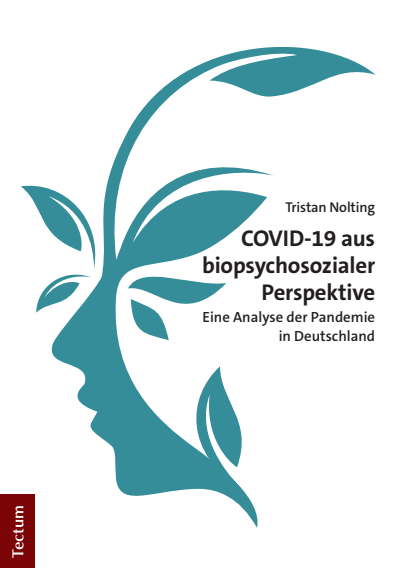
COVID-19 aus biopsychosozialer Perspektive
Eine Analyse der Pandemie in Deutschland- Autor:innen:
- Verlag:
- 2022
Zusammenfassung
Mit einem Geleitwort von Prof. Dr. Josef W. Egger.
Die durch den Erreger SARS-CoV-2 ausgelöste COVID-19-Pandemie wird trotz neuer medizintheoretischer Erkenntnisse stets aus der Perspektive der Biomedizin bzw. des pathogenetischen Modells von Krankheit beurteilt. Diese Arbeit erläutert den Nutzen des biopsychosozialen Modells nach Engel (1977) als notwendige Erweiterung der Biomedizin zur Überwindung der COVID-19-Pandemie in Deutschland. Durch eine Suchstrategie nach den Kriterien der Cochrane Stiftung Deutschland und der wissenschaftstheoretischen Methode des Falsifikationismus nach Karl Popper sollen entsprechende Studien zur COVID-19-Pandemie in Deutschland ausgewertet und der aktuelle Wissensstand aufgezeigt werden.
Schlagworte
Publikation durchsuchen
Bibliographische Angaben
- Auflage
- 1/2022
- Copyrightjahr
- 2022
- ISBN-Print
- 978-3-8288-4769-9
- ISBN-Online
- 978-3-8288-7875-4
- Verlag
- Tectum, Baden-Baden
- Sprache
- Deutsch
- Seiten
- 84
- Produkttyp
- Monographie
Inhaltsverzeichnis
- Titelei/InhaltsverzeichnisSeiten I - XVIII Download Kapitel (PDF)
- 1. AbstractSeiten 1 - 2 Download Kapitel (PDF)
- 2.1 Aufbau & Ziele
- 3.1 Das biopsychosoziale Krankheitsmodell
- 3.2 Suchstrategie
- 3.3 Erste Forschungsfrage: Wie ist COVID-19 aus biopsychosozialer Perspektive zu beurteilen?
- 3.4 Zweite Forschungsfrage: Wie sind die non-pharmakologischen Interventionen während der COVID-19-Pandemie in Deutschland aus biopsychosozialer Perspektive zu beurteilen?
- 4.1 Inwiefern lassen sich die aufgestellten Forschungsfragen beantworten?
- 4.2 Welche Limitationen gibt es?
- 4.3 Zukünftige Forschungsfragen
- 5.1 Kerninhalte der Masterarbeit
- 5.2 Fazit
- 6. LiteraturverzeichnisSeiten 65 - 84 Download Kapitel (PDF)
Literaturverzeichnis (155 Einträge)
Es wurden keine Treffer gefunden. Versuchen Sie einen anderen Begriff.
- Ahmad, A., Chung, R., Eckenwiler, L., Ganguli-Mitra, A., Hunt, M., Richards, R., Saghai, Y., Schwartz, L., Scully, J. L. & Wild, V. (2020). What does it mean to be made vulnerable in the era of COVID-19? The Lancet, 395(10235), 1481–1482. https://doi.org/10.1016/s0140-6736(20)30979-x Google Scholar öffnen DOI: 10.5771/9783828878754
- Aravindakshan, A., Boehnke, J., Gholami, E. & Nayak, A. (2020). Preparing for a future COVID-19 wave: insights and limitations from a data-driven evaluation of non-pharmaceutical interventions in Germany. Scientific Reports, 10(1), 20084. https://doi.org/10.1038/s41598-020-76244-6 Google Scholar öffnen DOI: 10.5771/9783828878754
- Ärzteblatt. (2020, 28. Juli). Kliniken und Praxen meldeten Kurzarbeit für mehr als 400.000 Mitarbeiter an. https://www.aerzteblatt.de/nachrichten/115076/Kliniken-und-Praxen-meldeten-Kurzarbeit-fuer-mehr-als-400-000-Mitarbeiter-an Google Scholar öffnen DOI: 10.5771/9783828878754
- Balzter, S. & Kopplin, I. (2021, 22. April). „Das größte Manko war das Versagen der Politik beim Impfen“. FAZ.NET. https://www.faz.net/aktuell/wirtschaft/unternehmen/chef-der-helios-kliniken-zu-corona-versagen-der-politik-beim-impfen-17305100.html Google Scholar öffnen DOI: 10.5771/9783828878754
- Baral, S. D., Rucinski, K. B., Twahirwa Rwema, J. O., Rao, A., Prata Menezes, N., Diouf, D., Kamarulzaman, A., Phaswana-Mafuya, N. & Mishra, S. (2021). The Relationship Between the Global Burden of Influenza From 2017 to 2019 and COVID-19: Descriptive Epidemiological Assessment. JMIR Public Health and Surveillance, 7(3), e24696. https://doi.org/10.2196/24696 Google Scholar öffnen DOI: 10.5771/9783828878754
- Barbarossa, M. V., Fuhrmann, J., Meinke, J. H., Krieg, S., Varma, H. V., Castelletti, N. & Lippert, T. (2020). Modeling the spread of COVID-19 in Germany: Early assessment and possible scenarios. PLOS ONE, 15(9), e0238559. https://doi.org/10.1371/journal.pone.0238559 Google Scholar öffnen DOI: 10.5771/9783828878754
- Bartolomucci, A. & Sapolsky, R. M. (2020). Psychosocial Risk Factors, Noncommunicable Diseases, and Animal Models for COVID-19. Biological Psychiatry, S0006-3223(20), 32123–32125. https://doi.org/10.1016/j.biopsych.2020.12.014 Google Scholar öffnen DOI: 10.5771/9783828878754
- Bäuerle, A., Steinbach, J., Schweda, A., Beckord, J., Hetkamp, M., Weismüller, B., Kohler, H., Musche, V., Dörrie, N., Teufel, M. & Skoda, E. M. (2020). Mental Health Burden of the COVID-19 Outbreak in Germany: Predictors of Mental Health Impairment. Journal of Primary Care & Community Health, 11, 215013272095368. https://doi.org/10.1177/2150132720953682 Google Scholar öffnen DOI: 10.5771/9783828878754
- Bekanntmachung des Umweltbundesamtes. (2008). Gesundheitliche Bewertung von Kohlendioxid in der Innenraumluft. Bundesgesundheitsblatt – Gesundheitsforschung – Gesundheitsschutz, 51(11), 1358–1369. https://doi.org/10.1007/s00103-008-0707-2 Google Scholar öffnen DOI: 10.5771/9783828878754
- Belousova, K. (2020, 17. März). Der Minister und die Fake News. Missglückter Coronavirus-Tweet: Der Minister und die Fake News – ZDFheute. https://www.zdf.de/nachrichten/politik/corona-gesundheitsministerium-fake-twitter-100.html Google Scholar öffnen DOI: 10.5771/9783828878754
- Berberich, H. J. (2014). Das biopsychosoziale Modell von Krankheit und Gesundheit. Die Urologie, 1–4. https://doi.org/10.1007/978-3-642-41168-7_21-1 Google Scholar öffnen DOI: 10.5771/9783828878754
- Berliner Vorschriften- und Rechtsprechungsdatenbank. (2020, 10. September). Einstweiliger Rechtsschutz gegen Aussagen des Robert Koch Instituts. Berlin.de. https://gesetze.berlin.de/bsbe/?query=DOKNR%3AJURE200013801&source=PermaLink Google Scholar öffnen DOI: 10.5771/9783828878754
- Bernard Korn & Partner. (2020, 30. August). Antrag auf einstweilige Anordnung. ckb-anwaelte.de. https://www.ckb-anwaelte.de/download/Antrag_JH_DP_teilanonymVerfoeff.pdf Google Scholar öffnen DOI: 10.5771/9783828878754
- Böhm, B. (1998). Kritischer Rationalismus. Wissenschaft und Medizin, 52–69. https://doi.org/10.1007/978-3-7091-6473-0_3 Google Scholar öffnen DOI: 10.5771/9783828878754
- Bollmann, A., Hohenstein, S., König, S., Meier-Hellmann, A., Kuhlen, R. & Hindricks, G. (2020). In-hospital mortality in heart failure in Germany during the Covid-19 pandemic. ESC Heart Failure, 7(6), 4416–4419. https://doi.org/10.1002/ehf2.13011 Google Scholar öffnen DOI: 10.5771/9783828878754
- Bolton, D. & Gillet, G. (2019). The Biopsychosocial Model of Health and Disease: New Philosophical and Scientific Developments [Internet]. The British Journal of Psychiatry, 4, 119–141. https://doi.org/10.1192/bjp.2020.42 Google Scholar öffnen DOI: 10.5771/9783828878754
- Borrell-Carrió, F., Suchman, A. L. & Epstein, R. M. (2004). The Biopsychosocial Model 25 Years Later: Principles, Practice, and Scientific Inquiry. The Annals of Family Medicine, 2(6), 576–582. https://doi.org/10.1370/afm.245 Google Scholar öffnen DOI: 10.5771/9783828878754
- Braun, P., Haffner, S., Davila, L. A., Braun, J. & Woodcock, B. G. (2020). Predictions for the COVID-19 pandemic in Germany using the modified Bateman SIZ model. Int. Journal of Clinical Pharmacology and Therapeutics, 58(09), 467–474. https://doi.org/10.5414/cp203868 Google Scholar öffnen DOI: 10.5771/9783828878754
- Bundesgesundheitsministerium. (2021, 25. März). Fragen und Antworten zu Schnell- und Selbsttests. https://www.bundesgesundheitsministerium.de/coronavirus/nationale-teststrategie/faq-schnelltests.html Google Scholar öffnen DOI: 10.5771/9783828878754
- Bundesministerium des Innern, für Bau und Heimat. (2020, 11. November). Wie wir COVID-19 unter Kontrolle bekommen. https://www.bmi.bund.de/SharedDocs/downloads/DE/veroeffentlichungen/2020/corona/szenarienpapier-covid19.html Google Scholar öffnen DOI: 10.5771/9783828878754
- Bundesregierung. (2021a, März 26). Epidemische Lage von nationaler Tragweite besteht fort. https://www.bundesregierung.de/breg-de/themen/coronavirus/pandemische-lage-verlaengert-1872464 Google Scholar öffnen DOI: 10.5771/9783828878754
- Bundesregierung. (2021b, April 21). Infektionsschutzgesetz: Das regelt die bundesweite Notbremse. https://www.bundesregierung.de/breg-de/aktuelles/bundesweite-notbremse-1888982 Google Scholar öffnen DOI: 10.5771/9783828878754
- Butler, M. J. & Barrientos, R. M. (2020). The impact of nutrition on COVID-19 susceptibility and long-term consequences. Brain, Behavior, and Immunity, 87, 53–54. https://doi.org/10.1016/j.bbi.2020.04.040 Google Scholar öffnen DOI: 10.5771/9783828878754
- Cecchini, R. & Cecchini, A. L. (2020). SARS-CoV-2 infection pathogenesis is related to oxidative stress as a response to aggression. Medical Hypotheses, 143, 110102. https://doi.org/10.1016/j.mehy.2020.110102 Google Scholar öffnen DOI: 10.5771/9783828878754
- Chauhan, N., Jaggi, M., Chauhan, S. C. & Yallapu, M. M. (2020). COVID-19: fighting the invisible enemy with microRNAs. Expert Review of Anti-infective Therapy, 19(2), 137–145. https://doi.org/10.1080/14787210.2020.1812385 Google Scholar öffnen DOI: 10.5771/9783828878754
- Cheng, V. C. C., Wong, S. C., Chuang, V. W. M., So, S. Y. C., Chen, J. H. K., Sridhar, S., To, K. K. W., Chan, J. F. W., Hung, I. F. N., Ho, P. L. & Yuen, K. Y. (2020). The role of community-wide wearing of face mask for control of coronavirus disease 2019 (COVID-19) epidemic due to SARS-CoV-2. Journal of Infection, 81(1), 107–114. https://doi.org/10.1016/j.jinf.2020.04.024 Google Scholar öffnen DOI: 10.5771/9783828878754
- Clemmensen, C., Petersen, M. B. & Sørensen, T. I. A. (2020). Will the COVID-19 pandemic worsen the obesity epidemic? Nature Reviews Endocrinology, 16(9), 469–470. https://doi.org/10.1038/s41574-020-0387-z Google Scholar öffnen DOI: 10.5771/9783828878754
- Cochrane Deutschland Stiftung, Institut für Evidenz in der Medizin, Institut für Medizinische Biometrie und Statistik, Freiburg, Arbeitsgemeinschaft der Wissenschaftlichen Medizinischen Fachgesellschaften – Institut für Medizinisches Wissensmanagement, Ärztliches Zentrum für Qualität in der Medizin. Manual Systematische Recherche für Evidenzsynthesen und Leitlinien. 2.1 Auflage (14.12.2020). Verfügbar: Cochrane Deutschland: https://www.cochrane.de/de/literaturrecherche; AWMF: https://www.awmf.org/leitlinien/awmf-regelwerk/ll-entwicklung.html; ÄZQ: https://www.aezq.de/aezq/publikationen/azq-partner#literaturrecherche. DOI: 10.6094/UNIFR/174468 Google Scholar öffnen DOI: 10.5771/9783828878754
- Cohen, S., Alper, C. M., Doyle, W. J., Treanor, J. J. & Turner, R. B. (2006). Positive Emotional Style Predicts Resistance to Illness After Experimental Exposure to Rhinovirus or Influenza A Virus. Psychosomatic Medicine, 68(6), 809–815. https://doi.org/10.1097/01.psy.0000245867.92364.3c Google Scholar öffnen DOI: 10.5771/9783828878754
- Corman, V. M., Landt, O., Kaiser, M., Molenkamp, R., Meijer, A., Chu, D. K., Bleicker, T., Brünink, S., Schneider, J., Schmidt, M. L., Mulders, D. G., Haagmans, B. L., van der Veer, B., van den Brink, S., Wijsman, L., Goderski, G., Romette, J. L., Ellis, J., Zambon, M., . . . Drosten, C. (2020). Detection of 2019 novel coronavirus (2019-nCoV) by real-time RT-PCR. Eurosurveillance, 25(3), 2000045. https://doi.org/10.2807/1560-7917.es.2020.25.3.2000045 Google Scholar öffnen DOI: 10.5771/9783828878754
- Cummings, M. J., Baldwin, M. R., Abrams, D., Jacobson, S. D., Meyer, B. J., Balough, E. M., Aaron, J. G., Claassen, J., Rabbani, L. R. E., Hastie, J., Hochman, B. R., Salazar-Schicchi, J., Yip, N. H., Brodie, D. & O’Donnell, M. R. (2020). Epidemiology, clinical course, and outcomes of critically ill adults with COVID-19 in New York City: a prospective cohort study. The Lancet, 395(10239), 1763–1770. https://doi.org/10.1016/s0140-6736(20)31189-2 Google Scholar öffnen DOI: 10.5771/9783828878754
- D’ Acquisto, F. (2017). Affective immunology: where emotions and the immune response converge. Psychoneuroimmunology, 19(1), 9–19. https://doi.org/10.31887/dcns.2017.19.1/fdacquisto Google Scholar öffnen DOI: 10.5771/9783828878754
- Delgado-Roche, L. & Mesta, F. (2020). Oxidative Stress as Key Player in Severe Acute Respiratory Syndrome Coronavirus (SARS-CoV) Infection. Archives of Medical Research, 51(5), 384–387. https://doi.org/10.1016/j.arcmed.2020.04.019 Google Scholar öffnen DOI: 10.5771/9783828878754
- Demongeot, J., Hazgui, H., Ben Amor, H. & Waku, J. (2014). Stability, Complexity and Robustness in Population Dynamics. Acta Biotheoretica, 62(3), 243–284. https://doi.org/10.1007/s10441-014-9229-5 Google Scholar öffnen DOI: 10.5771/9783828878754
- Deutsche Gesellschaft für Krankenhaushygiene e. V. (2021, 31. März). FFP2-Maskenpflicht in Berlin gefährdet mehr als dass sie nützt. Stellungnahme der DGKH. https://www.krankenhaushygiene.de/pdfdata/presse/2021_03_31_FFP2-Masken-Berlin.pdf Google Scholar öffnen DOI: 10.5771/9783828878754
- Deutsches Netzwerk Evidenzbasierte Medizin e. V. (2020, 13. Oktober). COVID-19: Wo ist die Evidenz? EbM-Netzwerk. https://www.ebm-netzwerk.de/de/veroeffentlichungen/covid-19 Google Scholar öffnen DOI: 10.5771/9783828878754
- Dhabhar, F. S. (2018). The short-term stress response – Mother nature’s mechanism for enhancing protection and performance under conditions of threat, challenge, and opportunity. Frontiers in Neuroendocrinology, 49, 175–192. https://doi.org/10.1016/j.yfrne.2018.03.004 Google Scholar öffnen DOI: 10.5771/9783828878754
- Dinnes, J., Deeks, J. J., Berhane, S., Taylor, M., Adriano, A., Davenport, C., Dittrich, S., Emperador, D., Takwoingi, Y., Cunningham, J., Beese, S., Domen, J., Dretzke, J., Ferrante di Ruffano, L., Harris, I. M., Price, M. J., Taylor-Phillips, S., Hooft, L., Leeflang, M. M., . . . Van den Bruel, A. (2021). Rapid, point-of-care antigen and molecular-based tests for diagnosis of SARS-CoV-2 infection. Cochrane Database of Systematic Reviews, CD013705(3), 1–412. https://doi.org/10.1002/14651858.cd013705.pub2 Google Scholar öffnen DOI: 10.5771/9783828878754
- DIVI-Intensivregister. (2021, 21. Mai). Anzahl gemeldeter intensivmedizinisch behandelter COVID-19-Fälle. https://www.intensivregister.de/#/aktuelle-lage/zeitreihen Google Scholar öffnen DOI: 10.5771/9783828878754
- Egger, J. W. (2005). Das biopsychosoziale Krankheitsmodell – Grundzüge eines wissenschaftlich begründeten ganzheitlichen Verständnisses von Krankheit. Psychologische Medizin, 2(16), 3–12. http://www.bpsmed.net/_data/doc/literature/1Egger_bpsMod05.pdf Google Scholar öffnen DOI: 10.5771/9783828878754
- Egger, J. W. (2017). Theorie und Praxis der biopsychosozialen Medizin: Körper-Seele-Einheit und sprechende Medizin (1. Aufl.). Facultas. Google Scholar öffnen DOI: 10.5771/9783828878754
- Emerman, M. & Malik, H. S. (2010). Paleovirology—Modern Consequences of Ancient Viruses. PLoS Biology, 8(2), e1000301. https://doi.org/10.1371/journal.pbio.1000301 Google Scholar öffnen DOI: 10.5771/9783828878754
- Engel, G. (1977). The need for a new medical model: a challenge for biomedicine. Science, 196(4286), 129–136. https://doi.org/10.1126/science.847460 Google Scholar öffnen DOI: 10.5771/9783828878754
- Ettel, A. (2021, 26. Juli). Helios-Health-Chef De Meo: „Endlich aufhören, nur über die Inzidenzen zu diskutieren“. DIE WELT. https://www.welt.de/wirtschaft/plus232729333/Helios-Health-Chef-De-Meo-Endlich-aufhoeren-nur-ueber-die-Inzidenzen-zu-diskutieren.html Google Scholar öffnen DOI: 10.5771/9783828878754
- FOCUS Online. (2021, 9. Juli). RKI-Chef Wieler: FFP2-Masken schützen nicht besser als OP-Masken. https://www.focus.de/gesundheit/coronavirus/schuld-ist-die-benutzung-rki-chef-wieler-ffp2-masken-schuetzen-nicht-besser-als-op-masken_id_13479629.html Google Scholar öffnen DOI: 10.5771/9783828878754
- FragDenStaat. (2021, 14. April). offener Brief; Stöhr und Krüger. https://fragdenstaat.de/anfrage/offener-brief-stohr-und-kruger/ Google Scholar öffnen DOI: 10.5771/9783828878754
- Frampton, D., Rampling, T., Cross, A., Bailey, H., Heaney, J., Byott, M., Scott, R., Sconza, R., Price, J., Margaritis, M., Bergstrom, M., Spyer, M. J., Miralhes, P. B., Grant, P., Kirk, S., Valerio, C., Mangera, Z., Prabhahar, T., Moreno-Cuesta, J., . . . Nastouli, E. (2021). Genomic characteristics and clinical effect of the emergent SARS-CoV-2 B.1.1.7 lineage in London, UK: a whole-genome sequencing and hospital-based cohort study. The Lancet Infectious Diseases, 1–11. https://doi.org/10.1016/s1473-3099(21)00170-5 Google Scholar öffnen DOI: 10.5771/9783828878754
- Franke, A., Antonovsky, A. & Schulte, N. (1997). Salutogenese: Zur Entmystifizierung der Gesundheit (Forum für Verhaltenstherapie und psychosoziale Praxis) (1. Aufl.). dgvt-Verlag. Google Scholar öffnen DOI: 10.5771/9783828878754
- Frey, D. & Schmalzried, L. (2013). Der Kritische Rationalismus. Philosophie der Führung, 257–286. https://doi.org/10.1007/978-3-642-34439-8_14 Google Scholar öffnen DOI: 10.5771/9783828878754
- Funk, S., Salathé, M. & Jansen, V. A. A. (2010). Modelling the influence of human behaviour on the spread of infectious diseases: a review. Journal of The Royal Society Interface, 7(50), 1247–1256. https://doi.org/10.1098/rsif.2010.0142 Google Scholar öffnen DOI: 10.5771/9783828878754
- Geiselhart, K. (2020, Oktober). Die politische Ökologie von Gesundheit. Zur Selbstreflexion der Kritik in der COVID- 19 Krise. Arbeitskreis Medizinische Geographie und Geographische Gesundheitsforschung in der Deutschen Gesellschaft für Geographie (DGfG). https://wp.med-geo.de/wp-content/uploads/2020/10/COVID19-Zaesur_Beitrag_Geiselhart.pdf Google Scholar öffnen DOI: 10.5771/9783828878754
- Gasmi, A., Tippairote, T., Mujawdiya, P. K., Peana, M., Menzel, A., Dadar, M., Gasmi Benahmed, A. & Bjørklund, G. (2020). Micronutrients as immunomodulatory tools for COVID-19 management. Clinical Immunology, 220, 108545. https://doi.org/10.1016/j.clim.2020.108545 Google Scholar öffnen DOI: 10.5771/9783828878754
- Gellman, M. D. & Turner, J. R. (2013). Engel, George. Encyclopedia of Behavioral Medicine. Springer, New York, 700–701. https://doi.org/10.1007/978-1-4419-1005-9_1714 Google Scholar öffnen DOI: 10.5771/9783828878754
- Goddemeier, C. (2019). Aaron Antonovsky: Vater der Salutogenese. Deutsches Ärzteblatt, PP(18), 366. https://www.aerzteblatt.de/archiv/209251/Aaron-Antonovsky-Vater-der-Salutogenese Google Scholar öffnen DOI: 10.5771/9783828878754
- Gold, M. S., Sehayek, D., Gabrielli, S., Zhang, X., McCusker, C. & Ben-Shoshan, M. (2020). COVID-19 and comorbidities: a systematic review and meta-analysis. Postgraduate Medicine, 132(8), 749–755. https://doi.org/10.1080/00325481.2020.1786964 Google Scholar öffnen DOI: 10.5771/9783828878754
- Goldstein, D. S. (2010). Adrenal Responses to Stress. Cellular and Molecular Neurobiology, 30(8), 1433–1440. https://doi.org/10.1007/s10571-010-9606-9 Google Scholar öffnen DOI: 10.5771/9783828878754
- Gomes, R. L. E., Faria, L. L., Holzmann, H. A., Fujiwara, N. K. F., Ando, S. M., Sawamura, M. V. Y., Leite, C. C. & Cerri, G. G. (2020). Fighting the invisible enemy: providing support and structure to radiology resident during the COVID-19 pandemic. Radiologia Brasileira, 53(6), 397–400. https://doi.org/10.1590/0100-3984.2020.0067 Google Scholar öffnen DOI: 10.5771/9783828878754
- Goodman, A. (1991). Organic unity theory: the mind-body problem revisited. American Journal of Psychiatry, 148(5), 553–563. https://doi.org/10.1176/ajp.148.5.553 Google Scholar öffnen DOI: 10.5771/9783828878754
- Graham, M. S., Sudre, C. H., May, A., Antonelli, M., Murray, B., Versavsky, T., Kläser, K., Canas, L. S., Molteni, E., Modat, M., Drew, D. A., Nguyen, L. H., Polidori, L., Selvachandran, S., Hu, C., Capdevila, J., Hammers, P., Chan, A. T., Wolf, J., . . . Ourselin, S. (2021). Changes in symptomatology, reinfection, and transmissibility associated with the SARS-CoV-2 variant B.1.1.7: an ecological study. The Lancet Public Health, 1–11. https://doi.org/10.1016/S2468-2667(21)00055-4 Google Scholar öffnen DOI: 10.5771/9783828878754
- Hamer, M., Kivimäki, M., Gale, C. R. & Batty, G. D. (2020). Lifestyle risk factors, inflammatory mechanisms, and COVID-19 hospitalization: A community-based cohort study of 387,109 adults in UK. Brain, Behavior, and Immunity, 87, 184–187. https://doi.org/10.1016/j.bbi.2020.05.059 Google Scholar öffnen DOI: 10.5771/9783828878754
- Henry, R. (2020). Etymologia: Coronavirus. Emerging Infectious Diseases, 26(5), 1027. https://doi.org/10.3201/eid2605.et2605 Google Scholar öffnen DOI: 10.5771/9783828878754
- Ioannidis, J. P. A. (2020a). Infection fatality rate of COVID-19 inferred from seroprevalence data. Bulletin of the World Health Organization, 99(1), 19–33. https://doi.org/10.2471/blt.20.265892 Google Scholar öffnen DOI: 10.5771/9783828878754
- Ioannidis, J. P. A. (2020b, März 24). In the coronavirus pandemic, we’re making decisions without reliable data. STAT. https://www.statnews.com/2020/03/17/a-fiasco-in-the-making-as-the-coronavirus-pandemic-takes-hold-we-are-making-decisions-without-reliable-data/ Google Scholar öffnen DOI: 10.5771/9783828878754
- Ioannidis, J. P. A. (2021). Reconciling estimates of global spread and infection fatality rates of COVID-19: An overview of systematic evaluations. European Journal of Clinical Investigation, 00(e13554), 1–13. https://doi.org/10.1111/eci.13554 Google Scholar öffnen DOI: 10.5771/9783828878754
- Jaehn, P., Holmberg, C., Uhlenbrock, G., Pohl, A., Finkenzeller, T., Pawlik, M. T., Quack, I., Ernstberger, A., Rockmann, F. & Schreyer, A. G. (2021). Differential trends of admissions in accident and emergency departments during the COVID-19 pandemic in Germany. BMC Emergency Medicine, 21(1), 1–10. https://doi.org/10.1186/s12873-021-00436-0 Google Scholar öffnen DOI: 10.5771/9783828878754
- Jung, F., Krieger, V., Hufert, F. T. & Küpper, J.-H. (2020a). How we should respond to the Coronavirus SARS-CoV-2 outbreak: A German perspective. Clinical Hemorheology and Microcirculation, 74(4), 363–372. https://doi.org/10.3233/ch-209004 Google Scholar öffnen DOI: 10.5771/9783828878754
- Jung, S., Kneer, J. & Krüger, T. H. C. (2020b). Mental Health, Sense of Coherence, and Interpersonal Violence during the COVID-19 Pandemic Lockdown in Germany. Journal of Clinical Medicine, 9(11), 3708. https://doi.org/10.3390/jcm9113708 Google Scholar öffnen DOI: 10.5771/9783828878754
- Kampf, G. & Kulldorff, M. (2021). Calling for benefit–risk evaluations of COVID-19 control measures. The Lancet, 397, 576–577. https://doi.org/10.1016/S0140-6736(21)00193-8 Google Scholar öffnen DOI: 10.5771/9783828878754
- Katsoulis, M., Pasea, L., Lai, A., Dobson, R., Denaxas, S., Hemingway, H. & Banerjee, A. (2021). Obesity during the COVID-19 pandemic: both cause of high risk and potential effect of lockdown? A population-based electronic health record study. Public Health, 191, 41–47. https://doi.org/10.1016/j.puhe.2020.12.003 Google Scholar öffnen DOI: 10.5771/9783828878754
- Kauermann, G., Küchenhoff, H. & Berger, U. (2021). CODAG Bericht Nr. 16 28.05.2021. COVID-19 Data Analysis Group Ludwigs-Maximilians-Universität (LMU), 16, 1–21. https://www.covid19.statistik.uni-muenchen.de/pdfs/codag_bericht_16.pdf Google Scholar öffnen DOI: 10.5771/9783828878754
- Keilmann, S. (2021, 15. April). Kritik an Infektionsschutzgesetz: „Wir setzen falsche Prioritäten“. tagesschau.de. https://www.tagesschau.de/inland/gesellschaft/infektionsschutzgesetz-111.html Google Scholar öffnen DOI: 10.5771/9783828878754
- Kisielinski, K., Giboni, P., Prescher, A., Klosterhalfen, B., Graessel, D., Funken, S., Kempski, O. & Hirsch, O. (2021). Is a Mask That Covers the Mouth and Nose Free from Undesirable Side Effects in Everyday Use and Free of Potential Hazards? International Journal of Environmental Research and Public Health, 18(8), 4344. https://doi.org/10.3390/ijerph18084344 Google Scholar öffnen DOI: 10.5771/9783828878754
- Klement, R. J. (2020). Systems Thinking About SARS-CoV-2. Frontiers in Public Health, 8, 1–6. https://doi.org/10.3389/fpubh.2020.585229 Google Scholar öffnen DOI: 10.5771/9783828878754
- Knoll, N., Scholz, U. & Rieckmann, N. (2017). Einführung Gesundheitspsychologie: Mit einem Vorwort von Ralf Schwarzer, Mit 26 Abb., 5 Tabellen und 52 Fragen zum Lernstoff (PsychoMed compact, Band 2650) (4. überarb. Aufl.). UTB GmbH. Google Scholar öffnen DOI: 10.5771/9783828878754
- Ko, J. Y., Danielson, M. L., Town, M., Derado, G., Greenlund, K. J., Kirley, P. D., Alden, N. B., Yousey-Hindes, K., Anderson, E. J., Ryan, P. A., Kim, S., Lynfield, R., Torres, S. M., Barney, G. R., Bennett, N. M., Sutton, M., Talbot, H. K., Hill, M., Hall, A. J., . . . George, A. (2020). Risk Factors for Coronavirus Disease 2019 (COVID-19)–Associated Hospitalization: COVID-19–Associated Hospitalization Surveillance Network and Behavioral Risk Factor Surveillance System. Clinical Infectious Diseases, 1–31. https://doi.org/10.1093/cid/ciaa1419 Google Scholar öffnen DOI: 10.5771/9783828878754
- Kopp, W. (2019). How Western Diet And Lifestyle Drive The Pandemic Of Obesity And Civilization Diseases. Diabetes, Metabolic Syndrome and Obesity: Targets and Therapy, Volume 12, 2221–2236. https://doi.org/10.2147/dmso.s216791 Google Scholar öffnen DOI: 10.5771/9783828878754
- Lange, K. W. & Nakamura, Y. (2020). Lifestyle factors in the prevention of COVID-19. Global Health Journal, 4(4), 146–152. https://doi.org/10.1016/j.glohj.2020.11.002 Google Scholar öffnen DOI: 10.5771/9783828878754
- Leonardi, M., Lee, H., van der Veen, S., Maribo, T., Cuenot, M., Simon, L., Paltamaa, J., Maart, S., Tucker, C., Besstrashnova, Y., Shosmin, A., Cid, D., Almborg, A.-H., Anttila, H., Yamada, S., Frattura, L., Zavaroni, C., Zhuoying, Q., Martinuzzi, A., . . . de Camargo, O. K. (2020). Avoiding the Banality of Evil in Times of COVID-19: Thinking Differently with a Biopsychosocial Perspective for Future Health and Social Policies Development. SN Comprehensive Clinical Medicine, 2(10), 1758–1760. https://doi.org/10.1007/s42399-020-00486-8 Google Scholar öffnen DOI: 10.5771/9783828878754
- Li, Y., Liang, M., Gao, L., Ayaz Ahmed, M., Uy, J. P., Cheng, C., Zhou, Q. & Sun, C. (2020). Face masks to prevent transmission of COVID-19: A systematic review and meta-analysis. American Journal of Infection Control, 1–7. https://doi.org/10.1016/j.ajic.2020.12.007 Google Scholar öffnen DOI: 10.5771/9783828878754
- Liang, M., Gao, L., Cheng, C., Zhou, Q., Uy, J. P., Heiner, K. & Sun, C. (2020). Efficacy of face mask in preventing respiratory virus transmission: A systematic review and meta-analysis. Travel Medicine and Infectious Disease, 36, 101751. https://doi.org/10.1016/j.tmaid.2020.101751 Google Scholar öffnen DOI: 10.5771/9783828878754
- Lopez-Leon, S., Wegman-Ostrosky, T., Perelman, C., Sepulveda, R., Rebolledo, P. A., Cuapio, A. & Villapol, S. (2021). More than 50 Long-term effects of COVID-19: a systematic review and meta-analysis. medRxiv [Preprint], 2021.01.27.21250617, 1–22. https://doi.org/10.1101/2021.01.27.21250617 Google Scholar öffnen DOI: 10.5771/9783828878754
- Lundstrom, K., Seyran, M., Pizzol, D., Adadi, P., Mohamed Abd El-Aziz, T., Hassan, S. S., Soares, A., Kandimalla, R., Tambuwala, M. M., Aljabali, A. A. A., Kumar Azad, G., Pal Choudhury, P., Uversky, V. N., Sherchan, S. P., Uhal, B. D., Rezaei, N. & Brufsky, A. M. (2020). The Importance of Research on the Origin of SARS-CoV-2. Viruses, 12(11), 1203. https://doi.org/10.3390/v12111203 Google Scholar öffnen DOI: 10.5771/9783828878754
- Matuschek, C., Moll, F., Fangerau, H., Fischer, J. C., Zänker, K., van Griensven, M., Schneider, M., Kindgen-Milles, D., Knoefel, W. T., Lichtenberg, A., Tamaskovics, B., Djiepmo-Njanang, F. J., Budach, W., Corradini, S., Häussinger, D., Feldt, T., Jensen, B., Pelka, R., Orth, K., . . . Haussmann, J. (2020). Face masks: benefits and risks during the COVID-19 crisis. European Journal of Medical Research, 25(1), 1–8. https://doi.org/10.1186/s40001-020-00430-5 Google Scholar öffnen DOI: 10.5771/9783828878754
- Mehmood, N., Nadir, M. & Hamza, M. (2018). Assessing the extent of utilization of biopsychosocial model in doctor–patient interaction in public sector hospitals of a developing country. Indian Journal of Psychiatry, 60(1), 103. https://doi.org/10.4103/psychiatry.indianjpsychiatry_153_17 Google Scholar öffnen DOI: 10.5771/9783828878754
- Milne, L. D. (1999). Social Therapy: A Guide to Social Support Interventions for Mental Health Practitioners. John Wiley & Sons. Google Scholar öffnen DOI: 10.5771/9783828878754
- Mitze, T., Kosfeld, R., Rode, J. & Wälde, K. (2020). Face masks considerably reduce COVID-19 cases in Germany. Proceedings of the National Academy of Sciences, 117(51), 32293–32301. https://doi.org/10.1073/pnas.2015954117 Google Scholar öffnen DOI: 10.5771/9783828878754
- Moradian, S., Bäuerle, A., Schweda, A., Musche, V., Kohler, H., Fink, M., Weismüller, B., Benecke, A. V., Dörrie, N., Skoda, E. M. & Teufel, M. (2021). Differences and similarities between the impact of the first and the second COVID-19-lockdown on mental health and safety behaviour in Germany. Journal of Public Health, fdab037. https://doi.org/10.1093/pubmed/fdab037 Google Scholar öffnen DOI: 10.5771/9783828878754
- Musa, S. A., Sivaramakrishnan, A., Paget, S. & El-Mugamar, H. (2020). COVID-19: Defining an invisible enemy within healthcare and the community. Infection Control & Hospital Epidemiology, 1–2. https://doi.org/10.1017/ice.2020.283 Google Scholar öffnen DOI: 10.5771/9783828878754
- N, M. (2020, 14. Juli). Covid-19-Studie zu Herzerkrankungen: Fast jeder dritte Patient meidet die Notaufnahme. Herzzentrum Leipzig. https://www.helios-gesundheit.de/kliniken/leipzig-herzzentrum/unser-haus/aktuelles/detail/news/covid-19-studie-zu-herzerkrankungen-fast-jeder-dritte-patient-meidet-notaufnahme/ Google Scholar öffnen DOI: 10.5771/9783828878754
- Nabert, A. (2021, 7. Februar). Interner E-Mail-Verkehr: Innenministerium spannte Wissenschaftler ein. DIE WELT. https://www.welt.de/politik/deutschland/article225864597/Interner-E-Mail-Verkehr-Innenministerium-spannte-Wissenschaftler-ein.html Google Scholar öffnen DOI: 10.5771/9783828878754
- Nanda, A., Hung, I., Kwong, A., Man, V. C., Roy, P., Davies, L. & Douek, M. (2021). Efficacy of surgical masks or cloth masks in the prevention of viral transmission: Systematic review, meta-analysis, and proposal for future trial. Journal of Evidence-Based Medicine, 1–15. https://doi.org/10.1111/jebm.12424 Google Scholar öffnen DOI: 10.5771/9783828878754
- Naumova, E. N. (2020). The traps of calling the public health response to COVID-19 “an unexpected war against an invisible enemy”. Journal of Public Health Policy, 41(3), 233–237. https://doi.org/10.1057/s41271-020-00237-y Google Scholar öffnen DOI: 10.5771/9783828878754
- Oestreicher, C. (2007). A history of chaos theory. Chronobiology in Psychiatry, 9(3), 279–289. https://doi.org/10.31887/dcns.2007.9.3/coestreicher Google Scholar öffnen DOI: 10.5771/9783828878754
- Onder, G., Rezza, G. & Brusaferro, S. (2020). Case-Fatality Rate and Characteristics of Patients Dying in Relation to COVID-19 in Italy. JAMA, 323(18), 1775–1776. https://doi.org/10.1001/jama.2020.4683 Google Scholar öffnen DOI: 10.5771/9783828878754
- Oran, D. P. & Topol, E. J. (2021). The Proportion of SARS-CoV-2 Infections That Are Asymptomatic. Annals of Internal Medicine, 22, M20-6976. https://doi.org/10.7326/m20-6976 Google Scholar öffnen DOI: 10.5771/9783828878754
- Otte, R. (2001). Thure von Uexküll: Von der Psychosomatik zur Integrierten Medizin. Vandenhoeck & Ruprecht. Google Scholar öffnen DOI: 10.5771/9783828878754
- Papadimitriou, G. (2017). The „Biopsychosocial Model“: 40 years of application in Psychiatry. Psychiatriki, 28(2), 107–110. https://doi.org/10.22365/jpsych.2017.282.107 Google Scholar öffnen DOI: 10.5771/9783828878754
- Pauls, H. (2013). Das biopsychosoziale Modell – Herkunft und Aktualität. Resonanzen, 1(1), 15–31. https://www.resonanzen-journal.org/index.php/resonanzen/article/view/191 Google Scholar öffnen DOI: 10.5771/9783828878754
- Pereira, M., Dantas Damascena, A., Galvão Azevedo, L. M., de Almeida Oliveira, T. & da Mota Santana, J. (2020). Vitamin D deficiency aggravates COVID-19: systematic review and meta-analysis. Critical Reviews in Food Science and Nutrition, 1–9. https://doi.org/10.1080/10408398.2020.1841090 Google Scholar öffnen DOI: 10.5771/9783828878754
- Peters, A., Rospleszcz, S., Greiser, K. H., Dallavalle, M. & Berger, K. (2020). The Impact of the COVID-19 Pandemic on Self-Reported Health. Deutsches Aerzteblatt Online, 117(50), 861–867. https://doi.org/10.3238/arztebl.2020.0861 Google Scholar öffnen DOI: 10.5771/9783828878754
- Popper, K. R. & Eccles, J. C. (1989). Das Ich und sein Gehirn (13. Aufl.). Piper Taschenbuch. Google Scholar öffnen DOI: 10.5771/9783828878754
- Prousa, D. (2020). Studie zu psychischen und psychovegetativen Beschwerden mit den aktuellen Mund-Nasenschutz-Verordnungen. PsychArchives, 1–23. https://doi.org/10.23668/PSYCHARCHIVES.3135 Google Scholar öffnen DOI: 10.5771/9783828878754
- Quaas, W. (1994). Arbeitswissenschaftlich orientierte Gesundheitsförderung in der Arbeit – konzeptionelle Aspekte und empirische Grundlagen. In P. Richter & B. Bergmann (Hrsg.), Die Handlungsregulationstheorie. Von der Praxis einer Theorie (1. Aufl., S. 175–197). Hogrefe Verlag. Google Scholar öffnen DOI: 10.5771/9783828878754
- Robert Koch-Institut. (2020a, Juli 29). Coronavirus SARS-CoV-2 – Informationen und Hilfestellungen für Personen mit einem höheren Risiko für einen schweren COVID-19-Krankheitsverlauf. https://www.rki.de/DE/Content/InfAZ/N/Neuartiges_Coronavirus/Risikogruppen.html Google Scholar öffnen DOI: 10.5771/9783828878754
- Robert Koch-Institut. (2020b, September 28). RKI – Coronavirus SARS-CoV-2 – Wirksamkeit nicht-pharmazeutischer Interventionen bei der Kontrolle der COVID-19-Pandemie. https://www.rki.de/DE/Content/InfAZ/N/Neuartiges_Coronavirus/Projekte_RKI/Wirksamkeit_NPIs.html Google Scholar öffnen DOI: 10.5771/9783828878754
- Robert Koch-Institut. (2021a, Februar 17). RKI – Navigation – Was ist beim Tragen einer Mund-Nasen-Bedeckung bzw. eines Mund-Nasen-Schutzes („OP-Maske“) in der Öffentlichkeit zu beachten? https://www.rki.de/SharedDocs/FAQ/NCOV2019/FAQ_Mund_Nasen_Schutz.html Google Scholar öffnen DOI: 10.5771/9783828878754
- Robert Koch-Institut. (2021b, März 5). Coronavirus SARS-CoV-2 – Todesfälle nach Sterbedatum (5.3.2021). https://www.rki.de/DE/Content/InfAZ/N/Neuartiges_Coronavirus/Projekte_RKI/COVID-19_Todesfaelle.html Google Scholar öffnen DOI: 10.5771/9783828878754
- Robert Koch-Institut. (2021c, Juli 14). RKI – Coronavirus SARS-CoV-2 – Erfassung der SARS-CoV-2-Testzahlen in Deutschland. https://www.rki.de/DE/Content/InfAZ/N/Neuartiges_Coronavirus/Testzahl.html Google Scholar öffnen DOI: 10.5771/9783828878754
- Robert Koch-Institut. (2021d, März 31). Bericht zu Virusvarianten von SARS-CoV-2 in Deutschland, insbesondere zur Variant of Concern (VOC) B.1.1.7. https://www.rki.de/DE/Content/InfAZ/N/Neuartiges_Coronavirus/DESH/Bericht_VOC_2021-03-31.pdf?__blob=publicationFile Google Scholar öffnen DOI: 10.5771/9783828878754
- Robert Koch-Institut. (2021e, April 14). Coronavirus SARS-CoV-2 – COVID-19: Fallzahlen in Deutschland und weltweit. https://www.rki.de/DE/Content/InfAZ/N/Neuartiges_Coronavirus/Fallzahlen.html Google Scholar öffnen DOI: 10.5771/9783828878754
- Robert Koch-Institut. (2021f, April 14). Täglicher Lagebericht des RKI zur Coronavirus-Krankheit-2019 (COVID-19). https://www.rki.de/DE/Content/InfAZ/N/Neuartiges_Coronavirus/Situationsberichte/Feb_2021/2021-02-16-de.pdf?__blob=publicationFile Google Scholar öffnen DOI: 10.5771/9783828878754
- Robert Koch-Institut. (2021g, April 19). Epidemiologischer Steckbrief zu SARS-CoV-2 und COVID-19. https://www.rki.de/DE/Content/InfAZ/N/Neuartiges_Coronavirus/Steckbrief Google Scholar öffnen DOI: 10.5771/9783828878754
- Roth, J., Qiang, X., Marbán, S. L., Redelt, H. & Lowell, B. C. (2004). The Obesity Pandemic: Where Have We Been and Where Are We Going? Obesity Research, 12(S11), 88S-101S. https://doi.org/10.1038/oby.2004.273 Google Scholar öffnen DOI: 10.5771/9783828878754
- Rothe, J., Buse, J., Uhlmann, A., Bluschke, A. & Roessner, V. (2021). Changes in emotions and worries during the Covid-19 pandemic: an online-survey with children and adults with and without mental health conditions. Child and Adolescent Psychiatry and Mental Health, 15(11), 1–9. https://doi.org/10.1186/s13034-021-00363-9 Google Scholar öffnen DOI: 10.5771/9783828878754
- Roy, S. (2021). Physicians’ Dilemma of False-Positive RT-PCR for COVID-19: a Case Report. SN Comprehensive Clinical Medicine, 3(1), 255–258. https://doi.org/10.1007/s42399-020-00655-9 Google Scholar öffnen DOI: 10.5771/9783828878754
- Sahin, O., Salim, H., Suprun, E., Richards, R., MacAskill, S., Heilgeist, S., Rutherford, S., Stewart, R. A. & Beal, C. D. (2020). Developing a Preliminary Causal Loop Diagram for Understanding the Wicked Complexity of the COVID-19 Pandemic. Systems, 8(2), 20. https://doi.org/10.3390/systems8020020 Google Scholar öffnen DOI: 10.5771/9783828878754
- Salvucci, E. (2012). Selfishness, warfare, and economics; or integration, cooperation, and biology. Frontiers in Cellular and Infection Microbiology, 2, 54. https://doi.org/10.3389/fcimb.2012.00054 Google Scholar öffnen DOI: 10.5771/9783828878754
- Savvides, C. & Siegel, R. (2020). Asymptomatic and presymptomatic transmission of SARS-CoV-2: A systematic review. medRxiv, 1–27. https://doi.org/10.1101/2020.06.11.20129072 Google Scholar öffnen DOI: 10.5771/9783828878754
- Schiele, K. (2021, 20. Februar). Corona-Mythen: Starkes Immunsystem genügt nicht. tagesschau.de. https://www.tagesschau.de/faktenfinder/immunsystem-covid-19-101.html Google Scholar öffnen DOI: 10.5771/9783828878754
- Schilling, J., Lehfeld, A. S., Schumacher, D., Buda, S. & Haas, W. (2020). Krankheitsschwere der ersten COVID-19-Welle in Deutschland basierend auf den Meldungen gemäß Infektionsschutzgesetz. Journal of Health Monitoring, S11, 1–20. https://doi.org/10.25646/7169 Google Scholar öffnen DOI: 10.5771/9783828878754
- Schmiedel, V. (2020). „Die Mikrobe ist nichts, das Milieu ist alles!“ Erfahrungsheilkunde, 69(04), 193. https://doi.org/10.1055/a-1158-4256 Google Scholar öffnen DOI: 10.5771/9783828878754
- Schnuriger, A., Perrier, M., Marinho, V., Michel, Y., Saloum, K., Boukli, N., Lambert-Niclot, S., Amiel, C., Fofana, D. B., Gozlan, J. & Morand-Joubert, L. (2021). Caution in interpretation of SARS-CoV-2 quantification based on RT-PCR cycle threshold value. Diagnostic Microbiology and Infectious Disease, 100(3), 115366. https://doi.org/10.1016/j.diagmicrobio.2021.115366 Google Scholar öffnen DOI: 10.5771/9783828878754
- Schrappe, M., François-Kettner, H., Gruhl, M., Hart, D., Knieps, F., Knipp-Selke, A., Manow, P., Pfaff, H., Püschel, K. & Glaeske, G. (2021, 16. Mai). Die Pandemie durch SARS-CoV-2/CoViD-19 – Zur intensivmedizinischen Versorgung in der SARS-2/CoViD-19-Epidemie –. Prof. Dr. med. Matthias Schrappe. http://www.matthias.schrappe.com/index_htm_files/thesenpapier_adhoc3_210516_endfass.pdf Google Scholar öffnen DOI: 10.5771/9783828878754
- Schulze-Röbbecke, R., Reska, M. & Lemmen, S. (2020). Welche Schutzmaske schützt vor COVID-19? Was ist evidenzbasiert? Krankenhaushygiene up2date, 15(02), 123–132. https://doi.org/10.1055/a-1133-2046 Google Scholar öffnen DOI: 10.5771/9783828878754
- Schwinger, M., Trautner, M., Kärchner, H. & Otterpohl, N. (2020). Psychological Impact of Corona Lockdown in Germany: Changes in Need Satisfaction, Well-Being, Anxiety, and Depression. International Journal of Environmental Research and Public Health, 17(23), 9083. https://doi.org/10.3390/ijerph17239083 Google Scholar öffnen DOI: 10.5771/9783828878754
- Sellers, S. A., Hagan, R. S., Hayden, F. G. & Fischer, W. A. (2017). The hidden burden of influenza: A review of the extra-pulmonary complications of influenza infection. Influenza and Other Respiratory Viruses, 11(5), 372–393. https://doi.org/10.1111/irv.12470 Google Scholar öffnen DOI: 10.5771/9783828878754
- Selye, H. (1936). A Syndrome produced by Diverse Nocuous Agents. Nature, 138(3479), 32. https://doi.org/10.1038/138032a0 Google Scholar öffnen DOI: 10.5771/9783828878754
- Shaw, D. M. (2020). Invisible Enemies: Coronavirus and Other Hidden Threats. Journal of Bioethical Inquiry, 17(4), 531–534. https://doi.org/10.1007/s11673-020-10015-w Google Scholar öffnen DOI: 10.5771/9783828878754
- Sikter, A., Rihmer, Z. & Guevara, R. (2017). New aspects in the pathomechanism of diseases of civilization, particularly psychosomatic disorders. Part 2. Chronic hypocapnia and hypercapnia in the medical practice. Hungarian Association of Psychopharmacology, 19(3), 159–169. https://mppt.hu/magazin/pdf/xix-evfolyam-3-szam/sikter_honlapra.pdf Google Scholar öffnen DOI: 10.5771/9783828878754
- Slagman, A., Behringer, W., Greiner, F., Klein, M., Weismann, D., Erdmann, B., Pigorsch, M. & Möckel, M. (2020). Medical Emergencies During the COVID-19 Pandemic. Deutsches Aerzteblatt Online, 117, 545–552. https://doi.org/10.3238/arztebl.2020.0545 Google Scholar öffnen DOI: 10.5771/9783828878754
- Slifka, M. K. & Gao, L. (2020). Is presymptomatic spread a major contributor to COVID-19 transmission? Nature Medicine, 26(10), 1531–1533. https://doi.org/10.1038/s41591-020-1046-6 Google Scholar öffnen DOI: 10.5771/9783828878754
- Sniehotta, F. F., Araújo-Soares, V., Brown, J., Kelly, M. P., Michie, S. & West, R. (2017). Complex systems and individual-level approaches to population health: a false dichotomy? The Lancet Public Health, 2(9), e396–e397. https://doi.org/10.1016/s2468-2667(17)30167-6 Google Scholar öffnen DOI: 10.5771/9783828878754
- Stang, A., Robers, J., Schonert, B., Jöckel, K. H., Spelsberg, A., Keil, U. & Cullen, P. (2021). The performance of the SARS-CoV-2 RT-PCR test as a tool for detecting SARS-CoV-2 infection in the population. Journal of Infection. Published. https://doi.org/10.1016/j.jinf.2021.05.022 Google Scholar öffnen DOI: 10.5771/9783828878754
- Streeck, H., Schulte, B., Kümmerer, B. M., Richter, E., Höller, T., Fuhrmann, C., Bartok, E., Dolscheid-Pommerich, R., Berger, M., Wessendorf, L., Eschbach-Bludau, M., Kellings, A., Schwaiger, A., Coenen, M., Hoffmann, P., Stoffel-Wagner, B., Nöthen, M. M., Eis-Hübinger, A. M., Exner, M., . . . Hartmann, G. (2020). Infection fatality rate of SARS-CoV2 in a super-spreading event in Germany. Nature Communications, 11(1), 5829. https://doi.org/10.1038/s41467-020-19509-y Google Scholar öffnen DOI: 10.5771/9783828878754
- Sudre, C. H., Murray, B., Varsavsky, T., Graham, M. S., Penfold, R. S., Bowyer, R. C., Pujol, J. C., Klaser, K., Antonelli, M., Canas, L. S., Molteni, E., Modat, M., Jorge Cardoso, M., May, A., Ganesh, S., Davies, R., Nguyen, L. H., Drew, D. A., Astley, C. M., . . . Steves, C. J. (2021). Attributes and predictors of long COVID. Nature Medicine, 27(4), 626–631. https://doi.org/10.1038/s41591-021-01292-y Google Scholar öffnen DOI: 10.5771/9783828878754
- Sykes, D. L., Holdsworth, L., Jawad, N., Gunasekera, P., Morice, A. H. & Crooks, M. G. (2021). Post-COVID-19 Symptom Burden: What is Long-COVID and How Should We Manage It? Lung, 199(2), 113–119. https://doi.org/10.1007/s00408-021-00423-z Google Scholar öffnen DOI: 10.5771/9783828878754
- Taukeni, S. G. (2020). Biopsychosocial Model of Health. Psychology and Psychiatry, 4, 1. https://www.researchgate.net/profile/Simon-Taukeni/publication/344844447_Biopsychosocial_Model_of_Health/links/5f930a94458515b7cf971932/Biopsychosocial-Model-of-Health.pdf Google Scholar öffnen DOI: 10.5771/9783828878754
- Uexküll, T. & Wesiack, W. (2011). Integrierte Medizin als Gesamtkonzept der Heilkunde: ein bio-psycho-soziales Modell. Uexküll, Psychosomatische Medizin, 3–40. https://doi.org/10.1016/b978-3-437-21831-6.10001-2 Google Scholar öffnen DOI: 10.5771/9783828878754
- Vainshelboim, B. (2021). Facemasks in the COVID-19 era: A health hypothesis. Medical Hypotheses, 146, 110411. https://doi.org/10.1016/j.mehy.2020.110411 Google Scholar öffnen DOI: 10.5771/9783828878754
- Vanherwegen, A. S., Gysemans, C. & Mathieu, C. (2017). Regulation of Immune Function by Vitamin D and Its Use in Diseases of Immunity. Endocrinology and Metabolism Clinics of North America, 46(4), 1061–1094. https://doi.org/10.1016/j.ecl.2017.07.010 Google Scholar öffnen DOI: 10.5771/9783828878754
- Verwaltungsgericht Berlin. (2020, 14. September). RKI-Lageberichte: Bürger können keine Änderungen beanspruchen (Nr. 45/2020) – Berlin.de. https://www.berlin.de/gerichte/verwaltungsgericht/presse/pressemitteilungen/2020/pressemitteilung.990514.php Google Scholar öffnen DOI: 10.5771/9783828878754
- Vinkers, C. H., van Amelsvoort, T., Bisson, J. I., Branchi, I., Cryan, J. F., Domschke, K., Howes, O. D., Manchia, M., Pinto, L., de Quervain, D., Schmidt, M. V. & van der Wee, N. J. A. (2020). Stress resilience during the coronavirus pandemic. European Neuropsychopharmacology, 35, 12–16. https://doi.org/10.1016/j.euroneuro.2020.05.003 Google Scholar öffnen DOI: 10.5771/9783828878754
- von Bertalanffy, L. (1950). The Theory of Open Systems in Physics and Biology. Science, 111(2872), 23–29. https://doi.org/10.1126/science.111.2872.23 Google Scholar öffnen DOI: 10.5771/9783828878754
- Wade, D. T. & Halligan, P. W. (2017). The biopsychosocial model of illness: a model whose time has come. Clinical Rehabilitation, 31(8), 995–1004. https://doi.org/10.1177/0269215517709890 Google Scholar öffnen DOI: 10.5771/9783828878754
- Walker, P. G. T., Whittaker, C., Watson, O. J., Baguelin, M., Winskill, P., Hamlet, A., Djafaara, B. A., Cucunubá, Z., Olivera Mesa, D., Green, W., Thompson, H., Nayagam, S., Ainslie, K. E. C., Bhatia, S., Bhatt, S., Boonyasiri, A., Boyd, O., Brazeau, N. F., Cattarino, L., . . . Ghani, A. C. (2020). The impact of COVID-19 and strategies for mitigation and suppression in low- and middle-income countries. Science, eabc0035. https://doi.org/10.1126/science.abc0035 Google Scholar öffnen DOI: 10.5771/9783828878754
- Weltgesundheitsorganisation. (2020). Pandemie der Coronavirus-Krankheit (COVID-19). WHO Regionalbüro für Europa. https://www.euro.who.int/de/health-topics/health-emergencies/coronavirus-covid-19/novel-coronavirus-2019-ncov Google Scholar öffnen DOI: 10.5771/9783828878754
- Weltgesundheitsorganisation. (2021, 20. Januar). WHO Information Notice for IVD Users 2020/05. https://www.who.int/news/item/20-01-2021-who-information-notice-for-ivd-users-2020-05 Google Scholar öffnen DOI: 10.5771/9783828878754
- Wieland, T. (2020). A phenomenological approach to assessing the effectiveness of COVID-19 related nonpharmaceutical interventions in Germany. Safety Science, 131, 104924. https://doi.org/10.1016/j.ssci.2020.104924 Google Scholar öffnen DOI: 10.5771/9783828878754
- Xiao, A. T., Tong, Y. X., Gao, C., Zhu, L., Zhang, Y. J. & Zhang, S. (2020). Dynamic profile of RT-PCR findings from 301 COVID-19 patients in Wuhan, China: A descriptive study. Journal of Clinical Virology, 127, 104346. https://doi.org/10.1016/j.jcv.2020.104346 Google Scholar öffnen DOI: 10.5771/9783828878754
- Yang, J., Zheng, Y., Gou, X., Pu, K., Chen, Z., Guo, Q., Ji, R., Wang, H., Wang, Y. & Zhou, Y. (2020). Prevalence of comorbidities and its effects in patients infected with SARS-CoV-2: a systematic review and meta-analysis. International Journal of Infectious Diseases, 94, 91–95. https://doi.org/10.1016/j.ijid.2020.03.017 Google Scholar öffnen DOI: 10.5771/9783828878754
- Yisak, H., Ewunetei, A., Kefale, B., Mamuye, M., Teshome, F., Ambaw, B. & Yideg Yitbarek, G. (2021). Effects of Vitamin D on COVID-19 Infection and Prognosis: A Systematic Review. Risk Management and Healthcare Policy, Volume 14, 31–38. https://doi.org/10.2147/rmhp.s291584 Google Scholar öffnen DOI: 10.5771/9783828878754
- ZEIT ONLINE. (2020, 2. September). Bundesgesundheitsminister schließt zweiten Lockdown aus. https://www.zeit.de/zustimmung?url=https%3A%2F%2Fwww.zeit.de%2Fpolitik%2Fdeutschland%2F2020-09%2Fcorona-beschraenkungen-jens-spahn-massnahmen-verbesserung Google Scholar öffnen DOI: 10.5771/9783828878754
- Zhang, W., Cheng, W., Luo, L., Ma, Y., Xu, C., Qin, P. & Zhang, Z. (2020). Secondary Transmission of Coronavirus Disease from Presymptomatic Persons, China. Emerging Infectious Diseases, 26(8), 1924–1926. https://doi.org/10.3201/eid2608.201142 Google Scholar öffnen DOI: 10.5771/9783828878754
- Zhou, R., Li, F., Chen, F., Liu, H., Zheng, J., Lei, C. & Wu, X. (2020). Viral dynamics in asymptomatic patients with COVID-19. International Journal of Infectious Diseases, 96, 288–290. https://doi.org/10.1016/j.ijid.2020.05.030 Google Scholar öffnen DOI: 10.5771/9783828878754
- Zhou, Y., Yang, Q., Chi, J., Dong, B., Lv, W., Shen, L. & Wang, Y. (2020). Comorbidities and the risk of severe or fatal outcomes associated with coronavirus disease 2019: A systematic review and meta-analysis. International Journal of Infectious Diseases, 99, 47–56. https://doi.org/10.1016/j.ijid.2020.07.029 Google Scholar öffnen DOI: 10.5771/9783828878754