, um zu prüfen, ob Sie einen Vollzugriff auf diese Publikation haben.
Sammelband Kein Zugriff
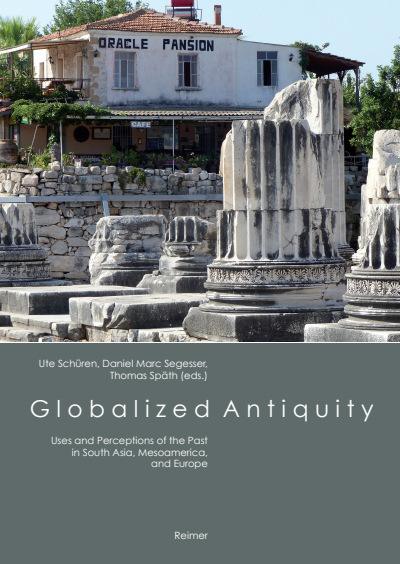
Globalized Antiquity
Uses and Perceptions of the Past in South Asia, Mesoamerica, and Europe
Herausgeber:innen:
| |
Verlag:
2015
Zusammenfassung
Inspiriert von der postkolonialen Kritik am dominierenden westlichen Kanon in den Bereichen Historiografie, Philologie, Kulturanthropologie und Archäologie untersucht dieses Buch die Bedeutungen von „Antike“ in drei Kulturbereichen. Untersucht wird die Verwandtschaft dieser Darstellungen einer fernen Vergangenheit. Erörtert werden die Verflechtungen europäischer Vorstellungen von Antike und ihre mesoamerikanischen und südasiatischen Aneignungen und Transformationen. Durch die diachrone Erforschung der Funktionen der „Antike“ auf historischer Grundlage verfolgt das Buch zugleich kulturanthropologische und postkoloniale Ansätze und implementiert das Postulat des lokalen Blicks auf globale Phänomene für die Weltgeschichts- und Globalisierungsforschung.
Publikation durchsuchen
Bibliographische Angaben
Auflage
1/2015
Copyrightjahr
2015
ISBN-Print
978-3-496-03004-1
ISBN-Online
978-3-496-03004-1
Verlag
Reimer, Berlin
Sprache
Englisch
Seiten
353
Produkttyp
Sammelband
Inhaltsverzeichnis
KapitelSeiten
Titelei/Inhaltsverzeichnis Kein Zugriff Seiten 2 - 12
Introduction: Antiquity, Globalization, and Constructions of the Past in South Asia, Mesoamerica, and Europe Kein Zugriff Seiten 13 - 20
Autor:innen: | |
Diversity – Historical Developments and Historiography in South Asia: A Brief Introduction Kein Zugriff Seiten 21 - 38
Autor:innen:
Chapter 1 - Historical Traditions: Were They Absent in Early India? Kein Zugriff Seiten 39 - 50
Autor:innen:
Chapter 2 - Constructions of the Past in and about India: From Jahiliyya to the Cradle of Civilization. Pre-colonial Perceptions of India Kein Zugriff Seiten 51 - 72
Autor:innen:
Chapter 3 - Ancient History as a Means of Transforming Colonial India in the Late-Eighteenth and Early-Nineteenth Centuries Kein Zugriff Seiten 73 - 92
Autor:innen:
Chapter 4 - The Concept of a Classical Age in India’s Contemporary Politics Kein Zugriff Seiten 93 - 126
Autor:innen:
Chapter 5 - The Politics of National Histories in Urban Space: (Re-)Constructing Islamic Architecture in Early Post-colonial Delhi Kein Zugriff Seiten 127 - 146
Autor:innen:
Mesoamerica: A Brief Introduction Kein Zugriff Seiten 147 - 156
Autor:innen:
Chapter 6 - Primordial Times in Mesoamerican Memory: Monuments, Tombs, and Codices Kein Zugriff Seiten 157 - 188
Autor:innen:
Chapter 7 - Imagining a Nation: Elite Discourse and theNative Past in Nineteenth-Century Mexico Kein Zugriff Seiten 189 - 210
Autor:innen:
Chapter 8 - Decolonizing Memory: The Case of the Ñuu Sau (Mixtec People), Mexico Kein Zugriff Seiten 211 - 218
Autor:innen:
Chapter 9 - On the History of Archaeological Research in Mesoamerica, with Particular Reference to Pre-Columbian Maya Civilization Kein Zugriff Seiten 219 - 230
Autor:innen:
Chapter 10 - Heirs of the Ancient Maya: IndigenousOrganizations and the Appropriation of History in Yucatán, Mexico, and Guatemala Kein Zugriff Seiten 231 - 250
Autor:innen:
European “Classical Antiquity”: A Brief Introduction Kein Zugriff Seiten 251 - 258
Autor:innen:
Chapter 11 - The Path of Ruins in the Graeco-Roman World Kein Zugriff Seiten 259 - 280
Autor:innen:
Chapter 12 - Füssli, Schlegel, and Lucian: A “True Story” about Late Eighteenth-Century Fragmented Antiquity Kein Zugriff Seiten 281 - 296
Autor:innen:
Chapter 13 - The Making of a Bourgeois Antiquity: Wilhelm von Humboldt and Greek History Kein Zugriff Seiten 297 - 316
Autor:innen:
Chapter 14 - Provincializing Antiquity? Uses of the Past Compared Kein Zugriff
Autor:innen:
Index of Personal Names Kein Zugriff Seiten 339 - 342
Index of Geographical Names Kein Zugriff Seiten 343 - 345
Index of Subjects Kein Zugriff Seiten 346 - 353
Ähnliche Veröffentlichungen
aus dem Schwerpunkt "Kulturgeschichte & Kulturwissenschaft"