, to see if you have full access to this publication.
Edited Book No access
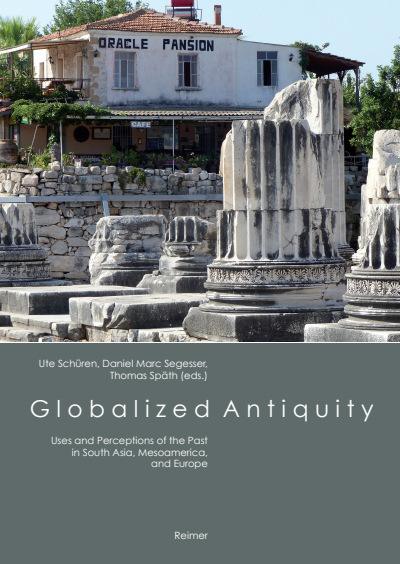
Globalized Antiquity
Uses and Perceptions of the Past in South Asia, Mesoamerica, and Europe- Editors:
- | |
- Publisher:
- 2015
Summary
Inspired by post-colonial critics of the dominant Western canons in the fields of historiography, philology, cultural anthropology, and archaeology, this book explores the meanings and uses of “antiquity” in three cultural areas and compares the genealogies of the representations of their remote past. It discusses the entanglement of European conceptions of antiquity and its Mesoamerican and South-Asian appropriations and transformations. By diachronically exploring the functions of “antiquity”, the book provides cultural anthropology and post-colonial studies with historical foundations and implements the postulate of the local gaze at global phenomena for world history and globalization research.
Search publication
Bibliographic data
- Edition
- 1/2015
- Copyright Year
- 2015
- ISBN-Print
- 978-3-496-03004-1
- ISBN-Online
- 978-3-496-03004-1
- Publisher
- Reimer, Berlin
- Language
- English
- Pages
- 353
- Product Type
- Edited Book
Table of contents
ChapterPages
- Titelei/Inhaltsverzeichnis No access Pages 2 - 12
- Introduction: Antiquity, Globalization, and Constructions of the Past in South Asia, Mesoamerica, and Europe No access Pages 13 - 20Authors: | |
- Diversity – Historical Developments and Historiography in South Asia: A Brief Introduction No access Pages 21 - 38Authors:
- Chapter 1 - Historical Traditions: Were They Absent in Early India? No access Pages 39 - 50Authors:
- Chapter 2 - Constructions of the Past in and about India: From Jahiliyya to the Cradle of Civilization. Pre-colonial Perceptions of India No access Pages 51 - 72Authors:
- Chapter 3 - Ancient History as a Means of Transforming Colonial India in the Late-Eighteenth and Early-Nineteenth Centuries No access Pages 73 - 92Authors:
- Chapter 4 - The Concept of a Classical Age in India’s Contemporary Politics No access Pages 93 - 126Authors:
- Chapter 5 - The Politics of National Histories in Urban Space: (Re-)Constructing Islamic Architecture in Early Post-colonial Delhi No access Pages 127 - 146Authors:
- Mesoamerica: A Brief Introduction No access Pages 147 - 156Authors:
- Chapter 6 - Primordial Times in Mesoamerican Memory: Monuments, Tombs, and Codices No access Pages 157 - 188Authors:
- Chapter 7 - Imagining a Nation: Elite Discourse and theNative Past in Nineteenth-Century Mexico No access Pages 189 - 210Authors:
- Chapter 8 - Decolonizing Memory: The Case of the Ñuu Sau (Mixtec People), Mexico No access Pages 211 - 218Authors:
- Chapter 9 - On the History of Archaeological Research in Mesoamerica, with Particular Reference to Pre-Columbian Maya Civilization No access Pages 219 - 230Authors:
- Chapter 10 - Heirs of the Ancient Maya: IndigenousOrganizations and the Appropriation of History in Yucatán, Mexico, and Guatemala No access Pages 231 - 250Authors:
- European “Classical Antiquity”: A Brief Introduction No access Pages 251 - 258Authors:
- Chapter 11 - The Path of Ruins in the Graeco-Roman World No access Pages 259 - 280Authors:
- Chapter 12 - Füssli, Schlegel, and Lucian: A “True Story” about Late Eighteenth-Century Fragmented Antiquity No access Pages 281 - 296Authors:
- Chapter 13 - The Making of a Bourgeois Antiquity: Wilhelm von Humboldt and Greek History No access Pages 297 - 316Authors:
- Chapter 14 - Provincializing Antiquity? Uses of the Past Compared No accessAuthors:
- Index of Personal Names No access Pages 339 - 342
- Index of Geographical Names No access Pages 343 - 345
- Index of Subjects No access Pages 346 - 353