, um zu prüfen, ob Sie einen Vollzugriff auf diese Publikation haben.
Sammelband Kein Zugriff
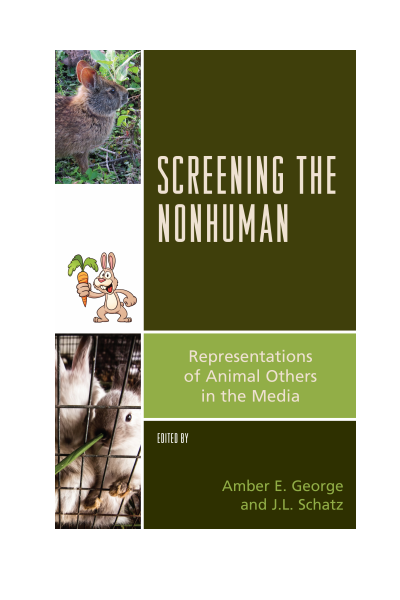
Screening the Nonhuman
Representations of Animal Others in the Media
Herausgeber:innen:
|
Verlag:
2016
Zusammenfassung
Screening the Nonhuman draws connections between how animals represented on screen translate into reality. In doing so, the book demonstrates that consuming media is not a neutral act but rather a political one. The images humans consume have real world consequences for how animals are treated as actors, as pets, and in nature. The contributors propose that altering the representations of animals can change the way humans relate to non/humans. Our hope is for humans to generate more ethical relationships with non/humans, ultimately mediating reality both in terms of fiction and non-fiction. To achieve this end, film, television, advertisements, and social media are analyzed through an intersectional lens. But the book doesn’t stop here. Each author creates counter-representational strategies that promise to unweave the assumptions that have led to the mistreatment of humans and non/humans alike.
Schlagworte
Publikation durchsuchen
Bibliographische Angaben
Auflage
1/2016
Copyrightjahr
2016
ISBN-Print
978-1-4985-1374-6
ISBN-Online
978-1-4985-1375-3
Verlag
Lexington, Lanham
Sprache
Englisch
Seiten
213
Produkttyp
Sammelband
Inhaltsverzeichnis
KapitelSeiten
Table of Contents Kein Zugriff
Acknowledgments Kein Zugriff
Introduction: Critical Media Studies and Critical Animal Studies at the Crossroads Kein Zugriff
Chapter 1: The Brown Wizard’s Unexpected Politics: Speciesist Fiction and the Ethics of The Hobbit Kein Zugriff
Chapter 2: The Passing Faerie and the Transforming Raven: Animalized Compulsory Re-covery, Endurance, and Dis/ability in Maleficent Kein Zugriff
Chapter 3: Jabbering Jaws: Reimagining Representations of Sharks Post-Jaws Kein Zugriff
Chapter 4: Horseplay: Beastly Cinematic Performances in Steven Spielberg’s War Horse Kein Zugriff
Chapter 5: Would Bugs Bunny Have Diabetes?: The Realistic Consequences of Cartoons for Non/Human Animals Kein Zugriff
Chapter 6: I Am Legend (2007), U.S. Imperialism, and the Liminal Animality of “The Last Man” Kein Zugriff
Chapter 7: Ape Anxiety: Intelligence, Human Supremacy, and Rise and Dawn of the Planet of the Apes Kein Zugriff
Chapter 8: The Vicious Cycle of Disnification and Audience Demands: Representations of the Non/Human in Martin Rosen’s Watership Down (1978) and The Plague Dogs (1982) Kein Zugriff
Chapter 9: The “Nature-Run-Amok” Cinema of the 1970s: Representation of Non/Human Animals in Frogs and Orca Kein Zugriff
Chapter 10: Cyberbeasts: Substitution and Trivialization of the Non/Human Animal in Home Movies, Memes, and Video Games Kein Zugriff
Chapter 11: Pet-Animals in the Concrete Jungle: Tales of Abandonment, Failures, and Sentimentality in San Hua and Twelve Nights Kein Zugriff
Chapter 12: In Defense of Non/Humans: Mystification and Oppression in the Sports Mascoting Process Kein Zugriff
Chapter 13: On Empathy, Anthropocentrism, and Rhetorical Tropes: An Analysis of Online “Save the Bees!” Campaign Images Kein Zugriff
Index Kein Zugriff Seiten 201 - 206
About the Contributors Kein Zugriff Seiten 207 - 213
Ähnliche Veröffentlichungen
aus dem Schwerpunkt "Soziologie allgemein"
Sammelband Vollzugriff
Karen Kastenhofer, Marius Albiez, Pauline Riousset, Constanze Scherz, Michael Decker