, um zu prüfen, ob Sie einen Vollzugriff auf diese Publikation haben.
Sammelband Kein Zugriff

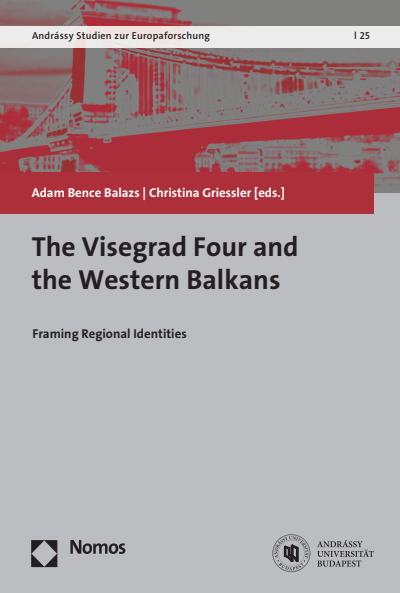
The Visegrad Four and the Western Balkans

Framing Regional Identities
Herausgeber:innen:
Verlag:
 2020

Zusammenfassung

Der Westbalkan und die Visegrad-Gruppe sind zwei Makroregionen innerhalb eines größeren osteuropäischen Raums. Geografisch und historisch nahe beieinander weisen beide Regionen sowohl auf makroregionaler als auch auf nationaler Ebene vergleichbare Merkmale auf. Kommt man zur Frage der Identität, scheint die nationale Ebene jedoch unumstößlich: Politisch gesehen bedeutet Identität zuallererst nationale Identität.Die aus den Regionen stammenden AutorenInnen untersuchen, auf welche Weise das Gefühl der Zugehörigkeit zu einer Region die Unzulänglichkeiten und Blockaden der nationalen Identität überwinden könnte - oder auch nicht. Die Vielfalt der Fallstudien konzentriert sich auf Identitätsaspekte und deren politischen (Missbrauch) durch Akteure in den untersuchten Regionen. Mit Beiträgen vonAdam Bence Balazs, Adam Balcer, Ladislav Cabada, Ondřej Daniel, Kinga Anna Gajda, Kamil Glinka, Christina Griessler, Adis Maksic, Jovana Mihajlović Trbovc, Ešref Kenan Rašidagić, Andrea Schmidt, Tamara Trošt, Robert Wiszniowski, Nikola Zečević.


Publikation durchsuchen


Bibliographische Angaben

Auflage
1/2020
Copyrightjahr
2020
ISBN-Print
978-3-8487-5999-6
ISBN-Online
978-3-7489-0113-6
Verlag
Nomos, Baden-Baden
Reihe
Andrássy Studien zur Europaforschung
Band
25
Sprache
Englisch
Seiten
306
Produkttyp
Sammelband

Inhaltsverzeichnis

KapitelSeiten
  1. Titelei/Inhaltsverzeichnis Kein Zugriff Seiten 1 - 8
  2. Autor:innen:
    1. Identity between Crisis and Regression Kein Zugriff
      Autor:innen:
    2. Regions as Narratives and Concentric Circles Kein Zugriff
      Autor:innen:
    3. Central Europe’s Intermediate Deadlock Kein Zugriff
      Autor:innen:
    4. The Western Balkans: Powder Keg or Paradigm Kein Zugriff
      Autor:innen:
    1. Autor:innen:
      1. Introduction Kein Zugriff
        Autor:innen:
      2. State of the Art Analysis and Operationalisation of Terms Kein Zugriff
        Autor:innen:
      3. Development and Structure of European Transnational Regions Kein Zugriff
        Autor:innen:
      4. Central and Eastern Europe Over the Last Two Centuries: Between Tradition and Modernity Kein Zugriff
        Autor:innen:
      5. Central Europe and the Balkans – Regional Identity in the 21st Century Kein Zugriff
        Autor:innen:
      6. Conclusion Kein Zugriff
        Autor:innen:
    2. Autor:innen:
      1. Orient– An Exhibition Kein Zugriff
        Autor:innen:
      2. Oppressive Performative Identity Kein Zugriff
        Autor:innen:
      3. Eastern Europe: Itinerant Names, Wandering Borders Kein Zugriff
        Autor:innen:
      4. Eastern Europe as an Orientalist Construction Kein Zugriff
        Autor:innen:
      5. Conclusion Kein Zugriff
        Autor:innen:
    3. Autor:innen:
      1. Introduction Kein Zugriff
        Autor:innen:
      2. Methodological Remarks Kein Zugriff
        Autor:innen:
      3. Identity Freedom and the Quality of Democracy Kein Zugriff
        Autor:innen:
      4. Measuring Identity Freedom Kein Zugriff
        Autor:innen:
      5. Summary Kein Zugriff
        Autor:innen:
    1. Autor:innen:
      1. Introduction Kein Zugriff
        Autor:innen:
      2. “Coming to Rape and Veil Your Daughters” Kein Zugriff
        Autor:innen:
      3. Insularity of the Landlocked? Kein Zugriff
        Autor:innen:
      4. “Unanimously Against the Quotas”? Kein Zugriff
        Autor:innen:
      5. “Coming to You, Mummy Merkel!” Kein Zugriff
        Autor:innen:
      6. “Let Us Help Them Where They Come From” Kein Zugriff
        Autor:innen:
      7. “Until Old Europe Open Its Eyes” Kein Zugriff
        Autor:innen:
    2. Autor:innen:
      1. Introduction Kein Zugriff
        Autor:innen:
      2. Discourse, Affect and Ethnic Groups Kein Zugriff
        Autor:innen:
      3. Reinforcing Religious Symbolisms Kein Zugriff
        Autor:innen:
      4. The National Essence of Victims and Perpetrators Kein Zugriff
        Autor:innen:
      5. Conclusion Kein Zugriff
        Autor:innen:
    3. Autor:innen:
      1. Introduction Kein Zugriff
        Autor:innen:
      2. First Phase: Shared Interests Kein Zugriff
        Autor:innen:
      3. Second Phase: Partial Normalisation after the Early 2000s Kein Zugriff
        Autor:innen:
      4. Third Phase: A Renewed Nationalist and Conservative Push after 2008 Kein Zugriff
        Autor:innen:
      5. Conclusion: Key Players or Accidental Partners in Crime? Kein Zugriff
        Autor:innen:
    4. Autor:innen:
      1. Introduction Kein Zugriff
        Autor:innen:
      2. The Ambivalent Legacy of the Polish Multicultural Past Kein Zugriff
        Autor:innen:
      3. Hetero-orthodox Polish Jewish Muslims Kein Zugriff
        Autor:innen:
      4. Frankism and Polish Romanticism Kein Zugriff
        Autor:innen:
      5. The Backlash of Polish Ethnic Nationalism Kein Zugriff
        Autor:innen:
      6. Polish Andalusia... Kein Zugriff
        Autor:innen:
    5. Autor:innen:
      1. Introduction Kein Zugriff
        Autor:innen:
      2. Overview of the State of History Textbooks from the 1970s until Today Kein Zugriff
        Autor:innen:
      3. Autor:innen:
        1. Socialist-Era Textbooks Kein Zugriff
          Autor:innen:
        2. Wartime Textbooks Kein Zugriff
          Autor:innen:
        3. Post-2000 Textbooks Kein Zugriff
          Autor:innen:
      4. Conclusion Kein Zugriff
        Autor:innen:
    6. Autor:innen:
      1. Introduction Kein Zugriff
        Autor:innen:
      2. History of Language-Naming Practices Kein Zugriff
        Autor:innen:
      3. Constitutional Break-up of the Language Kein Zugriff
        Autor:innen:
      4. Ethnicisation and Politicisation Kein Zugriff
        Autor:innen:
      5. Conclusion Kein Zugriff
        Autor:innen:
    7. Autor:innen:
      1. Introduction Kein Zugriff
        Autor:innen:
      2. The Teething Problems of Democratic Rule Kein Zugriff
        Autor:innen:
      3. The History of the Fragile Hungarian Democracy Kein Zugriff
        Autor:innen:
      4. “Homo Hungaricus” – the Nature of the Hungarian Mentality Kein Zugriff
        Autor:innen:
      5. Strong Politician Demands – the Birth of “Homo Kadaricus” Kein Zugriff
        Autor:innen:
      6. Towards a “New System?” – Experiences from the 2018 Election Kein Zugriff
        Autor:innen:
      7. Conclusion Kein Zugriff
        Autor:innen:
    8. Autor:innen:
      1. Exploring Identities: the Visegrad Four and the Western Balkans Kein Zugriff
        Autor:innen:
      2. Regional vs National identity Kein Zugriff
        Autor:innen:
      3. Outside Perspective: Relational Aspects of the Regions under Study Kein Zugriff
        Autor:innen:
      4. The Perspective from Within: National Identity Formation Kein Zugriff
        Autor:innen:
      5. The End Kein Zugriff
        Autor:innen:
  3. List of Authors Kein Zugriff Seiten 301 - 306

Ähnliche Veröffentlichungen

aus der Reihe "Andrássy Studien zur Europaforschung"
Cover des Buchs: Finance, Accounting, Controlling im Kontext von Digitaler Transformation und Nachhaltigkeit
Sammelband Kein Zugriff
Manuela Ender, Tim Alexander Herberger, Michael Kuttner
Finance, Accounting, Controlling im Kontext von Digitaler Transformation und Nachhaltigkeit
Cover des Buchs: Democratic Backsliding in Europe
Sammelband Teilzugriff
Melani Barlai, Christina E. Griessler, Martin R. Herbers, Ellen Bos, Peter Filzmaier, Christina Hainzl
Democratic Backsliding in Europe
Cover des Buchs: Diplomaten ohne Immunität
Monographie Kein Zugriff
Karl Dieter Uesseler
Diplomaten ohne Immunität
Cover des Buchs: Digitale Transformation und Nachhaltigkeit in der Finanzwelt
Sammelband Kein Zugriff
Tim Alexander Herberger
Digitale Transformation und Nachhaltigkeit in der Finanzwelt