, um zu prüfen, ob Sie einen Vollzugriff auf diese Publikation haben.
Monographie Kein Zugriff
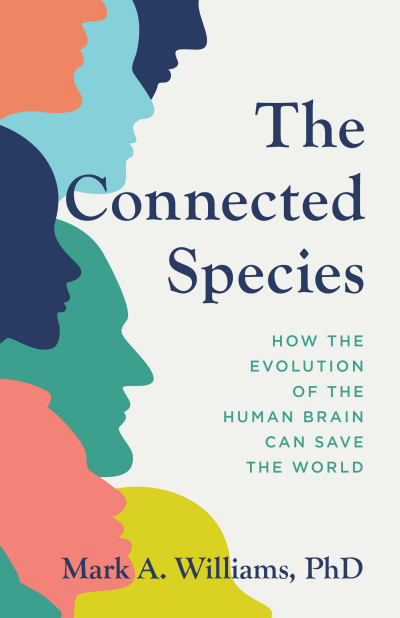
The Connected Species
How the Evolution of the Human Brain Can Save the World
Autor:innen:
Verlag:
2023
Zusammenfassung
Human beings have succeeded as the most dominant species on earth in large part due to our need to connect and cooperate. It was our ability to socialize and connect that catapulted our species to phenomenal heights of innovation, through collaboration and specialization. This drive has fine-tuned our unconscious perception of faces, facial expressions, body language, and touch. Our primitive drive to connect changes how we perceive the world and the people around us. We see, hear, empathize with, and understand others differently depending on whether they are a member of our in-group or not. This unconscious drive to connect can draw us together, but it also emphasizes the differences between groups. And it is getting worse, as overcrowding, technology, and the media often focus us on our differences. We become more and more divided into groups as a result.
Here, Mark Williams shows us how to recapture the drive for connection in a way that will help us look past our differences and reconnect, even with those whom we perceive to be outside our groups. He starts by discussing the human brain’s specialization for connection and how it evolved, and the fascinating way we automatically process the thoughts and feelings of others. He focuses on how connection works in practice and why it is important for learning, innovating, health and wellbeing. He then explores the negative consequences of our drive for connection and explains how it contributes to racism, sexism, nationalism, and many other social issues of our day, as well as its impact on our individual health and wellbeing. He ends with a positive perspective by examining how we can use our drive for connection to expand our in-group and extend multicultural societies for the good of our planet.
Schlagworte
Publikation durchsuchen
Bibliographische Angaben
Copyrightjahr
2023
ISBN-Print
978-1-5381-7900-0
ISBN-Online
978-1-5381-7901-7
Verlag
Rowman & Littlefield, Lanham
Sprache
Englisch
Seiten
210
Produkttyp
Monographie
Inhaltsverzeichnis
KapitelSeiten
Contents Kein Zugriff
Acknowledgments Kein Zugriff
Introduction Kein Zugriff
1 A Very Short History of Us Kein Zugriff
2 Why We Think without Knowing Kein Zugriff
3 Identifying People Kein Zugriff
4 A Puppet on a String Kein Zugriff
5 We Are Pack Animals Kein Zugriff
6 Connected to Learn Kein Zugriff
7 Home-CookedMeal for the Soul Kein Zugriff
8 Racism, Sexism, and Other -Isms Kein Zugriff
9 Viral Viruses Kein Zugriff
10 A Crowded Room Kein Zugriff
11 Modern Technology Thrives on Connection Kein Zugriff
12 Common Humanity Perspective Kein Zugriff
13 Get Real Kein Zugriff
14 Connected Development Kein Zugriff
15 The Future for the Connected Species Kein Zugriff