, um zu prüfen, ob Sie einen Vollzugriff auf diese Publikation haben.
Monographie Kein Zugriff
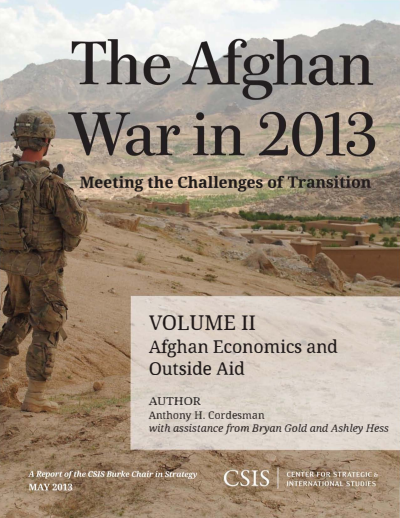
The Afghan War in 2013: Meeting the Challenges of Transition
Afghan Economics and Outside Aid- Autor:innen:
- | |
- Verlag:
- 2013
Schlagworte
Publikation durchsuchen
Bibliographische Angaben
- Copyrightjahr
- 2013
- ISBN-Print
- 978-1-4422-2499-5
- ISBN-Online
- 978-1-4422-2500-8
- Verlag
- Rowman & Littlefield, Lanham
- Sprache
- Englisch
- Seiten
- 162
- Produkttyp
- Monographie
Inhaltsverzeichnis
KapitelSeiten
- Table of Contents Kein Zugriff
- Continued Aid and Economic Stability as Key Threats to a Successful Transition Kein Zugriff
- The Need to Focus on the Afghan War Fatigue Kein Zugriff
- The Need for Credible Economic and Aid Plans, Credible Resources, and Transparency Kein Zugriff
- Time Is Another Key Threat Kein Zugriff
- Restructure Economic Aid to Reflect the Fact Afghans Will Need Aid for Economic Stability During Transition More Than for Development Kein Zugriff
- Create an Effective and Coordinated International Effort Kein Zugriff
- Shift Governance Aid to Deal with the Realities of a Flawed Afghan Political System But Hold the Afghan Government Accountable Where This Is Critical to Transition Kein Zugriff
- Accept the Reality That the “New Silk Road” and Regional Development May Benefit Afghanistan After 2020, But Offer No Practical Basis of Support for Transition Kein Zugriff
- Prepare to Shift Economic Aid from Development to Stability Kein Zugriff
- Real World vs. “Mythical-macro” Economics: There Are No Reliable Macroeconomic Data on Afghanistan Kein Zugriff
- No Reliable GDP or GDP Per Capita Data Kein Zugriff
- The Uncertain Forces Driving the Afghan GDP Kein Zugriff
- Per Capita Income Data Provide Only the Roughest Warnings Kein Zugriff
- How Many Afghans and Where? No One Knows Kein Zugriff
- Making Up More Detailed Numbers by Model and Guesstimate Kein Zugriff
- Taking a Guess at Some Key Population Trends Affecting Every Element of Development and Transition Kein Zugriff
- Without Credible Baseline Data, More Sophisticated Breakouts Become Impossible Kein Zugriff
- Past Spending, Current Spending Rates, and Spending as a Percent of Total Aid Funds Are Not a Measure of Merit, and Never Will Be Kein Zugriff
- Unreliable, Missing, and Self-Contradictory Country-by-Country Data That Do Not Provide Any Indication of How Much Money Was Actually Spent in, and Stayed in, Afghanistan Kein Zugriff
- The Totals for All International Aid Are Equally Unreliable and Fail to Provide Any Meaningful Measure of Progress Kein Zugriff
- The US as a Case Study and a Warning Kein Zugriff
- The Unknown Impact of Coming US Cuts in Spending Kein Zugriff
- Look at the Trends in US Aid vs. Total Spending Kein Zugriff
- The Lack of Meaningful Transition Data on the Sources of Afghan Government Domestic Revenues Kein Zugriff
- Afghan Investment and Future Sources of Revenue Kein Zugriff
- A New “Great Game”? Kein Zugriff
- The Problem of Sustaining Aid Levels Kein Zugriff
- Unaffordable “Needs” and the Rush for the Exits Kein Zugriff
- Building on a Weak Foundation Kein Zugriff
- World Bank Estimates of Dependence on Outside Spending Kein Zugriff
- Department of Defense Comments on Dependence Kein Zugriff
- General Accountability Office Estimate of Aid Dependence Kein Zugriff
- The Risks in Cutting Outside Spending Kein Zugriff
- The Afghan Response: Requesting More Than Will Ever Come Kein Zugriff
- Concepts Not Plans Kein Zugriff
- Promises of Reform from a Decade-Long Non-Reformer Kein Zugriff
- The Oliver Twist Approach to Transition: “More. Please.” Kein Zugriff
- World Bank, CRS, and SIGAR Warnings Kein Zugriff
- An Impossible Financing Gap in Aid? Kein Zugriff
- A Long History of Unmet Pledges and Real-World Abandonment Kein Zugriff
- Hope and Uncertainty Kein Zugriff
- The Operational Realities Kein Zugriff
- No Basis for Meaningful Planning Kein Zugriff
- If Reality Intervenes Kein Zugriff
- Afghan Problems versus Outside “Pledges” Kein Zugriff
- Trying to Make Aid Work as PRTs Are Eliminated and with Inadequate US, European, Donor, and UN Structures Kein Zugriff
- The Death of the Afghan Compact and Development Plan Kein Zugriff
- The US, ISAF, and Afghanistan Cannot Rely on Mines and the “New Silk Road” for Transition Kein Zugriff
- A Mining Option for the Future, Not for Transition Kein Zugriff
- The “New Silk Road” Is a Poor Cover, Even for an Exit Strategy Kein Zugriff
- Agriculture Kein Zugriff
- The Service Sector Kein Zugriff
- Mining and Narcotics Kein Zugriff
- Security Problems and Regional Impacts Kein Zugriff
- Demographics and Economic Stability Kein Zugriff
- Employment Kein Zugriff
- Poverty, Food Issues, and the UN World Food Program Kein Zugriff
- Refugees, Displaced Persons, and Poverty Kein Zugriff
- Rising Area under Cultivation Even in Helmand and Other Areas in the South and Rebirth of Taliban Influence Kein Zugriff
- Reality vs. Anti-Narcotics Claims of Progress Kein Zugriff
- Narcotics, Criminal Networks, Leadership Flight, and the ANSF Kein Zugriff
- Narco-Corruption as a Critical Part of Afghan Economic and Transition Kein Zugriff
- Dodging the Worst Case, But the Bad Case Is Bad Enough Kein Zugriff
- The Need to Focus on the Afghan War Fatigue Kein Zugriff
- The Need for Credible Economic and Aid Plans, Credible Resources, and Transparency Kein Zugriff
- Time Is Another Key Threat Kein Zugriff
- Restructure Economic Aid to Reflect the Fact Afghans Will Need Aid for Economic Stability During Transition More Than for Development Kein Zugriff
- Create an Effective and Coordinated International Effort Kein Zugriff
- Shift Governance Aid to Deal with the Realities of a Flawed Afghan Political System But Hold the Afghan Government Accountable Where This Is Critical to Transition Kein Zugriff
- Accept the Reality That the “New Silk Road” and Regional Development May Benefit Afghanistan After 2020, But Offer No Practical Basis of Support for Transition Kein Zugriff
- Prepare to Shift Economic Aid from Development to Stability Kein Zugriff