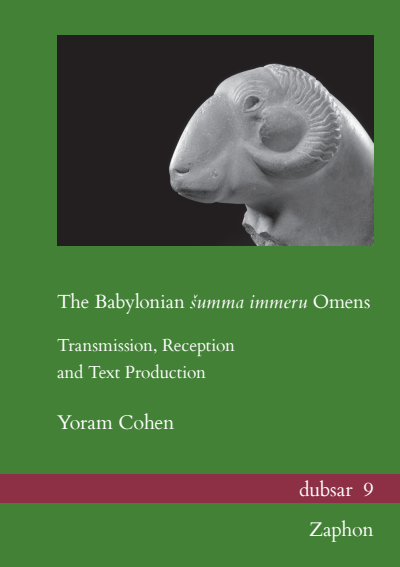
The Babylonian šumma immeru Omens
Transmission, Reception and Text Production- Autor:innen:
- Verlag:
- 2020
Zusammenfassung
Die babylonischen šumma-immeru-Omina („Wenn ein Schaf …“) befassen sich mit omiösen Zeichen, die aus dem Verhalten des Opferschafs zur Zeit des Opfers herausgelesen werden. Sie sind Teil des Handwerks des Wahrsagers und verbunden mit der Technik der Opferschau (d.h. der Untersuchung der Eigeweide). Die literarische Geschichte und die Überlieferung der šumma-immeru-Omina ist umfangreiche und verschachtelt. Die Omina sind bezeugt von der altbabylonischen Epoche bis fast zum Ende der keilschriftlichen Überlieferung im seleukidischen Uruk.Manuskripte der Omina stammen aus Babylonien, Assyrien, Anatolien und Nord-Syrien. Dieses Buch ist die erste umfassende Studie zu diesem Genre der Omina. Es bietet vollständige Text-Editionen und Kommentare. Es verortet šumma-immeru-Omina im Kontext der babylonischen Wahrsagekunst und untersucht, wie Texte „kanonischen“ Status erreichen, der sie immunisiert gegen Veränderungen im Laufe der Jahrtausende.
The Babylonian šumma immeru (‘If the Sheep’) omens are concerned with ominous signs drawn from the behaviour of the sacrificial sheep at the time of its sacrifice. They are part of the diviner’s craft of divination and are related to the technique of extispicy (i.e., the examination of the entrails). The literary history and the transmission of the šumma immeru omens is long and convoluted. The omens are attested from the Old Babylonian period to almost the very end of cuneiform civilization at Seleucid Uruk. Manuscripts of the omens and of their commentaries arrive from Babylonia, Assyria, Anatolia and Northern Syria. This book is the first comprehensive study of this omen genre. It offers complete text editions and commentaries of the omens, some previously unpublished. It places the šumma immeru omens within the context of Babylonian divination, and investigates how texts reached a “canonical” status that had become immune from changes during millennia of textual production, transmission and reception.
Reihe
E009677100 - Band 9
Publikation durchsuchen
Bibliographische Angaben
- Auflage
- 1/2020
- Copyrightjahr
- 2020
- ISBN-Print
- 978-3-96327-042-0
- ISBN-Online
- 978-3-96327-043-7
- Verlag
- Zaphon, Münster
- Reihe
- dubsar / Altorientalistische Publikationen / Publications on the Ancient Near East
- Band
- 9
- Sprache
- Englisch
- Seiten
- 432
- Produkttyp
- Monographie
Inhaltsverzeichnis
- Table of Contents Kein Zugriff
- List of Figures Kein Zugriff
- Acknowledgements Kein Zugriff
- Preface Kein Zugriff
- Abbreviations Kein Zugriff
- Abbreviations for the šumma immeru Omens Kein Zugriff
- The šumma immeru Omens Textual Sources Kein Zugriff
- 1. The Standard Version (ca. 1880s–1940s; 1980) Kein Zugriff
- 2. The Assur Manuscripts (1930s; 2012) Kein Zugriff
- 3. The Old Babylonian Version (ca. 1940s–1950s) Kein Zugriff
- 4. The Late Bronze Age Version (1970s–Present) Kein Zugriff
- 5. The Sealand Dynasty Manuscript (2013) Kein Zugriff
- 6. General Discussions and Related Sources Kein Zugriff
- 1. Mesopotamia—Land of Sheep and Wool Kein Zugriff
- 2. Sheep Terminology and the Terms for the Sacrificial Animal in Divination Kein Zugriff
- 3. How did Extispicy Omens Come About? Kein Zugriff
- 4. Divination Literature, Omen Compendia and the šumma immeru Omens Kein Zugriff
- 5. How to Read the šumma immeru Omens? Kein Zugriff
- 6. The Name of the šumma immeru Omen Compendium Kein Zugriff
- 1. The Ritual Purity of the Diviner Kein Zugriff
- 2. Finding the Right Sheep for the Extispicy Ritual Kein Zugriff
- 3. Placing the Oracle Question in Front of the Gods Kein Zugriff
- 4. The Slaughter of the Sacrificial Animal Kein Zugriff
- 5. “Reading” the Sheep Kein Zugriff
- 6. “Reading” the Liver Kein Zugriff
- 1. Edition and Translation Kein Zugriff
- 2. Commentary Kein Zugriff
- 3. Discussion Kein Zugriff
- 1. Edition and Translation Kein Zugriff
- 2. Commentary Kein Zugriff
- 3. Discussion Kein Zugriff
- 1.1 Edition Kein Zugriff
- 1.2 Commentary Kein Zugriff
- 1.3 Discussion Kein Zugriff
- 2.1 Edition Kein Zugriff
- 2.2 Commentary Kein Zugriff
- 2.3 Discussion Kein Zugriff
- 3.1 Edition Kein Zugriff
- 3.2 Commentary Kein Zugriff
- 3.3 Discussion Kein Zugriff
- 4.1 Edition Kein Zugriff
- 4.2 Discussion Kein Zugriff
- 1. Edition Kein Zugriff
- 2. Commentary Kein Zugriff
- 3. Discussion Kein Zugriff
- 1.1 Edition Kein Zugriff
- 1.2 Commentary Kein Zugriff
- 2.1 Edition Kein Zugriff
- 2.2 Commentary Kein Zugriff
- 3.1 Edition Kein Zugriff
- 3.2 Commentary Kein Zugriff
- 4. Discussion Kein Zugriff
- 1.1 Identifying the Compendium Kein Zugriff
- 1.2 The Structure and Content of the Sealand Dynasty Manuscript Kein Zugriff
- 1.3 Characteristic Features of the Sealand Dynasty Manuscript Kein Zugriff
- 1.4 The Sealand Dynasty Manuscript and Other Sealand Dynasty Omens Kein Zugriff
- 2.1 KAL 5 2 Kein Zugriff
- 2.2 KAL 5 3 (KAR 432) Kein Zugriff
- 2.3 KAL 5 4 Kein Zugriff
- 3. The Emar Bone Omen Compendia Kein Zugriff
- 4.1 Bārûtu Ch. 1 and its Commentary Kein Zugriff
- 4.2 KAL 5 1 (KAR 423) Kein Zugriff
- 4.3 K 6788––A Nineveh Fragment Relating to the Lower Parts of the Sheep Kein Zugriff
- 4.4 Tablets Relating to the Sheep’s Stomach Kein Zugriff
- 5.1 Old Babylonian and Kassite Omen Reports Kein Zugriff
- 5.2 Neo-Assyrian Oracular Queries and Extispicy Reports Kein Zugriff
- 6.1 Bird Divination Compendia: Sources and Distribution Kein Zugriff
- 6.2 Bird Divination Omens and the šumma immeru Omens Kein Zugriff
- 7. An Omen Compendium of Severed Hooves and Fetlocks Kein Zugriff
- 8. Tablet 41 of the šumma ālu Omen Series Kein Zugriff
- 9. The šumma izbu Omen Series Kein Zugriff
- 10. Omens from a Ewe Confined Overnight Kein Zugriff
- 11. The Hittite šašta Oracles Kein Zugriff
- 12. The Ritual of the Diviner Kein Zugriff
- 13. A Manual of Sacrificial Procedure Kein Zugriff
- 14.1 An Old Babylonian List of Sheep Body Parts (BM 29663) Kein Zugriff
- 14.2 An Akkadian-Hittite List of (Sheep) Body Parts (KBo 1.51) Kein Zugriff
- 14.3 The 15th Tablet of the ur5-ra=ḫubullu Lexical Lis Kein Zugriff
- 14.4 The Practical Vocabulary (The Assur Version) Kein Zugriff
- 1. The Head Region Kein Zugriff
- 3. Areas of the Abdomen and Rib Cage Kein Zugriff
- 2. The Hind Area of the Animal Kein Zugriff
- 1. The Past: The Presence of the God during the Extispicy Ritual Kein Zugriff
- 2. The Present: The šumma immeru Formula––Let Go of the Sheep! Kill the Enemy! Kein Zugriff
- 3. The Future: What Will the Exta Look Like? Kein Zugriff
- 1. The Old Babylonian Version and Related Texts Kein Zugriff
- 2. The Sealand Dynasty Manuscript Kein Zugriff
- 3. The Late Bronze Age Version and Related Texts Kein Zugriff
- 4. The Intermediate Versions 1–4 Kein Zugriff
- 5. The Standard Version and the Bārûtu Series Kein Zugriff
- 6. The Commentaries of the Standard Version Kein Zugriff
- 7. A Crosscut Comparison between the šumma immeru Versions Kein Zugriff
- 1. Text Standardization or Canonization? Kein Zugriff
- 2. Text Production of Omen Collections Kein Zugriff
- 3. From Old Babylonian Extispicy Collections to the Bārûtu Kein Zugriff
- 4. The Many Lives of the šumma immeru Omens Kein Zugriff
- Bibliography Kein Zugriff Seiten 373 - 394
- Sources Kein Zugriff
- Gods, People, and Persons Kein Zugriff
- Select Akkadian/Sumerian Terms Kein Zugriff
- Subject Index Kein Zugriff