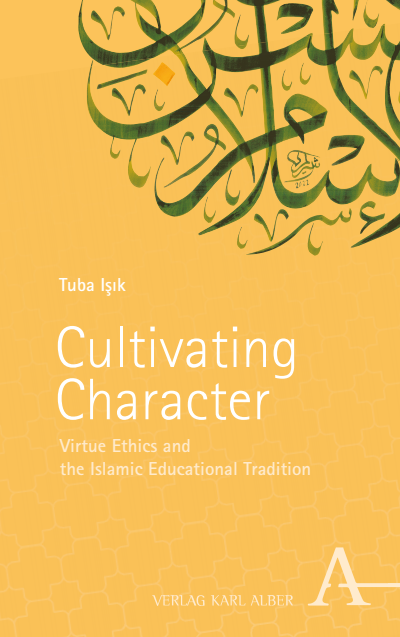
Cover des Buchs: Cultivating Character
Monographie Open Access Vollzugriff

Cultivating Character

Virtue Ethics and the Islamic Educational Tradition
Autor:innen:
Verlag:
 2025

Zusammenfassung

Theologische, bildungswissenschaftliche, philosophische und mystische Erkenntnisse in islamischer Perspektive werden in den Dienst der Kultivierung des Selbst gestellt. Vor diesem Hintergrund wird die Frage analysiert, inwiefern die Arbeit am Selbst in tugendethischer Hinsicht als Gegenstand des schulischen Bildungsauftrages gelten kann. Tugend wird als Dimension von Bildung – auch von islamisch religiöser Bildung – fokussiert. Zu Beginn des Buches stehen theoretische Überlegungen über die moralische Verfasstheit des Menschen im Zentrum. Diese werden anschließend in den praktischen Kategorien bzw. zentralen Tugenden der Gerechtigkeit, der Aufrichtigkeit, des Mitgefühls und der Freundschaft konkretisiert.

Schlagworte


Publikation durchsuchen


Bibliographische Angaben

Auflage
1/2025
Copyrightjahr
2025
ISBN-Print
978-3-495-99151-0
ISBN-Online
978-3-495-99152-7
Verlag
Karl Alber, Baden-Baden
Sprache
Englisch
Seiten
274
Produkttyp
Monographie

Inhaltsverzeichnis

KapitelSeiten
  1. Download Kapitel (PDF)
    1. Introduction
  2. Download Kapitel (PDF)
    1. 1. In Search of the Cultivation of the Self
    2. 2. Work on the Self with Ethical Virtues: A Component of the Educational Mission of Schools
      1. 3.1 Approaches to Values Education
      2. 3.2 Ethical Formation
      3. 3.3 Recognition Pedagogy
      4. 3.4 Intercultural Pedagogy
      5. 3.5 Virtue Competence? The Consequences of Virtue Ethics: Considerations for the Discourse on Competencies in Educational Theory
      6. 3.6 Summary
  3. Download Kapitel (PDF)
      1. 1.1 Philosophical Revival of Aristotelian Virtue Ethics in the Present Day
      2. 1.2 Virtue: An Ambivalent Word in Germany
    1. 2. Virtue Ethics as a Reference Point for a Common Life
        1. A Brief Excursus: Aristotle’s Concept of the Soul
      1. 3.2 The Deliberation Process as a Condition of Self-knowledge
      2. 3.3 Prospering for a Successful Life
      3. 3.4 Emotions as Relevant Dispositions of Moral Excellence
      4. 3.5 The Cultivation of Character
  4. Download Kapitel (PDF)
    1. 1. Adab and akhlāq: Two Categories of Ethical Educational Endeavours
      1. 2.1 Types of Adab Literature
      2. 2.2 Ibn Abī ’l-Dunyā (823–894)
      3. 2.3 Kitāb Makārim al-Akhlāq
      4. 2.4 Narrative Constructions of a Vision of the Virtuous
      5. 2.5 The Significance of Ethical, Religious Adab Literature for Contemporary Educational Thinking
      1. 3.1 Akhlāq as a Connotative Concept of the Islamic Ethnoleader
      2. 3.2 Phase of the Translation of Ancient Philosophical Writings
        1. 3.3.1 Abū Naṣr Muḥammad al-Fārābī (c. 872–950)
        2. 3.3.2 Abū ʿAlī Miskawayh (932–1030)
        3. 3.3.3 Al-Rāghib al-Iṣfahānī (d. 1108)
        4. 3.3.4 Abū Ḥāmid Muḥammad al-Ghazālī (c. 1055–1111)
        5. 3.3.5 Naṣīr al-Dīn al-Ṭūsī (1201–1274)
      3. 3.4 Brief Summary
      1. 4.1 Tazkiyya al-nafs: Physical Practices as Ethical Virtue Practice
      2. 4.2 A Brief Outlook
    2. 5. Summarising Reflections on the Cultivation of the Self
  5. Download Kapitel (PDF)
    1. 1. Society, Virtue, and Competence
      1. 2.1 Justice
        1. Excursus: Respect as an Important Secondary Virtue
      2. 2.3 Compassion
      3. 2.4 Friendship
    2. 3. Reflections on the Educational Discourse within the Horizon of Virtue Ethics
    3. 4. Insights for a Contemporary Islamic Religious Education in Germany
  6. AbbreviationsSeiten 231 - 232
    Download Kapitel (PDF)
  7. SourcesSeiten 233 - 274
    Download Kapitel (PDF)

Ähnliche Veröffentlichungen

aus dem Schwerpunkt "Islamische Theologie", "Allgemeine Pädagogik", "Ethik"
Cover des Buchs: Islamische Religionspädagogik
Lehrbuch Kein Zugriff
Harry Harun Behr
Islamische Religionspädagogik
Cover des Buchs: Hingabe
Monographie Kein Zugriff
Ahmad Milad Karimi
Hingabe
Cover des Buchs: Didaktik in einer Kultur der Digitalität
Sammelband Kein Zugriff
Gerhard Brandhofer
Didaktik in einer Kultur der Digitalität
Cover des Buchs: Wir werden sterben
Monographie Kein Zugriff
Wolfgang Weimer
Wir werden sterben