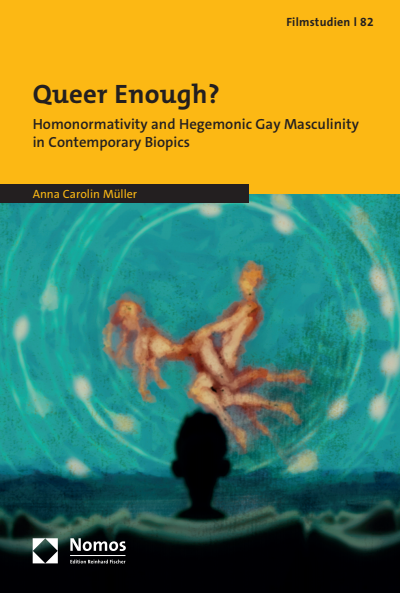
Queer Enough?
Homonormativity and Hegemonic Gay Masculinity in Contemporary Biopics- Autor:innen:
- Reihe:
- Filmstudien, Band 82
- Verlag:
- 2023
Zusammenfassung
Die Verschränkung von Heteronormativität, Homonormativität und hegemonialer Männlichkeit hat weitreichende Konsequenzen für die Darstellung wichtiger Momente und Akteure der LGBTQIAN+ Geschichte. Die Autorin untersucht, wie die Filme Howl, Stonewall und Milk die Emanzipation ihrer Protagonistinnen und Protagonisten inszenieren, während sie gleichzeitig ihre Unterdrückung reproduzieren und ihre Diskriminierung ästhetisieren und konsumierbar machen. Dieser Widerspruch steht sinnbildlich für neue Formen von Ausgrenzung, die subtiler funktionieren als unverhohlene Homophobie, unverblümter Sexismus oder offensichtlicher Rassismus und sich zugleich einer komplexeren Repräsentation von sozialen Erfahrungen verwehren sowie statische, abgrenzbare Identitäten verfestigen.
Schlagworte
Publikation durchsuchen
Bibliographische Angaben
- Copyrightjahr
- 2023
- ISBN-Print
- 978-3-7560-0583-3
- ISBN-Online
- 978-3-7489-4096-8
- Verlag
- Nomos, Baden-Baden
- Reihe
- Filmstudien
- Band
- 82
- Sprache
- Englisch
- Seiten
- 263
- Produkttyp
- Monographie
Inhaltsverzeichnis
- Titelei/InhaltsverzeichnisSeiten 1 - 10 Download Kapitel (PDF)
- Introduction: an Interdisciplinary Approach to lgbtqian+ CinemaSeiten 11 - 20 Download Kapitel (PDF)
- 1.1 From the Celluloid Closet to New Queer Cinema
- 1.2 More Visibility, More Normality?
- 1.3 After Brokeback Mountain: New Paradigms in lgbtqian+ Cinema
- 2.1 Heteronormativity and Queer Subversion
- 2.2 Homonormativity and Hegemonic Gay Masculinity
- 2.3 Formal-Aesthetic Features of Queer Cinema
- 2.4 Heteronarrative and the Gaze
- 2.5 Historical Background and the Biopic Genre
- Defence of the Heteronorm
- Institutional and Paternal Violence
- Homophobia and the Religious Right
- Ginsberg’s Artistic Breakthrough
- Danny’s Coming Of Age
- Milk’s Self-Empowerment
- Exclusion in Howl
- Straightwashing in Stonewall
- Collectivisation in Milk
- The Misunderstood Genius
- The All-American Rebel
- The Immortal Martyr
- Conclusion: The Commercialisation of DiversitySeiten 237 - 250 Download Kapitel (PDF)
- Works CitedSeiten 251 - 263 Download Kapitel (PDF)
Literaturverzeichnis (224 Einträge)
Es wurden keine Treffer gefunden. Versuchen Sie einen anderen Begriff.
- Abelove, Henry, Michèle Aina Barale, David M. Halperin, ed. The Lesbian and Gay Studies Reader. New York: Routledge, 1993. Google Scholar öffnen DOI: 10.5771/9783748940968
- Abrams, M. H., and Geoffrey Galt Harpham. A Glossary of Literary Terms. 10. ed. Boston, Mass. Wadsworth, 2012. Google Scholar öffnen DOI: 10.5771/9783748940968
- Adams, Henry E., Lester W. Wright, and Bethany A. Lohr. “Is Homophobia Associated with Homosexual Arousal?” Journal of Abnormal Psychology 105.3 (1996): 440–45. Google Scholar öffnen DOI: 10.5771/9783748940968
- Alegre, Sara M. “Heterosexual Masculinity in Despair: Dan White in Rob Epstein’s The Times of Harvey Milk and in Gus Van Sant’s Milk.” Mapping Identity and Identification Processes: Approaches from Cultural Studies. Ed. Eduardo de Gregorio-Godeo and Angel Mateos-Aparicio Martin-Albo. Bern: Peter Lang AG Internationaler Verlag der Wissenschaften, 2013. 179–93. Google Scholar öffnen DOI: 10.5771/9783748940968
- Altmann, Dennis. “Coming Out: The Search for Identity.” The Material Queer: A LesBiGay Cultural Studies Reader. Ed. Donald Morton. Oxford: Westview Press, 1996. 117–20. Queer Critique. Google Scholar öffnen DOI: 10.5771/9783748940968
- Ansen, David. “David Ansen: 'Milk' Is a Timely, Potent Film.” Newsweek 28 Nov. 2008. Web. 29 May 2021. <https://www.newsweek.com/david-ansen-milk-timely-potent-film-84799>. Google Scholar öffnen DOI: 10.5771/9783748940968
- Appenroth, Max. “The cis-washing of the Stonewall Riots – Why trans* activists can’t be heroes.” 2015. Web. 20 Sep. 2021. <https://www.academia.edu/16241721/The_cis_washing_of_the_Stonewall_Riots_Why_trans_activists_can_t_be_heroes?auto=download>. Google Scholar öffnen DOI: 10.5771/9783748940968
- Arellano, Lisa. “The 'Gay Film' That Wasn't: The Heterosexual Supplement in Brokeback Mountain.” Reading Brokeback Mountain: Essays on the Story and the Film. Ed. Jim Stacy. Jefferson, NC [u.a.]: McFarland, 2007. 59–70. Google Scholar öffnen DOI: 10.5771/9783748940968
- Atkinson, Michael. We Hardly Knew Ye: Why Do We Watch Biopics? Museum of the Moving Image, 2012. Web. <http://www.movingimagesource.us/articles/we-hardly-knew-ye-20121129>. Google Scholar öffnen DOI: 10.5771/9783748940968
- Babuscio, Jack. “Camp and Gay Sensibility.” Gays and Film. Ed. Richard Dyer. Rev. ed. New York, NY: New York Zoetrope, 1984. 40–57. Google Scholar öffnen DOI: 10.5771/9783748940968
- Ball, Gordon. “Wopbopgooglemop: 'Howl' and Its Influences.” The Poem That Changed America. Ed. Jason Shinder. New York: Farrar, Straus and Giroux, 2006. 93–101. Google Scholar öffnen DOI: 10.5771/9783748940968
- Barthes, Roland. Mythologies. Trans. Annette Lavers. 19. New York, NY: Hill and Wang, 1957. Google Scholar öffnen DOI: 10.5771/9783748940968
- Benshoff, Harry M. Film and Television Analysis: An Introduction to Methods, Theories, and Approaches. London: Routledge, 2016. Google Scholar öffnen DOI: 10.5771/9783748940968
- Benshoff, Harry M., and Sean Griffin. Queer Images: A History of Gay and Lesbian Film in America. Lanham, Md: Rowman & Littlefield Pub, 2010. Google Scholar öffnen DOI: 10.5771/9783748940968
- Bernstein, Elizabeth, and Laurie Schaffner, eds. Regulating Sex: The Politics of Intimacy and Identity. New York: Routledge, 2005.. Google Scholar öffnen DOI: 10.5771/9783748940968
- Bernstein, Mary. “Liberalism and Social Movement Success: The Case of United State Sodomy Statues.” Regulating Sex: The Politics of Intimacy and Identity. Ed. Elizabeth Bernstein and Laurie Schaffner. New York: Routledge, 2005. 3–18. Google Scholar öffnen DOI: 10.5771/9783748940968
- Bingham, Dennis. Whose Lives Are They Anyway? The Biopic as Contemporary Film Genre. New Brunswick, NJ: Rutgers University Press, 2010. Google Scholar öffnen DOI: 10.5771/9783748940968
- Black, Dustin Lance, and Gus van Sant. Milk: The Shooting Script. New York, NY: Newmarket Press, 2008. Google Scholar öffnen DOI: 10.5771/9783748940968
- Bloom, Harold. The Anxiety of Influence – A Theory of Poetry. Oxford: Oxford University Press, 1973. Google Scholar öffnen DOI: 10.5771/9783748940968
- Borden, Amy. “Queer or LGBTQ+: On the Question of Inclusivity in Queer Cinema Studies.” The Routledge Companion to Cinema and Gender. Ed. Kristin Lené Hole, et al. London: Routledge, 2019. 98–107. Google Scholar öffnen DOI: 10.5771/9783748940968
- Bordwell, David. The Way Hollywood Tells It: Story and Style in Modern Movies. Berkeley: University of California Press, 2006. Google Scholar öffnen DOI: 10.5771/9783748940968
- Bordwell, David, and Kristin Thompson. Film Art: An Introduction. 9. ed. New York: McGraw-Hill, 2010. Google Scholar öffnen DOI: 10.5771/9783748940968
- Brittan, Arthur. Masculinity and Power. Oxford: Blackwell Publishers, 1989. Google Scholar öffnen DOI: 10.5771/9783748940968
- Brodskaïa, Nathalia. Impressionism and Post-Impressionism. New York: Parkstone International, 2015. Google Scholar öffnen DOI: 10.5771/9783748940968
- Brown, Gavin. “Homonormativity: A Metropolitan Concept That Denigrates 'Ordinary' Gay Lives.” Journal of homosexuality 59.7 (2012): 1065–72. Google Scholar öffnen DOI: 10.5771/9783748940968
- Brown, Tom, and Belén Vidal, eds. The Biopic in Contemporary Film Culture. New York: Routledge, 2014. Google Scholar öffnen DOI: 10.5771/9783748940968
- Bruhn, Jørgen, and Anne Gjelsvik. “Ginsberg's Animating Typewriter: Mixing Senses and Media in Howl (2010).” Word & Image: A Journal of Verbal/Visual Enquiry (2015): 348–61. Google Scholar öffnen DOI: 10.5771/9783748940968
- Brunow, Dagmar, and Simon Dickel, eds. Queer Cinema. Mainz: Ventil, Februar 2018.. Google Scholar öffnen DOI: 10.5771/9783748940968
- Buchanan, Judith, ed. The Writer on Film: Screening Literary Authorship. Basingstoke: Palgrave MacMillan, 2013.. Google Scholar öffnen DOI: 10.5771/9783748940968
- Buchanan, Kyle. “Roland Emmerich Discusses His Gay-Rights Drama Stonewall and Debuts the Exclusive Poster.” Vulture 31 July 2015. Web. 21 May 2021. <https://www.vulture.com/2015/07/roland-emmerich-on-gay-rights-drama-stonewall.html#>. Google Scholar öffnen DOI: 10.5771/9783748940968
- Burns, James. “Milk: Review.” The Journal of American History 96.1 (2009): 318–20. Google Scholar öffnen DOI: 10.5771/9783748940968
- Butler, Judith. “Critically Queer.” GLQ A Journal of Lesbian and Gay Studies Vol. 1 (1993): 17–32. Google Scholar öffnen DOI: 10.5771/9783748940968
- Butler, Judith. “Imitation and Gender Insubordination.” The Lesbian and Gay Studies Reader. Ed. Abelove, Henry, Michèle Aina Barale, David M. Halperin. New York: Routledge, 1993. 307–20. Google Scholar öffnen DOI: 10.5771/9783748940968
- Butler, Judith P. Bodies That Matter: On the Discursive Limits of 'Sex'. New York: Routledge, 1993. Google Scholar öffnen DOI: 10.5771/9783748940968
- Butler, Judith. Gender Trouble: Feminism and the Subversion of Identity. New York: Routledge, 1999. Google Scholar öffnen DOI: 10.5771/9783748940968
- Calafell. “Narrative Authority, Theory in the Flesh, and the Fight over <em>The Death and Life of Marsha P. Johnson</em>.” QED: A Journal in GLBTQ Worldmaking 6.2 (2019): 26–39. Google Scholar öffnen DOI: 10.5771/9783748940968
- Cambridge Dictionary. Martyr, 2021. Web. 22 Sep. 2021. <https://dictionary.cambridge.org/us/dictionary/english/martyr>. Google Scholar öffnen DOI: 10.5771/9783748940968
- Carter, David. Stonewall: The Riots That Sparked the Gay Revolution. Second St. Martin's Griffin edition. New York, NY: St. Martin's Griffin, 2010. Google Scholar öffnen DOI: 10.5771/9783748940968
- Chambers, Samuel A. “Telepistemology of the Closet; Or, the Queer Politics of Six Feet Under.” J American Culture 26.1 (2003): 24–41. Google Scholar öffnen DOI: 10.5771/9783748940968
- Charity, Tom. 'Milk' Is a Terrific Film, 2015. Web. 19 Sep. 2021. <http://edition.cnn.com/2008/SHOWBIZ/Movies/11/26/review.milk/index.html?iref=24hours>. Google Scholar öffnen DOI: 10.5771/9783748940968
- Chibici-Revneanu, Claudia. “A Masculine Circle: The Charter Myth of Genius and its Effects on Women Writers.” University of Warwick, 2011. Google Scholar öffnen DOI: 10.5771/9783748940968
- Cohen, Cathy J. “Punks, Bulldaggers, and Welfare Queens: The Radical Potential of Queer Politics?” GLQ A Journal of Lesbian and Gay Studies 3 (1997): 437–65. Google Scholar öffnen DOI: 10.5771/9783748940968
- Connell, Raewyn, and James W. Messerschmidt. “Hegemonic Masculinity: Rethinking the Concept.” Gender and Society 19.6 (2005): pp. 829-859. Google Scholar öffnen DOI: 10.5771/9783748940968
- Connell, Raewyn W. Masculinities. 2nd ed. Berkeley and Los Angeles: University of California Press, 1995/2005. Google Scholar öffnen DOI: 10.5771/9783748940968
- Connell, Raewyn W. “The Social Organization of Masculinity.” The Masculinities Reader. Ed. Stephen Whitehead and Frank J. Barrett. Cambridge, UK, Malden, MA: Polity; Blackwell Publishers, 2001. 30–50. Google Scholar öffnen DOI: 10.5771/9783748940968
- Custen, George Frederick. Bio/Pics: How Hollywood Constructed Public History. New Brunswick: Rutgers University Press, 1992. Google Scholar öffnen DOI: 10.5771/9783748940968
- Davies, Steven Paul. Out at the Movies: A History of Gay Cinema. Harpenden: Kamera Books, 2008. Google Scholar öffnen DOI: 10.5771/9783748940968
- D'Emilio, John. “Capitalism and Gay Identity.” The Material Queer: A LesBiGay Cultural Studies Reader. Ed. Donald Morton. Boulder: Westview Press, 1996. Google Scholar öffnen DOI: 10.5771/9783748940968
- Di Blasi, Luca. Der Weiße Mann. Bielefeld: transcript, 2014. Google Scholar öffnen DOI: 10.5771/9783748940968
- Dines, Gail, and Jean MacMahon Humez, eds. Gender, Race, and Class in Media: A Text-Reader. 2. ed. Thousand Oaks: Sage Publ, 2003. Google Scholar öffnen DOI: 10.5771/9783748940968
- Donald, Morton, ed. The Material Queer: A LesBiGay Cultural Studies Reader. Boulder: Westview Press, 1996. Google Scholar öffnen DOI: 10.5771/9783748940968
- Doty, Mark. “Human Seraphim: "Howl", Sex, and Holiness.” The Poem That Changed America. Ed. Jason Shinder. New York: Farrar, Straus and Giroux, 2006. 11–18. Google Scholar öffnen DOI: 10.5771/9783748940968
- Drucker, Peter. Warped: Gay Normality and Queer Anti-Capitalism. Leiden: Brill, 2015. Historical Materialism Book Series. Google Scholar öffnen DOI: 10.5771/9783748940968
- Duberman, Martin B. Stonewall. First Plume printing. New York, NY: Plume, 1994. A Plume Book. Google Scholar öffnen DOI: 10.5771/9783748940968
- Duggan, Lisa. The Twilight of Equality? Neoliberalism, Cultural Politics, and the Attack on Democracy. Boston: Beacon Press, 2003. Google Scholar öffnen DOI: 10.5771/9783748940968
- Duggan, Lisa, and Nan D. Hunter. Sex Wars: Sexual Dissent and Political Culture. 10th anniversary ed. New York: Routledge, op. 2006. Google Scholar öffnen DOI: 10.5771/9783748940968
- Dyer, Richard. The Matter of Images: Essays on Representations. Reprinted. London: Routledge, 1995. Google Scholar öffnen DOI: 10.5771/9783748940968
- Eaklor, Vicki L. Queer America: A People's GLBT History of the United States. New York: New Press, 2011. Google Scholar öffnen DOI: 10.5771/9783748940968
- Easthope, Antony, ed. Contemporary Film Theory. 4. impr. London: Longman, 1996. Longman Critical Readers. Google Scholar öffnen DOI: 10.5771/9783748940968
- Ebert, Roger. Milk: A Man Who Decided He Wanted to Make a Difference with His Life, 2008. Web. 19 Sep. 2021. <https://www.rogerebert.com/reviews/milk>. Google Scholar öffnen DOI: 10.5771/9783748940968
- Ehrlich, Jake W. “Introduction.” Howl of the Censor. Ed. Lawrence Ferlinghetti. Westport: Greenwood Press, 1976. Google Scholar öffnen DOI: 10.5771/9783748940968
- Eng, David L., Judith Halberstam, and José Esteban Muñoz. “What's Queer About Queer Studies Now?” Social Text 23:2 (2005): 75–84. Google Scholar öffnen DOI: 10.5771/9783748940968
- Epstein, William H. “Introduction: Strategic Patriotic Memories.” Invented Lives, Imagined Communities: The Biopic and American National Identity. Ed. Epstein, William H. and Palmer, R. Barton, William H. Epstein, and R. Barton Palmer. Albany: State University of New York Press, 2016. 1–21. SUNY Series, Horizons of Cinema. Google Scholar öffnen DOI: 10.5771/9783748940968
- Epstein, William H. and Palmer, R. Barton, William H. Epstein, and R. Barton Palmer, eds. Invented Lives, Imagined Communities: The Biopic and American National Identity. Albany: State University of New York Press, 2016. Google Scholar öffnen DOI: 10.5771/9783748940968
- Erhart, Julia G. “Toward a New LGBT Biopic: Politics and Reflexivity in Gus Van Sant's Milk.” Invented Lives, Imagined Communities: The Biopic and American National Identity. Ed. Epstein, William H. and Palmer, R. Barton, William H. Epstein, and R. Barton Palmer. Albany: State University of New York Press, 2016. 261–79. SUNY Series, Horizons of Cinema. Google Scholar öffnen DOI: 10.5771/9783748940968
- Etherington-Wright, Christine, and Ruth Doughty. Understanding Film Theory. Houndmills: Palgrave MacMillan, 2011. Google Scholar öffnen DOI: 10.5771/9783748940968
- Fejes, Fred. Gay Rights and Moral Panic: The Origins of America's Debate on Homosexuality. New York: Palgrave MacMillan, 2008. Google Scholar öffnen DOI: 10.5771/9783748940968
- Ferlinghetti, Lawrence, ed. Howl of the Censor. Westport: Greenwood Press, 1976. Google Scholar öffnen DOI: 10.5771/9783748940968
- Fetner, Tina. How the Religious Right Shaped Lesbian and Gay Activism. Minneapolis: University of Minnesota Press, 2008. Google Scholar öffnen DOI: 10.5771/9783748940968
- Forsgren, Frida, and Michael J. Prince Prince, eds. Out of the Shadows: Beat Women Are Not Beaten Women. Kristiansand: Portal, 2015. Google Scholar öffnen DOI: 10.5771/9783748940968
- Foucault, Michel. “The Subject and Power.” Critical Inquiry 8.4 (1982): 777–95. Google Scholar öffnen DOI: 10.5771/9783748940968
- Foucault, Michel. The History of Sexuality: Volume I: An Introduction Foucault, Michel. The History of Volume I: An Introduction. New York: Randon House, 1990. Google Scholar öffnen DOI: 10.5771/9783748940968
- Frank, Steven. What Does It Take to Be a Gay Icon Today?, 2007. Web. 3 Nov. 2020. <https://web.archive.org/web/20071210064859/http://www.afterelton.com/people/2007/9/gayicons?page=0%2C0>. Google Scholar öffnen DOI: 10.5771/9783748940968
- Frye, Northrop. Anatomy of Criticism: Four Essays. 10th ed. New Jersey: Princeton University Press, 1957. Google Scholar öffnen DOI: 10.5771/9783748940968
- Fuss, Diana, ed. Inside/Out: Lesbian Theories, Gay Theories. Hoboken: Taylor and Francis, 2013. Google Scholar öffnen DOI: 10.5771/9783748940968
- Fuss, Diana. “Inside/Out.” Inside/Out: Lesbian Theories, Gay Theories. Ed. Diana Fuss. Hoboken: Taylor and Francis, 2013. 1–10. Google Scholar öffnen DOI: 10.5771/9783748940968
- Gair, Christopher. The American Counterculture. Edinburgh: Edinburgh University Press, 2007. Google Scholar öffnen DOI: 10.5771/9783748940968
- Genette, Gérard, Wolfram Bayer, and Dieter Hornig. Palimpseste: Die Literatur auf zweiter Stufe. Dt. Erstausg., Orig.-Ausg., 7. Aufl. Frankfurt am Main: Suhrkamp, 2015. Google Scholar öffnen DOI: 10.5771/9783748940968
- Gifford, Barry and Lee, Lawrence. Jack’s Book: An Oral Biography of Jack Kerouac. New York: Saint Martin’s Press, 1978. Google Scholar öffnen DOI: 10.5771/9783748940968
- Ginelle, Leela. The New Stonewall Film Is Just as Whitewashed as We Feared, 2015. Web. 11 May 2021. <https://www.bitchmedia.org/article/new-stonewall-film-just-whitewashed-we-feared>. Google Scholar öffnen DOI: 10.5771/9783748940968
- Ginsberg, Allen. “I've Lived with and Enjoyed 'Howl'.” The Poem That Changed America. Ed. Jason Shinder. New York: Farrar, Straus and Giroux, 2006. 143–47. Google Scholar öffnen DOI: 10.5771/9783748940968
- Ginsberg, Allen, and Eric Drooker. Howl: A Graphic Novel. London: Penguin, 2010. Google Scholar öffnen DOI: 10.5771/9783748940968
- GLAAD. The Vito Russo Test, 2014. The GLAAD Studio Responsibility Index. Web. 11 June 2021. <https://www.glaad.org/sri/2014/vitorusso>. Google Scholar öffnen DOI: 10.5771/9783748940968
- Godrej, Farah. “Spaces for Counter-Narratives: The Phenomenology of Reclamation.” Georgetown University. Chicago, 2003. Google Scholar öffnen DOI: 10.5771/9783748940968
- Gould, Deborah B. “The Shame of Gay Pride in Early AIDS Activism.” Gay Shame. Ed. David M. Halperin and Valerie Traub. Chicago: University of Chicago Press, 2009. 221–55. Google Scholar öffnen DOI: 10.5771/9783748940968
- Gregorio-Godeo, Eduardo de, and Angel Mateos-Aparicio Martin-Albo, eds. Mapping Identity and Identification Processes: Approaches from Cultural Studies. Bern: Peter Lang AG Internationaler Verlag der Wissenschaften, 2013. Google Scholar öffnen DOI: 10.5771/9783748940968
- Gray, Jeffrey. "Transgression, Release and ‘Moloch’" The Taboo. Ed. Harold Bloom and Blake Hobby. New York: Bloom's Literary Criticism, 2010. 37-49. Google Scholar öffnen DOI: 10.5771/9783748940968
- Gross, Larry P. Up from Invisibility: Lesbians, Gay Men, and the Media in America. New York, NY: Columbia Univ. Press, 2001. Google Scholar öffnen DOI: 10.5771/9783748940968
- Gurr, Ted Robert. Why Men Rebel. Fortieth anniversary paperback edition. London: Routledge Taylor & Francis Group, 2016. Google Scholar öffnen DOI: 10.5771/9783748940968
- Gutterman, David S. “Postmodernism and the Interrogation of Masculinity.” The Masculinities Reader. Ed. Stephen Whitehead and Frank J. Barrett. Cambridge, UK, Malden, MA: Polity; Blackwell Publishers, 2001. 56–71. Google Scholar öffnen DOI: 10.5771/9783748940968
- Halberstam, Jack. “Shame and White Gay Masculinity.” Social Text 23.3-4 84-85 (2005): 219–33. Google Scholar öffnen DOI: 10.5771/9783748940968
- Halberstam, Jack. The Queer Art of Failure. Durham: Duke University Press, 2011. Google Scholar öffnen DOI: 10.5771/9783748940968
- Halberstam, Jack. Trans*: A Quick and Quirky Account of Gender Variability. Oakland, California: University of California Press, 2018. Google Scholar öffnen DOI: 10.5771/9783748940968
- Hall, Stuart. Representation: Cultural Representations and Signifying Practices. Reprint. London: Sage Publ, 1997. Google Scholar öffnen DOI: 10.5771/9783748940968
- Halperin, David M. “Why Gay Shame Now?” Gay Shame. Ed. David M. Halperin and Valerie Traub. Chicago: University of Chicago Press, 2009. 41-48. Google Scholar öffnen DOI: 10.5771/9783748940968
- Halperin, David M., and Valerie Traub, eds. Gay Shame. Chicago: University of Chicago Press, 2009. Google Scholar öffnen DOI: 10.5771/9783748940968
- Harris, Oliver. “Queer Shoulders, Queer Wheel: Homosexuality and Beat Textual Politics.” Beat Culture: The 1950s and Beyond. Ed. Minnen, Cornelis A. van, et al. Amsterdam: VU University Press, 1999. 221–40. European Contributions to American Studies 42. Google Scholar öffnen DOI: 10.5771/9783748940968
- Harris, William Conley. “Broke(N)Back Faggots: Hollywood Gives Queers a Hobson's Choice.” Reading Brokeback Mountain: Essays on the Story and the Film. Ed. Jim Stacy. Jefferson, NC [u.a.]: McFarland, 2007. 118–34. Google Scholar öffnen DOI: 10.5771/9783748940968
- Herek, Gregory M. “Heterosexuals’ Attitudes Toward Lesbians and Gay Men: Correlates and Gender Differences.” The Journal of Sex Research 25 (1988): 451-477. Google Scholar öffnen DOI: 10.5771/9783748940968
- History vs. Hollywood, ed. Boys Don't Cry. Web. 19 Sep. 2021. <https://www.historyvshollywood.com/reelfaces/boysdontcry.php>. Google Scholar öffnen DOI: 10.5771/9783748940968
- Hole, Kristin Lené, et al., eds. The Routledge Companion to Cinema and Gender. London: Routledge, 2019. Google Scholar öffnen DOI: 10.5771/9783748940968
- hooks, bell. Black Looks: Race and Representation. Boston, Mass. South End Press, 1992. Google Scholar öffnen DOI: 10.5771/9783748940968
- Hotz-Davies, Ingrid. “Quentin Crisp, Camp and the Art of Shamelessness.” Sexed Sentiments: Interdisciplinary Perspectives on Gender and Emotion. Ed. Willemijn Ruberg and Kristine Steenbergh. Amsterdam: Rodopi, 2011. 165–84. Critical Studies 34. Google Scholar öffnen DOI: 10.5771/9783748940968
- Hughey, Matthew Windust. The White Savior Film: Content, Critics, and Consumption. Philadelphia: Temple University Press, 2014. Google Scholar öffnen DOI: 10.5771/9783748940968
- Hutcheon, Linda. A Theory of Adaptation. New York, NY: Routledge, 2006. Google Scholar öffnen DOI: 10.5771/9783748940968
- Huxley, Aldous. The Doors of Perception. London: Thinking Ink, 2011 (1952). Google Scholar öffnen DOI: 10.5771/9783748940968
- Ibson, John. “Lessons Learned on Brokeback Mountain: Expanding the Possibilities of American Manhood.” Reading Brokeback Mountain: Essays on the Story and the Film. Ed. Jim Stacy. Jefferson, NC [u.a.]: McFarland, 2007. 188–204. Google Scholar öffnen DOI: 10.5771/9783748940968
- Jacobs, Julia. “Two Transgender Activists Are Getting a Monument in New York.” The New York Times 29 May 2019. Web. 7 May 2020. <https://www.nytimes.com/2019/05/29/arts/transgender-monument-stonewall.html>. Google Scholar öffnen DOI: 10.5771/9783748940968
- Jagose, Annamarie. Queer Theory: An Introduction. Reprinted. New York: New York Univ. Press, 1996. Google Scholar öffnen DOI: 10.5771/9783748940968
- Jones, David Myles, and JoAnne C. Juett, eds. Coming Out to the Mainstream: New Queer Cinema in the 21st Century. Newcastle upon Tyne: Cambridge Scholars, 2010. Google Scholar öffnen DOI: 10.5771/9783748940968
- Juhasz, Alexandra. “A Stake in the Future: Transforming Queer Cinema, Staying Dissonant.” Coming Out to the Mainstream: New Queer Cinema in the 21st Century. Ed. David Myles Jones and JoAnne C. Juett. Newcastle upon Tyne: Cambridge Scholars, 2010. 257–75. Google Scholar öffnen DOI: 10.5771/9783748940968
- Jung, E. Alex. “Stonewall Didn’t Need a White Male Lead. So Why Does It Have One?” Vulture 24 Sep. 2015. Web. 7 July 2021. <https://www.vulture.com/2015/09/stonewall-yet-another-white-surrogate-project.html>. Google Scholar öffnen DOI: 10.5771/9783748940968
- Katz, Elliot. “Radical Eyes: Political Poetics and "Howl".” The Poem That Changed America. Ed. Jason Shinder. New York: Farrar, Straus and Giroux, 2006. 183–211. Google Scholar öffnen DOI: 10.5771/9783748940968
- Katz, Johnathan Ned. “The Invention of Heterosexuality.” Race, Class, and Gender in the United States: An Integrated Study. Ed. Paula S. Rothenberg. 7th ed. New York: Worth Publishers, 2007. 68–80. Google Scholar öffnen DOI: 10.5771/9783748940968
- Keith, Thomas. Masculinities in Contemporary American Culture: An Intersectional Approach to the Complexities and Challenges of Male Identity. New York: Routledge, 2017. Google Scholar öffnen DOI: 10.5771/9783748940968
- Keating, Shannon. Director Roland Emmerich Discusses “Stonewall” Controversy, 2015. Web. 20 Sep. 2021. <https://www.buzzfeednews.com/article/shannonkeating/director-roland-emmerich-discusses-stonewall-controversy>. Google Scholar öffnen DOI: 10.5771/9783748940968
- Keegan, Cáel M. “History, Disrupted: The Aesthetic Gentrification of Queer and Trans Cinema.” Social Alternatives 35 (2016): 50–56. Google Scholar öffnen DOI: 10.5771/9783748940968
- Kimmel, Michael S. “Masculinity as Homophobia: Fear, Shame, and Silence in the Construction of Gender Identity.” The Masculinities Reader. Ed. Stephen Whitehead and Frank J. Barrett. Cambridge, UK, Malden, MA: Polity; Blackwell Publishers, 2001. 266–87. Google Scholar öffnen DOI: 10.5771/9783748940968
- Kitses, Jim. “All That Brokeback Allows.” Film Quarterly 60.3 (2007): 22–27. Google Scholar öffnen DOI: 10.5771/9783748940968
- Knegt, Peter. Forging a Gay Mainstream: Negotiating Gay Cinema in the American Hegemony. , 2008. Google Scholar öffnen DOI: 10.5771/9783748940968
- Knight, Brenda. Women of the Beat Generation: The Writers, Artists, and Muses at the Heart of a Revolution. Berkeley, CA: Conari Press, 1996. Google Scholar öffnen DOI: 10.5771/9783748940968
- Korsmeyer, Carolyn. Gender and Aesthetics: An Introduction. Milton: Taylor & Francis Group, 2004. Google Scholar öffnen DOI: 10.5771/9783748940968
- Korte, Barbara, and Sylvia Paletschek, eds. History Goes Pop. transcript Verlag, 2009. Google Scholar öffnen DOI: 10.5771/9783748940968
- Kuhn, Markus. Filmnarratologie: Ein Erzähltheoretisches Analysemodell. Berlin: De Gruyter, 2011. Google Scholar öffnen DOI: 10.5771/9783748940968
- Lawson, Richard. Stonewall Is Terribly Offensive, and Offensively Terrible, 2015. Web. 20 Sep. 2021. <https://www.vanityfair.com/hollywood/2015/09/stonewall-review-roland-emmerich>. Google Scholar öffnen DOI: 10.5771/9783748940968
- Lay, Frank, and Russell West, eds. Subverting Masculinities: Hegemonic and Alternative Versions of Masculinity in Contemporary Culture. Amsterdam, Atlanta: Rodopi B.V., 2000. Google Scholar öffnen DOI: 10.5771/9783748940968
- Lenon, Suzanne. “White as <em>Milk</em>: Proposition 8 and the Cultural Politics of Gay Rights.” Atlantis: Critical Studies in Gender, Culture & Social Justice 36.1 (2013): 44–54. Web. 29 May 2021. <https://journals.msvu.ca/index.php/atlantis/article/view/3185/2568>. Google Scholar öffnen DOI: 10.5771/9783748940968
- Levy, Peter B. “Beating the Censor: The "Howl" Trial Revisited.” Beat Culture: The 1950s and Beyond. Ed. Minnen, Cornelis A. van, et al. Amsterdam: VU University Press, 1999. 107–16. European Contributions to American Studies 42. Google Scholar öffnen DOI: 10.5771/9783748940968
- Lind, Amy. “Heteronormativity and Sexuality.” The Oxford Handbook of Gender and Politics. Ed. Georgina Waylen. Oxford, New York: Oxford University Press, 2013. 189–213. Google Scholar öffnen DOI: 10.5771/9783748940968
- Marcus, Laura. “The Writer in Film: Authorship and Imagination.” The Writer on Film: Screening Literary Authorship. Ed. Judith Buchanan. Basingstoke: Palgrave MacMillan, 2013. 35–49. Google Scholar öffnen DOI: 10.5771/9783748940968
- Marks, Laura U. The Skin of the Film: Intercultural Cinema, Embodiment, and the Senses. Durham, NC: Duke University Press, 2000. Google Scholar öffnen DOI: 10.5771/9783748940968
- McFarlane, Beverly. “Traditions of Spiritual Guidance. Women's Martyrdom. Death, Gender and Witness in Rome and El Salvador.” The Way 41.3 (2001): 257–68. Google Scholar öffnen DOI: 10.5771/9783748940968
- McIntosh, Mary. “The Homosexual Role.” Social Problems 16.2 (1968): 182–92. Google Scholar öffnen DOI: 10.5771/9783748940968
- McKelly, James C. “Youth Cinema and the Culture of Rebellion: Heathers and the Rebel Archetype.” Rebel Without a Cause: Approaches to a Maverick Masterwork. Ed. J. David Slocum. Albany: State University of New York Press, 2005. 209–16. SUNY Series, Horizons of Cinema. Google Scholar öffnen DOI: 10.5771/9783748940968
- McKinnon, Scott. Gay Men at the Movies: Cinema, Memory and the History of a Gay Male Community. s.l. Intellect Books Ltd, 2016. Google Scholar öffnen DOI: 10.5771/9783748940968
- Medhurst, Andy. “Notes on Recent Gay Film Criticism.” Gays and Film. Ed. Richard Dyer. Rev. ed. New York, NY: New York Zoetrope, 1984. 58–64. Google Scholar öffnen DOI: 10.5771/9783748940968
- Messerli, Alfred, and Janis Osolin, eds. Blickführung. Basel: Stroemfeld/Roter Stern, 1996. Google Scholar öffnen DOI: 10.5771/9783748940968
- Milevski, Urania, Paul Reszke, and Felix Woitkowski, eds. Gender Und Genre: Populäre Serialität Zwischen Kritischer Rezeption Und Geschlechtertheoretischer Reflexion. Würzburg: Königshausen u. Neumann, 2016. Google Scholar öffnen DOI: 10.5771/9783748940968
- Minnen, Cornelis A. van, et al., eds. Beat Culture: The 1950s and Beyond. Amsterdam: VU University Press, 1999. Google Scholar öffnen DOI: 10.5771/9783748940968
- Morton, Donald, ed. The Material Queer: A LesBiGay Cultural Studies Reader. Oxford: Westview Press, 1996. Google Scholar öffnen DOI: 10.5771/9783748940968
- Müller, Anna Carolin. “’An Imitation Never does have the Value of the Original’: Literarische Begegnungen im Film Howl.” Literaturkontakte: Texte - Kulturen - Märkte. Ed. Isabell Oberle, et al. Berlin: Frank & Timme, 2018. 129–46. Google Scholar öffnen DOI: 10.5771/9783748940968
- Mulvey, Laura. “Visual Pleasure and Narrative Cinema.” Screen 16.3 (1975): 6–18. Google Scholar öffnen DOI: 10.5771/9783748940968
- Mulvey, Laura. “Afterthoughts on ‘Visual Pleasure and Narrative Cinema’ Inspired by King Vidor’s Duel in the Sun (1946).” Contemporary Film Theory. Ed. Antony Easthope. 4. impr. London: Longman, 1996. 125–34. Longman Critical Readers. Google Scholar öffnen DOI: 10.5771/9783748940968
- Muñoz, José Esteban. Disidentifications: Queers of Color and the Performance of Politics. Minneapolis, Minn. Univ. of Minnesota Press, 1999. Google Scholar öffnen DOI: 10.5771/9783748940968
- Muñoz, José Esteban. Cruising Utopia: The Then and There of Queer Futurity. New York: New York University Press, 2009. Google Scholar öffnen DOI: 10.5771/9783748940968
- Nitsun, M. Beyond the Anti-Group: Survival and Transformation. Taylor & Francis, 2014. Google Scholar öffnen DOI: 10.5771/9783748940968
- Noll-Brinckmann, Christine. “Das Gesicht Hinter Der Scheibe.” Blickführung. Ed. Alfred Messerli and Janis Osolin. Basel: Stroemfeld/Roter Stern, 1996. 9–21. Cinema 41. Google Scholar öffnen DOI: 10.5771/9783748940968
- Norton, Mary B., ed. A People & a Nation – a History of the United States. 9th ed. Andover: Wadsworth Cengange Learning, 2012. Google Scholar öffnen DOI: 10.5771/9783748940968
- Nowlan, Bob. “Queer Theory, Queer Cinema.” Coming Out to the Mainstream: New Queer Cinema in the 21st Century. Ed. David Myles Jones and JoAnne C. Juett. Newcastle upon Tyne: Cambridge Scholars, 2010. 2–19. Google Scholar öffnen DOI: 10.5771/9783748940968
- O’Rourke, Michael. “The Afterlives of Queer Theory.” Continent 1.2 (2011): 102–16. Google Scholar öffnen DOI: 10.5771/9783748940968
- Oberle, Isabell, et al., eds. Literaturkontakte: Texte - Kulturen - Märkte. Berlin: Frank & Timme, 2018. Google Scholar öffnen DOI: 10.5771/9783748940968
- O'hehir, Andrew. “The Man Who Blew up America's Closets.” Salon.com 26 Nov. 2008. Web. 4 June 2021. <https://www.salon.com/2008/11/26/milk_2/>. Google Scholar öffnen DOI: 10.5771/9783748940968
- Oxford English Dictionary. Queer, 2021. Web. 21 Sep. 2021. <https://www.oed.com/oed2/00194686;jsessionid=29800D0408C3B2E9D6BF3ACB049B00E7>. Google Scholar öffnen DOI: 10.5771/9783748940968
- Parker, Richard G., and Peter Aggleton, eds. Culture, Society and Sexuality: A Reader. London: UCL Press, 1999. Google Scholar öffnen DOI: 10.5771/9783748940968
- Plummer, Ken. “The Marrying Kind? Debating Same-Sex Marriage Within the Lesbian and Gay Movement Edited by Mary Bernstein and Verta Taylor.” American Journal of Sociology 119.6 (2014): 1765–67. Google Scholar öffnen DOI: 10.5771/9783748940968
- Pope, Rob. Creativity: Theory, History, Practice. Reprinted. London: Routledge, 2010.. Google Scholar öffnen DOI: 10.5771/9783748940968
- Prince, Michael J. Adapting the Beat Poets: Burroughs, Ginsberg, and Kerouac on Screen. Lanham: Rowman & Littlefield, 2016. Google Scholar öffnen DOI: 10.5771/9783748940968
- Puar, Jasbir K., Inderpal Grewal, Caren Kaplan, and Robyn Wiegman. Terrorist Assemblages: Homonationalism in Queer Times. North Carolina: Duke University Press, 2007. Google Scholar öffnen DOI: 10.5771/9783748940968
- Queer Nation. Queers Read This. , 1990. Google Scholar öffnen DOI: 10.5771/9783748940968
- Raymond, Diane. “Popular Culture and Queer Representation: A Critical Perspective.” Gender, Race, and Class in Media: A Text-Reader. Ed. Gail Dines and Jean MacMahon Humez. 2. ed. Thousand Oaks: Sage Publ, 2003. 98–110. Google Scholar öffnen DOI: 10.5771/9783748940968
- Rayside, David M. “Homophobia, Class and Party in England.” Canadian Journal of Political Science / Revue Canadienne de Science Politique 25 (1992): 121–49. Google Scholar öffnen DOI: 10.5771/9783748940968
- Reeb, Celeste. The Aural Identity of George in Tom Ford’s a Single Man, 2015. Web. <https://mdsoar.org/handle/11603/1587>. Google Scholar öffnen DOI: 10.5771/9783748940968
- Rich, Adrienne. “When We Dead Awaken: Writing as Re-Vision.” College English Women, Writing and Teaching 34.1 (1972): 18–30. Google Scholar öffnen DOI: 10.5771/9783748940968
- Rich, Adrienne. “Compulsory Heterosexuality and Lesbian Existance.” Signs 5.4 (1980): 631–60. Google Scholar öffnen DOI: 10.5771/9783748940968
- Rich, B. Ruby. Queer and Present Danger: After New Queer Cinema: Sight & Sound, 10/3., 2000. Web. <http://www.bfi.org.uk/news-opinion/sight-sound-magazine/features/queer-present-danger-b-ruby-rich>. Google Scholar öffnen DOI: 10.5771/9783748940968
- Rich, B. Ruby. Ginsberg's Howl Resounds on Film, 2010. Web. 19 Sep. 2021. <http://www.theguardian.com/film/2010/jan/19/allen-ginsberg-howl-film>. Google Scholar öffnen DOI: 10.5771/9783748940968
- Rich, B. Ruby. New Queer Cinema: The Director's Cut. North Carolina: Duke University Press, 2013. Google Scholar öffnen DOI: 10.5771/9783748940968
- Rivkin, Julie, and Michael Ryan, eds. Literary Theory: An Anthology. 2nd ed. Malden, Massachusetts: Blackwell Publishers, 2004. Google Scholar öffnen DOI: 10.5771/9783748940968
- Roof, Judith. Come as You Are: Sexuality and Narrative. New York: Columbia Univ. Press, 1996. Google Scholar öffnen DOI: 10.5771/9783748940968
- Rosenthal, Bob. “A Witness.” The Poem That Changed America. Ed. Jason Shinder. New York: Farrar, Straus and Giroux, 2006. 44–46. Google Scholar öffnen DOI: 10.5771/9783748940968
- Rothenberg, Paula S., ed. Race, Class, and Gender in the United States: An Integrated Study. 7th ed. New York: Worth Publishers, 2007. Google Scholar öffnen DOI: 10.5771/9783748940968
- Ruberg, Willemijn, and Kristine Steenbergh, eds. Sexed Sentiments: Interdisciplinary Perspectives on Gender and Emotion. Amsterdam: Rodopi, 2011. Google Scholar öffnen DOI: 10.5771/9783748940968
- Rubin, Gayle. “Thinking Sex: Notes for a Radical Theory of the Politics of Sexuality.” Culture, Society and Sexuality: A Reader. Ed. Richard G. Parker and Peter Aggleton. London: UCL Press, 1999. 143–78. Social Aspects of AIDS. Google Scholar öffnen DOI: 10.5771/9783748940968
- Russo, Vito. The Celluloid Closet: Homosexuality in the Movies. New York: Harper and Row, 1981. Google Scholar öffnen DOI: 10.5771/9783748940968
- Salazar, David. “Opera Meets Film: Harvey Milk as a 20th Century ‘Tosca’.” Opera Wire 1 Jan. 2018. Web. 25 Sep. 2021. <https://operawire.com/opera-meets-film-harvey-milk-as-a-20th-century-tosca/>. Google Scholar öffnen DOI: 10.5771/9783748940968
- Schou, Solvej. “Roland Emmerich’s ‘Stonewall’ Finds Controversy.” The New York Times 18 Sep. 2015. Web. 21 Sep. 2021. <https://www.nytimes.com/2015/09/20/movies/roland-emmerichs-stonewall-finds-controversy.html>. Google Scholar öffnen DOI: 10.5771/9783748940968
- Schwartz, Pepper. “The Social Construction of Heterosexuality.” The Sexual Self: The Construction of Sexual Scripts. Ed. Michael S. Kimmel. Nashville, TN: Vanderbilt University Press, 2007. 80–92. Google Scholar öffnen DOI: 10.5771/9783748940968
- Scott, Anthony O. Freedom Fighter in Life Becomes Potent Symbol in Death, 2008. Web. 19 Sep. 2021. <https://www.nytimes.com/2008/11/26/movies/26milk.html?_r=0>. Google Scholar öffnen DOI: 10.5771/9783748940968
- Scott, Anthony O. “‘Moonlight’: Is This the Year’s Best Movie?” The New York Times 1 Jan. 2016. Web. 23 Sep. 2021. <https://www.nytimes.com/2016/10/21/movies/moonlight-review.html>. Google Scholar öffnen DOI: 10.5771/9783748940968
- Sedgwick, Eve Kosofski. “Shame, Theatricality and Queer Performativity: Henry James's the Art of the Novel.” Gay Shame. Ed. David M. Halperin and Valerie Traub. Chicago: University of Chicago Press, 2009. 49–62. Google Scholar öffnen DOI: 10.5771/9783748940968
- Sedgwick, Eve Kosofsky. Epistemology of the Closet. [Nachdr.]. Berkeley: Univ. of California Pr, 1990.. Google Scholar öffnen DOI: 10.5771/9783748940968
- Sedgwick, Eve Kosofsky. Tendencies. Durham: Duke Univ. Press, 1993. Google Scholar öffnen DOI: 10.5771/9783748940968
- Segal, Mark. I Was at the Stonewall Riots. The Movie 'Stonewall' Gets Everything Wrong, 2015. Web. 21 Sep. 2021. <https://www.pbs.org/newshour/arts/stonewall-movie>. Google Scholar öffnen DOI: 10.5771/9783748940968
- Seidman, Steven. Beyond the Closet: The Transformation of Gay and Lesbian Life. New York NY: Routledge, 2004. Google Scholar öffnen DOI: 10.5771/9783748940968
- Seidman, Steven. “From Outsider to Citizen.” Regulating Sex: The Politics of Intimacy and Identity. Ed. Elizabeth Bernstein and Laurie Schaffner. New York: Routledge, 2005. 225–45. Google Scholar öffnen DOI: 10.5771/9783748940968
- Sender, Katherine. Business, Not Politics: The Making of the Gay Market. New York: Columbia University Press, 2004. Google Scholar öffnen DOI: 10.5771/9783748940968
- Shachar, Hila. Screening the Author: The Literary Biopic. Cham, Switzerland: Palgrave MacMillan, 2019. Google Scholar öffnen DOI: 10.5771/9783748940968
- Shilts, Randy. The Mayor of Castro Street: The Life and Times of Harvey Milk. London: Atlantic Books, 2009. Google Scholar öffnen DOI: 10.5771/9783748940968
- Shinder, Jason, ed. The Poem That Changed America. New York: Farrar, Straus and Giroux, 2006. Google Scholar öffnen DOI: 10.5771/9783748940968
- Shugart, Helene A. “Reinventing Privilege: The New (Gay) Man in Contemporary Popular Media.” Critical Studies in Media Communication 20.1 (2003): 67–91. Google Scholar öffnen DOI: 10.5771/9783748940968
- Slocum, J. David, ed. Rebel Without a Cause: Approaches to a Maverick Masterwork. Albany: State University of New York Press, 2005. Google Scholar öffnen DOI: 10.5771/9783748940968
- Slotkin, R. “Unit Pride: Ethnic Platoons and the Myths of American Nationality.” American Literary History 13.3 (2001): 469–98. Google Scholar öffnen DOI: 10.5771/9783748940968
- Smith, Cherry. “What Is This Thing Called Queer.” The Material Queer: A LesBiGay Cultural Studies Reader. Ed. Donald Morton. Boulder: Westview Press, 1996. 277–85. Google Scholar öffnen DOI: 10.5771/9783748940968
- Sontag, Susan. “Notes on Camp.” Camp: Queer Aesthetics and the Performing Subject: A Reader. 53–65. Google Scholar öffnen DOI: 10.5771/9783748940968
- Stacy, Jim, ed. Reading Brokeback Mountain: Essays on the Story and the Film. Jefferson, NC [u.a.]: McFarland, 2007. Google Scholar öffnen DOI: 10.5771/9783748940968
- Stein, Marc. The Stonewall Riots: A Documentary History. New York: New York University Press, 2019. Google Scholar öffnen DOI: 10.5771/9783748940968
- Steinle, Matthias. “Geschichte Im Film: Zum Umgang Mit Den Zeichen Der Vergangenheit Im Dokudrama Der Gegenwart.” History Goes Pop. Ed. Barbara Korte and Sylvia Paletschek: transcript Verlag, 2009. 147–66. Google Scholar öffnen DOI: 10.5771/9783748940968
- Stephenson, Gregory. The Daybreak Boys: Essays on the Literature of the Beat Generation. Carbondale: Southern Illinois Univ. Pr, 1990. Google Scholar öffnen DOI: 10.5771/9783748940968
- Sterritt, David. Mad to Be Saved: The Beats, the '50s, and Film. Carbondale: Southern Illinois University Press, 1998. Google Scholar öffnen DOI: 10.5771/9783748940968
- Taransky, Michelle. “Paris Review - the Art of Poetry No. 8, Allen Ginsberg.” Google Scholar öffnen DOI: 10.5771/9783748940968
- Tedjasukmana, Chris. “Das Webvideo als Flaschenpost: Sylvia Rivera und queere Filmgeschichte.” Queer Cinema. Ed. Dagmar Brunow and Simon Dickel. Mainz: Ventil, 2018. 56–67. Google Scholar öffnen DOI: 10.5771/9783748940968
- Tiedemann, Rolf, and Hermann Schweppenhäuser, eds. Ders. Gesammelte Schriften. Frankfurt am Main: Suhrkamp, 1972. Google Scholar öffnen DOI: 10.5771/9783748940968
- Tobin, Erin Christine. “Toward a Queer Gaze: Cinematic Representations of Queer Female Sexuality in Experimental/Avand-Garde and Narrative Film.” Masterarbeit. University of Florida, 2010. Google Scholar öffnen DOI: 10.5771/9783748940968
- Travers, Peter. “Milk.” Rolling Stone 26 Nov. 2008. Web. 29 May 2021. <https://www.rollingstone.com/movies/movie-reviews/milk-101650/#ixzz3az2FN9ND>. Google Scholar öffnen DOI: 10.5771/9783748940968
- Uytdewilligen, Ryan. 101 Most Influential Coming of Age Movies. New York: Algora Publishing, 2016. Google Scholar öffnen DOI: 10.5771/9783748940968
- vaan der Bent, Jaap, Mel van Elteren, and van Minnen, Cornelis A. “Introduction.” Beat Culture: The 1950s and Beyond. Ed. Minnen, Cornelis A. van, et al. Amsterdam: VU University Press, 1999. 1–11. European Contributions to American Studies 42. Google Scholar öffnen DOI: 10.5771/9783748940968
- Vaid, Urvashi. Virtual Equality: The Mainstreaming of Gay and Lesbian Liberation. New York, NY: Doubleday, 1995. Google Scholar öffnen DOI: 10.5771/9783748940968
- Valocchi, Stephen. “Not yet Queer Enough: The Lessons of Queer Theory for the Sociology of Gender and Sexuality.” Gender and Society Vol. 19, No. 6 (2005): 750–70. Google Scholar öffnen DOI: 10.5771/9783748940968
- van Engen, Dagmar. “Howling Masculinity: Queer Social Change in Allen Ginsberg’s Poetry.” Working Papers Collection (2012). Web. 19 Sep. 2021. <http://web.mit.edu/Gcws/news+events/2012UrbanSpacesPublication.html>. Google Scholar öffnen DOI: 10.5771/9783748940968
- van Gogh, Vincent, and Barrington Barber. Through the Eyes of Vincent Van Gogh. New York: Gramercy, 2005. Google Scholar öffnen DOI: 10.5771/9783748940968
- Wallace, A. J., and R. D. Rusk. Moral Transformation: The Original Christian Paradigm of Salvation. Adelaide: Bridgehead Pub, 2011. Google Scholar öffnen DOI: 10.5771/9783748940968
- Warner, Michael, ed. Fear of a Queer Planet: Queer Politics and Social Theory. Minneapolis: University of Minnesota Press, 1993. Google Scholar öffnen DOI: 10.5771/9783748940968
- Warner, Michael. The Trouble with Normal: Sex, Politics, and the Ethics of Queer Life. Cambridge, Mass. Harvard Univ. Press, 2000. Google Scholar öffnen DOI: 10.5771/9783748940968
- Watson, Steven. The Birth of the Beat Generation: Visionaries, Rebels, and Hipsters, 1944 - 1960. New York, NY: Pantheon Books, 1995. Google Scholar öffnen DOI: 10.5771/9783748940968
- Waylen, Georgina, ed. The Oxford Handbook of Gender and Politics. Oxford: Oxford University Press, 2013. Google Scholar öffnen DOI: 10.5771/9783748940968
- West, Candace and Don H. Zimmerman. “Doing Gender.” Gender & Society. Official publication of sociologists for women in society 1 (1987): 125–51. Google Scholar öffnen DOI: 10.5771/9783748940968
- Whitehead, Stephen, and Frank J. Barrett, eds. The Masculinities Reader. Cambridge, UK: Polity; Blackwell Publishers, 2001. Google Scholar öffnen DOI: 10.5771/9783748940968
- Wickberg, Daniel. “Homophobia: On the Cultural History of an Idea.” Critical Inquiry 27 (2000): 42–57. Google Scholar öffnen DOI: 10.5771/9783748940968
- Wilde, Oscar, ed. Intentions. New York, N.Y. Brentano’s, 1905. Google Scholar öffnen DOI: 10.5771/9783748940968
- Wittig, Monique. “The Straight Mind.” Feminist Issues 1.1 (1980): 103–11. Google Scholar öffnen DOI: 10.5771/9783748940968
- Wittner, Lawrence S. Cold War America: From Hiroshima to Watergate. Expanded ed., [Nachdr.]. New York: Holt Rinehart and Winston, 1990. Google Scholar öffnen DOI: 10.5771/9783748940968
- Woolf, Virginia. A Room of One's Own. London: Triad Grafton, 1987 [1929]. Google Scholar öffnen DOI: 10.5771/9783748940968
- Wray, Tim. “The Queer Gaze.” Thesis, Wissenschaftliche Zeitschrift der Bauhaus-Universität Weimar 4 (2003): 68–73. Google Scholar öffnen DOI: 10.5771/9783748940968
- YouTube. "Moonlight" Wins Best Picture, 2021. Web. 23 Sep. 2021. <https://www.youtube.com/watch?v=GCQn_FkFElI>. Google Scholar öffnen DOI: 10.5771/9783748940968