, um zu prüfen, ob Sie einen Vollzugriff auf diese Publikation haben.
Monographie Kein Zugriff
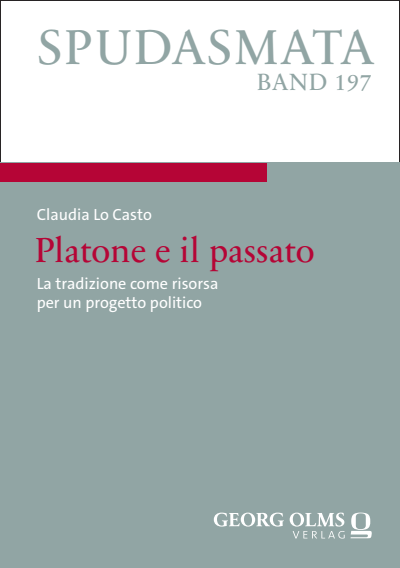
Platone e il passato
La tradizione come risorsa per un progetto politico- Autor:innen:
- Reihe:
- Spudasmata, Band 197
- Verlag:
- 2024
Zusammenfassung
Dieser Band widmet sich der Rekonstruktion von Platons Verhältnis zur Vergangenheit in literarischen, sozioökonomischen und politischen Kontexten. Die Vergangenheit wird als reale "Ressource" analysiert, aus der Inhalte zur Neuinterpretation und Re-Semantisierung geschöpft werden können. Die Analyse zeigt auf, wie Platon eine methodologische "Strategie" der Übertragung von Elementen des traditionellen kulturellen Systems – der archaischen, mythisch-religiösen und politischen Tradition – in einen neuen konzeptionellen Kontext entwickelt, der auf die Verwirklichung eines utopischen philosophisch-politischen Projekts ausgerichtet ist.
Schlagworte
Publikation durchsuchen
Bibliographische Angaben
- Auflage
- 1/2024
- Copyrightjahr
- 2024
- ISBN-Print
- 978-3-487-16691-9
- ISBN-Online
- 978-3-487-42450-7
- Verlag
- Georg Olms Verlag, Baden-Baden
- Reihe
- Spudasmata
- Band
- 197
- Sprache
- Italienisch
- Seiten
- 183
- Produkttyp
- Monographie
Inhaltsverzeichnis
KapitelSeiten
- Titelei/Inhaltsverzeichnis Kein Zugriff Seiten 1 - 5
- Vorwort Kein Zugriff Seiten 6 - 9
- Premessa Kein Zugriff Seiten 10 - 11
- Introduzione Kein Zugriff Seiten 12 - 17
- Platone e la ricezione del mito esiodeo Kein Zugriff
- Poesia epica e lirica Kein Zugriff
- Platone e Aristofane Kein Zugriff
- La storia di Atlantide e dell’antica Atene Kein Zugriff
- Trasposizione della caverna come “Ade” Kein Zugriff
- Il ritorno alle origini per la costruzione della città ideale Kein Zugriff
- Esiodo e l’agricoltura Kein Zugriff
- Senofonte e l’economia antica Kein Zugriff
- La costituzione laconica come modello della città ideale? Kein Zugriff
- Sparta nella Repubblica Kein Zugriff
- Sparta nelle Leggi Kein Zugriff
- Conclusioni Kein Zugriff Seiten 154 - 155
- Bibliografia Kein Zugriff Seiten 156 - 173
- Indice dei nomi Kein Zugriff Seiten 174 - 175
- Indice dei passi Kein Zugriff Seiten 176 - 183
Literaturverzeichnis (223 Einträge)
Es wurden keine Treffer gefunden. Versuchen Sie einen anderen Begriff.
- Adam, J. (1902): The Republic of Plato, Cambridge. Google Scholar öffnen DOI: 10.5771/9783487424507
- Akçay, K. N. (2009): Porhyry’s On the Cave of the Nymphs in its Intel-lectual Context, Leiden/Boston. Google Scholar öffnen DOI: 10.5771/9783487424507
- Anderson, J. K. (1974): Xenophon, London. Google Scholar öffnen DOI: 10.5771/9783487424507
- Annas, J. (1991): An Introduction to Plato’s Republic, Oxford. Google Scholar öffnen DOI: 10.5771/9783487424507
- Annas, J. (1997): “Politics and Ethics in Plato’s Republic.” In: Platon. Politeia, a cura di O. Höffe, Berlin, 144–153. Google Scholar öffnen DOI: 10.5771/9783487424507
- Arrighetti, G. (1984): Esiodo. Teogonia, Milano. Google Scholar öffnen DOI: 10.5771/9783487424507
- Arrighetti, G. (1991): “Platone fra mito, poesia e storia.” SCO 41, 13–34. Google Scholar öffnen DOI: 10.5771/9783487424507
- Arrighetti, G. (1992): “Esiodo e le Muse: il dono della verità e la con-quista delle parole.” Athenaeum 80, 45–63. Google Scholar öffnen DOI: 10.5771/9783487424507
- Beltrametti, A. (2000): “L’utopia dalla commedia al dialogo platonico.” In: Platone. La Repubblica. Vol. IV, Libro V, a cura di M. Vegetti, Napoli, 233–256. Google Scholar öffnen DOI: 10.5771/9783487424507
- von Berkel, T. A. (2018): “Socratic Economics and the Psycology of Money.” In: Plato and Xenophon. Comparative Studies, a cura di G. Danzig, D. Johnson e D. Morrison, Leiden/Boston, 391–430. Google Scholar öffnen DOI: 10.5771/9783487424507
- Bertelli, L. (1996): “La stasis dans la déémocratie.” In: Rééflections con-temporaines sur l’Antiquité classique, a cura di M.-L. Desclos, Pa-ris, 11–38. Google Scholar öffnen DOI: 10.5771/9783487424507
- Bertrand, J.-M. (1999): “De la stasis dans les cités Platoniciennes.” CCG 10, 209–224. Google Scholar öffnen DOI: 10.5771/9783487424507
- Birgalias, N. (2002): “Helotage and Spartan Social Organization.” In: Sparta: Beyond the Mirage, a cura di A. Powell, e S. Hodkinson, London, 249–266. Google Scholar öffnen DOI: 10.5771/9783487424507
- Blank, Th. (2014): Logos und Praxis. Sparta als politisches Exemplum in den Schriften des Isokrates, Berlin. Google Scholar öffnen DOI: 10.5771/9783487424507
- Bordt. M. (2006): Platons Theologie, Freiburg. Google Scholar öffnen DOI: 10.5771/9783487424507
- Bordt, M. (2013): “Die theologische Fundierung der Gesetze.” In: Pla-ton. Gesetze–Nomoi, a cura di Ch. Horn, Berlin, 209–226. Google Scholar öffnen DOI: 10.5771/9783487424507
- Botter, B. (2016): La creazione di immagini in Platone, Milano. Google Scholar öffnen DOI: 10.5771/9783487424507
- Boys-Stones, G. R. (2010): “Hesiod and Plato’s History of philosophy.” In: Plato and Hesiod, a cura di G. R. Boys-Stones e J. H. Haubold, Oxford., 31–51. Breitenbach, H. R. (1967): “Xenophon von Athen.” In: Real-Encyc-lopadie der classischen Altertumswissenschaft [RE], IX A2, a cura di A. Pauly et al., Stuttgart, 1837–1871. Google Scholar öffnen DOI: 10.5771/9783487424507
- Brickhouse, T.C. (1981): “The Paradox of the Philosophers’ Rule.” Apeiron 15, 1-9. Google Scholar öffnen DOI: 10.5771/9783487424507
- Brisson, L. (1987): “Le discours comme univers et l’univers comme discours. Platon et ses interprètes néo-platoniciens.” In: Le texte et ses representations, a cura di Ph. Hoffmann, J. Lallot e A. Le Boul-luec, Paris, 121–128. Google Scholar öffnen DOI: 10.5771/9783487424507
- Brisson, L. (1994a): “Critias.” In: Dictionnaire des philosophes an-tiques. Vol. 2, a cura di R. Goulet, Paris, 512–520. Google Scholar öffnen DOI: 10.5771/9783487424507
- Brisson, L. (1994b): Platon, les mots et les mythes. Comment et pour-quoi Platon nomma le mythe?, Paris. Google Scholar öffnen DOI: 10.5771/9783487424507
- Brisson, L. (1996): Einführung in die Philosophie des Mythos, Darm-stadt. Google Scholar öffnen DOI: 10.5771/9783487424507
- Brisson, L. (2000): Lectures de Platon, Paris. Google Scholar öffnen DOI: 10.5771/9783487424507
- Brisson, L./Pradeau, J.-F. (2006): Platon. Les Lois, Paris. Google Scholar öffnen DOI: 10.5771/9783487424507
- Burkert, W. (1969): “Das Proömium des Parmenides und die Katabasis des Pythagoras.” Phronesis 14, 1–30. Google Scholar öffnen DOI: 10.5771/9783487424507
- Burkert, W. (1972): Lore and Science in Ancient Pythagoreanism, Cambridge Mass. Google Scholar öffnen DOI: 10.5771/9783487424507
- Burnet, J. (1914): Greek Philosophy. Part I: Thales to Plato, London. Google Scholar öffnen DOI: 10.5771/9783487424507
- Calabi, F. (1998a): “Gige.” In: Platone. La Repubblica. Vol. II, Libri II e III, a cura di M. Vegetti, Napoli, 173–188. Google Scholar öffnen DOI: 10.5771/9783487424507
- Calabi, F. (1998b): “La nobile menzogna.” In: Platone. La Repubblica. Vol. II, Libri II e III, a cura di M. Vegetti, Napoli, 445–457. Google Scholar öffnen DOI: 10.5771/9783487424507
- Calabi, F. (2006): “Timocrazia.” In: Platone. La Repubblica. Vol. VI, Libri VIII–IX, a cura di M. Vegetti, Napoli, 263–293. Google Scholar öffnen DOI: 10.5771/9783487424507
- Calame, C. (2004): “Succession des âges et pragmatique poétique de la justice. La récit hésiodique des cinq espèces humaines.” Kernos 17, 67–102. Google Scholar öffnen DOI: 10.5771/9783487424507
- Cambiano, G. (2016): Come nave in tempesta. Il governo della città in Platone e Aristotele, Roma/Bari. Google Scholar öffnen DOI: 10.5771/9783487424507
- Campese, S. (1998): “La genesi della polis.” Platone. La Repubblica. Vol. II, Libri II e III, a cura di M. Vegetti, Napoli, 285–306. Google Scholar öffnen DOI: 10.5771/9783487424507
- Campese, S. (2003): “La caverna.” In: Platone. La Repubblica. Vol. V, Libri VI e VII, a cura di M. Vegetti, Napoli, 435–472. Google Scholar öffnen DOI: 10.5771/9783487424507
- Campese, S. (2006): “L’oikos e la decadenza della città.” In: Platone. La Repubblica. Vol. VI, Libri VIII–IX, Napoli, 189–261. Google Scholar öffnen DOI: 10.5771/9783487424507
- Campese, S. (2007): “L’innovazione platonica nell’allegoria della ca-verna.” In: The Ascent to The Good, a cura di F. Lisi, Sankt Augus-tin, 101–112. Google Scholar öffnen DOI: 10.5771/9783487424507
- Canfora, L. (2016): La crisi dell’utopia: Aristofane contro Platone, Roma/Bari. Google Scholar öffnen DOI: 10.5771/9783487424507
- Canto-Sperber, M./Brisson, L. (1997): “Zur sozialen Gliederung der Polis.” In: Platon. Politeia, a cura di O. Höffe, Berlin, 95–117. Google Scholar öffnen DOI: 10.5771/9783487424507
- Capra, A. (2007): “Stratagemmi comici da Aristofane a Platone. Parte III: Utopia (Repubblica, Donne al parlamento).” Stratagemmi 4, 32–40. Google Scholar öffnen DOI: 10.5771/9783487424507
- Capra, A. (2010): Aristofane. Donne al parlamento. Introduzione, tra-duzione, commento, Roma. Google Scholar öffnen DOI: 10.5771/9783487424507
- Carloni, M. (2012): “Una parafrasi di Omero nella Repubblica di Pla-tone.” Antiquorum Philosophia 6, 101–127. Google Scholar öffnen DOI: 10.5771/9783487424507
- Casertano, G. (2005): “La caverne: entre analogie, image, connaissance et praxis.” In: Études sur la République de Platon. Vol. 2: De la science du bien et des mythes, Paris, 39–70. Google Scholar öffnen DOI: 10.5771/9783487424507
- Centrone, B. (2015): Prima lezione di filosofia antica, Roma/Bari. Google Scholar öffnen DOI: 10.5771/9783487424507
- Centrone, B. (2021): La seconda «polis». Introduzione alle «Leggi» di Platone, Roma. Google Scholar öffnen DOI: 10.5771/9783487424507
- Cerri, G. (2000): “Dalla dialettica all’epos. Platone, Repubblica X, Ti-meo, Crizia.” In: La struttura del dialogo platonico, a cura di G. Casertano, Napoli, 7–34. Google Scholar öffnen DOI: 10.5771/9783487424507
- Charalabopoulos, N. G. (2012): Platonic drama and its ancient recep-tion, Cambridge. Google Scholar öffnen DOI: 10.5771/9783487424507
- Cherry, K. M. (2012): Plato, Aristotle and the Purpose of Politics, Cambridge, 48-73. Google Scholar öffnen DOI: 10.5771/9783487424507
- Cornford, F. M. C. (1956): Plato’s Cosmology. The Timaeus of Plato, London. Google Scholar öffnen DOI: 10.5771/9783487424507
- Craig, L. H. (1994): The War Lover. A Study of Plato’s ‘Republic’, To-ronto. Google Scholar öffnen DOI: 10.5771/9783487424507
- Cross, R. C./Woozley, A. D. (1964): Plato’s Republic. A Philosophical Commentary, London. Google Scholar öffnen DOI: 10.5771/9783487424507
- Crubellier, M. (1996): “Le mythe comme discours. Le récit des cinq races humaines dans les Travaux et les jours.” In: Le métier du mythe. Lectures d’Hesiode, a cura di F. Blaise, P. Judet de la Combe e P. Rousseau, Lille, 431–463. Google Scholar öffnen DOI: 10.5771/9783487424507
- Danzig, G./Schaps, D. (2001): “The Economy: what Plato saw and what he wanted.” In: Plato’s Laws and its Historical Significance. Se-lected Papers of the I International Congress on Ancient Thought, Salamanca, 1998, a cura di F. Lisi, Sankt Augustin, 143–148. Google Scholar öffnen DOI: 10.5771/9783487424507
- Danzig, G. (2018): “Introduction to the Comparative Study of Plato and Xenophon.” In: Plato and Xenophon. Comparative Studies, a cura di G. Danzig, D. Johnson e D. Morrison, Leiden/Boston, 1–30. Google Scholar öffnen DOI: 10.5771/9783487424507
- De Brasi, D. (2013): L’immagine di Sparta nei dialoghi platonici. Il giudizio di un filosofo su una (presunta) pólis modello, Sankt Au-gustin. Google Scholar öffnen DOI: 10.5771/9783487424507
- De Martinis, L. (2013): Senofonte. Tutti gli scritti socratici. Apologia di Socrate, Memorabili, Economico, Simposio, Milano. Google Scholar öffnen DOI: 10.5771/9783487424507
- De Sanctis, D. (2012): “Ai tempi di Crono: il duplice volto dell’umanità primitiva in Omero e in Esiodo”. In: Immagini delle Origini. La nascita della civiltà e della cultura nel pensiero antico, a cura di F. Calabi/S. Gastaldi, Sankt Augustin, 17-35. Google Scholar öffnen DOI: 10.5771/9783487424507
- Destrée, P. (2012): “Plato on Tragic and Comic Pleasures.” In: Plato on Art and Beauty, a cura di A. E. Denham, London, 125–141. Google Scholar öffnen DOI: 10.5771/9783487424507
- Di Benedetto, V. (2010): Omero. Odissea, Milano. Google Scholar öffnen DOI: 10.5771/9783487424507
- Diels, H. (1956): Die Fragmente des Vorsocratiker, a cura di W. Kranz, Berlin. Google Scholar öffnen DOI: 10.5771/9783487424507
- Dodds, Ε. Ρ. (2003): I greci e l’irrazionale, Firenze. Google Scholar öffnen DOI: 10.5771/9783487424507
- Dorter, K. (2006): The Transformation of Plato’s Republic, New York/Toronto/Oxford. Google Scholar öffnen DOI: 10.5771/9783487424507
- Elias, A. (1984): Plato’s Defence of Poetry, London. Google Scholar öffnen DOI: 10.5771/9783487424507
- Else, G. F. (1986): Plato and Aristotle on Poetry, Chapel Hill. Google Scholar öffnen DOI: 10.5771/9783487424507
- Erler, M. (1997): “Ideal und Wirklichkeit. Die Rahmengespräche des Timaios und Kritias und Aristoteles’ Poetik”. In: Interpreting the Timaeus-Critias, a cura di T. Calvo/L. Brisson, Sankt Augustin 83–98. Google Scholar öffnen DOI: 10.5771/9783487424507
- Erler, M. (2000): “Geschlechterdifferenz als Konvention. Zum Verhält-nis von Körper und Rolle der Geschlechter bei Platon.” In: Der Körper und die Religion, a cura di E. Klinger, S. Böhm e Th. Seidl, Würzburg, 47–66. Erler, M. (2002): “Praesens divinum. Mythische und historische Zeit in der griechischen Literatur” In: Platon als Mythologe. Neue Inter-pretationen zu den Mythen in Platons Dialogen, a cura di M. Janka e C. Schäfer, Darmstadt, 81–98. Google Scholar öffnen DOI: 10.5771/9783487424507
- Erler, M. (2007): Platon. Grundriss der Geschichte der Philosophie, begründet von F. Überweg; völlig neu bearb. Ausg. hrsg. von Hel-mut Holzhey. Die Philosophie der Antike. 2/2, Basel. Google Scholar öffnen DOI: 10.5771/9783487424507
- Faraguna, M. (2003): “‘Nomisma’ e ‘polis’. Aspetti della riflessione greca antica sul ruolo della moneta nella società.” In: Moneta, mer-canti, banchieri. I precedenti greci e romani dell’Euro, a cura di G. Urso, Pisa, 109–135. Google Scholar öffnen DOI: 10.5771/9783487424507
- Ferrari, F. (1998): “Theologia.” In: Platone. La Repubblica. Vol. II, Li-bri II e III, a cura di M. Vegetti, Napoli, 402–425. Google Scholar öffnen DOI: 10.5771/9783487424507
- Ferrari, F. (2006): I miti di Platone, Milano. Google Scholar öffnen DOI: 10.5771/9783487424507
- Ferrari, F. (2015–2016): “La condizione umana secondo il ‘mito’ della caverna di Platone.” Eranos Yearbook 73, 865–898. Google Scholar öffnen DOI: 10.5771/9783487424507
- Ferrari, F. (2019): La via dell’immortalità dell’anima, Torino. Google Scholar öffnen DOI: 10.5771/9783487424507
- Ferrari, F. (2022): La Repubblica di Platone, Bologna. Google Scholar öffnen DOI: 10.5771/9783487424507
- Ferrari, F. (2022): “Dall’abitudine alla conoscenza: il ruolo delle mate-matiche nella paidea della Repubblica di Platone.” In: La virtù tra paideia, politeia ed episteme. Una questione di lungo periodo, a cura di M. Ferrari, M. Morandi, G. Delogu, Brescia, 69-89. Google Scholar öffnen DOI: 10.5771/9783487424507
- Ferrari, G. R. F. (2003): City and Soul in Plato’s Republic, Sankt Au-gustin. Google Scholar öffnen DOI: 10.5771/9783487424507
- Ferrucci, S. (2006): “«L’oikos» nel diritto attico. Pubblico, privato e individuale nella democrazia ateniese classica.” Dike 9, 183–210. Google Scholar öffnen DOI: 10.5771/9783487424507
- Finley, M. I. (1999): The Ancient Economy, Berkeley/Los Angeles. Google Scholar öffnen DOI: 10.5771/9783487424507
- Föllinger, S. (1996): Differenz und Gleichheit. Das Geschlechterver-hältnis in der Sicht griechischer Philosophen des 4. Bis 1. Jahr-hunderts v. Chr., Stuttgard. Google Scholar öffnen DOI: 10.5771/9783487424507
- Föllinger, S. (2006): “Sokrates als Ökonom. Eine Analyse der didakti-schen Gestaltung von Xenophons Oikonomikos.” WJA 30, 5–23. Google Scholar öffnen DOI: 10.5771/9783487424507
- Föllinger, S. (2014): “Ökonomische Literatur.” In: Handbuch der grie-chischen Literatur der Antiken. Band 2: Die Literatur der klas-sichen und Hellenistischen Zeit, a cura di B. Zimmermann e A. Rengakos, München, 584–590. Google Scholar öffnen DOI: 10.5771/9783487424507
- Föllinger, S. (2016): Ökonomie bei Platon, Berlin/Boston. Google Scholar öffnen DOI: 10.5771/9783487424507
- Ford, A. L. (2010): “Plato’s two Hesiods.” In: Plato and Hesiod, a cura di G. R. Boys-Stones e J. H. Haubold, Oxford, 133–154. Google Scholar öffnen DOI: 10.5771/9783487424507
- Gaiser, K. (1984): Platone come scrittore filosofico. Saggi sull’erme-neutica di Platone, Napoli. Google Scholar öffnen DOI: 10.5771/9783487424507
- Gastaldi, S. (1998): Storia del pensiero politico, Roma/Bari. Google Scholar öffnen DOI: 10.5771/9783487424507
- Gastaldi, S. (2007): “La mimesis e l’anima.” In: Platone. La Repub-blica. Vol. VII, Libro X, a cura di M. Vegetti, Napoli, 93–149. Google Scholar öffnen DOI: 10.5771/9783487424507
- Gastaldi, S. (2012): “«La semplicità» dei primi uomini: L’immagine delle origini nel libro III delle Leggi di Platone”. In: Plato’s “Laws”: from Theory into Practice. Proceedings of the VI Sym-posium Platonicum, a cura di S. Scolnicov e L. Brisson Sankt Au-gustin, 105-120. Google Scholar öffnen DOI: 10.5771/9783487424507
- Gehrke, H. J. (1996): “La stasis.” In: I Greci. Vol. II, a cura di S. Settis, Torino, 453–480. Google Scholar öffnen DOI: 10.5771/9783487424507
- Ghibellini, A. (2004): “La nobile menzogna in Platone.” Giornale di Metafisica 26, 301–332. Google Scholar öffnen DOI: 10.5771/9783487424507
- Gigante, M. (1956): ΝΟΜΟΣ ΒΑΣΙΛΕΥΣ, Napoli. Google Scholar öffnen DOI: 10.5771/9783487424507
- Gigante, M. (1998): Diogene Laerzio. Vite dei filosofi, Roma/Bari. Google Scholar öffnen DOI: 10.5771/9783487424507
- Gill, Ch. (1980): Plato. The Atlantis Story. Timaeus 17–27. Critias, Bristol. Google Scholar öffnen DOI: 10.5771/9783487424507
- Gill, Ch. (2017): Plato’s Atlantis Story, Liverpool. Google Scholar öffnen DOI: 10.5771/9783487424507
- Giuliano, F. M. (2005): Platone e la poesia. Teoria della composizione e prassi della ricezione, Sankt Augustin. Google Scholar öffnen DOI: 10.5771/9783487424507
- Goldschimdt, V. (1970): “Theologia.” In: Questions platoniciennes, V. Goldschimdt, Paris, 141–172. Google Scholar öffnen DOI: 10.5771/9783487424507
- Görgemanns, H. (1960): Beiträge zur Interpretation von Platons No-moi, München. Google Scholar öffnen DOI: 10.5771/9783487424507
- Graziosi, B. (2010): “Hesiod in classical Athens: Rhapsodes, orators, and Platonic discourse.” In: Plato and Hesiod, a cura di G. R. Boys-Stones e J. H. Haubold, Oxford, 111–132. Google Scholar öffnen DOI: 10.5771/9783487424507
- Grisei, P. (2000): “Visione e conoscenza. Il “gioco” analogico di Re-pubblica VI-VII.” In: La struttura del dialogo platonico, a cura di G. Casertano, Napoli, 261–296. Google Scholar öffnen DOI: 10.5771/9783487424507
- Hahm, D. E. (1969): “Plato’s ‘Noble Lie’ and Political Brotherhood.” Classica et Mediaevalia 30, 211–227. Google Scholar öffnen DOI: 10.5771/9783487424507
- Hall, J. (2000): “Sparta, Lakedaimon and the Nature of Perioikic De-pendency.” In: Further Studies in the Ancient Greek Polis, a cura di P. Flensted-Jensen, Stuttgart, 73–89. Google Scholar öffnen DOI: 10.5771/9783487424507
- Halliwell, S. (1996): “Plato’s Repudiation of the Tragic.” In: Tragedy and the Tragic, a cura di M. S. Silk, Oxford, 332–349. Google Scholar öffnen DOI: 10.5771/9783487424507
- Halliwell, S. (1997): “The Republic’s Two Critiques of Poetry.” In: Plato Politeia, a cura di O. Höffe, Berlin, 313–332. Google Scholar öffnen DOI: 10.5771/9783487424507
- Halliwell, S. (2002): The Aesthetics of Mimesis. Ancient Texts and Modern Problems, Princeton/Oxford. Google Scholar öffnen DOI: 10.5771/9783487424507
- Hartmann, L. (2017): Die grosse Rede des Timaios – ein Beispiel wah-rer Rhetoric? Zur Theorie und Praxis philosophischer Rhetorik in Platons Dialogen Gorgias, Phaidros und Timaios, Basel. Google Scholar öffnen DOI: 10.5771/9783487424507
- Herren, X. (2021): Pandora, Pflug und Poesie. Immaterielle und mate-rielle Ressourcen in Hesiods Werken und Tagen, Zürich/New York. Google Scholar öffnen DOI: 10.5771/9783487424507
- Hodkinson, S. (2005): “The Imaginary Spartan Politeia.” In: The Imag-inary Polis, a cura di M. H. Hansen, Copenhagen, 222–281. Google Scholar öffnen DOI: 10.5771/9783487424507
- Horn, Ch. (2013): “Politische Philosophie in Platons Nomoi. Das Prob-lem von Kontinuität und Diskontinuität.” In: Platon. Gesetze–No-moi, a cura di Ch. Horn, Berlin, 1–21. Google Scholar öffnen DOI: 10.5771/9783487424507
- Hunter, R. L. (2014): Hesiodic Voices. Studies in the Ancient Reception of Hesiod’s Works and Days, Cambridge. Google Scholar öffnen DOI: 10.5771/9783487424507
- Irwin, E. (2005): Solon and Early Greek Poetry: The Politics of Exhor-tation, Cambridge. Google Scholar öffnen DOI: 10.5771/9783487424507
- Isnardi Parente, M. (1974): “Aristocratismo, conservatorismo, assoluti-smo in Platone.” In: La filosofia dei Greci nel suo sviluppo storico. Parte II, volume III/2, a cura di E. Zeller, R. Mondolfo e M. Isnardi Parente, Firenze, 604–624. Google Scholar öffnen DOI: 10.5771/9783487424507
- Jaeger, W. (1947): Theology of the Early Greek Philosophers, Oxford. Google Scholar öffnen DOI: 10.5771/9783487424507
- Joly, H. (1974): Le renversement platonicien. Logos, Episteme, Polis, Paris. Google Scholar öffnen DOI: 10.5771/9783487424507
- Jouët-Pastré, E. (2006): Le Jeu et le sérieux dans les Lois de Platon, Sankt Augustin. Google Scholar öffnen DOI: 10.5771/9783487424507
- Keber, W. (1957): Platos Stellung zur Sparta-Ideologie, Müünster. Google Scholar öffnen DOI: 10.5771/9783487424507
- Knoll, M. (2013): “Bürger, Frauen, Fremde und Sklaven in Magnesia.” In: Platon. Gesetze–Nomoi, a cura di Ch. Horn, Berlin, 143–163. Google Scholar öffnen DOI: 10.5771/9783487424507
- Latona, M. (2004): “Tale is Not My Own (οὐκ ἐμὸς ό μῦθος): Myth and Recollection in Plato”. Apeiron 37, 181-210. Google Scholar öffnen DOI: 10.5771/9783487424507
- Laurenti, R. (1999): Empedocle, Napoli. Google Scholar öffnen DOI: 10.5771/9783487424507
- Lavecchia, S. (2006): Una via che conduce al divino. La «homoiosis theo» nella filosofia di Platone, Milano. Google Scholar öffnen DOI: 10.5771/9783487424507
- Lesser, H. (1979): “Plato’s Feminism.” Philosophy 54, 113-117. Google Scholar öffnen DOI: 10.5771/9783487424507
- Lévy, E. (2005): “La Sparte de Platon.” Ktèma 30, 217–236. Google Scholar öffnen DOI: 10.5771/9783487424507
- Lewis, D. (2009): “Xenophon’s Poroi and the Foundations of Political Economy.” Polis 26.2, 370–388. Google Scholar öffnen DOI: 10.5771/9783487424507
- Lisi, F. (2006): “Repubblica VIII e Leggi III.” In: Platone. La Repub-blica. Vol. VI, Libri VIII–IX, Napoli, 635–666. Google Scholar öffnen DOI: 10.5771/9783487424507
- Longo, O. (1975–1976): “Strutture socio-economiche nella Repubblica di Platone: ideologia e utopia.” Helikon 15–16, 540–552. Google Scholar öffnen DOI: 10.5771/9783487424507
- Longo, O. (2006): Tucidide. Epitafio di Pericle per i caduti del primo anno di guerra, Venezia. Google Scholar öffnen DOI: 10.5771/9783487424507
- de Luise, F. (2016): “La scienza del potere ovvero il potere dei tecnici: la questione dei migliori tra Repubblica e Politico.” In: Legittima-zione del potere, autorità della legge: un dibattito antico, a cura di F. de Luise, Trento, 75–105. Google Scholar öffnen DOI: 10.5771/9783487424507
- Luraghi, N. (2002): “Helotic Slavery Reconsidered.” In: Sparta: Be-yond the Mirage, a cura di A. Powell, e S. Hodkinson, London, 227–248. Google Scholar öffnen DOI: 10.5771/9783487424507
- Luraghi, N. (2003): “The Imaginary Conquest of the Helots.” In: Helots and their Masters in Laconia and Messenia: Histories, Ideologies, Structures, a cura di N. Luraghi e S. E. Alcock, Cambridge, 109–141. Google Scholar öffnen DOI: 10.5771/9783487424507
- Männlein-Robert, I. (2010): “Umrisse des Göttlichen. Zur Typologie des idealen Gottes in Platons Politeia II.” In: Platon und das Gött-liche, a cura di D. Koch, I. Männlein-Robert e N. Weidtmann, Tü-bingen, 112–138. Google Scholar öffnen DOI: 10.5771/9783487424507
- Männlein-Robert, I. (2012): “Von Hölen und Helden. Zur Semantik von Katabasis und Raum in Platons Politeia.” Gymnasium 119, 1–21. Google Scholar öffnen DOI: 10.5771/9783487424507
- Männlein-Robert, I. (2013a): “Katabasis und Höhle: Philosophische Entwüürfe der (Unter-)Welt in Platons Politeia.” In: Dia-logues on Plato’s Politeia (Republic). Selected Papers from the Ninth Symposium Platonicum, a cura di N. Notomi e L. Brisson, Sankt Augustin, 242–251. Google Scholar öffnen DOI: 10.5771/9783487424507
- Männlein-Robert, I. (2013b): “Poetik: Kömodie und Tragödie.” In: Pla-ton. Gesetze–Nomoi, a cura di Ch. Horn, Berlin, 123–141. Google Scholar öffnen DOI: 10.5771/9783487424507
- Männlein-Robert, I. (2019a): “Der Motiv der Höhle in Literatur und Kunst: Porphyrios De Antro Nympharum.” In: Die Seele im Kos-mos Porphyrios. Über die Nymphengrotte in der Odyssee, a cura di M. Baumbach, Tübingen, 97–116. Google Scholar öffnen DOI: 10.5771/9783487424507
- Männlein-Robert, I. (2019b): „Unsere φύσις“ im Höhlengleichnis Pla-tons.” In: Platon und die Physis, a cura di D. Koch, I. Männlein-Robert e N. Weidtmann, Tübingen 2019, 73–91. Google Scholar öffnen DOI: 10.5771/9783487424507
- Männlein-Robert, I. (2021): Forget about Atlantis: Plato’s Invention of Tradition or Symbolic Dimensions of Knowledge in: Exploring Re-sources on Cultural, Spatial and Temporal Dimensions of Re-sourceCultures, a cura di M. Bartelheim, Th. Scholten, Tübingen 2021, 113-123. Google Scholar öffnen DOI: 10.5771/9783487424507
- Merlo, V. (2003): Contadini perfetti e cittadini agricoltori nel pensiero antico, Milano. Google Scholar öffnen DOI: 10.5771/9783487424507
- Mertens, N. (2002): “οὐκ ὁμοῖοι ἀγαθοὶ δὲ. The Perioikoi in the Clas-sical Lakedaimonian Polis.” In: Sparta: Beyond the Mirage, a cura di A. Powell, e S. Hodkinson, London, 285–303. Google Scholar öffnen DOI: 10.5771/9783487424507
- Migliori, M. (2021) “The Use and Meaning of the Past in Plato”. Plato Journal 21, 43-58. Google Scholar öffnen DOI: 10.5771/9783487424507
- Morgan, M. L. (1992): “Platon und Greek Religion.” In: The Cam-bridge Companion to Plato, a cura di R. Kraut, Cambridge, 227–247. Google Scholar öffnen DOI: 10.5771/9783487424507
- Morris, I. (1994): “The Athenian Economy Twenty Years after The An-cient Economy.” Classical Philology 89, 351–366. Google Scholar öffnen DOI: 10.5771/9783487424507
- Morrow, G. R. (1960): Plato’s Cretan City. A Historical Interpretation of the Laws, Princeton. Google Scholar öffnen DOI: 10.5771/9783487424507
- Mosconi, G. (2005): “Prima di Iscomaco, Pericle: la terra da bene di sussistenza e prestigio a fonte di reddito.” MediterrAnt 8, 63–118. Google Scholar öffnen DOI: 10.5771/9783487424507
- Most, G. W. (2014): “Platons Exotherische Mythen.” In: Platon als My-thologe. Neue Interpretationen zu den Mythen in Platons Dialogen, a cura di M. Janka e Ch. Schäfer, Darmstadt, 9–21. Google Scholar öffnen DOI: 10.5771/9783487424507
- Mumford, L. (1969): La storia dell’utopia, Bologna. Google Scholar öffnen DOI: 10.5771/9783487424507
- Murray, P. (1996): Plato on Poetry. Ion; Republic 376e–398b9; Repub-lic 595–608b10, Cambridge. Google Scholar öffnen DOI: 10.5771/9783487424507
- Murray, P. (1999): “What is a mythos for Plato?” In: From Myth to Reason, a cura di R. Buxton, Oxford, 251–262. Google Scholar öffnen DOI: 10.5771/9783487424507
- Nagy, G. (2002): Plato’s Rhapsody and Homer’s Music. The Poetics of the Panathenaic Festival in Classical Athens, Athens. Google Scholar öffnen DOI: 10.5771/9783487424507
- Natali, C. (2005): L’élision de l’«oikos» dans la «République» de Pla-ton, in: Études sur la «République» de Platon, vol. I: De la justice, édu-cation, psychologie et politique, a cura di M. Dixsaut, Paris, 199-223. Google Scholar öffnen DOI: 10.5771/9783487424507
- Napolitano Valditara, L. M. (2007): Platone e le ‘ragioni’ dell’imma-gine. Percorsi filosofici e deviazioni tra metafore e miti, Milano. Google Scholar öffnen DOI: 10.5771/9783487424507
- Natali, C. (1988): Senofonte. L’amministrazione della casa (Econo-mico), Venezia. Google Scholar öffnen DOI: 10.5771/9783487424507
- Nesselrath, H.-G. (2002): Platon und die Erfindung von Atlantis, Leipzig/Munich. Google Scholar öffnen DOI: 10.5771/9783487424507
- Nesselrath, H.-G. (2006): Platon. Kritias, Göttingen. Google Scholar öffnen DOI: 10.5771/9783487424507
- Nesselrath, H.-G. (2014): “Platons Atlantis-Geschichte-ein Mythos?” In: Platon als Mythologe. Neue Interpretationen zu den Mythen in Platons Dialogen, a cura di M. Janka e C. Schäfer, Darmstadt, 339–353. Google Scholar öffnen DOI: 10.5771/9783487424507
- Nightingale, A. W. (1999): “Historiography and Cosmology in Plato’s Laws.” AncPhil 19, 299–326. Google Scholar öffnen DOI: 10.5771/9783487424507
- Noack, L. (2020): Religion als kultureller Ordnungsrahmen in Platons Nomoi, Wiesbaden. Google Scholar öffnen DOI: 10.5771/9783487424507
- van Noorden, H. (2015): Playing Hesiod. ‘The Myth of the Races’ in Classical Antiquity, Cambridge. Google Scholar öffnen DOI: 10.5771/9783487424507
- Ollier, F. (1933): Le mirage spartiate. Etude sur l’idéalisation de Sparte dans l’antiquité grecque de l’origine jusqu’aux cyniques, Paris. Google Scholar öffnen DOI: 10.5771/9783487424507
- Otto, D. (1994): Das utopische Staatsmodell von Platon’s Politeia aus der Sicht von Orwels Nineteen Eighty-Four. Ein Beitrag zur Be-wertung des Totalitarismus-vorwurfs gegenüber Platon, Berlin. Google Scholar öffnen DOI: 10.5771/9783487424507
- Palumbo, L. (2008): Mimesis. Rappresentazione, teatro e mondo nei dialoghi di Platone e nella Poetica di Aristotele, Napoli. Google Scholar öffnen DOI: 10.5771/9783487424507
- Panno, G. (2007): Dionisiaco e Alterità nelle «Leggi» di Platone. Or-dine del corpo e automovimento dell’anima nella città-tragedia, Milano. Google Scholar öffnen DOI: 10.5771/9783487424507
- Pender, E. E. (2007): “Poetic Allusion in Plato’s Timaeus and Phae-drus.” GFA 10, 21–57. Google Scholar öffnen DOI: 10.5771/9783487424507
- Pender, E. E. (2010): “Chaos Corrected: Hesiod in Plato’s Creation Myth.” In: Plato and Hesiod, a cura di G. R. Boys-Stones e J. H. Haubold, Oxford, 219–245. Google Scholar öffnen DOI: 10.5771/9783487424507
- Péérilliéé, J.-L. (2015): Mystèères socratiques et Traditions orales de l’eudéémo- nisme dans les Dialogues de Platon, Sankt Augustin. Google Scholar öffnen DOI: 10.5771/9783487424507
- Petraki, Z. (2011): The Poetics of Philosophical Language, Berlin/Bos-ton. Google Scholar öffnen DOI: 10.5771/9783487424507
- Piérart, M. (1974): Platon et la Cité grecque. Théorie et réalité dans la Constitution des “Lois”, Brüssel. Google Scholar öffnen DOI: 10.5771/9783487424507
- Pöhlmann, R. (1925): Geschichte der sozialen Frage und des sozialis-mus in der antiken Welt, München. Google Scholar öffnen DOI: 10.5771/9783487424507
- Pomeroy, S. B. (1995): Xenophon. Oeconomicus. A Social and Histor-ical Commentary, Oxford. Google Scholar öffnen DOI: 10.5771/9783487424507
- Popper, K. R. (19624): The Open Society and Its Enemies. I: The Spell of Plato, London. Google Scholar öffnen DOI: 10.5771/9783487424507
- Pradeau, J.-F. (1997): Le monde de la politique. Sur le récit atlante de Platon, Timée (17–27) et Critias, Sankt Augustin. Google Scholar öffnen DOI: 10.5771/9783487424507
- Pradeau, J.-F. (2001): “La economía política de las Leyes. Observa-ciones sobre la institución de los κλῆροι.” In: Plato’s Laws and its Historical Significance. Selected Papers of the I International Congress on Ancient Thought, Salamanca, 1998, a cura di F. Lisi, Sankt Augustin, 149–160. Google Scholar öffnen DOI: 10.5771/9783487424507
- Pradeau, J.-F. (2005): “L’irréalisable verité de la République platoni-cienne: Remarques sur le statut et sur le contenu de la πολιτεία de la République.” In: The Imaginary Polis, a cura di M. H. Hansen, Copenhagen, 100–123. Google Scholar öffnen DOI: 10.5771/9783487424507
- Quarta, C. (1993): L’utopia platonica. Il progetto politico di un grande filosofo, Bari. Google Scholar öffnen DOI: 10.5771/9783487424507
- Rawson, E. (1969): The Spartan Tradition in European Thought, Ox-ford. Google Scholar öffnen DOI: 10.5771/9783487424507
- Regali, M. (2010): “Hesiod in the Timaeus: The Demiurge Adresses the Gods.” In: Plato and Hesiod, a cura di G. R. Boys-Stones e J. H. Haubold, Oxford, 259–275. Google Scholar öffnen DOI: 10.5771/9783487424507
- Regali, M. (2012): Il poeta e il Demiurgo. Teoria e prassi della produ-zione letteraria nel Timeo e nel Crizia di Platone, Sankt Augustin. Google Scholar öffnen DOI: 10.5771/9783487424507
- Reinhardt, K. (2015): I miti di Platone, Genova. Google Scholar öffnen DOI: 10.5771/9783487424507
- Rowe, C. J. (1999): Myth, History and Dialectic in Plato’s Republic and Timaeus-Critias.” In: From Myth to Reason? Studies in the Devel-opment of Greek Thought, a cura di R. Buxton, Oxford, 263–278. Google Scholar öffnen DOI: 10.5771/9783487424507
- Savino, E. (2007): Tucidide. La guerra del Peloponneso, Milano. Google Scholar öffnen DOI: 10.5771/9783487424507
- Schmidt, J. U. (1986): Adressat und Parainseform. Zur intention von Hesiods Werke und Tagen, Göttingen. Google Scholar öffnen DOI: 10.5771/9783487424507
- Schmitz, W. (2010): Haus und Familie im antiken Griechenland, Mün-chen. Google Scholar öffnen DOI: 10.5771/9783487424507
- Schofield, M. (2003): “Religion and Philosophy in the Laws.” In: Plato’s Laws: From Theory into Practice. Proceedings of the VI Symposium Platonicum. Selected Papers, a cura di S. Scolnicov e L. Brisson, Sankt Augustin, 1–13. Google Scholar öffnen DOI: 10.5771/9783487424507
- Schofield, M. (2006): Plato. Political Philosophy, Oxford. Google Scholar öffnen DOI: 10.5771/9783487424507
- Schöpsdau, K. (1994): Platon. Nomoi (Gesetze). Buch I-III, Göttingen. Google Scholar öffnen DOI: 10.5771/9783487424507
- Schöpsdau, K. (2011): Platon. Nomoi (Gesetze). Buch VIII-XII, Göttin-gen. Google Scholar öffnen DOI: 10.5771/9783487424507
- Schriefl, A. (2013a): “Die Wirtschaftsordnung und die richtige Einstel-lung zu Besitz und Reichtum.” Platon. Gesetze–Nomoi, a cura di Ch. Horn, Berlin, 105–122. Google Scholar öffnen DOI: 10.5771/9783487424507
- Schriefl, A. (2013b): Platons Kritik an Geld und Reichtum, Berlin. Google Scholar öffnen DOI: 10.5771/9783487424507
- Seaford, R. (2004): Money and the Early Greek Mind. Homer, Philos-ophy, Tragedy, Cambridge. Google Scholar öffnen DOI: 10.5771/9783487424507
- Simonini, L. (1986): L’antro delle Ninfe, Milano. Google Scholar öffnen DOI: 10.5771/9783487424507
- Snell, B./Maehler, H. (1987–1989): Pindarus, I-II, Leipzig 1987–1989. Google Scholar öffnen DOI: 10.5771/9783487424507
- Solmsen, F. (1962): “Hesiodic Motifs in Plato.” In: Hésiode et son In-fluence. Six exposés et discussions, Entretiens sur l’antiquité Clas-sique 7, Fondation Hardt, Genève, 171–211. Google Scholar öffnen DOI: 10.5771/9783487424507
- Sommerstein, A. (1998): Ecclesiazusae, English & Greek. Edited with Translation and Commentary, Warminster. Google Scholar öffnen DOI: 10.5771/9783487424507
- Steiner, P. M. (1992): Platon. Nomoi X, Berlin. Google Scholar öffnen DOI: 10.5771/9783487424507
- Stemmer, P. (1988): “Der Grundriss der platonischen Ethik.” ZPhF 42.4, 529–569. Google Scholar öffnen DOI: 10.5771/9783487424507
- Stevens, J. A. (1994): “Friendship and profit in Xenophon’s Oeconomi-cus.” In: The socratic Movement, a cura di P. Vander Waerd, Ith-aca, 209–237. Google Scholar öffnen DOI: 10.5771/9783487424507
- Strauss, L. (1970): Xenophon’s Socratic Discourse. An Interpretation of the Oeconomicus, Ithaca. Google Scholar öffnen DOI: 10.5771/9783487424507
- Strauss, L. (1972): Xenophon’s Socrates, Ithaca. Google Scholar öffnen DOI: 10.5771/9783487424507
- Strauss Clay, J. (2003): Hesiod’s Cosmos, Cambridge. Google Scholar öffnen DOI: 10.5771/9783487424507
- Szlezák, Th. A. (1993): “Atlantis und Troia, Platon und Homer. Bemer-kungen zum Wahrheitsanspruch des Atlantis–Mythos.” Studia Troica 3, 233–237. Google Scholar öffnen DOI: 10.5771/9783487424507
- Szlezák, Th. A. (1997): “Das Höhlengleichnis.” In: Platon. Politeia, a cura di O. Höffe, Berlin, 205–228. Google Scholar öffnen DOI: 10.5771/9783487424507
- Szlezák, Th. A. (2004): Platon und die Schriftlichkeit der Philosophie. Teil 2: Das Bild des Dialektikers in Platons spääten Dialogen, Ber-lin. Google Scholar öffnen DOI: 10.5771/9783487424507
- Tarrant, H. (2012): “Literal and deeper meanings in Platonic myths.” In: Plato and Myth. Studies on the Use and Status of Platonic Myths, a cura di C. Collobert, P. Destrée e F. J. Gonzalez, Lei-den/Boston, 47–65. Google Scholar öffnen DOI: 10.5771/9783487424507
- Taylor, A. E. (1928): A Commentary on Plato’s Timaeus, Oxford. Google Scholar öffnen DOI: 10.5771/9783487424507
- Thesleff, H. (1997): “The Early Version of Plato’s Republic.” Arctos 31, 149–174. Google Scholar öffnen DOI: 10.5771/9783487424507
- Thesleff, H. (2009): Platonic Patterns. A Collection of Works by Holger Thesleff, Las Vegas. Google Scholar öffnen DOI: 10.5771/9783487424507
- Tigerstedt, E. N. (1965): The Legend of Sparta in Classical Antiquity. Vol. I, Stockholm. Google Scholar öffnen DOI: 10.5771/9783487424507
- Tornau, Ch. (2007): “Nachahmung/Darstellung/Mimesis (mimêsis).” In: Platon-Lexicon. Begriffswörterbuch zu Platon und der platoni-schen Tradition, a cura di C. Schäfer, Darmstadt, 210–213. Google Scholar öffnen DOI: 10.5771/9783487424507
- Trabattoni, F. (2011): Platone. Fedone, Torino. Google Scholar öffnen DOI: 10.5771/9783487424507
- Trabattoni, F. (2020): La filosofia di Platone. Verità e ragione umana, Roma. Google Scholar öffnen DOI: 10.5771/9783487424507
- Trampedach, K. (1994): Platon, die Akademie und die zeitgenössische Politik, Stuttgart. Google Scholar öffnen DOI: 10.5771/9783487424507
- Tulli, M. (2003): “Omero nel III libro delle Leggi”. In: Plato’s “Laws”: from Theory into Practice. Proceedings of the VI Symposium Pla-tonicum, a cura di S. Scolnicov e L. Brisson Sankt Augustin, 227-231. Google Scholar öffnen DOI: 10.5771/9783487424507
- Tulli, M. (2010): “Weak Ignorance: the γελοῖον from the Scenes of Ar-istophanes to the Dialogue of Plato.” In: Plato’s Philebus. Selected Papers from the Eighth Symposium Platonicum, a cura di J. Dillon e L. Brisson, Sankt Augustin, 237–242. Google Scholar öffnen DOI: 10.5771/9783487424507
- Tulli, M. (2013): “La mimesis nel III libro della Repubblica. Il rapporto di Platone con la tradizione.” In: Dialogues on Plato’s Politeia (Republic). Selected Papers from the Ninth Symposium Platoni-cum, a cura di N. Notomi e L. Brisson, Sankt Augustin, 314–318. Google Scholar öffnen DOI: 10.5771/9783487424507
- Tulli, M. (2016): “Mimesis und neue Dichtung: Platon als Maler.” In: Platon und die Bilder, a cura di D. Koch, I. Männlein-Robert e N. Weidtmann, Tübingen, 149–165. Google Scholar öffnen DOI: 10.5771/9783487424507
- Vegetti, M. (1998): “Introduzione al libro V”. In: Platone. La Repub-blica. Vol. III, Libro V, a cura di M. Vegetti, Napoli, 11-45. Google Scholar öffnen DOI: 10.5771/9783487424507
- Vegetti, M. (2000): “Beltista eiper dynata. Lo statuto dell’utopia nella Repubblica.” In: Platone. La Repubblica. Vol. IV, Libro V, a cura di M. Vegetti, Napoli, 107–147. Google Scholar öffnen DOI: 10.5771/9783487424507
- Vegetti, M. (2004): “Anthropologies of Pleonexia in Plato.” In: Plato Ethicus. Philosophy is Life, a cura di M. Migliori, L. Napolitano Valditara e D. del Forno, Sankt Augustin, 315–327. Google Scholar öffnen DOI: 10.5771/9783487424507
- Vegetti, M. (2009): «Un paradigma in cielo». Platone politico da Ari-stotele al Novecento, Roma. Google Scholar öffnen DOI: 10.5771/9783487424507
- Vidal-Naquet, P. (2007): The Atlantis Story. A Short History of Plato’s Myth, Liverpool. Google Scholar öffnen DOI: 10.5771/9783487424507
- Vlastos, G. (1970): “Theology and Philosophy in Early Greek Thought.” In: Studies in Presocratic Philosophy. Vol. I, a cura di D. Furley e R. E. Allen, London, 92–129. Google Scholar öffnen DOI: 10.5771/9783487424507
- Weil, R. (1959): L’archééologie de Platon, Paris. Google Scholar öffnen DOI: 10.5771/9783487424507
- West, M. L. (1978): Hesiod, Works & Days, Oxford. Google Scholar öffnen DOI: 10.5771/9783487424507
- White, N. P. (1979): A Companion to Plato’s Republic, Indianapolis. Google Scholar öffnen DOI: 10.5771/9783487424507
- Wood, E. M. (2008): From Citiziens to Lords. A social History of West-ern Political Thought from Antiquity to the Middle Ages, Lon-don/New York. Google Scholar öffnen DOI: 10.5771/9783487424507
- Yamagata, N. (2010): “Hesiod in Plato. Second Fiddle to Homer?” In: Plato and Hesiod, a cura di G. R. Boys-Stones e J. H. Haubold, Oxford, 68–88. Google Scholar öffnen DOI: 10.5771/9783487424507
- Zuolo, F. (2013): “Republic’s Political Idealism: between Utopia and Ideal Theory.” In: Dialogues on Plato’s Politeia (Republic). Se-lected Papers from the Ninth Symposium Platonicum, a cura di N. Notomi e L. Brisson, Sankt Augustin, 141–145. Google Scholar öffnen DOI: 10.5771/9783487424507