, to see if you have full access to this publication.
Monograph No access
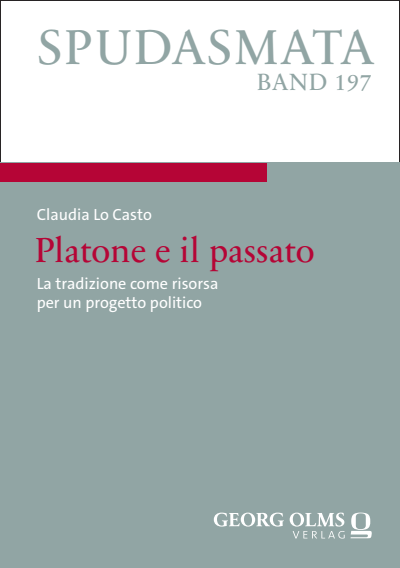
Platone e il passato
La tradizione come risorsa per un progetto politico- Authors:
- Series:
- Spudasmata, Volume 197
- Publisher:
- 2024
Summary
The volume is committed to the reconstruction of Plato's relationship with the past in literary, socio-economic, and political contexts. The past is analysed as a real “resource” from which content can be drawn for reinterpretation and resemantisation. The analysis shows how Plato develops a methodological "strategy" for transferring elements of the traditional cultural system – the archaic, mythical-religious, and political tradition – into a new conceptual context which aims at the realisation of a utopian philosophical-political project.
Keywords
Search publication
Bibliographic data
- Edition
- 1/2024
- Copyright Year
- 2024
- ISBN-Print
- 978-3-487-16691-9
- ISBN-Online
- 978-3-487-42450-7
- Publisher
- Georg Olms Verlag, Baden-Baden
- Series
- Spudasmata
- Volume
- 197
- Language
- Italian
- Pages
- 183
- Product Type
- Monograph
Table of contents
ChapterPages
- Titelei/Inhaltsverzeichnis No access Pages 1 - 5
- Vorwort No access Pages 6 - 9
- Premessa No access Pages 10 - 11
- Introduzione No access Pages 12 - 17
- Platone e la ricezione del mito esiodeo No access
- Poesia epica e lirica No access
- Platone e Aristofane No access
- La storia di Atlantide e dell’antica Atene No access
- Trasposizione della caverna come “Ade” No access
- Il ritorno alle origini per la costruzione della città ideale No access
- Esiodo e l’agricoltura No access
- Senofonte e l’economia antica No access
- La costituzione laconica come modello della città ideale? No access
- Sparta nella Repubblica No access
- Sparta nelle Leggi No access
- Conclusioni No access Pages 154 - 155
- Bibliografia No access Pages 156 - 173
- Indice dei nomi No access Pages 174 - 175
- Indice dei passi No access Pages 176 - 183
Bibliography (223 entries)
No match found. Try another term.
- Adam, J. (1902): The Republic of Plato, Cambridge. Open Google Scholar DOI: 10.5771/9783487424507
- Akçay, K. N. (2009): Porhyry’s On the Cave of the Nymphs in its Intel-lectual Context, Leiden/Boston. Open Google Scholar DOI: 10.5771/9783487424507
- Anderson, J. K. (1974): Xenophon, London. Open Google Scholar DOI: 10.5771/9783487424507
- Annas, J. (1991): An Introduction to Plato’s Republic, Oxford. Open Google Scholar DOI: 10.5771/9783487424507
- Annas, J. (1997): “Politics and Ethics in Plato’s Republic.” In: Platon. Politeia, a cura di O. Höffe, Berlin, 144–153. Open Google Scholar DOI: 10.5771/9783487424507
- Arrighetti, G. (1984): Esiodo. Teogonia, Milano. Open Google Scholar DOI: 10.5771/9783487424507
- Arrighetti, G. (1991): “Platone fra mito, poesia e storia.” SCO 41, 13–34. Open Google Scholar DOI: 10.5771/9783487424507
- Arrighetti, G. (1992): “Esiodo e le Muse: il dono della verità e la con-quista delle parole.” Athenaeum 80, 45–63. Open Google Scholar DOI: 10.5771/9783487424507
- Beltrametti, A. (2000): “L’utopia dalla commedia al dialogo platonico.” In: Platone. La Repubblica. Vol. IV, Libro V, a cura di M. Vegetti, Napoli, 233–256. Open Google Scholar DOI: 10.5771/9783487424507
- von Berkel, T. A. (2018): “Socratic Economics and the Psycology of Money.” In: Plato and Xenophon. Comparative Studies, a cura di G. Danzig, D. Johnson e D. Morrison, Leiden/Boston, 391–430. Open Google Scholar DOI: 10.5771/9783487424507
- Bertelli, L. (1996): “La stasis dans la déémocratie.” In: Rééflections con-temporaines sur l’Antiquité classique, a cura di M.-L. Desclos, Pa-ris, 11–38. Open Google Scholar DOI: 10.5771/9783487424507
- Bertrand, J.-M. (1999): “De la stasis dans les cités Platoniciennes.” CCG 10, 209–224. Open Google Scholar DOI: 10.5771/9783487424507
- Birgalias, N. (2002): “Helotage and Spartan Social Organization.” In: Sparta: Beyond the Mirage, a cura di A. Powell, e S. Hodkinson, London, 249–266. Open Google Scholar DOI: 10.5771/9783487424507
- Blank, Th. (2014): Logos und Praxis. Sparta als politisches Exemplum in den Schriften des Isokrates, Berlin. Open Google Scholar DOI: 10.5771/9783487424507
- Bordt. M. (2006): Platons Theologie, Freiburg. Open Google Scholar DOI: 10.5771/9783487424507
- Bordt, M. (2013): “Die theologische Fundierung der Gesetze.” In: Pla-ton. Gesetze–Nomoi, a cura di Ch. Horn, Berlin, 209–226. Open Google Scholar DOI: 10.5771/9783487424507
- Botter, B. (2016): La creazione di immagini in Platone, Milano. Open Google Scholar DOI: 10.5771/9783487424507
- Boys-Stones, G. R. (2010): “Hesiod and Plato’s History of philosophy.” In: Plato and Hesiod, a cura di G. R. Boys-Stones e J. H. Haubold, Oxford., 31–51. Breitenbach, H. R. (1967): “Xenophon von Athen.” In: Real-Encyc-lopadie der classischen Altertumswissenschaft [RE], IX A2, a cura di A. Pauly et al., Stuttgart, 1837–1871. Open Google Scholar DOI: 10.5771/9783487424507
- Brickhouse, T.C. (1981): “The Paradox of the Philosophers’ Rule.” Apeiron 15, 1-9. Open Google Scholar DOI: 10.5771/9783487424507
- Brisson, L. (1987): “Le discours comme univers et l’univers comme discours. Platon et ses interprètes néo-platoniciens.” In: Le texte et ses representations, a cura di Ph. Hoffmann, J. Lallot e A. Le Boul-luec, Paris, 121–128. Open Google Scholar DOI: 10.5771/9783487424507
- Brisson, L. (1994a): “Critias.” In: Dictionnaire des philosophes an-tiques. Vol. 2, a cura di R. Goulet, Paris, 512–520. Open Google Scholar DOI: 10.5771/9783487424507
- Brisson, L. (1994b): Platon, les mots et les mythes. Comment et pour-quoi Platon nomma le mythe?, Paris. Open Google Scholar DOI: 10.5771/9783487424507
- Brisson, L. (1996): Einführung in die Philosophie des Mythos, Darm-stadt. Open Google Scholar DOI: 10.5771/9783487424507
- Brisson, L. (2000): Lectures de Platon, Paris. Open Google Scholar DOI: 10.5771/9783487424507
- Brisson, L./Pradeau, J.-F. (2006): Platon. Les Lois, Paris. Open Google Scholar DOI: 10.5771/9783487424507
- Burkert, W. (1969): “Das Proömium des Parmenides und die Katabasis des Pythagoras.” Phronesis 14, 1–30. Open Google Scholar DOI: 10.5771/9783487424507
- Burkert, W. (1972): Lore and Science in Ancient Pythagoreanism, Cambridge Mass. Open Google Scholar DOI: 10.5771/9783487424507
- Burnet, J. (1914): Greek Philosophy. Part I: Thales to Plato, London. Open Google Scholar DOI: 10.5771/9783487424507
- Calabi, F. (1998a): “Gige.” In: Platone. La Repubblica. Vol. II, Libri II e III, a cura di M. Vegetti, Napoli, 173–188. Open Google Scholar DOI: 10.5771/9783487424507
- Calabi, F. (1998b): “La nobile menzogna.” In: Platone. La Repubblica. Vol. II, Libri II e III, a cura di M. Vegetti, Napoli, 445–457. Open Google Scholar DOI: 10.5771/9783487424507
- Calabi, F. (2006): “Timocrazia.” In: Platone. La Repubblica. Vol. VI, Libri VIII–IX, a cura di M. Vegetti, Napoli, 263–293. Open Google Scholar DOI: 10.5771/9783487424507
- Calame, C. (2004): “Succession des âges et pragmatique poétique de la justice. La récit hésiodique des cinq espèces humaines.” Kernos 17, 67–102. Open Google Scholar DOI: 10.5771/9783487424507
- Cambiano, G. (2016): Come nave in tempesta. Il governo della città in Platone e Aristotele, Roma/Bari. Open Google Scholar DOI: 10.5771/9783487424507
- Campese, S. (1998): “La genesi della polis.” Platone. La Repubblica. Vol. II, Libri II e III, a cura di M. Vegetti, Napoli, 285–306. Open Google Scholar DOI: 10.5771/9783487424507
- Campese, S. (2003): “La caverna.” In: Platone. La Repubblica. Vol. V, Libri VI e VII, a cura di M. Vegetti, Napoli, 435–472. Open Google Scholar DOI: 10.5771/9783487424507
- Campese, S. (2006): “L’oikos e la decadenza della città.” In: Platone. La Repubblica. Vol. VI, Libri VIII–IX, Napoli, 189–261. Open Google Scholar DOI: 10.5771/9783487424507
- Campese, S. (2007): “L’innovazione platonica nell’allegoria della ca-verna.” In: The Ascent to The Good, a cura di F. Lisi, Sankt Augus-tin, 101–112. Open Google Scholar DOI: 10.5771/9783487424507
- Canfora, L. (2016): La crisi dell’utopia: Aristofane contro Platone, Roma/Bari. Open Google Scholar DOI: 10.5771/9783487424507
- Canto-Sperber, M./Brisson, L. (1997): “Zur sozialen Gliederung der Polis.” In: Platon. Politeia, a cura di O. Höffe, Berlin, 95–117. Open Google Scholar DOI: 10.5771/9783487424507
- Capra, A. (2007): “Stratagemmi comici da Aristofane a Platone. Parte III: Utopia (Repubblica, Donne al parlamento).” Stratagemmi 4, 32–40. Open Google Scholar DOI: 10.5771/9783487424507
- Capra, A. (2010): Aristofane. Donne al parlamento. Introduzione, tra-duzione, commento, Roma. Open Google Scholar DOI: 10.5771/9783487424507
- Carloni, M. (2012): “Una parafrasi di Omero nella Repubblica di Pla-tone.” Antiquorum Philosophia 6, 101–127. Open Google Scholar DOI: 10.5771/9783487424507
- Casertano, G. (2005): “La caverne: entre analogie, image, connaissance et praxis.” In: Études sur la République de Platon. Vol. 2: De la science du bien et des mythes, Paris, 39–70. Open Google Scholar DOI: 10.5771/9783487424507
- Centrone, B. (2015): Prima lezione di filosofia antica, Roma/Bari. Open Google Scholar DOI: 10.5771/9783487424507
- Centrone, B. (2021): La seconda «polis». Introduzione alle «Leggi» di Platone, Roma. Open Google Scholar DOI: 10.5771/9783487424507
- Cerri, G. (2000): “Dalla dialettica all’epos. Platone, Repubblica X, Ti-meo, Crizia.” In: La struttura del dialogo platonico, a cura di G. Casertano, Napoli, 7–34. Open Google Scholar DOI: 10.5771/9783487424507
- Charalabopoulos, N. G. (2012): Platonic drama and its ancient recep-tion, Cambridge. Open Google Scholar DOI: 10.5771/9783487424507
- Cherry, K. M. (2012): Plato, Aristotle and the Purpose of Politics, Cambridge, 48-73. Open Google Scholar DOI: 10.5771/9783487424507
- Cornford, F. M. C. (1956): Plato’s Cosmology. The Timaeus of Plato, London. Open Google Scholar DOI: 10.5771/9783487424507
- Craig, L. H. (1994): The War Lover. A Study of Plato’s ‘Republic’, To-ronto. Open Google Scholar DOI: 10.5771/9783487424507
- Cross, R. C./Woozley, A. D. (1964): Plato’s Republic. A Philosophical Commentary, London. Open Google Scholar DOI: 10.5771/9783487424507
- Crubellier, M. (1996): “Le mythe comme discours. Le récit des cinq races humaines dans les Travaux et les jours.” In: Le métier du mythe. Lectures d’Hesiode, a cura di F. Blaise, P. Judet de la Combe e P. Rousseau, Lille, 431–463. Open Google Scholar DOI: 10.5771/9783487424507
- Danzig, G./Schaps, D. (2001): “The Economy: what Plato saw and what he wanted.” In: Plato’s Laws and its Historical Significance. Se-lected Papers of the I International Congress on Ancient Thought, Salamanca, 1998, a cura di F. Lisi, Sankt Augustin, 143–148. Open Google Scholar DOI: 10.5771/9783487424507
- Danzig, G. (2018): “Introduction to the Comparative Study of Plato and Xenophon.” In: Plato and Xenophon. Comparative Studies, a cura di G. Danzig, D. Johnson e D. Morrison, Leiden/Boston, 1–30. Open Google Scholar DOI: 10.5771/9783487424507
- De Brasi, D. (2013): L’immagine di Sparta nei dialoghi platonici. Il giudizio di un filosofo su una (presunta) pólis modello, Sankt Au-gustin. Open Google Scholar DOI: 10.5771/9783487424507
- De Martinis, L. (2013): Senofonte. Tutti gli scritti socratici. Apologia di Socrate, Memorabili, Economico, Simposio, Milano. Open Google Scholar DOI: 10.5771/9783487424507
- De Sanctis, D. (2012): “Ai tempi di Crono: il duplice volto dell’umanità primitiva in Omero e in Esiodo”. In: Immagini delle Origini. La nascita della civiltà e della cultura nel pensiero antico, a cura di F. Calabi/S. Gastaldi, Sankt Augustin, 17-35. Open Google Scholar DOI: 10.5771/9783487424507
- Destrée, P. (2012): “Plato on Tragic and Comic Pleasures.” In: Plato on Art and Beauty, a cura di A. E. Denham, London, 125–141. Open Google Scholar DOI: 10.5771/9783487424507
- Di Benedetto, V. (2010): Omero. Odissea, Milano. Open Google Scholar DOI: 10.5771/9783487424507
- Diels, H. (1956): Die Fragmente des Vorsocratiker, a cura di W. Kranz, Berlin. Open Google Scholar DOI: 10.5771/9783487424507
- Dodds, Ε. Ρ. (2003): I greci e l’irrazionale, Firenze. Open Google Scholar DOI: 10.5771/9783487424507
- Dorter, K. (2006): The Transformation of Plato’s Republic, New York/Toronto/Oxford. Open Google Scholar DOI: 10.5771/9783487424507
- Elias, A. (1984): Plato’s Defence of Poetry, London. Open Google Scholar DOI: 10.5771/9783487424507
- Else, G. F. (1986): Plato and Aristotle on Poetry, Chapel Hill. Open Google Scholar DOI: 10.5771/9783487424507
- Erler, M. (1997): “Ideal und Wirklichkeit. Die Rahmengespräche des Timaios und Kritias und Aristoteles’ Poetik”. In: Interpreting the Timaeus-Critias, a cura di T. Calvo/L. Brisson, Sankt Augustin 83–98. Open Google Scholar DOI: 10.5771/9783487424507
- Erler, M. (2000): “Geschlechterdifferenz als Konvention. Zum Verhält-nis von Körper und Rolle der Geschlechter bei Platon.” In: Der Körper und die Religion, a cura di E. Klinger, S. Böhm e Th. Seidl, Würzburg, 47–66. Erler, M. (2002): “Praesens divinum. Mythische und historische Zeit in der griechischen Literatur” In: Platon als Mythologe. Neue Inter-pretationen zu den Mythen in Platons Dialogen, a cura di M. Janka e C. Schäfer, Darmstadt, 81–98. Open Google Scholar DOI: 10.5771/9783487424507
- Erler, M. (2007): Platon. Grundriss der Geschichte der Philosophie, begründet von F. Überweg; völlig neu bearb. Ausg. hrsg. von Hel-mut Holzhey. Die Philosophie der Antike. 2/2, Basel. Open Google Scholar DOI: 10.5771/9783487424507
- Faraguna, M. (2003): “‘Nomisma’ e ‘polis’. Aspetti della riflessione greca antica sul ruolo della moneta nella società.” In: Moneta, mer-canti, banchieri. I precedenti greci e romani dell’Euro, a cura di G. Urso, Pisa, 109–135. Open Google Scholar DOI: 10.5771/9783487424507
- Ferrari, F. (1998): “Theologia.” In: Platone. La Repubblica. Vol. II, Li-bri II e III, a cura di M. Vegetti, Napoli, 402–425. Open Google Scholar DOI: 10.5771/9783487424507
- Ferrari, F. (2006): I miti di Platone, Milano. Open Google Scholar DOI: 10.5771/9783487424507
- Ferrari, F. (2015–2016): “La condizione umana secondo il ‘mito’ della caverna di Platone.” Eranos Yearbook 73, 865–898. Open Google Scholar DOI: 10.5771/9783487424507
- Ferrari, F. (2019): La via dell’immortalità dell’anima, Torino. Open Google Scholar DOI: 10.5771/9783487424507
- Ferrari, F. (2022): La Repubblica di Platone, Bologna. Open Google Scholar DOI: 10.5771/9783487424507
- Ferrari, F. (2022): “Dall’abitudine alla conoscenza: il ruolo delle mate-matiche nella paidea della Repubblica di Platone.” In: La virtù tra paideia, politeia ed episteme. Una questione di lungo periodo, a cura di M. Ferrari, M. Morandi, G. Delogu, Brescia, 69-89. Open Google Scholar DOI: 10.5771/9783487424507
- Ferrari, G. R. F. (2003): City and Soul in Plato’s Republic, Sankt Au-gustin. Open Google Scholar DOI: 10.5771/9783487424507
- Ferrucci, S. (2006): “«L’oikos» nel diritto attico. Pubblico, privato e individuale nella democrazia ateniese classica.” Dike 9, 183–210. Open Google Scholar DOI: 10.5771/9783487424507
- Finley, M. I. (1999): The Ancient Economy, Berkeley/Los Angeles. Open Google Scholar DOI: 10.5771/9783487424507
- Föllinger, S. (1996): Differenz und Gleichheit. Das Geschlechterver-hältnis in der Sicht griechischer Philosophen des 4. Bis 1. Jahr-hunderts v. Chr., Stuttgard. Open Google Scholar DOI: 10.5771/9783487424507
- Föllinger, S. (2006): “Sokrates als Ökonom. Eine Analyse der didakti-schen Gestaltung von Xenophons Oikonomikos.” WJA 30, 5–23. Open Google Scholar DOI: 10.5771/9783487424507
- Föllinger, S. (2014): “Ökonomische Literatur.” In: Handbuch der grie-chischen Literatur der Antiken. Band 2: Die Literatur der klas-sichen und Hellenistischen Zeit, a cura di B. Zimmermann e A. Rengakos, München, 584–590. Open Google Scholar DOI: 10.5771/9783487424507
- Föllinger, S. (2016): Ökonomie bei Platon, Berlin/Boston. Open Google Scholar DOI: 10.5771/9783487424507
- Ford, A. L. (2010): “Plato’s two Hesiods.” In: Plato and Hesiod, a cura di G. R. Boys-Stones e J. H. Haubold, Oxford, 133–154. Open Google Scholar DOI: 10.5771/9783487424507
- Gaiser, K. (1984): Platone come scrittore filosofico. Saggi sull’erme-neutica di Platone, Napoli. Open Google Scholar DOI: 10.5771/9783487424507
- Gastaldi, S. (1998): Storia del pensiero politico, Roma/Bari. Open Google Scholar DOI: 10.5771/9783487424507
- Gastaldi, S. (2007): “La mimesis e l’anima.” In: Platone. La Repub-blica. Vol. VII, Libro X, a cura di M. Vegetti, Napoli, 93–149. Open Google Scholar DOI: 10.5771/9783487424507
- Gastaldi, S. (2012): “«La semplicità» dei primi uomini: L’immagine delle origini nel libro III delle Leggi di Platone”. In: Plato’s “Laws”: from Theory into Practice. Proceedings of the VI Sym-posium Platonicum, a cura di S. Scolnicov e L. Brisson Sankt Au-gustin, 105-120. Open Google Scholar DOI: 10.5771/9783487424507
- Gehrke, H. J. (1996): “La stasis.” In: I Greci. Vol. II, a cura di S. Settis, Torino, 453–480. Open Google Scholar DOI: 10.5771/9783487424507
- Ghibellini, A. (2004): “La nobile menzogna in Platone.” Giornale di Metafisica 26, 301–332. Open Google Scholar DOI: 10.5771/9783487424507
- Gigante, M. (1956): ΝΟΜΟΣ ΒΑΣΙΛΕΥΣ, Napoli. Open Google Scholar DOI: 10.5771/9783487424507
- Gigante, M. (1998): Diogene Laerzio. Vite dei filosofi, Roma/Bari. Open Google Scholar DOI: 10.5771/9783487424507
- Gill, Ch. (1980): Plato. The Atlantis Story. Timaeus 17–27. Critias, Bristol. Open Google Scholar DOI: 10.5771/9783487424507
- Gill, Ch. (2017): Plato’s Atlantis Story, Liverpool. Open Google Scholar DOI: 10.5771/9783487424507
- Giuliano, F. M. (2005): Platone e la poesia. Teoria della composizione e prassi della ricezione, Sankt Augustin. Open Google Scholar DOI: 10.5771/9783487424507
- Goldschimdt, V. (1970): “Theologia.” In: Questions platoniciennes, V. Goldschimdt, Paris, 141–172. Open Google Scholar DOI: 10.5771/9783487424507
- Görgemanns, H. (1960): Beiträge zur Interpretation von Platons No-moi, München. Open Google Scholar DOI: 10.5771/9783487424507
- Graziosi, B. (2010): “Hesiod in classical Athens: Rhapsodes, orators, and Platonic discourse.” In: Plato and Hesiod, a cura di G. R. Boys-Stones e J. H. Haubold, Oxford, 111–132. Open Google Scholar DOI: 10.5771/9783487424507
- Grisei, P. (2000): “Visione e conoscenza. Il “gioco” analogico di Re-pubblica VI-VII.” In: La struttura del dialogo platonico, a cura di G. Casertano, Napoli, 261–296. Open Google Scholar DOI: 10.5771/9783487424507
- Hahm, D. E. (1969): “Plato’s ‘Noble Lie’ and Political Brotherhood.” Classica et Mediaevalia 30, 211–227. Open Google Scholar DOI: 10.5771/9783487424507
- Hall, J. (2000): “Sparta, Lakedaimon and the Nature of Perioikic De-pendency.” In: Further Studies in the Ancient Greek Polis, a cura di P. Flensted-Jensen, Stuttgart, 73–89. Open Google Scholar DOI: 10.5771/9783487424507
- Halliwell, S. (1996): “Plato’s Repudiation of the Tragic.” In: Tragedy and the Tragic, a cura di M. S. Silk, Oxford, 332–349. Open Google Scholar DOI: 10.5771/9783487424507
- Halliwell, S. (1997): “The Republic’s Two Critiques of Poetry.” In: Plato Politeia, a cura di O. Höffe, Berlin, 313–332. Open Google Scholar DOI: 10.5771/9783487424507
- Halliwell, S. (2002): The Aesthetics of Mimesis. Ancient Texts and Modern Problems, Princeton/Oxford. Open Google Scholar DOI: 10.5771/9783487424507
- Hartmann, L. (2017): Die grosse Rede des Timaios – ein Beispiel wah-rer Rhetoric? Zur Theorie und Praxis philosophischer Rhetorik in Platons Dialogen Gorgias, Phaidros und Timaios, Basel. Open Google Scholar DOI: 10.5771/9783487424507
- Herren, X. (2021): Pandora, Pflug und Poesie. Immaterielle und mate-rielle Ressourcen in Hesiods Werken und Tagen, Zürich/New York. Open Google Scholar DOI: 10.5771/9783487424507
- Hodkinson, S. (2005): “The Imaginary Spartan Politeia.” In: The Imag-inary Polis, a cura di M. H. Hansen, Copenhagen, 222–281. Open Google Scholar DOI: 10.5771/9783487424507
- Horn, Ch. (2013): “Politische Philosophie in Platons Nomoi. Das Prob-lem von Kontinuität und Diskontinuität.” In: Platon. Gesetze–No-moi, a cura di Ch. Horn, Berlin, 1–21. Open Google Scholar DOI: 10.5771/9783487424507
- Hunter, R. L. (2014): Hesiodic Voices. Studies in the Ancient Reception of Hesiod’s Works and Days, Cambridge. Open Google Scholar DOI: 10.5771/9783487424507
- Irwin, E. (2005): Solon and Early Greek Poetry: The Politics of Exhor-tation, Cambridge. Open Google Scholar DOI: 10.5771/9783487424507
- Isnardi Parente, M. (1974): “Aristocratismo, conservatorismo, assoluti-smo in Platone.” In: La filosofia dei Greci nel suo sviluppo storico. Parte II, volume III/2, a cura di E. Zeller, R. Mondolfo e M. Isnardi Parente, Firenze, 604–624. Open Google Scholar DOI: 10.5771/9783487424507
- Jaeger, W. (1947): Theology of the Early Greek Philosophers, Oxford. Open Google Scholar DOI: 10.5771/9783487424507
- Joly, H. (1974): Le renversement platonicien. Logos, Episteme, Polis, Paris. Open Google Scholar DOI: 10.5771/9783487424507
- Jouët-Pastré, E. (2006): Le Jeu et le sérieux dans les Lois de Platon, Sankt Augustin. Open Google Scholar DOI: 10.5771/9783487424507
- Keber, W. (1957): Platos Stellung zur Sparta-Ideologie, Müünster. Open Google Scholar DOI: 10.5771/9783487424507
- Knoll, M. (2013): “Bürger, Frauen, Fremde und Sklaven in Magnesia.” In: Platon. Gesetze–Nomoi, a cura di Ch. Horn, Berlin, 143–163. Open Google Scholar DOI: 10.5771/9783487424507
- Latona, M. (2004): “Tale is Not My Own (οὐκ ἐμὸς ό μῦθος): Myth and Recollection in Plato”. Apeiron 37, 181-210. Open Google Scholar DOI: 10.5771/9783487424507
- Laurenti, R. (1999): Empedocle, Napoli. Open Google Scholar DOI: 10.5771/9783487424507
- Lavecchia, S. (2006): Una via che conduce al divino. La «homoiosis theo» nella filosofia di Platone, Milano. Open Google Scholar DOI: 10.5771/9783487424507
- Lesser, H. (1979): “Plato’s Feminism.” Philosophy 54, 113-117. Open Google Scholar DOI: 10.5771/9783487424507
- Lévy, E. (2005): “La Sparte de Platon.” Ktèma 30, 217–236. Open Google Scholar DOI: 10.5771/9783487424507
- Lewis, D. (2009): “Xenophon’s Poroi and the Foundations of Political Economy.” Polis 26.2, 370–388. Open Google Scholar DOI: 10.5771/9783487424507
- Lisi, F. (2006): “Repubblica VIII e Leggi III.” In: Platone. La Repub-blica. Vol. VI, Libri VIII–IX, Napoli, 635–666. Open Google Scholar DOI: 10.5771/9783487424507
- Longo, O. (1975–1976): “Strutture socio-economiche nella Repubblica di Platone: ideologia e utopia.” Helikon 15–16, 540–552. Open Google Scholar DOI: 10.5771/9783487424507
- Longo, O. (2006): Tucidide. Epitafio di Pericle per i caduti del primo anno di guerra, Venezia. Open Google Scholar DOI: 10.5771/9783487424507
- de Luise, F. (2016): “La scienza del potere ovvero il potere dei tecnici: la questione dei migliori tra Repubblica e Politico.” In: Legittima-zione del potere, autorità della legge: un dibattito antico, a cura di F. de Luise, Trento, 75–105. Open Google Scholar DOI: 10.5771/9783487424507
- Luraghi, N. (2002): “Helotic Slavery Reconsidered.” In: Sparta: Be-yond the Mirage, a cura di A. Powell, e S. Hodkinson, London, 227–248. Open Google Scholar DOI: 10.5771/9783487424507
- Luraghi, N. (2003): “The Imaginary Conquest of the Helots.” In: Helots and their Masters in Laconia and Messenia: Histories, Ideologies, Structures, a cura di N. Luraghi e S. E. Alcock, Cambridge, 109–141. Open Google Scholar DOI: 10.5771/9783487424507
- Männlein-Robert, I. (2010): “Umrisse des Göttlichen. Zur Typologie des idealen Gottes in Platons Politeia II.” In: Platon und das Gött-liche, a cura di D. Koch, I. Männlein-Robert e N. Weidtmann, Tü-bingen, 112–138. Open Google Scholar DOI: 10.5771/9783487424507
- Männlein-Robert, I. (2012): “Von Hölen und Helden. Zur Semantik von Katabasis und Raum in Platons Politeia.” Gymnasium 119, 1–21. Open Google Scholar DOI: 10.5771/9783487424507
- Männlein-Robert, I. (2013a): “Katabasis und Höhle: Philosophische Entwüürfe der (Unter-)Welt in Platons Politeia.” In: Dia-logues on Plato’s Politeia (Republic). Selected Papers from the Ninth Symposium Platonicum, a cura di N. Notomi e L. Brisson, Sankt Augustin, 242–251. Open Google Scholar DOI: 10.5771/9783487424507
- Männlein-Robert, I. (2013b): “Poetik: Kömodie und Tragödie.” In: Pla-ton. Gesetze–Nomoi, a cura di Ch. Horn, Berlin, 123–141. Open Google Scholar DOI: 10.5771/9783487424507
- Männlein-Robert, I. (2019a): “Der Motiv der Höhle in Literatur und Kunst: Porphyrios De Antro Nympharum.” In: Die Seele im Kos-mos Porphyrios. Über die Nymphengrotte in der Odyssee, a cura di M. Baumbach, Tübingen, 97–116. Open Google Scholar DOI: 10.5771/9783487424507
- Männlein-Robert, I. (2019b): „Unsere φύσις“ im Höhlengleichnis Pla-tons.” In: Platon und die Physis, a cura di D. Koch, I. Männlein-Robert e N. Weidtmann, Tübingen 2019, 73–91. Open Google Scholar DOI: 10.5771/9783487424507
- Männlein-Robert, I. (2021): Forget about Atlantis: Plato’s Invention of Tradition or Symbolic Dimensions of Knowledge in: Exploring Re-sources on Cultural, Spatial and Temporal Dimensions of Re-sourceCultures, a cura di M. Bartelheim, Th. Scholten, Tübingen 2021, 113-123. Open Google Scholar DOI: 10.5771/9783487424507
- Merlo, V. (2003): Contadini perfetti e cittadini agricoltori nel pensiero antico, Milano. Open Google Scholar DOI: 10.5771/9783487424507
- Mertens, N. (2002): “οὐκ ὁμοῖοι ἀγαθοὶ δὲ. The Perioikoi in the Clas-sical Lakedaimonian Polis.” In: Sparta: Beyond the Mirage, a cura di A. Powell, e S. Hodkinson, London, 285–303. Open Google Scholar DOI: 10.5771/9783487424507
- Migliori, M. (2021) “The Use and Meaning of the Past in Plato”. Plato Journal 21, 43-58. Open Google Scholar DOI: 10.5771/9783487424507
- Morgan, M. L. (1992): “Platon und Greek Religion.” In: The Cam-bridge Companion to Plato, a cura di R. Kraut, Cambridge, 227–247. Open Google Scholar DOI: 10.5771/9783487424507
- Morris, I. (1994): “The Athenian Economy Twenty Years after The An-cient Economy.” Classical Philology 89, 351–366. Open Google Scholar DOI: 10.5771/9783487424507
- Morrow, G. R. (1960): Plato’s Cretan City. A Historical Interpretation of the Laws, Princeton. Open Google Scholar DOI: 10.5771/9783487424507
- Mosconi, G. (2005): “Prima di Iscomaco, Pericle: la terra da bene di sussistenza e prestigio a fonte di reddito.” MediterrAnt 8, 63–118. Open Google Scholar DOI: 10.5771/9783487424507
- Most, G. W. (2014): “Platons Exotherische Mythen.” In: Platon als My-thologe. Neue Interpretationen zu den Mythen in Platons Dialogen, a cura di M. Janka e Ch. Schäfer, Darmstadt, 9–21. Open Google Scholar DOI: 10.5771/9783487424507
- Mumford, L. (1969): La storia dell’utopia, Bologna. Open Google Scholar DOI: 10.5771/9783487424507
- Murray, P. (1996): Plato on Poetry. Ion; Republic 376e–398b9; Repub-lic 595–608b10, Cambridge. Open Google Scholar DOI: 10.5771/9783487424507
- Murray, P. (1999): “What is a mythos for Plato?” In: From Myth to Reason, a cura di R. Buxton, Oxford, 251–262. Open Google Scholar DOI: 10.5771/9783487424507
- Nagy, G. (2002): Plato’s Rhapsody and Homer’s Music. The Poetics of the Panathenaic Festival in Classical Athens, Athens. Open Google Scholar DOI: 10.5771/9783487424507
- Natali, C. (2005): L’élision de l’«oikos» dans la «République» de Pla-ton, in: Études sur la «République» de Platon, vol. I: De la justice, édu-cation, psychologie et politique, a cura di M. Dixsaut, Paris, 199-223. Open Google Scholar DOI: 10.5771/9783487424507
- Napolitano Valditara, L. M. (2007): Platone e le ‘ragioni’ dell’imma-gine. Percorsi filosofici e deviazioni tra metafore e miti, Milano. Open Google Scholar DOI: 10.5771/9783487424507
- Natali, C. (1988): Senofonte. L’amministrazione della casa (Econo-mico), Venezia. Open Google Scholar DOI: 10.5771/9783487424507
- Nesselrath, H.-G. (2002): Platon und die Erfindung von Atlantis, Leipzig/Munich. Open Google Scholar DOI: 10.5771/9783487424507
- Nesselrath, H.-G. (2006): Platon. Kritias, Göttingen. Open Google Scholar DOI: 10.5771/9783487424507
- Nesselrath, H.-G. (2014): “Platons Atlantis-Geschichte-ein Mythos?” In: Platon als Mythologe. Neue Interpretationen zu den Mythen in Platons Dialogen, a cura di M. Janka e C. Schäfer, Darmstadt, 339–353. Open Google Scholar DOI: 10.5771/9783487424507
- Nightingale, A. W. (1999): “Historiography and Cosmology in Plato’s Laws.” AncPhil 19, 299–326. Open Google Scholar DOI: 10.5771/9783487424507
- Noack, L. (2020): Religion als kultureller Ordnungsrahmen in Platons Nomoi, Wiesbaden. Open Google Scholar DOI: 10.5771/9783487424507
- van Noorden, H. (2015): Playing Hesiod. ‘The Myth of the Races’ in Classical Antiquity, Cambridge. Open Google Scholar DOI: 10.5771/9783487424507
- Ollier, F. (1933): Le mirage spartiate. Etude sur l’idéalisation de Sparte dans l’antiquité grecque de l’origine jusqu’aux cyniques, Paris. Open Google Scholar DOI: 10.5771/9783487424507
- Otto, D. (1994): Das utopische Staatsmodell von Platon’s Politeia aus der Sicht von Orwels Nineteen Eighty-Four. Ein Beitrag zur Be-wertung des Totalitarismus-vorwurfs gegenüber Platon, Berlin. Open Google Scholar DOI: 10.5771/9783487424507
- Palumbo, L. (2008): Mimesis. Rappresentazione, teatro e mondo nei dialoghi di Platone e nella Poetica di Aristotele, Napoli. Open Google Scholar DOI: 10.5771/9783487424507
- Panno, G. (2007): Dionisiaco e Alterità nelle «Leggi» di Platone. Or-dine del corpo e automovimento dell’anima nella città-tragedia, Milano. Open Google Scholar DOI: 10.5771/9783487424507
- Pender, E. E. (2007): “Poetic Allusion in Plato’s Timaeus and Phae-drus.” GFA 10, 21–57. Open Google Scholar DOI: 10.5771/9783487424507
- Pender, E. E. (2010): “Chaos Corrected: Hesiod in Plato’s Creation Myth.” In: Plato and Hesiod, a cura di G. R. Boys-Stones e J. H. Haubold, Oxford, 219–245. Open Google Scholar DOI: 10.5771/9783487424507
- Péérilliéé, J.-L. (2015): Mystèères socratiques et Traditions orales de l’eudéémo- nisme dans les Dialogues de Platon, Sankt Augustin. Open Google Scholar DOI: 10.5771/9783487424507
- Petraki, Z. (2011): The Poetics of Philosophical Language, Berlin/Bos-ton. Open Google Scholar DOI: 10.5771/9783487424507
- Piérart, M. (1974): Platon et la Cité grecque. Théorie et réalité dans la Constitution des “Lois”, Brüssel. Open Google Scholar DOI: 10.5771/9783487424507
- Pöhlmann, R. (1925): Geschichte der sozialen Frage und des sozialis-mus in der antiken Welt, München. Open Google Scholar DOI: 10.5771/9783487424507
- Pomeroy, S. B. (1995): Xenophon. Oeconomicus. A Social and Histor-ical Commentary, Oxford. Open Google Scholar DOI: 10.5771/9783487424507
- Popper, K. R. (19624): The Open Society and Its Enemies. I: The Spell of Plato, London. Open Google Scholar DOI: 10.5771/9783487424507
- Pradeau, J.-F. (1997): Le monde de la politique. Sur le récit atlante de Platon, Timée (17–27) et Critias, Sankt Augustin. Open Google Scholar DOI: 10.5771/9783487424507
- Pradeau, J.-F. (2001): “La economía política de las Leyes. Observa-ciones sobre la institución de los κλῆροι.” In: Plato’s Laws and its Historical Significance. Selected Papers of the I International Congress on Ancient Thought, Salamanca, 1998, a cura di F. Lisi, Sankt Augustin, 149–160. Open Google Scholar DOI: 10.5771/9783487424507
- Pradeau, J.-F. (2005): “L’irréalisable verité de la République platoni-cienne: Remarques sur le statut et sur le contenu de la πολιτεία de la République.” In: The Imaginary Polis, a cura di M. H. Hansen, Copenhagen, 100–123. Open Google Scholar DOI: 10.5771/9783487424507
- Quarta, C. (1993): L’utopia platonica. Il progetto politico di un grande filosofo, Bari. Open Google Scholar DOI: 10.5771/9783487424507
- Rawson, E. (1969): The Spartan Tradition in European Thought, Ox-ford. Open Google Scholar DOI: 10.5771/9783487424507
- Regali, M. (2010): “Hesiod in the Timaeus: The Demiurge Adresses the Gods.” In: Plato and Hesiod, a cura di G. R. Boys-Stones e J. H. Haubold, Oxford, 259–275. Open Google Scholar DOI: 10.5771/9783487424507
- Regali, M. (2012): Il poeta e il Demiurgo. Teoria e prassi della produ-zione letteraria nel Timeo e nel Crizia di Platone, Sankt Augustin. Open Google Scholar DOI: 10.5771/9783487424507
- Reinhardt, K. (2015): I miti di Platone, Genova. Open Google Scholar DOI: 10.5771/9783487424507
- Rowe, C. J. (1999): Myth, History and Dialectic in Plato’s Republic and Timaeus-Critias.” In: From Myth to Reason? Studies in the Devel-opment of Greek Thought, a cura di R. Buxton, Oxford, 263–278. Open Google Scholar DOI: 10.5771/9783487424507
- Savino, E. (2007): Tucidide. La guerra del Peloponneso, Milano. Open Google Scholar DOI: 10.5771/9783487424507
- Schmidt, J. U. (1986): Adressat und Parainseform. Zur intention von Hesiods Werke und Tagen, Göttingen. Open Google Scholar DOI: 10.5771/9783487424507
- Schmitz, W. (2010): Haus und Familie im antiken Griechenland, Mün-chen. Open Google Scholar DOI: 10.5771/9783487424507
- Schofield, M. (2003): “Religion and Philosophy in the Laws.” In: Plato’s Laws: From Theory into Practice. Proceedings of the VI Symposium Platonicum. Selected Papers, a cura di S. Scolnicov e L. Brisson, Sankt Augustin, 1–13. Open Google Scholar DOI: 10.5771/9783487424507
- Schofield, M. (2006): Plato. Political Philosophy, Oxford. Open Google Scholar DOI: 10.5771/9783487424507
- Schöpsdau, K. (1994): Platon. Nomoi (Gesetze). Buch I-III, Göttingen. Open Google Scholar DOI: 10.5771/9783487424507
- Schöpsdau, K. (2011): Platon. Nomoi (Gesetze). Buch VIII-XII, Göttin-gen. Open Google Scholar DOI: 10.5771/9783487424507
- Schriefl, A. (2013a): “Die Wirtschaftsordnung und die richtige Einstel-lung zu Besitz und Reichtum.” Platon. Gesetze–Nomoi, a cura di Ch. Horn, Berlin, 105–122. Open Google Scholar DOI: 10.5771/9783487424507
- Schriefl, A. (2013b): Platons Kritik an Geld und Reichtum, Berlin. Open Google Scholar DOI: 10.5771/9783487424507
- Seaford, R. (2004): Money and the Early Greek Mind. Homer, Philos-ophy, Tragedy, Cambridge. Open Google Scholar DOI: 10.5771/9783487424507
- Simonini, L. (1986): L’antro delle Ninfe, Milano. Open Google Scholar DOI: 10.5771/9783487424507
- Snell, B./Maehler, H. (1987–1989): Pindarus, I-II, Leipzig 1987–1989. Open Google Scholar DOI: 10.5771/9783487424507
- Solmsen, F. (1962): “Hesiodic Motifs in Plato.” In: Hésiode et son In-fluence. Six exposés et discussions, Entretiens sur l’antiquité Clas-sique 7, Fondation Hardt, Genève, 171–211. Open Google Scholar DOI: 10.5771/9783487424507
- Sommerstein, A. (1998): Ecclesiazusae, English & Greek. Edited with Translation and Commentary, Warminster. Open Google Scholar DOI: 10.5771/9783487424507
- Steiner, P. M. (1992): Platon. Nomoi X, Berlin. Open Google Scholar DOI: 10.5771/9783487424507
- Stemmer, P. (1988): “Der Grundriss der platonischen Ethik.” ZPhF 42.4, 529–569. Open Google Scholar DOI: 10.5771/9783487424507
- Stevens, J. A. (1994): “Friendship and profit in Xenophon’s Oeconomi-cus.” In: The socratic Movement, a cura di P. Vander Waerd, Ith-aca, 209–237. Open Google Scholar DOI: 10.5771/9783487424507
- Strauss, L. (1970): Xenophon’s Socratic Discourse. An Interpretation of the Oeconomicus, Ithaca. Open Google Scholar DOI: 10.5771/9783487424507
- Strauss, L. (1972): Xenophon’s Socrates, Ithaca. Open Google Scholar DOI: 10.5771/9783487424507
- Strauss Clay, J. (2003): Hesiod’s Cosmos, Cambridge. Open Google Scholar DOI: 10.5771/9783487424507
- Szlezák, Th. A. (1993): “Atlantis und Troia, Platon und Homer. Bemer-kungen zum Wahrheitsanspruch des Atlantis–Mythos.” Studia Troica 3, 233–237. Open Google Scholar DOI: 10.5771/9783487424507
- Szlezák, Th. A. (1997): “Das Höhlengleichnis.” In: Platon. Politeia, a cura di O. Höffe, Berlin, 205–228. Open Google Scholar DOI: 10.5771/9783487424507
- Szlezák, Th. A. (2004): Platon und die Schriftlichkeit der Philosophie. Teil 2: Das Bild des Dialektikers in Platons spääten Dialogen, Ber-lin. Open Google Scholar DOI: 10.5771/9783487424507
- Tarrant, H. (2012): “Literal and deeper meanings in Platonic myths.” In: Plato and Myth. Studies on the Use and Status of Platonic Myths, a cura di C. Collobert, P. Destrée e F. J. Gonzalez, Lei-den/Boston, 47–65. Open Google Scholar DOI: 10.5771/9783487424507
- Taylor, A. E. (1928): A Commentary on Plato’s Timaeus, Oxford. Open Google Scholar DOI: 10.5771/9783487424507
- Thesleff, H. (1997): “The Early Version of Plato’s Republic.” Arctos 31, 149–174. Open Google Scholar DOI: 10.5771/9783487424507
- Thesleff, H. (2009): Platonic Patterns. A Collection of Works by Holger Thesleff, Las Vegas. Open Google Scholar DOI: 10.5771/9783487424507
- Tigerstedt, E. N. (1965): The Legend of Sparta in Classical Antiquity. Vol. I, Stockholm. Open Google Scholar DOI: 10.5771/9783487424507
- Tornau, Ch. (2007): “Nachahmung/Darstellung/Mimesis (mimêsis).” In: Platon-Lexicon. Begriffswörterbuch zu Platon und der platoni-schen Tradition, a cura di C. Schäfer, Darmstadt, 210–213. Open Google Scholar DOI: 10.5771/9783487424507
- Trabattoni, F. (2011): Platone. Fedone, Torino. Open Google Scholar DOI: 10.5771/9783487424507
- Trabattoni, F. (2020): La filosofia di Platone. Verità e ragione umana, Roma. Open Google Scholar DOI: 10.5771/9783487424507
- Trampedach, K. (1994): Platon, die Akademie und die zeitgenössische Politik, Stuttgart. Open Google Scholar DOI: 10.5771/9783487424507
- Tulli, M. (2003): “Omero nel III libro delle Leggi”. In: Plato’s “Laws”: from Theory into Practice. Proceedings of the VI Symposium Pla-tonicum, a cura di S. Scolnicov e L. Brisson Sankt Augustin, 227-231. Open Google Scholar DOI: 10.5771/9783487424507
- Tulli, M. (2010): “Weak Ignorance: the γελοῖον from the Scenes of Ar-istophanes to the Dialogue of Plato.” In: Plato’s Philebus. Selected Papers from the Eighth Symposium Platonicum, a cura di J. Dillon e L. Brisson, Sankt Augustin, 237–242. Open Google Scholar DOI: 10.5771/9783487424507
- Tulli, M. (2013): “La mimesis nel III libro della Repubblica. Il rapporto di Platone con la tradizione.” In: Dialogues on Plato’s Politeia (Republic). Selected Papers from the Ninth Symposium Platoni-cum, a cura di N. Notomi e L. Brisson, Sankt Augustin, 314–318. Open Google Scholar DOI: 10.5771/9783487424507
- Tulli, M. (2016): “Mimesis und neue Dichtung: Platon als Maler.” In: Platon und die Bilder, a cura di D. Koch, I. Männlein-Robert e N. Weidtmann, Tübingen, 149–165. Open Google Scholar DOI: 10.5771/9783487424507
- Vegetti, M. (1998): “Introduzione al libro V”. In: Platone. La Repub-blica. Vol. III, Libro V, a cura di M. Vegetti, Napoli, 11-45. Open Google Scholar DOI: 10.5771/9783487424507
- Vegetti, M. (2000): “Beltista eiper dynata. Lo statuto dell’utopia nella Repubblica.” In: Platone. La Repubblica. Vol. IV, Libro V, a cura di M. Vegetti, Napoli, 107–147. Open Google Scholar DOI: 10.5771/9783487424507
- Vegetti, M. (2004): “Anthropologies of Pleonexia in Plato.” In: Plato Ethicus. Philosophy is Life, a cura di M. Migliori, L. Napolitano Valditara e D. del Forno, Sankt Augustin, 315–327. Open Google Scholar DOI: 10.5771/9783487424507
- Vegetti, M. (2009): «Un paradigma in cielo». Platone politico da Ari-stotele al Novecento, Roma. Open Google Scholar DOI: 10.5771/9783487424507
- Vidal-Naquet, P. (2007): The Atlantis Story. A Short History of Plato’s Myth, Liverpool. Open Google Scholar DOI: 10.5771/9783487424507
- Vlastos, G. (1970): “Theology and Philosophy in Early Greek Thought.” In: Studies in Presocratic Philosophy. Vol. I, a cura di D. Furley e R. E. Allen, London, 92–129. Open Google Scholar DOI: 10.5771/9783487424507
- Weil, R. (1959): L’archééologie de Platon, Paris. Open Google Scholar DOI: 10.5771/9783487424507
- West, M. L. (1978): Hesiod, Works & Days, Oxford. Open Google Scholar DOI: 10.5771/9783487424507
- White, N. P. (1979): A Companion to Plato’s Republic, Indianapolis. Open Google Scholar DOI: 10.5771/9783487424507
- Wood, E. M. (2008): From Citiziens to Lords. A social History of West-ern Political Thought from Antiquity to the Middle Ages, Lon-don/New York. Open Google Scholar DOI: 10.5771/9783487424507
- Yamagata, N. (2010): “Hesiod in Plato. Second Fiddle to Homer?” In: Plato and Hesiod, a cura di G. R. Boys-Stones e J. H. Haubold, Oxford, 68–88. Open Google Scholar DOI: 10.5771/9783487424507
- Zuolo, F. (2013): “Republic’s Political Idealism: between Utopia and Ideal Theory.” In: Dialogues on Plato’s Politeia (Republic). Se-lected Papers from the Ninth Symposium Platonicum, a cura di N. Notomi e L. Brisson, Sankt Augustin, 141–145. Open Google Scholar DOI: 10.5771/9783487424507