, to see if you have full access to this publication.
Edited Book Partial access
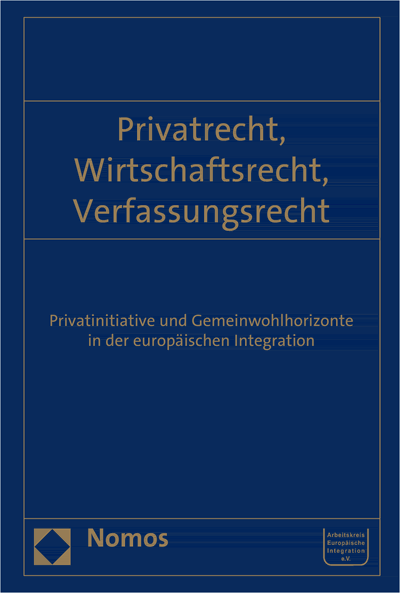
Privatrecht, Wirtschaftsrecht, Verfassungsrecht
Privatinitiative und Gemeinwohlhorizonte in der europäischen Integration- Editors:
- | |
- Publisher:
- 2015
Keywords
Search publication
Bibliographic data
- Edition
- 1/2015
- Copyright year
- 2015
- ISBN-Print
- 978-3-8487-2088-0
- ISBN-Online
- 978-3-8452-6478-3
- Publisher
- Nomos, Baden-Baden
- Language
- German
- Pages
- 1622
- Product type
- Edited Book
Table of contents
ChapterPages
- Titelei/Inhaltsverzeichnis Full access Pages 1 - 39 Download chapter (PDF)
- Authors:
- I. Einleitung No accessAuthors:
- II. Das Grundgerüst des rechtsphilosophischen Begründungswegs in der Metaphysik der Sitten No accessAuthors:
- III. Einwände gegen die Ableitung des Privatrechts aus der praktischen Vernunft No accessAuthors:
- IV. Schlussbemerkung No accessAuthors:
- Authors:
- I. Einleitung No accessAuthors:
- II. Zwei offene Begriffe: Rechtsgeschichte und Privatrecht der Union No accessAuthors:
- III. Integrationsrecht und Rechtsgeschichte: Aporien der Auslegung No accessAuthors:
- IV. Anforderungen an die Teildisziplinen No accessAuthors:
- V. Methode für den Maschinenraum No accessAuthors:
- Bemerkungen zur Angleichung des Privatrechts in Europa No access Pages 59 - 65Authors:
- Begrenzte Rationalität als Rechtfertigung einer speziellen Vertragsethik bei Langzeitverträgen? Zur Bedeutung verhaltenswissenschaftlicher Gesichtspunkte für die Beurteilung privatautonomer Bindungen No access Pages 66 - 72Authors:
- Authors:
- I. Die Aktualität der Unterscheidung zwischen gesetzter und vereinbarter Gerechtigkeit No accessAuthors:
- II. Geltungsbedingungen von Gesetz und Vertrag No accessAuthors:
- III. Vereinbarungen mit Belastungswirkungen für Dritte No accessAuthors:
- IV. Die vertragliche Begründung einer juristischen Person No accessAuthors:
- V. Vertrag im Rahmen der Gesetze No accessAuthors:
- Party Autonomy and the Interface between Principles of Contract Law and Unification of Private International Law No access Pages 85 - 90Authors:
- Authors:
- I. Die Bedeutung des Subsidiaritätsprinzips für das Gemeinwohl No accessAuthors:
- II. Subsidiarität als dynamisches Konzept No accessAuthors:
- III. Anwendung auf das europäische Privatrecht No accessAuthors:
- IV. Fazit No accessAuthors:
- Authors:
- I. No accessAuthors:
- II. No accessAuthors:
- III. No accessAuthors:
- Authors:
- I. Einführung No accessAuthors:
- Authors:
- 1. Der gefährliche Vertrag No accessAuthors:
- Authors:
- a) Die cause – Rechtfertigung der Naturalerfüllung No accessAuthors:
- b) Die cause – Begrenzung der Naturalerfüllung No accessAuthors:
- Authors:
- 1. Das Reformprojekt No accessAuthors:
- 2. Konsensuales Vertragsmodell ohne cause No accessAuthors:
- Authors:
- 1. Rechtfertigungsfunktion No accessAuthors:
- 2. Begrenzungsfunktion No accessAuthors:
- V. Bilanz No accessAuthors:
- Authors:
- I. Die Vertragstypen im europäischen Vertragsrecht No accessAuthors:
- II. Die Vertragstypen im Vorschlag für das GEK No accessAuthors:
- III. Fazit No accessAuthors:
- Authors:
- I. Einleitung No accessAuthors:
- II. Externe Lücken No accessAuthors:
- Authors:
- 1. Normative Maßgaben im GEKR No accessAuthors:
- 2. Systematische Auslegung des Unionsrechts: die Klausel-Richtlinie No accessAuthors:
- 3. Illegalität und Immoralität No accessAuthors:
- Authors:
- a) Unmöglichkeit? No accessAuthors:
- b) Vermeidung einer Doppelprüfung No accessAuthors:
- c) Nicht vertragsrechtliche Materien No accessAuthors:
- 5. Vermeidung eines gespaltenen Kontrollmaßstabs No accessAuthors:
- IV. Fazit und Ausblick No accessAuthors:
- V. Post skriptum No accessAuthors:
- Authors:
- I. Einführung No accessAuthors:
- II. Thema No accessAuthors:
- III. Poldermodell versus Streitmodell No accessAuthors:
- IV. Einzelheiten No accessAuthors:
- VI. Praxis No accessAuthors:
- VII. Ergebnisse No accessAuthors:
- VIII. Zukunft und Fazit No accessAuthors:
- Vertragstreue und Vertragsreue No access Pages 146 - 151Authors:
- Authors:
- I. Einleitende Bemerkungen No accessAuthors:
- II. Neue polnische Regelung der Verkäuferhaftung für Mängel der Kaufsache No accessAuthors:
- III. Vergleich der Mängelhaftung des Verkäufers nach dem geplanten GEK und nach dem polnischen Gewährleistungsrecht No accessAuthors:
- IV. Schlussfolgerungen No accessAuthors:
- Authors:
- I. Das Binnenmarktkonzept als materielle Voraussetzung der Rechtsangleichung – herkömmliche Fallgruppen No accessAuthors:
- II. Binnenmarkt im Gleichgewicht No accessAuthors:
- III. Verbraucherschutz als eigener Teil der Binnenmarktidee No accessAuthors:
- IV. Folgen für die Verbraucherschutzkompetenz No accessAuthors:
- Authors:
- I. Befund: negative Abgrenzung No accessAuthors:
- Authors:
- 1. Unselbständige berufliche Tätigkeit No accessAuthors:
- 2. Geschäfte mit doppeltem Zweck No accessAuthors:
- Authors:
- 1. Nischen für Privatautonomie und Umsetzung in deutsches Recht No accessAuthors:
- Authors:
- a) Systemwidrigkeit No accessAuthors:
- b) Fazit: Restriktion No accessAuthors:
- 3. Geschäfte mit doppeltem Zweck No accessAuthors:
- Authors:
- I. Von den Nebengesetzen zum Verbraucherschutz im BGB No accessAuthors:
- Authors:
- 1. Verzahnung mit dem allgemeinen Schuldrecht No accessAuthors:
- 2. Systematisierung verbraucherprivatrechtlicher Vorschriften No accessAuthors:
- 3. Sollbruchstellen No accessAuthors:
- Authors:
- 1. Bedeutung des Verbraucherprivatrechts für die juristische Ausbildung No accessAuthors:
- 2. Bedeutung des Verbraucherprivatrechts in der Praxis No accessAuthors:
- IV. Schluss No accessAuthors:
- Authors:
- I. Einleitung No accessAuthors:
- Authors:
- 1. Keine europäische Vorgabe eines „ewigen“ Widerrufsrechts allgemein bei grundpfandrechtlich gesicherten Verbraucherkrediten No accessAuthors:
- 2. Erstreckung des europäischen Haustürwiderrufs-Regimes auf grundpfandrechtlich gesicherte Kredite No accessAuthors:
- 3. Europarechtliche Korrektur des haustürrechtlichen Vorbildes No accessAuthors:
- III. Ausblick No accessAuthors:
- Ist die „Internet -Abo-Falle“ bei richtlinienkonformer Auslegung Betrug? No access Pages 191 - 198Authors:
- Authors:
- I. Einführung No accessAuthors:
- II. Strafbare Werbung, § 16 Abs. 1 UWG No accessAuthors:
- III. Betrug, § 263 StGB No accessAuthors:
- IV. Fazit No accessAuthors:
- Authors:
- Authors:
- 1. Die Gleichbehandlung von Frauen und Männern im Unionsrecht No accessAuthors:
- 2. Erfolge der Gleichstellungspolitik No accessAuthors:
- 3. Neue diskriminierungstechnische Grenzverläufe No accessAuthors:
- Authors:
- 1. Irrationale Diskriminierung No accessAuthors:
- 2. „Rationale Diskriminierungen“ No accessAuthors:
- 3. Zwischenfazit No accessAuthors:
- III. Abhilfemöglichkeiten de lege lata? No accessAuthors:
- IV. Fazit No accessAuthors:
- Authors:
- I. Einführung No accessAuthors:
- II. Europarechtliche Rahmenbedingungen No accessAuthors:
- III. Gender-Mainstreaming als autonome Quelle eines umfassenden Geschlechterdiskriminierungsverbots No accessAuthors:
- IV. Sprachwandel als Ausfluss des Gender-Mainstreaming-Konzepts? No accessAuthors:
- V. Schlusswort – eine Sottise No accessAuthors:
- Authors:
- I. Einleitung No accessAuthors:
- II. Der nationale Beurteilungsspielraum No accessAuthors:
- III. Das Diskriminierungsverbot: Rechtsordnungsimmanenter Menschenrechtsschutz No accessAuthors:
- IV. Der Blick auf den Einzelfall No accessAuthors:
- V. Zusammenfassung No accessAuthors:
- Authors:
- I. Einleitung No accessAuthors:
- II. Die zwei zentralen Elemente einer Konstituierung No accessAuthors:
- III. Die Notwendigkeit effektiver Grundrechtsgewährleistungen No accessAuthors:
- Authors:
- 1. Das Strukturdefizit im europäischen Gesellschaftsrecht No accessAuthors:
- 2. Die Infrastrukturverantwortung des Unionsgesetzgebers No accessAuthors:
- 3. Die Genese des Prinzipien- und Wertungskanons No accessAuthors:
- V. Fazit No accessAuthors:
- Authors:
- I. Einführung No accessAuthors:
- Authors:
- 1. Einführung No accessAuthors:
- 2. Stellungnahme No accessAuthors:
- Authors:
- 1. Einführung und Fragestellung No accessAuthors:
- 2. Zustimmungsbedürftigkeit des Antrags wegen drohender Zahlungsunfähigkeit No accessAuthors:
- 3. Zustimmungsbedürftigkeit eines Antrags auf Eigenverwaltung und Schutzschirmverfahren No accessAuthors:
- IV. Ergebnisse No accessAuthors:
- Authors:
- Authors:
- I. Zusammengesetztes SE-Recht No accessAuthors:
- II. Vom Vollstatut zu europäischem Minimalismus No accessAuthors:
- III. Zur Attraktivität der SE No accessAuthors:
- IV. Europäisierungs-Impulse aus der Rechtspraxis? No accessAuthors:
- V. Rechtspolitische Konsequenzen No accessAuthors:
- Authors:
- I. Unternehmerische Mitbestimmung in Deutschland No accessAuthors:
- II. Die Verhandlungslösung in der Societas Europaea (SE) No accessAuthors:
- III. Rechtspraktische Gestaltungen auf Basis der europäischen Verhandlungslösung No accessAuthors:
- IV. Funktionsweise des Verhandlungsmechanismus – Lehren für die deutsche Diskussion No accessAuthors:
- V. Fazit No accessAuthors:
- Authors:
- I. Einleitung No accessAuthors:
- Authors:
- 1. Zum Meinungsstand No accessAuthors:
- 2. Das Gesellschaftsinteresse als Ziel des Vorstandshandelns No accessAuthors:
- III. Die Wechselwirkung zwischen der Pflicht zur Abgabe einer nichtfinanziellen Erklärung und der aktienrechtlichen Sorgfaltspflicht No accessAuthors:
- Authors:
- I. Das Fehlen einer generellen Normierung der Sonderrechte im italienischen Aktienrecht No accessAuthors:
- II. Einzelne Sonderrechtstatbestände im Aktienrecht und ihre Verallgemeinerbarkeit als Rechtsfigur No accessAuthors:
- III. Rechtsvergleichender Meinungsstand und die personalistische Gestaltbarkeit der Aktiengesellschaft No accessAuthors:
- IV. Sonderrechte in der Praxis No accessAuthors:
- Authors:
- I. Einleitung No accessAuthors:
- Authors:
- 1. Bildung eines Prüfungsausschusses No accessAuthors:
- 2. Aufgaben des Prüfungsausschusses No accessAuthors:
- Authors:
- 1. Bildung des Prüfungsausschusses No accessAuthors:
- Authors:
- a) Mitwirkung bei der Bestellung des Abschlussprüfers No accessAuthors:
- b) Durchführung der Abschlussprüfung No accessAuthors:
- c) Berichterstattung über die Prüfung No accessAuthors:
- IV. Schlussfolgerungen No accessAuthors:
- Authors:
- I. Problemstellung No accessAuthors:
- Authors:
- 1. Der Inhalt No accessAuthors:
- 2. Der Zweck der Regelung No accessAuthors:
- Authors:
- 1. Fallgestaltungen No accessAuthors:
- 2. Die im Richtlinienentwurf vorgesehene Rechtsfolge No accessAuthors:
- V. Fazit No accessAuthors:
- Authors: |
- I. No accessAuthors: |
- II. No accessAuthors: |
- III. No accessAuthors: |
- IV. No accessAuthors: |
- Die Verfolgung von Gruppeninteressen in der grenzüberschreitenden Unternehmensgruppe No access Pages 305 - 311Authors:
- Authors:
- Authors:
- I. The governance problem and the Commission’s remedies No accessAuthors:
- II. Related Party Transactions and transparency No accessAuthors:
- III. Related Party Transactions and shareholder approval No accessAuthors:
- IV. Related Party Transactions and controlling shareholder liability No accessAuthors:
- V. A market for corporate governance regulation? No accessAuthors:
- VI. Summing up No accessAuthors:
- Authors:
- I. Einleitung: 25 Jahre europäisches Insiderverbot No accessAuthors:
- Authors:
- 1. Die Insiderrichtlinie (1989) No accessAuthors:
- 2. Das Zweite Finanzmarktförderungsgesetz (1994) No accessAuthors:
- Authors:
- 1. Die Marktmissbrauchsrichtlinie (2003) No accessAuthors:
- 2. Das Gesetz zur Verbesserung des Anlegerschutzes (2004) No accessAuthors:
- 3. Die Spector-Entscheidung des EuGH (2009) No accessAuthors:
- Authors:
- 1. Grundsatz: Vermutete Kausalität No accessAuthors:
- 2. Strafrechtliche Umsetzung No accessAuthors:
- Authors:
- I. Koalitionsfreiheit: Freiheitsrecht der Arbeitnehmer und Arbeitgeber und Gewährleistung des Tarifvertragssystems No accessAuthors:
- II. Die Gewährleistung der Tarifautonomie durch das Freiheitsrecht und die objektive Grundsatznorm des Art. 9 Abs. 3 GG No accessAuthors:
- Authors:
- I. Einführung des flächendeckenden Mindestlohns No accessAuthors:
- II. Scheitern der freiheitsgrundrechtlichen Eingriffsrechtfertigung No accessAuthors:
- III. Anforderungen des europäischen Binnenmarkts No accessAuthors:
- IV. Wert und Gefährdung der Freiheit No accessAuthors:
- Authors:
- I. Einführung No accessAuthors:
- Authors:
- 1. Hintergrund: die unsichere Rechtslage nach dem Teilzeit- und Befristungsgesetz No accessAuthors:
- 2. Anwendungsbereich und tatbestandliche Voraussetzungen No accessAuthors:
- Authors:
- a) Beachtung des Verbots der Altersdiskriminierung No accessAuthors:
- b) Bedenken im Hinblick auf die Anforderungen der Befristungsrichtlinie No accessAuthors:
- III. Folgen und Fazit No accessAuthors:
- Authors:
- I. Einleitung No accessAuthors:
- II. Inhalt des Art. 30 GRC No accessAuthors:
- III. Auswirkungen auf das deutsche Recht No accessAuthors:
- IV. Schluss No accessAuthors:
- Authors:
- I. Einleitung No accessAuthors:
- II. Arbeitnehmerentsendung im System der Grundfreiheiten: Entwicklung in Rechtsprechung und Unionsgesetzgebung No accessAuthors:
- Authors:
- 1. Bewertung auf der Grundlage des Grundverständnisses des EuGH No accessAuthors:
- 2. Die Arbeitnehmerentsendung und Arbeitnehmerfreizügigkeit No accessAuthors:
- IV. Ergebnis No accessAuthors:
- Authors:
- I. Einleitung No accessAuthors:
- Authors:
- 1. Die Zulässigkeit der Mediation bei grenzüberschreitenden arbeitsrechtlichen Konflikten No accessAuthors:
- 2. Inländischer Mediationsort No accessAuthors:
- 3. Ausländischer Mediationsort No accessAuthors:
- III. Schluss No accessAuthors:
- Authors:
- I. Einführung No accessAuthors:
- Authors:
- 1. Privatautonomie No accessAuthors:
- 2. Dogmatik No accessAuthors:
- 3. Dogmatische Rigidität vor Privatautonomie No accessAuthors:
- Authors:
- 1. Das Haager Übereinkommen von 2005 No accessAuthors:
- 2. Akzeptanz und Durchsetzung von Gerichtsstandsvereinbarungen im HGÜ No accessAuthors:
- 3. Gerichtsstandsvereinbarungen und Rechtshängigkeitseinwand im HGÜ No accessAuthors:
- 4. Bedeutung No accessAuthors:
- IV. Europa – Teil 2: auf dem richtigen Weg No accessAuthors:
- Authors:
- Authors:
- 1. Uneinheitliche Implementierung des europäischen Verbraucherschutzes in den nationalen Justizsystemen No accessAuthors:
- 2. Alternative Streitbeilegungsverfahren No accessAuthors:
- II. Durchsetzung zwingenden Verbraucherrechts durch konsensuale Verfahren? No accessAuthors:
- Authors:
- Authors:
- a) Einrichtung eines Akkreditierungssystems No accessAuthors:
- b) Fachliche Qualifikation sog. „Streitmittler“ No accessAuthors:
- Authors:
- a) Implementierung zwingender Verfahrensgarantien No accessAuthors:
- b) Bindung der Einigungsvorschläge an zwingendes Verbraucherrecht No accessAuthors:
- IV. Fazit No accessAuthors:
- Authors:
- I. Einleitung No accessAuthors:
- II. Parteiherrschaft und Gemeinwohl im Zivilprozessrecht No accessAuthors:
- III. Die Rechtssache Duarte Hueros No accessAuthors:
- Authors:
- 1. Ne ultra petita No accessAuthors:
- 2. Ausschluss der Klageänderung No accessAuthors:
- 3. Breite Rechtskraft No accessAuthors:
- V. Schluss No accessAuthors:
- Authors:
- I. Paradigmenwechsel in der grenzüberschreitenden Vollstreckung No accessAuthors:
- II. Innerstaatliche Regelung in Ungarn No accessAuthors:
- III. Neufassung der Brüssel-I Verordnung No accessAuthors:
- Authors:
- Authors:
- II. Prüfungsmaßstab des Bundesverfassungsgerichts No accessAuthors:
- III. Prüfungsgegenstand des Bundesverfassungsgerichts No accessAuthors:
- IV. Die Voraussetzungen für eine Ausnahme von der Vorlagepflicht No accessAuthors:
- V. Konsequenzen einer CILFIT-widrigen Nichtvorlage nach Unionsrecht und EMRK No accessAuthors:
- VI. Konsequenzen für das Bundesverfassungsgericht No accessAuthors:
- Authors:
- I. Gerichtsstands- und Vollstreckungsübereinkommen No accessAuthors:
- II. Schiedsgerichtsbarkeit – TTIP und Ceta No accessAuthors:
- III. Rechtsstaat, Realismus, Liberalität, Pluralität gegen übertriebene Gemeinsamkeit, Subsidiarität, Weltoffenheit ... No accessAuthors:
- Authors:
- Authors:
- 1. Reaktion auf die Emanzipation des Verbrauchers No accessAuthors:
- 2. Stärkere Konvergenz der privatrechtlichen Disziplinen des Europarechts No accessAuthors:
- 3. Neue Arten der Kooperation zwischen dem EuGH und den nationalen Gerichten No accessAuthors:
- II. Schluss No accessAuthors:
- Authors:
- I. Einführung No accessAuthors:
- II. Grenzüberschreitende Aktivität als Tatbestandsmerkmal der Marktfreiheiten No accessAuthors:
- III. Binnenmarktrelevanz statt grenzüberschreitender Aktivität: Die Entscheidung des EuGH in der Rs. Belgacom No accessAuthors:
- IV. Bewertung No accessAuthors:
- Authors:
- I. Introduction No accessAuthors:
- II. Dassonville remains good law: does Keck survive? No accessAuthors:
- III. De minimis non curat lex? No accessAuthors:
- IV. Assimilation of the justifications? No accessAuthors:
- V. Conclusions and Valedictory No accessAuthors:
- Authors:
- I. Das Grundstück in Matera und der EuGH No accessAuthors:
- Authors:
- 1. Codice civile in Matera – und Luxemburg? No accessAuthors:
- 2. Die Grundfreiheiten No accessAuthors:
- III. Fazit No accessAuthors:
- Authors:
- I. Einleitung No accessAuthors:
- II. Die Rechtfertigung von Eingriffen in die Grundfreiheiten: Hintergrund und Struktur No accessAuthors:
- Authors:
- 1. „Mitgliedstaatliche“ Gemeinwohlinteressen No accessAuthors:
- 2. Schutzkonzeption und Schutzniveau No accessAuthors:
- 3. Gefährdung des Schutzguts No accessAuthors:
- 4. Geeignetheit und Erforderlichkeit No accessAuthors:
- IV. Schluss No accessAuthors:
- Authors:
- I. Einführung No accessAuthors:
- II. Entwicklung und Reichweite der EuGH-Rechtsprechung zur unmittelbaren Dritt- bzw. Privatwirkung der Grundfreiheiten No accessAuthors:
- Authors:
- 1. Der begrenzte Nutzen herkömmlicher Rechtfertigungsgründe für Private No accessAuthors:
- 2. Fragwürdiger Mehrwert der im Angonese-Urteil höchstrichterlich anerkannten Rechtfertigungskategorie „sachlicher Erwägungen“ No accessAuthors:
- 3. Plädoyer für eine unmittelbare Heranziehung der Unionsgrundrechte zur Rechtfertigung privater Grundfreiheitseingriffe No accessAuthors:
- IV. Fazit No accessAuthors:
- Authors:
- I. Einleitung No accessAuthors:
- Authors:
- 1. Grundrechte No accessAuthors:
- 2. Grundfreiheiten No accessAuthors:
- Authors:
- 1. Egalisierung (scheinbarer) privater Macht? No accessAuthors:
- 2. Heteronomisierung der Privatrechtsgesellschaft No accessAuthors:
- 3. Distributionswirkung No accessAuthors:
- 4. Entparlamentarisierung der Rechtsbeziehungen in der Privatrechtsgesellschaft No accessAuthors:
- IV. Zusammenfassung No accessAuthors:
- The Case-Law of the European Court of Justice on Direct Taxation No access Pages 493 - 500Authors:
- Authors:
- I. Einleitung No accessAuthors:
- II. Hintergrund: EuGH-Entscheid in Rs. C-284/09 No accessAuthors:
- III. Reaktion des deutschen Gesetzgebers auf den EuGH-Entscheid No accessAuthors:
- IV. Bewertung des § 8b Abs. 4 KStG No accessAuthors:
- V. Vorschlag de lege ferenda No accessAuthors:
- VI. Schluss No accessAuthors:
- Authors:
- Authors:
- 1. Reichweite der Nichtigkeit No accessAuthors:
- 2. Teil des europäischen ordre public No accessAuthors:
- Authors:
- 1. Die Anerkennung als Schutzgesetz No accessAuthors:
- 2. Courage/Crehan – Die Initialzündung durch den Gerichtshof No accessAuthors:
- Authors:
- 3. Flankierung durch die Brüssel-I und Rom-II Verordnungen No accessAuthors:
- Authors:
- a) Weißbuch No accessAuthors:
- b) Die Ausweitung der europarechtlichen Vorgaben durch den Gerichtshof No accessAuthors:
- c) Das ORWI-Urteil des Bundesgerichtshofes No accessAuthors:
- d) Die Richtlinie über private Schadensersatzansprüche No accessAuthors:
- III. Fazit und Ausblick No accessAuthors:
- Authors:
- Authors:
- 1. The years devoted to the examination of vertical agreements (1979-1995) No accessAuthors:
- 2. The negative impact of the merger control provisions on competition law enforcement (1995-2000) No accessAuthors:
- 3. Legislative initiatives to enhance law enforcement and setbacks (2000-2011) No accessAuthors:
- 4. The impact of Regulation 1/2003 on the new Competition Act 3959/2011 No accessAuthors:
- II. Is There a Need for Special Competition Rules in Times of Financial Crisis? No accessAuthors:
- Authors:
- I. „Zielkonflikte“ No accessAuthors:
- II. Dogmatische Problemebenen No accessAuthors:
- III. Antinomien und Systemökologie No accessAuthors:
- IV. Politik der Privaten? No accessAuthors:
- Authors:
- Authors:
- 1. Der Zweckbegriff in Art. 101 Abs. 1 AEUV No accessAuthors:
- 2. Die „dauernde oder fortgesetzte Zuwiderhandlung“ in Art. 25 Abs. 2 der VO 1/2003 No accessAuthors:
- Authors:
- 1. EGMR-Urteil Janosevic No accessAuthors:
- 2. Beschluss der Kommission in Sachen MB No accessAuthors:
- III. Bewertung No accessAuthors:
- Authors:
- I. Ansatzpunkt beim Schutzzweck No accessAuthors:
- II. Ablehnung des Auswirkungsprinzips No accessAuthors:
- III. Hinwendung zum Auswirkungsprinzip No accessAuthors:
- IV. Anerkennung des Auswirkungsprinzips No accessAuthors:
- V. Völkerrechtliche Schranken No accessAuthors:
- Authors:
- I. Problemstellung No accessAuthors:
- II. Der normative Rahmen No accessAuthors:
- III. Rechtsprechung und Praxis No accessAuthors:
- IV. Insbesondere die Tatbestandsmäßigkeit der Wettbewerbsbeschränkung No accessAuthors:
- V. Fazit No accessAuthors:
- Authors:
- I. Einführung No accessAuthors:
- II. Private Normdurchsetzung ohne Systembrüche mit dem Privatrecht? No accessAuthors:
- III. Schadensrechtliche Weichenstellungen in der Richtlinie No accessAuthors:
- IV. Résumé No accessAuthors:
- Authors:
- I. No accessAuthors:
- II. No accessAuthors:
- III. No accessAuthors:
- IV. No accessAuthors:
- Authors:
- I. Gestern:Zielsetzungen, Rechtsfolgen, Akteure der Kartellrechtsdurchsetzung No accessAuthors:
- II. Heute: Das Ziel der Kompensation erlittener Vermögenseinbußen ergänzt die individualschützende Ausrichtung des Kartellrechts No accessAuthors:
- Authors:
- 1. Die Vorteile des Instruments der Verpflichtungszusageentscheidung No accessAuthors:
- 2. Nebenwirkungen des Erfolgs der Verpflichtungszusageentscheidung No accessAuthors:
- 3. Verpflichtung zur Kompensation erlittener Verluste als mögliche Lösung No accessAuthors:
- IV. Ergebnis No accessAuthors:
- Authors:
- I. Der Verbotsirrtum im europäischen Kartellordnungswidrigkeitenrecht No accessAuthors:
- II. Die Schenker-Entscheidung des EuGH No accessAuthors:
- III. Fragwürdigkeit der Rechtsprechung des EuGH und Ausblick No accessAuthors:
- Authors:
- I. Gründe für die Einführung des SIEC-Tests No accessAuthors:
- Authors:
- 1. Schadenstheorie und Horizontalleitlinien No accessAuthors:
- 2. Wettbewerbsverhältnis der fusionierenden Unternehmen statt Marktanteile No accessAuthors:
- 3. Beseitigung eines für den Wettbewerb besonders wichtigen Unternehmens (Maverick) No accessAuthors:
- 4. Quantifizierung der Beeinträchtigung des Wettbewerbs: Entstehung von Preiserhöhungsspielräumen No accessAuthors:
- 5. Effizienzverteidigung No accessAuthors:
- III. Bilanz und Ausblick No accessAuthors:
- Authors:
- I. Einführung No accessAuthors:
- Authors:
- Authors:
- Authors:
- aa) Informationsmitteilung No accessAuthors:
- bb) Wettbewerbsrelevante Verbindung No accessAuthors:
- b) Stellungnahme No accessAuthors:
- 2. Änderungen beim Verweisungsregime No accessAuthors:
- 3. Sonstiger Änderungsbedarf No accessAuthors:
- 4. Auf dem Weg zu einem einheitlichen „Europäischen Raum der Fusionskontrolle“? No accessAuthors:
- III. Fazit und Ausblick No accessAuthors:
- Authors:
- I. Einleitung No accessAuthors:
- Authors:
- 1. Beihilfeverfahren vor der Kommission No accessAuthors:
- 2. Die Rolle der nationalen Gerichte No accessAuthors:
- 3. Bewertung des Lufthansa-Urteils im Schrifttum No accessAuthors:
- Authors:
- a) Unklarheiten und Interpretation des Lufthansa-Urteils No accessAuthors:
- Authors:
- aa) Institutionelles Gleichgewicht No accessAuthors:
- bb) Unionsgrundrechte No accessAuthors:
- cc) Verfassungsrechtliche Schranken No accessAuthors:
- dd) Praktische Aspekte No accessAuthors:
- III. Schluss No accessAuthors:
- Authors:
- I. Wirtschaftlichkeit No accessAuthors:
- II. Korruptionsprävention No accessAuthors:
- III. Wettbewerbsschutz No accessAuthors:
- IV. Rechtsstaatlichkeit No accessAuthors:
- V. Grundrechtsschutz No accessAuthors:
- VI. Fazit No accessAuthors:
- Goldhasen und Goldbären im Europäischen Wirtschaftsrecht No access Pages 641 - 650Authors:
- Authors:
- I. Die Grundthese: Qualifizierte geografische Herkunftsangaben als gewerbliches und kommerzielles Eigentum No accessAuthors:
- II. Konsequenz: Genuin kennzeichenrechtlicher Schutz auf europäischer und nationaler Ebene No accessAuthors:
- III. Die Konkurrenzfrage: Kennzeichenschutz und lauterkeitsrechtlicher Schutz vor Irreführung mit geografischen Herkunftsangaben im Rahmen komplementärer nationaler Schutzsysteme No accessAuthors:
- IV. Das Verhältnis der VO (EU) Nr. 1151/2012 zu den nationalen Schutzsystemen No accessAuthors:
- V. Résumé No accessAuthors:
- Authors:
- I. Vorlagefragen: Nutzung des Art. 256 Abs. 3 AEUV No accessAuthors:
- II. Einrichtung von Fachgerichten für Teile des Geistigen Eigentums nach Art. 257 AEUV No accessAuthors:
- III. Ausdehnung der Fachgerichts-Zuständigkeit auf Rechtsstreitigkeiten zwischen Privaten (Art. 262 AEUV). No accessAuthors:
- IV. Verhältnis der Fachgerichte zum Einheitlichen Patentgericht No accessAuthors:
- Authors:
- I. Einleitung No accessAuthors:
- II. Folgerungen aus dem Urteil des EuGH „Trianel“ für die nationale Öffentlichkeitsbeteiligung No accessAuthors:
- Authors:
- 1. Unionsebene No accessAuthors:
- 2. Auslegung des Aarhus Compliance Committee No accessAuthors:
- 3. Das Urteil des BVerwG vom 5. September 2013 No accessAuthors:
- IV. Präklusion von Einwendungen (§ 2 Abs. 3 UmwRG) No accessAuthors:
- V. Ausblick No accessAuthors:
- Authors:
- I. Hintergrund und (erneute) Aktualität des Themas No accessAuthors:
- II. Dogmatische Einordnung des Umweltschutzes als Rechtfertigungsgrund No accessAuthors:
- III. Verhältnismäßigkeitsprüfung auf Schranken-Schranken-Ebene No accessAuthors:
- Authors:
- I. Einführung einer „Pkw-Vignette“ in Deutschland No accessAuthors:
- Authors:
- Authors:
- a) Abgaberechtliches Diskriminierungsverbot des Art. 110 AEUV No accessAuthors:
- b) Verkehrspolitisches Diskriminierungsverbot des Art. 92 AEUV No accessAuthors:
- c) Grundfreiheiten und allgemeines Diskriminierungsverbot des Art. 18 AEUV No accessAuthors:
- 2. Ausgestaltung des Vignettenerwerbs No accessAuthors:
- III. Fazit No accessAuthors:
- Authors:
- I. Einführung No accessAuthors:
- II. EWWU im Dienste des Gemeinwohls No accessAuthors:
- III. Beeinträchtigung des Gemeinwohls durch Nichtanpassung No accessAuthors:
- IV. Gemeinwohlförderliche Krisenbekämpfung No accessAuthors:
- Authors:
- I. Die These von der „asymmetrischen Demokratie“ – Versuch einer Falsifikation No accessAuthors:
- Authors:
- 1. Haushaltsautonomie als Bestandteil des Demokratieprinzips im nationalen Verfassungsrecht No accessAuthors:
- 2. Beschränkungen der Haushaltsautonomie durch konditionierte Finanzhilfen der Europäischen Union No accessAuthors:
- 3. Gegenargument I: Die Autonomiebeschränkung ist keine Folge der Finanzhilfen No accessAuthors:
- Authors:
- 1. Das Prinzip der repräsentativen Demokratie als Prinzip der Europäischen Union in der Europäischen Wirtschafts- und Währungsunion No accessAuthors:
- 2. Gegenargument II: Duale demokratische Legitimation No accessAuthors:
- IV. Conclusio No accessAuthors:
- Authors:
- I. Einleitung No accessAuthors:
- Authors:
- 1. Marktintegration auf der Grundlage harmonisierter Wertpapierdienstleistungsregulierung No accessAuthors:
- 2. Marktintegration durch eine koordinierte Durchsetzung harmonisierter Regulierung No accessAuthors:
- III. Marktintegration durch Risikosteuerung No accessAuthors:
- Authors:
- I. Verfassungsdurchbrechung No accessAuthors:
- Authors:
- 1. Der Taler wandert No accessAuthors:
- 2. Durchbrechung der Selbstfinanzierungsregel No accessAuthors:
- 3. Quadratur des Teufelskreises No accessAuthors:
- 4. Versteckter Wechselbalg im SRM No accessAuthors:
- Authors:
- 1. Konzeptionelle Klarheit No accessAuthors:
- 2. Funktionelle Realitätsfähigkeit No accessAuthors:
- 3. Systemrationalität No accessAuthors:
- 4. Reduktion von Komplexität No accessAuthors:
- Europas Finanz- und Staatsschuldenkrise – Auswirkungen auf die Rechtsstaatlichkeit und die Demokratie in der Europäischen Union No access Pages 735 - 740Authors:
- Das Gemeinwohl im Spannungsfeld von staatlichem Recht, Europarecht und Völkerrecht – Ein österreichisches Beispiel No access Pages 741 - 749Authors:
- Authors:
- I. Einleitung No accessAuthors:
- II. Makroökonomischer Hintergrund No accessAuthors:
- III. Argument 1 - Einkommensverluste für Sparer No accessAuthors:
- IV. Argument 2 - Steigende Immobilienpreise No accessAuthors:
- V. Argument 3 - Niedrigere Zinsen stimulieren die Investitionsnachfrage kaum No accessAuthors:
- VI. Schlussfolgerungen No accessAuthors:
- Literatur No accessAuthors:
- Authors:
- I. Einleitung No accessAuthors:
- II. Gegenstand und Regelungsfragen No accessAuthors:
- Authors:
- 1. Ausgangslage No accessAuthors:
- 2. Haager Übereinkommen und Brüsseler Übungen No accessAuthors:
- IV. Sachrecht No accessAuthors:
- Authors:
- I. Die Weltwirtschaftskrise und die Reformen des EU-Finanzmarktrechts No accessAuthors:
- II. Grundzüge des Rechts der Märkte No accessAuthors:
- III. Der Schutz der Anleger No accessAuthors:
- V. Die Implementierung des Wettbewerbs und die Wahlfreiheit der Kunden No accessAuthors:
- VI. Systemorientierte Schlussfolgerungen aus der primären EU-Rechtsperspektive: Licht und Schatten No accessAuthors:
- Authors:
- I. Einleitung No accessAuthors:
- Authors:
- 1. Allgemein: Funktionsschutz und Individualschutz – Regulierung und Privatrecht No accessAuthors:
- 2. Organisationsrecht (Governance) und Restrukturierungsrecht (Bankeninsolvenz) No accessAuthors:
- 3. Bank-Kunden-Beziehung No accessAuthors:
- III. Ausblick No accessAuthors:
- Authors:
- I. Einführung No accessAuthors:
- II. Instrumente des Islamic Banking und Finance im europäischen Kontext No accessAuthors:
- III. Anpassung europäischen Rechts? No accessAuthors:
- IV. Schluss No accessAuthors:
- Authors:
- Authors:
- 1. „Fundamentally“ ... No accessAuthors:
- 2. Economic freedom vs. „allegedly higher values“ No accessAuthors:
- 3. Freiheit für alle, Ethik für jeden No accessAuthors:
- II. Freiheit ohne Gemeinwohl? No accessAuthors:
- III. Did we do it? ... or did we blew it? No accessAuthors:
- Erzählungen ohne Grenzen – Gemeinwohlhorizonte unter Internationalisierung No access Pages 799 - 805Authors:
- Authors:
- I. Allgemeine Wirtschaftsdaten No accessAuthors:
- II. Bisherige Rechtslage No accessAuthors:
- III. Barcelona, die Mittelmeer-Union und die Europäische Nachbarschaftspolitik No accessAuthors:
- IV. Der tunesische Frühling No accessAuthors:
- V. Das Assoziierungsabkommen No accessAuthors:
- VI. Ausblick No accessAuthors:
- Authors:
- 1. Einleitung No accessAuthors:
- Authors:
- 2.1 Restriktive Auslegung des Binnenmarktverständnisses No accessAuthors:
- 2.2 Ansicht der Synonymität zwischen Gemeinsamen Markt und Binnenmarkt No accessAuthors:
- 2.3 Weite Auslegung des Binnenmarktbegriffs No accessAuthors:
- Authors:
- 3.1 Angleichungs- und Konvergenzelemente zwischen den wirtschaftlichen Grundfreiheiten No accessAuthors:
- 3.2 Enge Auslegung No accessAuthors:
- 4. Beitrag zum Mercosur No accessAuthors:
- Authors:
- Authors:
- 1. Stil der Gesetzgebung No accessAuthors:
- 2. Wirkung der Grundrechte im Privatrecht No accessAuthors:
- 3. Stellenwert der Selbstregulierung No accessAuthors:
- 4. Wille zum Pragmatismus No accessAuthors:
- Authors:
- 1. Vertragsfreiheit und Inhaltskontrolle von Allgemeinen Geschäftsbedingungen No accessAuthors:
- 2. Vereinigungsfreiheit und Typenstrenge im Gesellschaftsrecht No accessAuthors:
- 3. Informationelle Selbstbestimmung und Publizität No accessAuthors:
- 4. Wirtschaftsfreiheit und Lauterkeitsrecht No accessAuthors:
- III. Fazit No accessAuthors:
- Authors:
- I. Der Auftakt zur EU-US-Partnerschaft No accessAuthors:
- II. Die Position der Schweiz No accessAuthors:
- Authors:
- 1. Gewerbliche und industrielle Produkte No accessAuthors:
- 2. Agrarprodukte und Nahrungsmittel No accessAuthors:
- 3. Dienstleistungen No accessAuthors:
- 4. Öffentliche Beschaffung No accessAuthors:
- 5. Gesundheit und Sicherheit No accessAuthors:
- 6. Direkte Investitionen No accessAuthors:
- IV. Die neue alte Welthandelsordnung No accessAuthors:
- Literatur No accessAuthors:
- Authors:
- I. Einführung No accessAuthors:
- II. Entwicklungsgeschichte No accessAuthors:
- III. Wettbewerbsrecht in China No accessAuthors:
- IV. Fusionskontrolle No accessAuthors:
- V. Chinesische Begründung No accessAuthors:
- VI. Are we trapped? No accessAuthors:
- Authors:
- I. Einführung No accessAuthors:
- II. Die Ausgangslage: Eine Neuordnung von Organ- und Verbandskompetenzen im Investitionsschutzrecht No accessAuthors:
- III. Individualrechtlicher Investitionsschutz aus Gemeinwohlgesichtspunkten No accessAuthors:
- IV. Die Gefahr eines Regulatory Chill durch Individualrechtsschutz No accessAuthors:
- V. Schaffung eines rechtsstaatlichen Investor-Staat-Streitverfahrens No accessAuthors:
- VI. Die Konkretisierung der individualrechtlichen Schutzstandards und das Right to Regulate aus allgemeinpolitischen Gründen No accessAuthors:
- VII. Die Aufladung des Investitionsschutzrechtes mit allgemeinpolitischen Zielen No accessAuthors:
- VIII. Fazit No accessAuthors:
- Authors:
- I. Haben Investoren ausreichenden Rechtsschutz? No accessAuthors:
- Authors:
- 1. EU-Regeln mit Anforderungen an nationale Rechtsbehelfe No accessAuthors:
- 2. Nationale Gerichte auf dem Prüfstand der EU-Institutionen No accessAuthors:
- III. Der Auftrag zu leichterem Zugang zum Recht und zur Förderung alternativer Streitbeilegung No accessAuthors:
- IV. Eine rechtspolitische Überlegung No accessAuthors:
- Authors:
- Einleitung No accessAuthors:
- Authors:
- 1. Grundfragen (bei ausschließlicher Beteiligung der Bundesrepublik Deutschland) No accessAuthors:
- 2. Schiedsverfahren unter Beteiligung der Europäischen Union No accessAuthors:
- 3. Bestellung des Vorsitzenden No accessAuthors:
- III. Zusammenfassung No accessAuthors:
- The Dispute Settlement System of the WTO: A Bright Picture with a Few Dark Spots No access Pages 885 - 888Authors:
- Authors:
- I. Das Zustimmungsgesetz als Grundlage für die Geltung des Unionsrechts in Deutschland No accessAuthors:
- Authors:
- 1. Integrationsprogramm und Ultra vires-Kontrolle No accessAuthors:
- 2. Verfassungsidentität (Art. 79 Abs. 3 GG) No accessAuthors:
- Authors:
- 1. Ultra-vires-Kontrolle No accessAuthors:
- 2. Verfassungsidentität No accessAuthors:
- Authors:
- I. No accessAuthors:
- II. No accessAuthors:
- III. No accessAuthors:
- Authors:
- A. Internationale Einbindung der Staaten als Herausforderung No accessAuthors:
- B. Reform der Optionsobliegenheit No accessAuthors:
- Authors:
- I. Verlust der Staatsangehörigkeit und deren Rechtfertigung No accessAuthors:
- II. Bedeutung der Staatsangehörigkeit sowie Mehrstaatigkeit No accessAuthors:
- III. Hinnahme von Mehrstaatigkeit in Bezug auf andere EU-Staaten und Schweiz No accessAuthors:
- IV. Weitergehende Mehrstaatigkeit für in Deutschland aufgewachsene ius-soli-Deutsche No accessAuthors:
- V. Individuelle Unmöglichkeit oder Unzumutbarkeit der Optionsobliegenheit No accessAuthors:
- D. Résumé No accessAuthors:
- Authors:
- I. Überblick No accessAuthors:
- II. Konturen des Amtes No accessAuthors:
- III. Der Zusammenhang von Wahl und Amt No accessAuthors:
- IV. Hinweise auf Fehlentwicklungen und Warnungen vor Gefahren als Gegenstand öffentlicher Äußerungen des Bundespräsidenten No accessAuthors:
- V. Neue und vorgezeichnete Aspekte der Rechtsprechung No accessAuthors:
- Authors:
- Authors:
- 1. Nachfrage nach Gesundheitsleistungen und Begrenzung ihrer Finanzierung No accessAuthors:
- 2. Rationale Verteilungsentscheidungen durch Priorisierung oder Rationierung No accessAuthors:
- Authors:
- 1. Staatliche Gewährleistung medizinischer (Grund-)versorgung No accessAuthors:
- 2. Die gesetzliche Krankenversicherung als verfassungskomplementäres Leistungssystem No accessAuthors:
- Authors:
- 1. Teilhabe an der medizinischen Versorgung durch Inklusion No accessAuthors:
- 2. Grenzen klinischer Entscheidungskompetenz No accessAuthors:
- Bewährungshilfe durch einen freien Träger – zur Erfüllung von Gemeinwohlaufgaben durch Private No access Pages 940 - 948Authors:
- Authors:
- I. No accessAuthors:
- II. No accessAuthors:
- III. No accessAuthors:
- IV. No accessAuthors:
- V. No accessAuthors:
- Authors:
- I. La compréhension du donné et du construit No accessAuthors:
- II. L’intelligence des fins et des moyens No accessAuthors:
- Europa, Nation, Souveränität No access Pages 967 - 975Authors:
- Schulden- sowie Vermögensverteilung im Rahmen der Staatensukzession No access Pages 976 - 979Authors:
- Authors:
- I. Einige Gesichtspunkte der Vita von Karl Carstens No accessAuthors:
- Authors:
- III. Grundzüge einiger Schriften zum europäischen Gemeinschaftsrecht No accessAuthors:
- IV. Schuss No accessAuthors:
- Authors:
- Authors:
- 1. Integrationsbegriff No accessAuthors:
- 2. Europäische Integration und Integrationsprinzip No accessAuthors:
- Authors:
- 1. Entwicklung No accessAuthors:
- 2. Finalitätsfrage No accessAuthors:
- III. Integrationsgewalt, Integrationsgrenzen und Integrationsverantwortung No accessAuthors:
- Authors:
- 1. Dilemma No accessAuthors:
- 2. Remedur No accessAuthors:
- Authors:
- I. Orientierung No accessAuthors:
- Authors:
- 1. Ordoliberalismus: Erfolg auf historischer Grundlage? No accessAuthors:
- 2. Input-orienterte vs. Output-orientierte Legitimation No accessAuthors:
- 3. Neue Legitimationsfiguren in der Ökonomik No accessAuthors:
- III. Abschluss No accessAuthors:
- Authors:
- I. Fragestellung No accessAuthors:
- II. Kontinuität des Verfassungsrahmens des Binnenmarkts No accessAuthors:
- III. Die tschechische verfassungsgerichtliche Perspektive No accessAuthors:
- IV. Fazit No accessAuthors:
- Authors:
- Einleitung No accessAuthors:
- I. Gerechtigkeit ist ein Verfassungsbegriff mit kurzer europarechtlicher Tradition und vagem Inhalt No accessAuthors:
- II. Gerechtigkeit ist kein Europäischer Wert i.S.v. Art. 2 S. 1 EUV No accessAuthors:
- III. Autor und Adressat der Gerechtigkeit ist die europäische Gesellschaft No accessAuthors:
- IV. Gerechtigkeit ist ein Standard im rechtstechnischen Sinn No accessAuthors:
- V. Gerechtigkeit ist der an der Menschenwürde orientierte angemessene Ausgleich von Freiheit und Gleichheit No accessAuthors:
- VI. Die Werte der Europäischen Union verlangen die Ermöglichung und Beachtung des gesellschaftlichen Gerechtigkeitsdiskurses No accessAuthors:
- Gemeinwohl und Solidarität in der Europäischen Union No access Pages 1022 - 1028Authors:
- Authors:
- I. Introduction No accessAuthors:
- II. Asymmetric pressures within the AFSJ No accessAuthors:
- III. Solidarity within in the AFSJ: the legal framework No accessAuthors:
- IV. Solidarity within the AFSJ: The political dimension No accessAuthors:
- V. Solidarity within the AFSJ: The financial support instruments No accessAuthors:
- VI. Solidarity within the AFSJ: The operational instruments No accessAuthors:
- VII. Conclusions No accessAuthors:
- Authors:
- I. Kants Träume No accessAuthors:
- II. Integrationsräume No accessAuthors:
- III. Antinomien No accessAuthors:
- IV. Rekonstruktion oder Dekonstruktion? No accessAuthors:
- Authors:
- I. Zu den Ursachen No accessAuthors:
- Authors:
- 1. Das Friedensargument No accessAuthors:
- 2. Das Binnenmarktargument No accessAuthors:
- 3. Das Deutschen-Argument No accessAuthors:
- 4. Das imperiale Argument No accessAuthors:
- 5. Spezifische Interessenlagen No accessAuthors:
- III. Bundesstaat kein Modell No accessAuthors:
- Authors:
- I. Immer grösser, immer weiter ? No accessAuthors:
- II. Die Kopenhagener Kriterien – Wandlungen der Union No accessAuthors:
- III. Grenzen und Wesen der Union No accessAuthors:
- IV. Grenzen der Größe ? No accessAuthors:
- V. Grenzen und Erfolg No accessAuthors:
- Authors:
- I. Einleitung No accessAuthors:
- II. Rückblende: Klassischer völkerrechtlicher Vertrag? No accessAuthors:
- III. Wiederentdeckung der Markt- und Verfassungselemente No accessAuthors:
- IV. Access to Justice No accessAuthors:
- V. Akzeptanz No accessAuthors:
- VI. Schluss No accessAuthors:
- Authors:
- I. Problemaufriss No accessAuthors:
- II. Zum Begriff der Notstandsverfassung No accessAuthors:
- Authors:
- 1. Allgemeines No accessAuthors:
- 2. Solidarität im Notstand – der neue Art. 222 AEUV No accessAuthors:
- 3. The apocalypse would need to happen first – Die Allgemeine Notstandsklausel (Art. 347 AEUV) No accessAuthors:
- 4. Sektorielle Notstandsklauseln und ordre public-Vorbehalte No accessAuthors:
- Authors:
- 1. Allgemeines No accessAuthors:
- 2. Gravierende Versorgungsschwierigkeiten als Notstand (Art. 122 AEUV) No accessAuthors:
- 3. Grundfreiheiten und Notstand No accessAuthors:
- V. Funktionen der Notstandsregelungen und die Rolle der EU-Institutionen No accessAuthors:
- VI. Notstand und Souveränität der Mitgliedstaaten No accessAuthors:
- VII. Schluss No accessAuthors:
- Authors:
- I. Der Anwendungsvorrang als Ausdruck von formeller Superiorität No accessAuthors:
- Authors:
- 1. Delegiertes Recht als notwendig nachrangiges Recht? No accessAuthors:
- 2. Anwendungsvorrang durch ein formelles Prinzip No accessAuthors:
- Authors:
- I. Einführung No accessAuthors:
- Authors:
- 1. Zulassungsregelungen für Gesundheitsdienstleister No accessAuthors:
- 2. Zum Anwendungsbereich der Freiheiten No accessAuthors:
- III. Sekundärrecht No accessAuthors:
- Authors:
- 1. Primärrecht No accessAuthors:
- 2. Sekundärrecht No accessAuthors:
- 3. Schlussbemerkung No accessAuthors:
- Authors:
- I. Introduction No accessAuthors:
- II. Institutional balances in the EU legal system No accessAuthors:
- Authors:
- 1. The ”Market Realism” theory in practice No accessAuthors:
- V. Judicial Activism versus Scandinavian Legal Realism No accessAuthors:
- VI. European Constitutionalism as the prevailing element No accessAuthors:
- VII. Conclusions No accessAuthors:
- Authors:
- I. Einführung No accessAuthors:
- Authors:
- 1. Die Lage No accessAuthors:
- Authors:
- a) Unmittelbare Anwendung von Richtlinien No accessAuthors:
- b) Die volle Wirksamkeit des Wettbewerbsrechts No accessAuthors:
- c) Vorrang des Gemeinschaftsrechts (Costa) No accessAuthors:
- d) Ausweitung der Kompetenzen der EU (AETR) No accessAuthors:
- e) Schadenshaftung der Mitgliedstaaten (Francovich) No accessAuthors:
- f) Einschränkung der Kompetenzen von Mitgliedstaaten No accessAuthors:
- Authors:
- 1. Effet utile und das Prinzip der Effektivität No accessAuthors:
- 2. Effet utile und seine Natur. Rechtsauslegung und Rechtsanwendung No accessAuthors:
- IV. Bedingungen und Grenzen der Anwendung des effet utile No accessAuthors:
- V. Zusammenfassung No accessAuthors:
- Authors:
- I. Einführende Bemerkungen No accessAuthors:
- II. Zur Abgrenzung des Untersuchungsgegenstandes: Eine Verlaufsanalyse No accessAuthors:
- III. Bausteine und Prinzipien No accessAuthors:
- IV. Schlussfolgerung No accessAuthors:
- Authors:
- I. Problem No accessAuthors:
- II. Beispiel: Urlaubsübertragung in anderes Kalenderjahr, § 7 Abs. 3 S. 3 BUrlG No accessAuthors:
- Authors:
- 1. Bindung an den EuGH No accessAuthors:
- Authors:
- a) Unbefristete Übertragung des Urlaubs No accessAuthors:
- b) Auf 15 Monate befristete Übertragung No accessAuthors:
- IV. Grundsatzkritik No accessAuthors:
- Authors:
- I. Die Vertragsreform No accessAuthors:
- II. Zur Deutung des Begriffs „Rechtsakte mit Verordnungscharakter“ durch die Unionsgerichte No accessAuthors:
- III. Ausblick No accessAuthors:
- Authors:
- I. Einleitung No accessAuthors:
- II. Die prozessuale Vorfrage im Vorabentscheidungsverfahren No accessAuthors:
- Authors:
- 1. Die Zustellungsvollmacht des Schadensregulierungsbeauftragten No accessAuthors:
- 2. Das deutsche dingliche Vorkaufsrecht und Art. 22 Nr. 1 EuGVVO No accessAuthors:
- IV. Optimierung des Kooperationsverhältnisses No accessAuthors:
- Authors:
- I. Einleitung No accessAuthors:
- Authors:
- 1. Grundsatz der Enumeration und Subsidiarität No accessAuthors:
- 2. Rekurs auf die Theorie öffentlicher Güter No accessAuthors:
- 3. Modalitäten der Kompetenzallokation No accessAuthors:
- 4. Die zentrale Rolle des Fallrechts No accessAuthors:
- III. Folgerungen No accessAuthors:
- Authors:
- Authors:
- I. Der Name in Vertragstexten No accessAuthors:
- Authors:
- 1. Die klassische Formulierung No accessAuthors:
- 2. Anwendungsmöglichkeiten No accessAuthors:
- 3. Offenheit des Subsidiaritätsprinzips und Relativität des Gemeinwohls No accessAuthors:
- Authors:
- Authors:
- a) Konkurrierende Kompetenzen No accessAuthors:
- b) Hürde der supranationalen Kompetenzausübung No accessAuthors:
- c) Dichotomie des Kompetenzsystems No accessAuthors:
- 2. EU-spezifische rechtliche Schwierigkeiten No accessAuthors:
- 3. Praktische Wirkungslosigkeit No accessAuthors:
- IV. Legitimationschancen No accessAuthors:
- Authors:
- I. Einleitung No accessAuthors:
- Authors:
- 1. Zum Begriff „souverän“ No accessAuthors:
- 2. Zu „Glied in einem vereinten Europa“ No accessAuthors:
- 3. Zu „Eintritt in einen Bundesstaat“ No accessAuthors:
- 4. EGKS, EVG, EPG No accessAuthors:
- Authors:
- Präambel No accessAuthors:
- b) Art. 23 No accessAuthors:
- 6. Maastricht-Vertrag No accessAuthors:
- 7. Verfassungsvertrag No accessAuthors:
- 8. Lissabon-Vertrag No accessAuthors:
- 9. Demokratiegebot No accessAuthors:
- III. Schluss No accessAuthors:
- Authors:
- I. Einleitung No accessAuthors:
- Authors:
- 1. Die Begründung der Identitätskontrolle im Lissabon-Urteil des BVerfG No accessAuthors:
- Authors:
- a) Vorratsdatenspeicherungsurteil des BVerfG No accessAuthors:
- b) Die TEHG-Urteile des BVerwG No accessAuthors:
- Authors:
- 1. Die Relevanz der Achtung der nationalen Identität der Mitgliedstaaten vor dem Vertrag von Lissabon No accessAuthors:
- Authors:
- a) Direkte Anwendung des Art. 4 Abs. 2 EUV No accessAuthors:
- b) Indirekte Berücksichtigung No accessAuthors:
- IV. Fazit No accessAuthors:
- Authors:
- I. Einführung No accessAuthors:
- II. Ausgangspunkt Lissabon-Urteil No accessAuthors:
- III. Verfassungsanforderungen an die Ratifizierung oder Umsetzung von Unionsrecht No accessAuthors:
- Authors:
- 1. Unionsrechtliche Zulässigkeit des Prüfungsanspruchs No accessAuthors:
- 2. Reichweite und unionsrechtliche Folgen der Kontrolle No accessAuthors:
- V. Schlussbemerkung No accessAuthors:
- Authors:
- Authors:
- 1. Procédure incidente de contrôle de constitutionalité et principe de primauté du droit de l’Union. No accessAuthors:
- 2. Procédure incidente de contrôle de constitutionalité et procédure préjudicielle devant la Cour de justice de l’Union. No accessAuthors:
- Authors:
- 1. Le choix des juges constitutionnels nationaux d’utiliser la procédure préjudicielle. No accessAuthors:
- 2. Les réponses de la Cour de justice aux questions préjudicielles posées par les juges constitutionnels. No accessAuthors:
- Authors:
- I. Der europäische Gerichtsverbund No accessAuthors:
- Authors:
- 1. Erschließung juristischen Neulands No accessAuthors:
- 2. Bewältigung des gerichtlichen Alltags No accessAuthors:
- 3. Delegation der Entscheidungsverantwortung No accessAuthors:
- 4. Moderation von Kompetenzkonflikten No accessAuthors:
- III. Zusammenfassung No accessAuthors:
- Gemeinwohl und nationale Identität No access Pages 1238 - 1245Authors:
- Authors:
- I. Einleitung No accessAuthors:
- Authors:
- 1. Der Raum der Freiheit und das Freizügigkeitsrecht (Art. 21 AEUV) No accessAuthors:
- 2. Der Raum des Rechts und das Gesetzlichkeitsprinzip (Art. 49 GRC) No accessAuthors:
- Authors:
- 1. Art. 82 Abs. 1 Unterabs. 2 lit. b AEUV als einschlägige Ermächtigungsgrundlage No accessAuthors:
- 2. Die Orientierung am völkerrechtlichen Jurisdiktionsbegriff No accessAuthors:
- 3. Die Parallele zu Kompetenzkonflikten in Zivilverfahren (Art. 81 Abs. 2 lit. c AEUV) No accessAuthors:
- IV. Schluss No accessAuthors:
- Authors:
- I. Zum Thema Korruption No accessAuthors:
- II. Korruptionsbekämpfung No accessAuthors:
- III. Neuere Initiativen No accessAuthors:
- IV. Vorgeschichte No accessAuthors:
- V. Lösungsansätze: Allgemeine Bemerkungen No accessAuthors:
- VI. Vorschläge No accessAuthors:
- Authors:
- 1. Die demokratische Legitimation des Unionsgesetzgebers, Art. 10 EUV No accessAuthors:
- 2. Das EP: Repräsentation der Unionsbürger, Art. 14 EUV No accessAuthors:
- 3. Das EP und die Wahlrechtsgleichheit No accessAuthors:
- 4. Ein mit gleichem Erfolgswert gewähltes EP No accessAuthors:
- 5. Ein unionseinheitliches Wahlrecht No accessAuthors:
- 6. Ungleiches Wahlrecht zum EP: ein unabänderliches Merkmal der parlamentarischen Repräsentation auf Unionsebene No accessAuthors:
- 7. Weitere „Defizite“ des EP No accessAuthors:
- 8. Die demokratische Legitimierung des Grundrechtekatalogs der EU No accessAuthors:
- 9. Die Aufhebung der Sperrklausel für die EP-Wahl No accessAuthors:
- 10. Das erfundene Grundrecht oder: vom Grundrechtssenat zum angemaßten Staatsgerichtshof No accessAuthors:
- 11. Staatsziel europäische Integration No accessAuthors:
- 12. Die (Mit)gestaltung der Europäischen Union No accessAuthors:
- Authors:
- I. Müller-Graff und die europäische Integration No accessAuthors:
- II. Abgeordnete des Europäischen Parlaments No accessAuthors:
- III. Fraktionen im Europäischen Parlament No accessAuthors:
- IV. Politische Parteien auf europäischer Ebene No accessAuthors:
- V. Schluss No accessAuthors:
- Authors:
- I. No accessAuthors:
- II. No accessAuthors:
- III. No accessAuthors:
- Authors:
- I. „Demokratie im Verbund“: Die politisch-institutionelle Architektur der EU No accessAuthors:
- Authors:
- 1. Mehr „Westminster“ für das Europäische Parlament? No accessAuthors:
- 2. Innovationspotential durch „Spitzenkandidaten“? No accessAuthors:
- Authors:
- I. Gemeinwohldefinitionen No accessAuthors:
- II. Kriterien für die Auswahl des Kommissionspräsidenten vor und nach Lissabon No accessAuthors:
- III. Strukturelle Verbesserungen für die Gemeinwohlorientierung der EU No accessAuthors:
- Authors:
- Personal remark No accessAuthors:
- The puzzle: relevance and approach No accessAuthors:
- The Model: Integration Spiral No accessAuthors:
- The significance of the case: The European Council´s activities in justice and home affairs No accessAuthors:
- ‘The Constitutional Architect at Work’: Constructing the Area of Freedom, Security and Justice No accessAuthors:
- Conclusions: The Fusion Spiral Revisited No accessAuthors:
- Authors:
- I. Einleitung No accessAuthors:
- II. Positive Integration im Wege der Rechtsangleichung No accessAuthors:
- Authors:
- 1. Positive Integration durch Schaffung von Unionsagenturen No accessAuthors:
- 2. Positive Integration durch Übertragung von Eingriffsbefugnissen No accessAuthors:
- Authors:
- 1. Vertikale Abgrenzung zu der Durchführungskompetenz der Mitgliedstaaten No accessAuthors:
- 2. Horizontale Abgrenzung zu den Befugnissen der Unionsorgane No accessAuthors:
- V. Demokratisierung der EU durch Unionsagenturen No accessAuthors:
- Authors:
- I. Die Entwicklung der administrativen Dimension der Union No accessAuthors:
- II. Gestaltungsfragen des Rechtsschutzes No accessAuthors:
- Authors:
- I. Die Europäische Vereinigung der Anwaltschaften bei den Obersten Gerichtshöfen No accessAuthors:
- II. Das Netzwerk der Präsidenten der Obersten Gerichtshöfe der Europäischen Union No accessAuthors:
- III. Das Netzwerk der Generalstaatsanwälte der Obersten Gerichtshöfe der Europäischen Union No accessAuthors:
- IV. Vom Horchposten zum Sprachrohr der Justiz No accessAuthors:
- Authors:
- I Bürgerschaft als normative Imagination No accessAuthors:
- II Bürgerschaft als rechtliche Konstruktion No accessAuthors:
- III Bürgerschaft als soziale Praxis No accessAuthors:
- Authors:
- I. Einleitung No accessAuthors:
- II. Der Protokollinhalt und ein Versuch seiner Auslegung No accessAuthors:
- III. Schlussfolgerungen aus der bisherigen Rechtsprechung No accessAuthors:
- IV. Fazit No accessAuthors:
- Authors:
- I. Einleitung No accessAuthors:
- II. Entwicklung und Funktion von Grundrechten im Integrationsprozess No accessAuthors:
- III. Grundrechtsgeltung bei der Umsetzung und Anwendung von Sekundärrecht No accessAuthors:
- IV. Grundrechtsgeltung bei der mitgliedsstaatlichen Einschränkung von Binnenmarktfreiheiten No accessAuthors:
- V. Grundrechtsgeltung im Fall Akerberg Fransson No accessAuthors:
- VI. Fazit No accessAuthors:
- Authors:
- I. Grundfreiheiten und Grundrechte No accessAuthors:
- II. Normenkontrollmonopole im Binnenmarkt No accessAuthors:
- III. Normenkontrollmonopole und Unionsgrundrechte No accessAuthors:
- IV. Verfassungsgerichtliche Normenkontrollverfahren – Zwischenverfahren mit Zukunft? No accessAuthors:
- Authors:
- I. Einleitung No accessAuthors:
- II. Åkerberg Fransson, Durchführung und Anwendungsbereich des Unionsrechts No accessAuthors:
- III. Missachtung nationaler Spielräume? No accessAuthors:
- Authors:
- 1. Gleichlauf mit den sonstigen allgemeinen Rechtsgrundsätzen No accessAuthors:
- 2. Gleichlauf mit der Anwendbarkeit von Äquivalenz- und Effektivitätsprinzipien No accessAuthors:
- 3. Grundrechtsschutz als Voraussetzung gegenseitiger Anerkennung No accessAuthors:
- 4. Rechtspolitische Randbemerkung zur EMRK No accessAuthors:
- V. Für ein sachgerechtes Miteinander von nationalem und europäischem Grundrechtsschutz No accessAuthors:
- VI. Fazit No accessAuthors:
- Authors:
- I. Einleitung No accessAuthors:
- II. Die Ausgangssituation: Charta-Rechte als verfassungsgesetzlich gewährleistete Rechte No accessAuthors:
- Authors:
- 1. Das angewendete Grundrecht No accessAuthors:
- 2. Maßstäbe und Kontrolldichte No accessAuthors:
- 3. Unterschiede im Kontrollobjekt No accessAuthors:
- 4. Gemeinsamkeiten in der Gewichtung No accessAuthors:
- 5. Fragen geographischer Beschränkungen und der Territorialität No accessAuthors:
- IV. Perspektiven einer Rollenverteilung zwischen den europäischen Gerichtshöfen und Verfassungsgerichten im Grundrechtsbereich No accessAuthors:
- Authors:
- I. Einführung No accessAuthors:
- Authors:
- 1. Beschlussfassung No accessAuthors:
- 2. Adressaten No accessAuthors:
- 3. Ziele des Art. 39 EUV No accessAuthors:
- 4. Erforderlichkeit eines Beschlusses nach Art. 39 EUV No accessAuthors:
- 5. Anforderungen an den freien Datenverkehr im Bereich der GASP No accessAuthors:
- Authors:
- a) Schutzbereich No accessAuthors:
- b) Schranken No accessAuthors:
- 7. Überwachung No accessAuthors:
- III. Schlussbemerkung No accessAuthors:
- Authors:
- I. Einleitung No accessAuthors:
- Authors:
- 1. Allgemeines No accessAuthors:
- 2. Das Konzept der dienenden Freiheit No accessAuthors:
- Authors:
- a) Die Meinungsfreiheit als Individualrecht No accessAuthors:
- b) Der besondere Schutz der Medien No accessAuthors:
- c) Die Übernahme der Konzeption der dienenden Freiheit No accessAuthors:
- 4. Konsequenzen für die Auslegung des Art. 11 Abs. 2 GRCh No accessAuthors:
- Authors:
- I. No accessAuthors:
- II. No accessAuthors:
- III. No accessAuthors:
- Authors: |
- Introduction No accessAuthors: |
- 2. Legislative action by the European Union in the field of civil status No accessAuthors: |
- 3. Case law of the ECJ on civil status No accessAuthors: |
- 4. Limits of the public policy exception due to the obligation to recognise the nationality of another Member State No accessAuthors: |
- Authors:
- I. Freizügigkeit als Ziel der Union No accessAuthors:
- II. Wirtschaftliche Freizügigkeit No accessAuthors:
- III. Allgemeine Freizügigkeit No accessAuthors:
- IV. Studierende No accessAuthors:
- V. Arbeitssuchende No accessAuthors:
- VI. Sozialhilfebedürftige No accessAuthors:
- Authors:
- I. Unionsbürgerschaft und Freizügigkeit No accessAuthors:
- II. Beschränkungen der Freizügigkeit wegen Bezugs von Sozialleistungen No accessAuthors:
- III. Auf dem Weg zur Sozialbürgerschaft? No accessAuthors:
- IV. Klarheit und Kohärenz No accessAuthors:
- Authors:
- I. Ausgangspunkt: Die tatsächliche Situation No accessAuthors:
- II. Die Regelung im Gemeinsamen Europäischen Asylsystem No accessAuthors:
- III. Die Rechtsprechung des EuGH No accessAuthors:
- IV. Einzelfragen No accessAuthors:
- Authors:
- I. Sehnsucht nach Gerechtigkeit No accessAuthors:
- II. „Gerechtigkeit ist im Auge des Betrachters“ No accessAuthors:
- III. Gerechte Ordnung No accessAuthors:
- IV. Gerechtigkeit als normativer Begriff No accessAuthors:
- V. Gerechtigkeit und Rechtsprechung No accessAuthors:
- VI. Gerechtigkeit und Rechtswissenschaft No accessAuthors:
- VII. „Magisches Dreieck“ No accessAuthors:
- VIII. Sinn- und Leitbild No accessAuthors:
- Authors:
- Authors:
- 1. Der Promotor: Karl Heinsheimer No accessAuthors:
- 2. Der Geehrte: Carl Leopold Netter No accessAuthors:
- Authors:
- 1. Der Promotor: Otto Gradenwitz No accessAuthors:
- 2. Der Geehrte: Rudolf Mosse No accessAuthors:
- Inquisidores No access Pages 1466 - 1467Authors:
- Authors:
- I. Bildungs-Bologna No accessAuthors:
- II. Bologna für die Rechtswissenschaft No accessAuthors:
- III. Bologna an der Universität Potsdam No accessAuthors:
- Authors:
- 1. Grundlage der Juristenausbildung ist das eigene Recht No accessAuthors:
- 2. Die Juristenausbildung muss so international sein wie das Recht No accessAuthors:
- 3. Internationalisierung darf kein Selbstzweck sein No accessAuthors:
- 4. Schwerpunktstudium als Möglichkeit der Diversifizierung No accessAuthors:
- 5. Internationalisierung braucht Zeit No accessAuthors:
- 6. Internationalisierung erfordert Mobilität der Studierenden No accessAuthors:
- 7. Anerkennung als Rechtsprinzip – nicht nur im Europäischen Justizraum No accessAuthors:
- 8. Studienaufbau und Internationalisierung sind getrennt zu betrachten No accessAuthors:
- 9. Internationalisierung erfordert mehr als nur juristische Fertigkeiten No accessAuthors:
- 10. Internationalisierung benötigt eine neue Debattenkultur in der Ausbildung No accessAuthors:
- 11. Internationalisierung erfordert Mobilität des Lehrkörpers No accessAuthors:
- 12. Mehrsprachigkeit ist ein wesentliches Kennzeichen der Internationalisierung No accessAuthors:
- La Coopération internationale universitaire Montpellier – Heidelberg: un exemple à suivre, propos d’amitié No access Pages 1484 - 1485Authors:
- Authors:
- I. Einleitung No accessAuthors:
- II. Schule des Deutschen Rechts No accessAuthors:
- III. Deutsch-polnische und deutsch-polnisch-ukrainische Rechtsseminare No accessAuthors:
- IV. Europäisches Graduiertenkolleg No accessAuthors:
- V. Deutsch-polnisch-ukrainische Zusammenarbeit No accessAuthors:
- VI. Schlussworte No accessAuthors:
- Authors:
- Authors:
- 1. Das Fehlen von Gestaltungsmöglichkeiten: Ungarn in der Ratifikationslage No accessAuthors:
- 2. Der Beitrittsantrag als souveräner Akt ungarischer Staatlichkeit No accessAuthors:
- 3. Annahmebedürftigkeit und Aufnahmebedingungen No accessAuthors:
- Authors:
- 1. Finanzwirtschaftliche Lage No accessAuthors:
- 2. Unionale Perspektiven No accessAuthors:
- Authors:
- 1. Ungarn No accessAuthors:
- 2. Wehrhaftigkeit des Unionsrechts No accessAuthors:
- IV. Fazit No accessAuthors:
- Einzeltitel (Monographien, Kommentierungen, Herausgeberschaften) No access
- Einzelbeiträge No access
- Rezensionen No access
- Stichwortverzeichnis No access Pages 1561 - 1584
- Personenverzeichnis No access Pages 1585 - 1588
- Ortsverzeichnis No access Pages 1589 - 1592
- Rechtsaktsverzeichnis No access Pages 1593 - 1606
- Entscheidungsregister No access Pages 1607 - 1616
- Autorenverzeichnis No access Pages 1617 - 1622