, to see if you have full access to this publication.
Monograph No access
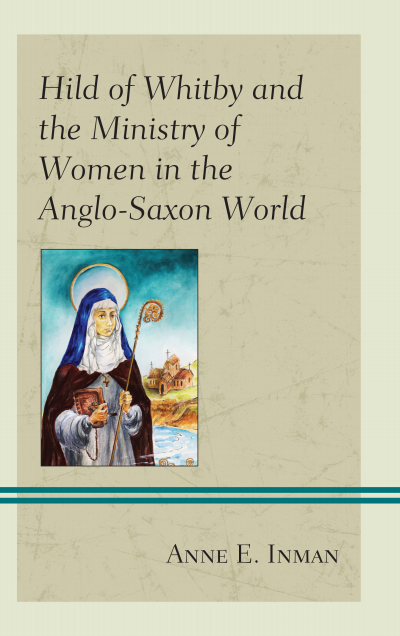
Hild of Whitby and the Ministry of Women in the Anglo-Saxon World
Authors:
Publisher:
2019
Summary
This book tells the story of Hild, the abbess of a highly successful double monastery at Whitby in Northumbria, where she was responsible for the education of five future bishops. Here she exercised an authority which in subsequent centuries would be reserved exclusively for men.
At thirteen Hild was baptized by Paulinus, who had come to Britain to join Augustine’s mission. Augustine had been sent by Pope Gregory to convert Britain, which had largely lapsed into paganism after the fall of the Roman Empire. Augustine in fact had little success in converting the Britons beyond Kent, and even in Kent Christianity had already been partially re-established by Queen Bertha, who had brought her Catholic Chaplain with her from Gaul upon her marriage to King Ethelbert.
There were many powerful women, like Bertha, who had been at the forefront of keeping the faith alive in the "Dark Ages," but whose agency has been written out of history or down-played in favour of the actions of famous men. Hild’s story is brought back to life alongside Mary, who founded a desert community at Tabenisi; Macrina, the teacher (didaskalos) of Gregory of Nyssa, Basil of Caesarea; Ita, confessor to Brendan; the formidable Aelffled, who succeeded Hild at Whitby, a co-worker and confidante of Cuthbert.
As the Catholic Church struggles under the weight of centuries-old misogyny, it is surprising to see how, in the early medieval period, abbesses had shared governance with bishops. As that church struggles with a shortage of male priests to celebrate the sacraments, it is instructive to see how many sacramental ministries were once exercised by female monastics. Confession, for example, was once practiced in the same way whether the confessor was a man or, as in Hild’s case, a woman.
The span of Hild’s life covers the period before and after the establishment of clericalism, the unbridgeable gap between the higher plane of the male priesthood and the lower plane of religious women. Bede’s telling of Hild’s life was already downplaying her authority as a powerful leader in the Anglo-Saxon church. It is time for that to be remedied.
Keywords
Search publication
Bibliographic data
Edition
1/2019
Copyright Year
2019
ISBN-Print
978-1-9787-0066-6
ISBN-Online
978-1-9787-0067-3
Publisher
Lexington, Lanham
Language
English
Pages
226
Product Type
Monograph
Table of contents
ChapterPages
Contents No access
List of Illustrations No access
Preface No access
Introduction to Sources No access
Introduction to Hild: A Brilliant Light in a Dark Age No access Pages 1 - 4
Ch01. The Anglo-Saxon Princess No access Pages 5 - 18
Ch02. The Forgotten Women of Early Monasticism No access Pages 19 - 28
Ch03. The Celts, Ireland, and Saint Patrick No access Pages 29 - 38
Ch04. The Augustinian Mission No access Pages 39 - 52
Ch05. Hild Embarks on the Religious Life No access Pages 53 - 66
Ch06. Life in Hild’s Monasteries No access Pages 67 - 80
Ch07. Hild the Confessor No access Pages 81 - 92
Ch08. A Window onto Ancient Liturgies No access Pages 93 - 110
Ch09. Hild the Overseer No access Pages 111 - 124
Ch10. Whitby: At the Origins of English Poetry No access Pages 125 - 138
Ch11. Underlying Tensions Come to a Head No access Pages 139 - 148
Ch12. The Synod of Whitby No access Pages 149 - 162
Ch13. The Aftermath No access Pages 163 - 174
Ch14. Hild Departs This Life No access Pages 175 - 178
Ch15. Hild and Aelffled No access Pages 179 - 190
Ch16. Further Developments No access Pages 191 - 198
Ch17. The Untold Story No access Pages 199 - 206
Glossary No access Pages 207 - 210
Bibliography No access Pages 211 - 216
Index No access Pages 217 - 224
About the Author No access Pages 225 - 226
Similar publications
from the topics "Religion und Theologie allgemein"