, to see if you have full access to this publication.
Monograph No access
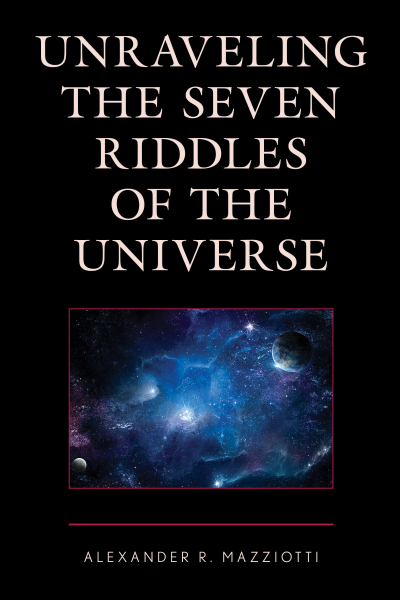
Unraveling the Seven Riddles of the Universe
Authors:
Publisher:
2022
Summary
As the crowd stood and applauded for the neurophysiologist Du Bois-Reymond’s lecture on August 14, 1872, they did not know that his lecture on the seven riddles of the universe would be long remembered. Scientists at the time believed that science could unlock all of the mysteries of the universe. However, the scientific revolution of the early 20th century fueled by relativity and quantum mechanics would upend the scientific world confirming Du Bois-Reymond’s insights. This book explores the brilliance of Du Bois-Reymond’s life and work and a vastly expanded scientific understanding of these riddles through the modern disciplines of physics, chemistry, and biology. Despite the progress, underlying metaphysical notions still haunt the riddles. Utilizing notions from Whitehead’s Process Philosophy, the author delves into the underlying structure of our universe and outlines the nature of the deity that emerges.
Part two of this book examines the riddles consequent demands on theology and religion through the lens of the extraordinary teacher, philosopher, and theologian William DeWitt Hyde. The author clarifies notions about miracles, immortality, and wisdom. This book takes the reader on a vivid, imaginative journey towards unraveling the mysteries of our existence, roles in society, and personal loyalties.
Keywords
Search publication
Bibliographic data
Edition
1/2022
Copyright Year
2022
ISBN-Print
978-0-7618-7289-4
ISBN-Online
978-0-7618-7290-0
Publisher
Hamilton Books, Lanham
Language
English
Pages
122
Product Type
Monograph
Table of contents
ChapterPages
Contents No access
Preface No access
Notes No access
Inanimate Matter and Energy—Quantum Theory and Relativity No access
Biologic Systems—Entropy and Complexity No access
Human Mind, Information, and Spiritual Energy No access
Notes No access
Science from the Late 1800s to the Present No access
Notes No access
Notes No access
Notes No access
Notes No access
Sensation and Consciousness No access
Language and Rationality No access
The Moral Constraints and Lure No access
Robotic Man No access
Language’s Origin No access
The First Languages No access
Language and Progress No access
The Future of Language and Reason No access
Notes No access
Note No access
1. Elimination Of Violence And War In Society No access
2. Elimination Of Illness, Accidents, Addictions, And An Increase In A Healthy Longevity No access
3. Elimination Of Racial, Religious, Economic, Sexual And Class Prejudice No access
4. Elimination Of Illiteracy And Allow A Fundamental Critical Thinking And Basic Moral (Not Religious) Educational Curriculum For All No access
5. Universal Social Service Networks For Those In Dire Need Of Help No access
6. The Development Of Truly Democratic And Just Republics That Encourage Freedom, Compassion, Justice, And Responsibility No access
7. Create Socially Responsive And International Free Enterprise Business, Educational, And Research Institutions No access
Notes No access
Notes No access
Notes No access
Science and the Modern World No access
Process and Reality No access
Process Theology–Developments since Whitehead No access
Notes No access
Hyde quoting Epictetus No access
On Plato No access
On Aristotle No access
On Christianity No access
Notes No access
Notes No access
Notes No access
Notes No access
How Do You Judge True Science and True Religion? No access
Beyond Belief In God: Can We Assess Whether The Overall Impact Of A Given Religious System Is Good Or Bad For Both The Society And The Individual? No access
How Has Science Affected Religion And Vice Versa? No access