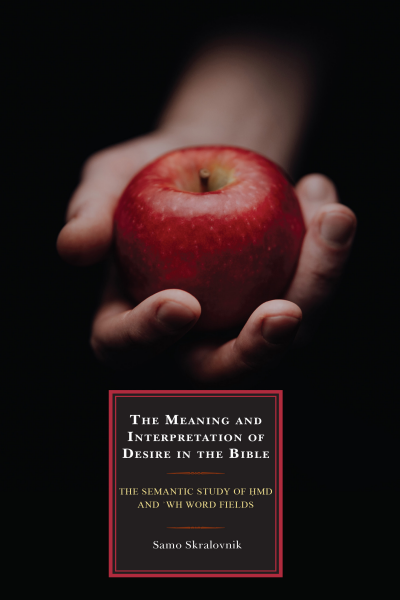
The Meaning and Interpretation of Desire in the Bible
The Semantic Study of hmd and ‘wh Word Fields- Authors:
- Publisher:
- 2022
Summary
The term desire in the Hebrew Bible covers a wide range of human longings, emotions, and cravings. The direct and explicit term of desire is nevertheless limited to only two roots found in the Decalogue—the verb forms of the lexical roots חמד and אוה, which reflect not only the dynamics of desire occurring in human beings, but also in God. With an comprehensive semantic analysis and an overview of the synonyms and antonyms, the author shows that the verb form of the lexical root אוה denotes a variety of needs related to human existence including aspiration for God while the verb form of the lexical root חמד denotes the desire to acquire material wealth and possessions beyond basic needs. All the findings are compared on two levels—in relation to human beings (objects and people) and in relation to God—and ultimately serve for the interpretation of the roots in both versions of the Decalogue (Exod 20:17 and Deut 5:21) to resolve questions concerning the meaning of the desire in Tenth Commandment and substantiate whether the answers to life’s questions provided by the Bible correspond to modern society.
Keywords
Search publication
Bibliographic data
- Edition
- 1/2022
- Copyright Year
- 2022
- ISBN-Print
- 978-1-7936-5287-4
- ISBN-Online
- 978-1-7936-5288-1
- Publisher
- Lexington, Lanham
- Language
- English
- Pages
- 250
- Product Type
- Monograph
Table of contents
- Contents No access
- General Abbreviations No access
- Introduction No access
- The Numbering of the Ten Commandments No access
- The Structure of the Decalogue No access
- Authorship or the Path from the Original to the Canonical Form No access
- Literary Context No access
- Notes No access
- The Covenant as the Modality of the Relationship between Yahweh and Israel No access
- The Specific Status of the Decalogue – The Direct Address of God No access
- The Meaning of the Decalogue in the Jewish Tradition No access
- The Law or God’s Fundamental Demands? No access
- Conclusion: The Decalogue in the Jewish Perception No access
- Notes No access
- Biblical Texts No access
- What Is a Semantic Study? No access
- Language Has Its Own Structure No access
- The Meaning of Words Changes over Time No access
- Semantic Range of Words (Range of Meanings) No access
- Words Only Carry a Meaning in Context (the Key Role of Context) No access
- Words as Synonyms No access
- The Meaning of Syntax for the Determination of the Lexical Meaning No access
- Non-verbal Influences on the Meaning of Words No access
- The Canonical Approach No access
- The Lexical Field Theory No access
- Notes No access
- The Lexicographic Definition No access
- The Basic Semantic Range No access
- The Application No access
- Prophetic Texts No access
- Literary Context No access
- Interpretation No access
- Isa 1:29 No access
- Literary Context No access
- The Interpretation No access
- Isa 44:9 No access
- Literary Context No access
- The Interpretation No access
- Isa 53:2 No access
- Literary Context No access
- Interpretation No access
- Conclusion: The Meaning of the Verb Form of the Root חמד in Isa 53:2 No access
- Conclusion: The Meaning of the Verb Form of the Root חמד in the Book of Isaiah (Isa 1:29, 44:9, 53:2) No access
- Historical Books No access
- Literary Context No access
- Interpretation No access
- Conclusion: The Meaning of the Verb Form of the Root חמד in Josh 7:21 No access
- Wisdom and the Poetic Books No access
- Literary Context No access
- Interpretation No access
- Ps 19:10 No access
- Literary Context No access
- The Interpretation No access
- Ps 39:11 No access
- Literary Context No access
- The Interpretation No access
- Ps 68:16 No access
- Literary Context No access
- The Interpretation No access
- Conclusion: The Meaning of the Verb Form of the Root חמד in verse Ps 68:16 No access
- Prov 1:22 No access
- Literary Context No access
- Interpretation No access
- Prov 6:25 No access
- Literary Context No access
- Interpretation No access
- Prov 12:12 No access
- Literary Context No access
- Interpretation No access
- Prov 21:20 No access
- Literary Context No access
- Interpretation No access
- Conclusion: The Meaning of the Verb Form of the Root חמד in Prov 21:20 No access
- Song 2:3 No access
- Literary Context No access
- The Interpretation No access
- Conclusion: The Meaning of the Verb Form of the Root חמד in Song 2:3 No access
- The Pentateuch No access
- Literary Context No access
- Interpretation No access
- Gen 3:6 No access
- Literary Context No access
- Interpretation No access
- Exod 34:24 No access
- Literary Context No access
- Interpretation No access
- Deut 7:25 No access
- Literary Context No access
- Interpretation No access
- Conclusion: The Meaning of the Verb Form of the Root חמד in Deut 7:25 No access
- Conclusion: The Meaning of the Verb Form of the Root חמד in the Pentateuch (Gen 2:9; 3:6; Exod 34:24; Deut 7:25) No access
- Thought Process (of Greed) with the Motif of Appropriation No access
- Congruity with Ancient Jewish Interpretations No access
- Holistic Understanding of the Dynamics of Desire No access
- Synonyms No access
- Antonyms No access
- The Joint Lexical Paradigm of Synonyms and Antonyms No access
- Semantic Shift in the Septuagint No access
- The Verb Form of the Root חמד Indicates Greed No access
- The Role of the Object of Desire (בֵּ֣ית) in the Interpretation of the Verb חָמַד No access
- Four Provisions in Deuteronomy as the Interpretation of the Verb חָמַד No access
- Does the Verb חָמַד Characterise Actions? No access
- The Verb חָמַד Does Not Characterise Actions No access
- The Tenth Commandment as the Climax of the Decalogue No access
- The Original Form of the Tenth Commandment Did Not Contain the Verb חָמַד No access
- Do Not Desire Things in Time No access
- Notes No access
- Lexicographic Definition No access
- The Basic Semantic Range No access
- From the Throat to the Soul – נֶפֶשׁ No access
- Application No access
- Prophetic Texts No access
- Literary Context No access
- Interpretation No access
- Isa 26:9 No access
- Literary Context No access
- Interpretation No access
- Jer 17:16 No access
- Literary Context No access
- Interpretation No access
- Amos 5:18 No access
- Literary Context No access
- Interpretation No access
- Conclusion: The Meaning of the Verb Form of the Root אוה in Amos 5:18 No access
- Conclusion: The Meaning of the Verb Form of the Root אוה in Prophetic Texts (Mic 7:1; Isa 26:9; Jer 17:16; Amos 5:18) No access
- Historical Books No access
- Literary Context No access
- Interpretation No access
- 2 Sam 3:21 No access
- Literary Context No access
- Interpretation No access
- 2 Sam 23:15 No access
- Literary Context No access
- Interpretation No access
- Conclusion: The Meaning of the Verb Form of the Root אוה in 2 Sam 23:15 No access
- 1 Chr 11:17 (= 2 Sam 23:15) No access
- 1 Kings 11:37 No access
- Literary Context No access
- Interpretation No access
- Conclusion: The Meaning of the Verb Form of the Root אוה in 1 Kings 11:37 No access
- Conclusion: The Meaning of the Verb Form of the Root אוה in the Historical Books (1 Sam 2:16; 2 Sam 3:21, 23:15; 1 Chr 11:17; 1 Kings 11:37) No access
- The Pentateuch No access
- Literary Context No access
- Interpretation No access
- Deut 14:26 No access
- Literary Context No access
- Interpretation No access
- Num 11:4 No access
- Literary Context No access
- Interpretation No access
- Num 11:34 No access
- Literary Context No access
- Interpretation No access
- Num 34:10 No access
- Conclusion: The Meaning of the Verb Form of the Root אוה in the Pentateuch (Num 11:4–34, 34:10; Deut 12:20, 14:26) No access
- Numbers No access
- Deuteronomy No access
- The Pentateuch (Conclusion) No access
- Wisdom and Poetic Books No access
- Literary Context No access
- Interpretation No access
- Prov 21:10 No access
- Literary Context No access
- Interpretation No access
- Prov 21:26 No access
- Literary Context No access
- Interpretation No access
- Prov 23:3.6 No access
- Literary Context No access
- Interpretation No access
- Prov 24:1 No access
- Literary Context No access
- Interpretation No access
- Conclusion: The Meaning of the Verb Form of the Root אוה in Prov 24:1 No access
- Job 23:13 No access
- Literary Context No access
- Interpretation No access
- Conclusion: The Meaning of the Verb Form of the Root אוה in Job 23:13 No access
- Eccl 6:2 No access
- Literary Context No access
- Interpretation No access
- Ps 45:11 No access
- Literary Context No access
- Interpretation No access
- Conclusion: The Meaning of the Verb Form of the Root אוה in Ps 45:11 No access
- Ps 106:14 No access
- Literary Context No access
- Interpretation No access
- Ps 132:13–14 No access
- Literary Context No access
- Interpretation No access
- Conclusion: The Meaning of the Verb Form of the Root אוה in Ps 132:13–14 No access
- Conclusion: The Meaning of the Verb Form of the Root אוה in the Book of Psalms (Ps 45:11, 106:14, 132:13–14) No access
- The Wide Semantic Range of the Verb Form of the Root אוה No access
- The Physical-Impulsive Response to Sensory Stimuli No access
- Desire with the Intention of Fulfilment No access
- The Verb Form of the Root אוה as a Moral (Life) Stance No access
- Synonyms Marking the Fundamental Tendency for (Self-)Preservation No access
- Synonyms Marking the Fundamental (Spiritual) Aspiration for God No access
- Synonym Marking God’s Aspiration for Man No access
- Antonyms No access
- The Joint Lexical Paradigm of the Synonyms and the Antonyms No access
- The Verb Form of the Root אוה Characterises the Life Dynamism of Living Beings No access
- The Verb Form of the Root אוה Characterises the Desire for God No access
- The Verb Form of the Root אוה as a Synonym for an Action No access
- The Root אוה as a Synonym of the Root חמד No access
- Notes No access
- Desire with the Intention of Fulfilment No access
- Man as a Subject in Relation to Objects and People No access
- The Verb Forms of the Roots Indicate a Human Stance (A Way of Life) No access
- Man as a Subject in Relation to God No access
- God as the Subject in Relation to Man and Creation No access
- Conclusion: The Root חמד in Relation to the Root אוה with an Emphasis on the Pentateuch No access
- Notes No access
- Literary Context No access
- Yahweh’s Land Ownership as a Theological-Economic Concept No access
- The Meaning of the Verb Form of the Root חמד in Exod 20:17 No access
- Do Not Steal. Do Not Covet No access
- Conclusion: The Meaning of the Verb Form of the Root חמד in Exod 20:17 No access
- Literary Context No access
- The Masoretic Text Deut 5:21 in Comparison with the Samaritan Torah, the Dead Sea Scrolls, and Other Ancient Scrolls No access
- The Deuteronomic Revision in the Light of the Wisdom Tradition No access
- Deuteronomy and the Status of Women No access
- Ugaritic Legal Formulations No access
- Consistency with Ancient Jewish Interpretations No access
- Conclusion: The Meaning of the Verb Form of the Roots חמד and אוה in Deut 5:21 No access
- Notes No access
- Note No access
- References No access Pages 231 - 238
- General Index No access Pages 239 - 242
- Index of (Mentioned) Scholars/Authorities No access Pages 243 - 244
- Index of Analyzed Hebrew Forms No access Pages 245 - 246
- Index of Proper Biblical Names No access Pages 247 - 248
- About the Author No access Pages 249 - 250