, to see if you have full access to this publication.
Edited Book No access
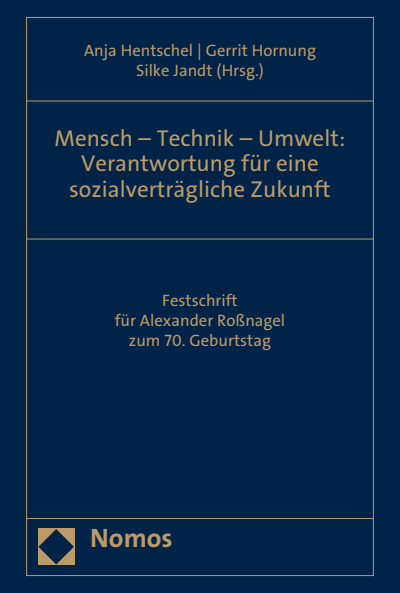
Mensch - Technik - Umwelt: Verantwortung für eine sozialverträgliche Zukunft
Festschrift für Alexander Roßnagel zum 70. Geburtstag- Editors:
- | |
- Publisher:
- 2020
Keywords
Search publication
Bibliographic data
- Edition
- 1/2020
- Copyright Year
- 2020
- ISBN-Print
- 978-3-8487-7014-4
- ISBN-Online
- 978-3-7489-1077-0
- Publisher
- Nomos, Baden-Baden
- Language
- German
- Pages
- 934
- Product Type
- Edited Book
Table of contents
ChapterPages
- Titelei/Inhaltsverzeichnis No access Pages 1 - 18
- Authors:
- Authors:
- 1. Macht No accessAuthors:
- 2. Technik und Regulierung No accessAuthors:
- 3. Innovation und Recht No accessAuthors:
- 4. Normative Orientierung: Nachhaltige Entwicklung No accessAuthors:
- 5. Herausforderungen für die Technikregulierung No accessAuthors:
- Authors:
- 1. Green Deal und Circular Economy No accessAuthors:
- 2. Kein Innovationsprinzip, sondern ein rekursiver Prozess No accessAuthors:
- 3. Systeminnovationen No accessAuthors:
- Authors:
- 1. Verhaltenswissenschaftlich informierte „Regulierungskunst“ No accessAuthors:
- 2. Rahmen für „lernende Systeme“ No accessAuthors:
- 3. Steuerungsansatz: Responsive Regulierung No accessAuthors:
- IV. Verhaltenssteuerung durch Technikverwaltungsrecht No accessAuthors:
- V. Regulatorische Experimentierräume und prospektive Rechtsfolgenforschung No accessAuthors:
- Authors: |
- I. Einleitung No accessAuthors: |
- II. Die Verletzlichkeitsstudie von 1989 No accessAuthors: |
- III. Ergebnisse der Studie aus heutiger Sicht No accessAuthors: |
- IV. Sind Verletzlichkeitsszenarien sinnvoll? No accessAuthors: |
- Authors: |
- 1. Technische und gesellschaftliche Entwicklungen No accessAuthors: |
- 2. Folgen für die Verletzlichkeit No accessAuthors: |
- 3. Gegensteuern No accessAuthors: |
- VI. Wir brauchen eine neue Verletzlichkeitsstudie No accessAuthors: |
- Authors:
- I. Recht und Technik No accessAuthors:
- Authors:
- 1. Der Mensch des Grundgesetzes No accessAuthors:
- 2. Der Mensch als Träger von Rechten und als Adressat von Pflichten No accessAuthors:
- 3. Der Mensch als Gestalter und Entscheidungsträger No accessAuthors:
- Authors:
- 1. Der Mensch als Nutzer und Konsument No accessAuthors:
- 2. Der Mensch als Gestalter und Techniker No accessAuthors:
- 3. Der Mensch als Herr über die Technik No accessAuthors:
- 4. Der Mensch als Fehlerquelle… No accessAuthors:
- 5. … und Maschinen als bessere Menschen No accessAuthors:
- 6. Der Mensch als Verhinderer und Lenker No accessAuthors:
- 7. Der Mensch als Maschine No accessAuthors:
- 8. Der Mensch als Handlungsobjekt von Technik No accessAuthors:
- IV. Technik als Herausforderung No accessAuthors:
- V. Fazit No accessAuthors:
- Authors:
- Authors:
- Authors:
- a) Isolierte Grundrechtsprüfung No accessAuthors:
- b) Einbeziehung der Funktionen der Grundrechte No accessAuthors:
- c) Grundrechtsbezogene Feststellung technikbedingter Veränderungen der Wirklichkeit No accessAuthors:
- d) Zusammenführung der Ergebnisse der isolierten Grundrechtsprüfungen No accessAuthors:
- Authors:
- a) Bewertung der technikbedingten Chancen und Risiken No accessAuthors:
- b) Bedingungen des Grundrechtsvoraussetzungsschutzes No accessAuthors:
- Authors:
- a) Ableitung von Normbereichen No accessAuthors:
- b) Ableitung von Normzielen No accessAuthors:
- Authors:
- a) Bewertung wissenschaftlicher Ansätze für neue Grundrechte No accessAuthors:
- b) Bestimmung der Form der Grundrechtsentwicklung No accessAuthors:
- c) Technikadäquate Grundrechtsausgestaltung No accessAuthors:
- d) Kursorische Folgenabschätzung der Grundrechtsentwicklungen No accessAuthors:
- II. Schlusswort No accessAuthors:
- Authors:
- I. Erste Begegnungen No accessAuthors:
- II. Geheimnisschutz – Verschlüsselung No accessAuthors:
- III. Verträge – Digitale Signatur No accessAuthors:
- IV. Urheberrecht – Digitales Rechtemanagement No accessAuthors:
- V. Politische Wahlen – E-Voting No accessAuthors:
- VI. Datenschutz – Privacy Enhancing Technology No accessAuthors:
- VII. Neue Herausforderung: die Privacy-Risk-Analysis No accessAuthors:
- Authors:
- Authors:
- 1. Datenschutz-Grundverordnung (DSGVO) No accessAuthors:
- 2. Netzwerkdurchsetzungsgesetz (NetzDG) No accessAuthors:
- 3. Gesichtserkennung No accessAuthors:
- II. Verbreitung und Bekämpfung von Falschinformationen No accessAuthors:
- III. Umgang mit künstlicher Intelligenz und Sprachassistenzsystemen No accessAuthors:
- IV. Fazit No accessAuthors:
- Authors: | |
- I. Einleitung No accessAuthors: | |
- Authors: | |
- 1. Muster in der Systementwicklung No accessAuthors: | |
- 2. Gestaltungsaspekte für soziotechnische Systeme No accessAuthors: | |
- Authors: | |
- 1. Anforderungsmuster No accessAuthors: | |
- 2. Entwurfsmuster No accessAuthors: | |
- IV. Diskussion und künftiger Forschungsbedarf No accessAuthors: | |
- V. Fazit No accessAuthors: | |
- Authors:
- I. Einleitung No accessAuthors:
- Authors:
- 1. Cloud-Dienste No accessAuthors:
- 2. Zertifizierung von Cloud-Diensten No accessAuthors:
- 3. Datenschutzzertifizierungen No accessAuthors:
- Authors:
- 1. Probleme klassischer Zertifizierungen No accessAuthors:
- 2. Automatisierung von Zertifizierungsprozessen zur Schaffung von Vertrauen und Transparenz No accessAuthors:
- Authors:
- 1. Rechtsverbindliche Vereinbarung zur Auftragsverarbeitung No accessAuthors:
- 2. Rechte und Pflichten des Cloud-Anbieters No accessAuthors:
- 3. Datenschutz-Managementsystem des Cloud-Anbieters No accessAuthors:
- 4. Datenschutz durch Systemgestaltung No accessAuthors:
- 5. Subauftragsverarbeitung No accessAuthors:
- 6. Datenverarbeitung außerhalb der EU und des EWR No accessAuthors:
- V. Fazit und Ausblick No accessAuthors:
- Authors:
- I. Motivation und Inspiration No accessAuthors:
- II. Terminologie und Analogie No accessAuthors:
- III. Anforderungen und Herausforderungen No accessAuthors:
- IV. Konstruktion und Applikation No accessAuthors:
- V. Konklusion und Gratulation No accessAuthors:
- Authors:
- I. Ordinal Data No accessAuthors:
- II. Formal Concept Analysis: A Mathematization of Concepts No accessAuthors:
- Authors:
- 1. FCA as a medium of human expression No accessAuthors:
- 2. The ontological commitment of FCA No accessAuthors:
- 3. Formal contexts and concepts as surrogates No accessAuthors:
- 4. FCA as fragmentary theory of intelligent reasoning No accessAuthors:
- 5. Efficient computation within FCA No accessAuthors:
- IV. Ordinal Data Science for Socially Acceptable ICT Design No accessAuthors:
- Authors: | |
- I. Notwendigkeit der automatisierten Erkennung No accessAuthors: | |
- Authors: | |
- 1. Organisatorische Konzepte No accessAuthors: | |
- 2. Erkennungsprinzipen No accessAuthors: | |
- 3. Erforderliche Techniken No accessAuthors: | |
- Authors: | |
- 1. Wiedererkennung No accessAuthors: | |
- 2. Manipulationserkennung No accessAuthors: | |
- IV. Diskussion No accessAuthors: | |
- Authors:
- Authors:
- 1. Die Alterslücke als Ausgangspunkt No accessAuthors:
- 2. Gründe und Ansatzpunkte No accessAuthors:
- Authors:
- 1. Räumliche und institutionelle Responsivität No accessAuthors:
- 2. Situative Responsivität No accessAuthors:
- 3. Eine explorative Studie zu Aufsuchender Digitalassistenz No accessAuthors:
- Authors:
- 1. Ein Stufenmodell Aufsuchender Digitalassistenz No accessAuthors:
- 2. Angebote und Anbieter Aufsuchender Digitalassistenz No accessAuthors:
- 3. Überwindung finanzieller Barrieren No accessAuthors:
- 4. Digitalambulanzen als kommunale Pflichtaufgabe No accessAuthors:
- Authors:
- Einleitung No accessAuthors:
- Authors:
- 1. Charakteristika von Pflegearbeit No accessAuthors:
- 2. Ausgangsbedingung Pflegekräftemangel No accessAuthors:
- 3. Pflegedokumentation unter Zeitdruck No accessAuthors:
- Authors:
- 1. Die politische Antwort auf den Pflegekräftemangel No accessAuthors:
- 2. Erwartungen an die Digitalisierung und erste Erfahrungen der Pflegekräfte mit der Digitalisierung, insbesondere der digitalen Dokumentation No accessAuthors:
- 3. Erwartungen und Zukunftsperspektiven der Digitalisierung in der Pflege – Roboter als Pflegekräfte No accessAuthors:
- Authors:
- 1. Das Besondere von Gesundheitsdaten No accessAuthors:
- Authors:
- Prolog No accessAuthors:
- I. Technische Risiken No accessAuthors:
- II. Privatisierung und Monokultur der Technikanbieter No accessAuthors:
- III. Grenzüberschreitende Datenverarbeitung und entgrenzte Datensammlung No accessAuthors:
- IV. Transparenz und Kontrolle durch Technikgestaltung No accessAuthors:
- V. Kontrollstrukturen und -ressourcen No accessAuthors:
- VI. Fazit No accessAuthors:
- Authors:
- I. Einleitung No accessAuthors:
- Authors:
- 1. Informationelle Selbstbestimmung und Gemeinbezug No accessAuthors:
- Authors:
- a) HDSG 1970 No accessAuthors:
- b) BDSG 1977 No accessAuthors:
- c) BDSG 1990 No accessAuthors:
- d) BDSG 2001/2003 No accessAuthors:
- e) BDSG 2009/2010 Novellen I-III No accessAuthors:
- f) Datenschutz-Richtlinie und Datenschutz-Grundverordnung No accessAuthors:
- Authors:
- 1. Die Bezugspunkte des Datenschutzrechts haben sich geändert, das Recht nicht No accessAuthors:
- 2. Alles wird personenbezogen No accessAuthors:
- 3. Anonyme Datensammlungen und KI sind weitgehend unreguliert No accessAuthors:
- 4. Schwindende Akzeptanz der betroffenen Personen No accessAuthors:
- 5. Verkrustete Strukturen No accessAuthors:
- Authors:
- 1. Kapitulation? No accessAuthors:
- 2. Revolution? No accessAuthors:
- Authors:
- a) Regulierung statt aufgezwungener Transparenz und fingierter Selbstbestimmung No accessAuthors:
- b) Vorrang gesetzlicher Rechtsgrundlagen, Opt-Out vor Opt-In No accessAuthors:
- c) Differenzierte Behandlung nicht zielgerichtet personenbezogener Verarbeitungen in einem reformierten Datenschutzrecht No accessAuthors:
- d) Geänderte Rechtsauslegung i.R.v. Art. 6 DSGVO No accessAuthors:
- e) Sicherungsmaßnahmen und kurze Löschfristen für nicht zielgerichtet erhobene Daten No accessAuthors:
- f) Regelung der Anschlussnutzung nicht zielgerichtet erhobener Daten zu weiteren Zwecken No accessAuthors:
- g) Ermöglichung von Anonymisierungs- und Pseudonymisierungskonzepten No accessAuthors:
- h) Berücksichtigung der Erkenntnisse aus anonymen Datensammlungen und KI No accessAuthors:
- V. Fazit No accessAuthors:
- Authors:
- I. Automatisierte Entscheidungen: drei Schutzperspektiven No accessAuthors:
- Authors:
- 1. Verbotsprinzip No accessAuthors:
- 2. Zweckbindung No accessAuthors:
- 3. Datenminimierung, Speicherbegrenzung und Richtigkeit No accessAuthors:
- 4. Transparenzproblem No accessAuthors:
- Authors:
- 1. Besondere Risiken No accessAuthors:
- 2. Datenschutz als präventiver Diskriminierungsschutz No accessAuthors:
- 3. Ungleichbehandlung und/oder Diskriminierung? No accessAuthors:
- IV. Schutz „vor der Maschine“ (Art. 22 DS-GVO) No accessAuthors:
- V. Ausblick No accessAuthors:
- Authors:
- I. Microtargeting im Wahlkampf No accessAuthors:
- Authors:
- 1. Besondere Kategorien von Daten? Eine Frage des Zwecks… No accessAuthors:
- Authors:
- Authors:
- aa) Einwilligung No accessAuthors:
- bb) Verarbeitung durch politische Vereinigungen No accessAuthors:
- cc) Verarbeitung von offensichtlich öffentlich gemachten Daten einer Person No accessAuthors:
- dd) Verarbeitung aufgrund des Unionsrechts oder mitgliedstaatlichen Rechts No accessAuthors:
- ee) Verarbeitung zu wissenschaftlichen und statistischen Zwecken No accessAuthors:
- b) Verantwortlichkeit bei individualisierter Wahlwerbung in bestehenden Werbeplattformen und durch Postdienstleister No accessAuthors:
- III. Ausblick No accessAuthors:
- Authors:
- I. Einführung No accessAuthors:
- II. Verfassungsrechtliche Vorgaben und rechtliche Anforderungen No accessAuthors:
- Authors:
- Authors:
- a) Einwilligung No accessAuthors:
- b) § 26 Abs. 1 S. 1 BDSG und Art. 6 Abs. 1 lit. f DS-GVO No accessAuthors:
- c) Gestaltungsziele No accessAuthors:
- Authors:
- a) Erhöhte Transparenzanforderungen (Art. 13 Abs. 2 lit. f / Art. 15 Abs. 1 lit. h DS-GVO) No accessAuthors:
- b) Gestaltungsziele No accessAuthors:
- Authors:
- a) „Richtigkeit“ der Algorithmen No accessAuthors:
- b) Gestaltungsziele No accessAuthors:
- 4. Nachweispflicht (Art. 5 Abs. 1 lit. d; 24 Abs. 1 DS-GVO) No accessAuthors:
- 5. Gebot menschlicher Überprüfung bei der Bewerberauswahl No accessAuthors:
- IV. Fazit No accessAuthors:
- Authors:
- I. Einleitung No accessAuthors:
- Authors:
- 1. Anbieter als Verantwortliche No accessAuthors:
- Authors:
- a) Keine ausschließlich persönliche oder familiäre Tätigkeit No accessAuthors:
- b) Öffentliche Profilseite No accessAuthors:
- c) Social Plug-ins No accessAuthors:
- III. Kollektive Verantwortlichkeit nach Jandt und Roßnagel No accessAuthors:
- IV. Die gemeinsame Verantwortlichkeit nach der Datenschutz-Grundverordnung No accessAuthors:
- V. Vergleich der kollektiven Verantwortlichkeit mit Art. 26 DSGVO No accessAuthors:
- VI. Fazit No accessAuthors:
- Authors:
- I. Die Europäisierung des Datenschutzrechts – Aufstieg des EuGH und Fall des BVerfG No accessAuthors:
- II. Agrarsubventionen – EuGH, Urt. v. 9.11.2010, C-92/09 „Schecke GbR“ No accessAuthors:
- III. EuGH, Urt. v. 29.6.2010 – C-28/08 P „Bavarian Lager“ No accessAuthors:
- IV. EuGH, Urt. v. 13.5.2014 – C-131/12 „Google Spain“ No accessAuthors:
- V. Fazit No accessAuthors:
- Authors:
- I. Perpetuiertes und vergessenes Wissen im Internet No accessAuthors:
- II. Systematisierung und Fallgruppen No accessAuthors:
- Authors:
- 1. Die datenschutzrechtliche Verantwortlichkeit der Suchmaschinenbetreiber No accessAuthors:
- 2. Bewertung und offene Fragen No accessAuthors:
- Authors:
- 1. Schutz von sensiblen Daten nur auf Antrag? No accessAuthors:
- 2. Verfehlte Auslegung der Ausnahmevorschriften in Art. 9 Abs. 2 DSGVO No accessAuthors:
- 3. Veraltete Informationen zu Strafverfahren No accessAuthors:
- V. Zwischenstand und offene Fragen No accessAuthors:
- Authors:
- I. Einleitung No accessAuthors:
- Authors:
- 1. Anreize für eine Zertifizierung No accessAuthors:
- 2. Zertifizierungsgegenstand No accessAuthors:
- 3. Zertifizierungskriterien No accessAuthors:
- Authors:
- 1. Akkreditierungsanforderungen No accessAuthors:
- Authors:
- a) Anforderungen an die verschiedenen Phasen einer Zertifizierung No accessAuthors:
- b) Umgang mit Nichtkonformitäten No accessAuthors:
- c) Berücksichtigung bestehender Zertifizierungen No accessAuthors:
- IV. ISO/IEC 27701 No accessAuthors:
- V. Fazit No accessAuthors:
- Authors:
- I. Einleitung No accessAuthors:
- II. Grundrecht auf Datenschutz No accessAuthors:
- III. Forschungsfreiheit No accessAuthors:
- Authors:
- 1. Unabhängige Forschung No accessAuthors:
- 2. Transparenz No accessAuthors:
- V. Rechtsgrundlagen No accessAuthors:
- VI. Zweckbindung No accessAuthors:
- VII. Statistik No accessAuthors:
- Authors:
- 1. Materielles Recht No accessAuthors:
- 2. Prozedurales No accessAuthors:
- IX. Abschlussbemerkung No accessAuthors:
- Authors:
- I. Einleitung No accessAuthors:
- Authors:
- 1. Vergleichende Sichtweise No accessAuthors:
- 2. Position des Gesetzes zum Schutz personenbezogener Daten im japanischen Rechtssystem No accessAuthors:
- 3. Führungsrolle lokaler Regierungsverordnungen (Verordnung-1975/1984) No accessAuthors:
- Authors:
- 1. Geschichte der Gesetzgebung No accessAuthors:
- 2. Verwaltungsreformgesetzgebung No accessAuthors:
- 3. Inhalt und Grenzen No accessAuthors:
- Authors:
- 1. Privatsektor No accessAuthors:
- 2. Änderungen der Situation im In- und Ausland No accessAuthors:
- 3. Bis zum Inkrafttreten des Gesetzes No accessAuthors:
- 4. Inhalt und Einschränkungen No accessAuthors:
- 5. APPI-AO-2003 No accessAuthors:
- Authors:
- 1. Überreaktion No accessAuthors:
- 2. Verabschiedung des Nummerngesetzes und Einrichtung des spezifizierten Ausschusses zum Schutz personenbezogener Daten No accessAuthors:
- 3. Informationsrevolution No accessAuthors:
- 4. Gesetzgebungsprozess No accessAuthors:
- Authors:
- Authors:
- aa) Klarstellung der Definition personenbezogener Daten (Art. 2 Abs. 1 und 2) No accessAuthors:
- bb) Personenbezogene Daten, die berücksichtigt werden müssen (Art. 2 Abs. 3) No accessAuthors:
- b) Überarbeitung in Bezug auf die Nutzung No accessAuthors:
- c) Änderung aus Schutzrichtung No accessAuthors:
- d) Neuinstallation der PPC No accessAuthors:
- e) Reaktion auf die Globalisierung No accessAuthors:
- f) APPI-AO-2015 No accessAuthors:
- Authors:
- 1. Hintergrund der Überarbeitung No accessAuthors:
- 2. Gesetzgebungsprozess No accessAuthors:
- Authors:
- a) Individuelle Rechte No accessAuthors:
- b) Verantwortlichkeiten von Unternehmen No accessAuthors:
- c) Mechanismen zur Förderung freiwilliger Bemühungen von Unternehmen No accessAuthors:
- d) Maßnahmen zur Datennutzung No accessAuthors:
- e) Strafen No accessAuthors:
- f) Extraterritoriale Anwendung und grenzüberschreitende Verlagerung No accessAuthors:
- VII. Nächste Aufgabe No accessAuthors:
- VIII. Ausblick No accessAuthors:
- Authors:
- I. Einleitung No accessAuthors:
- II. Entwicklung des Datenschutzrechts in Brasilien No accessAuthors:
- III. Das Gesetzgebungsverfahren des LGPD No accessAuthors:
- IV. Inhalt des Gesetzes No accessAuthors:
- V. Fazit No accessAuthors:
- Authors:
- I. Einleitung No accessAuthors:
- II. Infrastrukturen als Element und Blindstelle soziologischer Theorien der digitalen Gesellschaft No accessAuthors:
- III. Macht- und Grenzverschiebungen in der digitalen Infrastrukturentwicklung No accessAuthors:
- IV. Fazit No accessAuthors:
- Authors:
- I. Vorbemerkungen No accessAuthors:
- II. Frühe politische Anforderungen No accessAuthors:
- III. Neue Paradigmen der Wertediskussion No accessAuthors:
- IV. Erweiterung des formalen Rationalitätsbegriffes No accessAuthors:
- V. Vernetztes Denken No accessAuthors:
- Authors:
- 1. Arbeit No accessAuthors:
- 2. Volkswirtschaft No accessAuthors:
- 3. Wechselwirkung Recht und Technik No accessAuthors:
- VII. Mehr Demokratisierung oder mehr Monopolisierung in vernetzten Systemen? No accessAuthors:
- VIII. Führt die Technologie zu einer Risikogesellschaft? No accessAuthors:
- IX. Ethische Fragen und Verantwortbarkeit No accessAuthors:
- X. Big Data als Grundlage von Verhaltensrelationalität No accessAuthors:
- XI. Fragen an die Zukunft No accessAuthors:
- Authors:
- I. Einleitung No accessAuthors:
- II. Zukunft als Sachverhalt? No accessAuthors:
- III. Nutzer: Bewusstseinsloses Netzwandeln? No accessAuthors:
- IV. Mit Design und Default zur Digitalsouveränität? No accessAuthors:
- V. Digitalordnung: Konsens für neue Ordnungspolitik? No accessAuthors:
- Authors:
- I. Eine passive DSGVO mit aktiven Rechten? No accessAuthors:
- Authors:
- 1. Landnahme: Die soziale Schlagseite des Datenschutzes No accessAuthors:
- 2. Soziale-technische Ko-Evolution: Das Digitalisierungsdilemma No accessAuthors:
- 3. Disruptionen: Kulturprägende Werte verlieren an Wert No accessAuthors:
- 4. Digitale Rationalität: Der Streit der Theorien No accessAuthors:
- Authors:
- 1. Transparenz? No accessAuthors:
- 2. Darknet? No accessAuthors:
- Authors:
- I. Zur normativen Einhegung neuer Technologien No accessAuthors:
- II. Roboter zwischen Sachen und Personen No accessAuthors:
- III. Zivilrechtliche Haftung für von Maschinen erzeugte Schäden No accessAuthors:
- IV. Strafrechtliche Verantwortlichkeit No accessAuthors:
- V. Welche Sorgfaltspflichten treffen den Hersteller robotischer Systeme? No accessAuthors:
- Authors:
- 1. Ethische Grundprinzipien No accessAuthors:
- 2. Vertrauensgrundsatz No accessAuthors:
- 3. Das erlaubte Risiko No accessAuthors:
- VII. Zusammenfassung No accessAuthors:
- Authors:
- Authors:
- 1. A Future with AI Networks No accessAuthors:
- Authors:
- a) Example: Internet of Things Devices No accessAuthors:
- b) Example: Connected Cars No accessAuthors:
- c) Example: Drones No accessAuthors:
- Authors:
- 1. Cyber-Attacks No accessAuthors:
- 2. Job Security No accessAuthors:
- 3. AI in the Legal Sector No accessAuthors:
- 4. Strong AI – Singularity No accessAuthors:
- 5. Legal Personality of AI? No accessAuthors:
- 6. Unintended Behavior of AI No accessAuthors:
- Authors:
- Authors:
- a) Discussion on AI in the United States No accessAuthors:
- b) Discussion in the EU No accessAuthors:
- Authors:
- aa) The Tenets of “Partnership on AI” No accessAuthors:
- bb) The IEEE Global Initiative on Ethics of Autonomous and Intelligent Systems No accessAuthors:
- cc) The Asilomar AI Principles of the “Future of Life Institute” No accessAuthors:
- d) Analysis No accessAuthors:
- 2. Guidelines for an AI Networking Society No accessAuthors:
- IV. Conclusion No accessAuthors:
- Authors:
- I. Einleitung No accessAuthors:
- Authors:
- 1. Inhalt und Zielsetzung der eIDAS-VO No accessAuthors:
- 2. Anwendungsbereich No accessAuthors:
- 3. Vertrauensdienstegesetz (VDG) No accessAuthors:
- 4. Aufsicht No accessAuthors:
- Authors:
- 1. Einfache Vertrauensdienste No accessAuthors:
- 2. Qualifizierte Vertrauensdienste No accessAuthors:
- 3. Weitere Vertrauensdienste No accessAuthors:
- Authors:
- 1. De-Mail und andere elektronische Postdienste No accessAuthors:
- 2. Das besondere elektronische Anwalts-, Notar- und Behördenpostfach No accessAuthors:
- 3. Kunden-Postfächer und Portalkommunikation No accessAuthors:
- 4. „Oder elektronisch“ im Verwaltungsrecht No accessAuthors:
- Authors:
- a) Technik No accessAuthors:
- b) Blockchain und eIDAS No accessAuthors:
- V. Fazit No accessAuthors:
- Authors:
- I. Einleitung No accessAuthors:
- Authors:
- 1. Die „e-Japan-Strategie“ No accessAuthors:
- 2. Die Signatur-Gesetzgebung No accessAuthors:
- 3. Zeitstempeldienste ohne Gesetzesgrundlage No accessAuthors:
- 4. Erstes Gesetzespaket zur Onlineverwaltung No accessAuthors:
- 5. Erste Digitalisierung von Verwaltungsverfahren u.a. No accessAuthors:
- 6. Digitalisierung im privaten Sektor No accessAuthors:
- 7. Das Persönliche-Nummern-Gesetz und das Persönliche-Nummern-Portal des Staates No accessAuthors:
- Authors:
- 1. Das Digital-Verwaltungsverfahrens-Gesetz No accessAuthors:
- 2. Ziel des Gesetzes No accessAuthors:
- 3. Namensänderung des Gesetzes No accessAuthors:
- Authors:
- a) Digitalisierung der Gesellschaft als Ganzes No accessAuthors:
- b) Entwicklungsplan für Informationssysteme No accessAuthors:
- c) Online-Prinzip der Verwaltungsverfahren No accessAuthors:
- d) Elektronische Signaturen und Zahlungen; Informationszusammenarbeit No accessAuthors:
- e) Entwicklungsplan für Informationssysteme zur Realisierung der Digitalisierung No accessAuthors:
- f) Maßnahmen zur Überbrückung der digitalen Kluft No accessAuthors:
- g) Förderung des Einsatzes von Informations- und Kommunikationstechnologien in privaten Verfahren No accessAuthors:
- h) Einzelmaßnahmen zur Förderung der Digitalisierung No accessAuthors:
- i) Ausweitung des Anwendungsbereiches des Gesetzes No accessAuthors:
- j) Notarielle Beglaubigung von Identifikationsinformationen No accessAuthors:
- 5. Damit zusammenhängende Maßnahmen No accessAuthors:
- Authors:
- 1. Allgemeines No accessAuthors:
- 2. Die Persönliche-Nummer-Karte No accessAuthors:
- 3. Die noch nicht ganzheitliche Digitalisierung und die lokalen Gebietskörperschaften No accessAuthors:
- 4. Vorkehrungen zur Steigerung der Anzahl der Persönliche-Nummer-Karten No accessAuthors:
- 5. Diskussionsstand zu damit zusammenhängenden Strategien No accessAuthors:
- 6. Weitere geplante Gesetzgebungsreformen No accessAuthors:
- 7. Überbrückung der digitalen Kluft No accessAuthors:
- V. Fazit No accessAuthors:
- Authors:
- I. Einleitung No accessAuthors:
- II. Ausgangssituation No accessAuthors:
- Authors:
- 1. Unternehmereigenschaft der Anbieter von Internet-Dienstleistungen No accessAuthors:
- 2. Erbringung sonstiger Leistungen durch die Anbieter von Internet-Dienstleistungen No accessAuthors:
- 3. Im Inland No accessAuthors:
- Authors:
- a) Inhalt der Gegenleistung No accessAuthors:
- b) Vorteilszuwendung und Leistungswille No accessAuthors:
- c) Unternehmereigenschaft des Nutzers No accessAuthors:
- d) Wechselseitiger unmittelbarer Zusammenhang No accessAuthors:
- e) Teleologische Reduktion des Entgeltbegriffs No accessAuthors:
- f) Die Holzkauf-Entscheidung des BFH No accessAuthors:
- g) Übertragung der Holzkauf-Entscheidung auf „kostenlose“ Internetdienstleistungen No accessAuthors:
- h) Folgerungen der RL (EU) 2019/770 auf die vorstehenden Ausführungen? No accessAuthors:
- i) Ergebnis No accessAuthors:
- Authors:
- I. Einleitung No accessAuthors:
- II. Grundlagen No accessAuthors:
- III. Digitale „Produkte“ No accessAuthors:
- IV. Hersteller digitaler Produkte No accessAuthors:
- V. Fehlerhafte digitale Produkte No accessAuthors:
- VI. Schaden No accessAuthors:
- VII. Schaden und Kausalität No accessAuthors:
- Authors:
- 1. Beweislast No accessAuthors:
- 2. Beweismaß No accessAuthors:
- 3. Notwendigkeit der Konkretisierung des Fehlers? No accessAuthors:
- 4. Mehrere Produkte und/oder Hersteller No accessAuthors:
- IX. Zusammenfassung und Perspektive No accessAuthors:
- Authors:
- I. Anlass und Fragestellung No accessAuthors:
- Authors:
- 1. Gegenstände staatlicher Kommunikationstätigkeit No accessAuthors:
- 2. Legitimation folgt aus der Aufgabenzuweisung No accessAuthors:
- 3. Gebot der „Staatsferne“ No accessAuthors:
- Authors:
- Authors:
- Authors:
- aa) Orts- und Verwaltungsbezug No accessAuthors:
- bb) Sachlichkeitsgebot, Information statt Unterhaltung oder Bewertung No accessAuthors:
- cc) Neutralitätsgebot No accessAuthors:
- b) Pressespezifische Grenze aus dem Gebot der Staatsferne No accessAuthors:
- c) Grenzen für die Pressebetätigung von Parteien No accessAuthors:
- Authors:
- a) Kompetenzrechtliche Schranken No accessAuthors:
- Authors:
- aa) Organisationsrechtliche Restriktionen zur Gewährleistung der Staatsferne No accessAuthors:
- bb) Programmliche Restriktionen zur Gewährleistung der Staatsferne No accessAuthors:
- Authors:
- a) Kompetenzrechtliche Grenzen No accessAuthors:
- b) Gebot der Staatsferne auch in Telemedien? No accessAuthors:
- c) Vorläufige rechtspolitische Zwischenbilanz für Telemedien No accessAuthors:
- IV. Schlussbemerkung No accessAuthors:
- Authors:
- I. Einleitung No accessAuthors:
- Authors:
- 1. Der Fall der belgischen Anlagen – die EuGH Entscheidung vom 29.7.2019 No accessAuthors:
- Authors:
- a) Projektbegriff der UVP-Richtlinie: Laufzeitverlängerung „mit Nachrüstung“ No accessAuthors:
- b) Anwendbarkeit der UVP-Richtlinie auf Gesetzgebungsakte No accessAuthors:
- Authors:
- a) Offene Fragen No accessAuthors:
- b) Espoo-Konvention No accessAuthors:
- c) Aarhus-Konvention No accessAuthors:
- Authors:
- Authors:
- a) Anwendung der Espoo-Konvention auf Gesetze No accessAuthors:
- b) Anwendung der Aarhus-Konvention auf Gesetze No accessAuthors:
- c) Öffentlichkeitsbeteiligung No accessAuthors:
- 2. Völkergewohnheitsrecht No accessAuthors:
- Authors:
- 1. Voraussetzung: Zwischenlagerung am Produktionsstandort No accessAuthors:
- 2. Projektbegriff No accessAuthors:
- 3. Die Laufzeitverlängerung als Neugenehmigung No accessAuthors:
- 4. Laufzeitverlängerung durch Gesetz? No accessAuthors:
- V. Fazit No accessAuthors:
- Authors: |
- I. Einleitung No accessAuthors: |
- II. Die Bilder der Beteiligung – Paradigmen der Beteiligung No accessAuthors: |
- Authors: |
- 1. Gute Prozessqualität No accessAuthors: |
- 2. Kontextuelle Dimension No accessAuthors: |
- Authors: |
- a) Handlungsspielräume No accessAuthors: |
- b) Mandatierung No accessAuthors: |
- c) Verzahnung No accessAuthors: |
- Authors: |
- a) Transparenz und Nachvollziehbarkeit No accessAuthors: |
- b) Attraktivität No accessAuthors: |
- 5. Temporale Dimension No accessAuthors: |
- 6. Akteursdimension No accessAuthors: |
- Authors: |
- 1. Selbstwirksamkeit No accessAuthors: |
- 2. Informiertheit No accessAuthors: |
- 3. Einstellungstoleranz No accessAuthors: |
- V. Wann macht Beteiligung keinen Sinn No accessAuthors: |
- VI. Schluss No accessAuthors: |
- Authors:
- I. Einführung No accessAuthors:
- II. Konzept und Formen der erweiterten Herstellerverantwortung No accessAuthors:
- III. Vorzüge und Grenzen einer erweiterten Herstellerverantwortung No accessAuthors:
- IV. Rechtliche Verankerung auf europäischer Ebene No accessAuthors:
- V. Erweiterte Herstellerverantwortung für Einweg-Kunststoffprodukte No accessAuthors:
- VI. Fazit No accessAuthors:
- Authors:
- I. Einleitung No accessAuthors:
- II. Änderung der Hessischen Bauordnung vom 28.5.2018 No accessAuthors:
- III. Bestimmung der Schutzobjekte No accessAuthors:
- IV. Öffentlichkeitsbeteiligung bei Unterschreitung des Abstandes No accessAuthors:
- V. Berücksichtigung des Abstandserfordernisses im Planungsverfahren No accessAuthors:
- VI. Öffentlichkeitsbeteiligung No accessAuthors:
- VII. Fehlerfolgen und Rechtsschutzfragen No accessAuthors:
- VIII. Schlussbemerkung No accessAuthors:
- Authors:
- Authors:
- 1. Aufnahme der Klimaziele ins Pflichtenheft der Bundesregierung No accessAuthors:
- 2. Klimaschutz als konkretes Ziel gesetzgeberischen Handelns No accessAuthors:
- Authors:
- a) Individualrechte aus dem Klimaschutzgesetz No accessAuthors:
- b) Klimaschutzziele als Schutzpflichtenkonkretisierung? No accessAuthors:
- Authors:
- 1. Notwendigkeit staatlicher Steuerung No accessAuthors:
- 2. Notwendigkeit dynamischer staatlicher Steuerung No accessAuthors:
- Authors:
- 1. Risikolage No accessAuthors:
- Authors:
- a) Die „Vor-Kyoto Phase“ No accessAuthors:
- b) Die Kyoto-Umsetzungsphase No accessAuthors:
- c) Die aktuelle Situation unter dem Klimaschutzgesetz No accessAuthors:
- IV. Fazit No accessAuthors:
- Authors:
- I. Introduction No accessAuthors:
- II. CO2 regulation regarding thermal power stations in Japan No accessAuthors:
- Authors:
- 1. Introduction No accessAuthors:
- 2. White Bear Case – conciliation for pollution and litigation against electricity companies No accessAuthors:
- Authors:
- Authors:
- Authors:
- (1) The right to enjoy a stable climate No accessAuthors:
- (2) Infringement on the right to a healthy and tranquil life No accessAuthors:
- bb) Evaluation No accessAuthors:
- Authors:
- aa) Legal foundation of the administrative litigation No accessAuthors:
- bb) Evaluation No accessAuthors:
- Authors:
- 1. Requested remedy in climate litigation No accessAuthors:
- 2. Trends in western countries No accessAuthors:
- Authors:
- 1. Relation between the Act to Promote Global Warming Countermeasures and Air Pollution No accessAuthors:
- Authors:
- a) Standing No accessAuthors:
- b) Right to enjoy a stable climate, environmental right and right to a healthy and tranquil life No accessAuthors:
- Authors:
- a) Civil injunction suits No accessAuthors:
- b) Compensation suits No accessAuthors:
- 4. Administrative discretion No accessAuthors:
- 5. Is climate protection a political issue or a legal issue? No accessAuthors:
- Authors:
- a) Conclusion for the climate litigation regarding coal-fired power plants in Japan No accessAuthors:
- b) Desirable attitude for the legal interpretation regarding climate litigation No accessAuthors:
- Authors:
- I. Einleitung No accessAuthors:
- II. Kein einfachgesetzlicher Anspruch auf Sicherung siedlungsverträglicher Grundwasserverhältnisse No accessAuthors:
- III. Baugrundrisiko und Pflicht zur Erkundigung nach Grundwasserständen No accessAuthors:
- IV. Folgenbeseitigungsanspruch No accessAuthors:
- Authors:
- 1. Handeln in Ausübung eines öffentlichen Amtes No accessAuthors:
- Authors:
- a) Befreiung von der Pflicht zur Vorlage von Baugrunduntersuchungen No accessAuthors:
- b) Fehlerhafte Auskunft auf Nachfrage nach Grundwasserständen No accessAuthors:
- c) Ausgebliebene Hinweise auf zu erwartende hohe Grundwasserstände No accessAuthors:
- Authors:
- a) Erteilung fehlerhafter Baugenehmigungen No accessAuthors:
- b) Amtspflicht zur Erteilung richtiger Auskünfte No accessAuthors:
- c) Amtspflicht zu ungefragtem Hinweis auf zu erwartende hohe Grundwasserstände No accessAuthors:
- 4. Verschulden des Amtsträgers No accessAuthors:
- 5. Verjährung No accessAuthors:
- VI. Anspruch aus vorherigem Verwaltungshandeln und auf konsequentes Verwaltungshandeln No accessAuthors:
- VII. Anspruch aus Grundrechten No accessAuthors:
- Authors:
- 1. Herleitung des Anspruchs No accessAuthors:
- Authors:
- a) Verletzung von Eigentum No accessAuthors:
- b) Unmittelbarer hoheitlicher Eingriff als Verletzungshandlung No accessAuthors:
- c) Gemeinwohlbezogenheit des hoheitlichen Eingriffs No accessAuthors:
- d) Rechtswidriges Sonderopfer des Verletzten No accessAuthors:
- e) Subsidiarität des Anspruchs No accessAuthors:
- IX. Ergebnis No accessAuthors:
- Authors:
- I. Die Konfliktlinien No accessAuthors:
- II. Die weitere Verhandlungsprozedur No accessAuthors:
- III. Brexit „ohne Deal“? No accessAuthors:
- IV. Die Institutionen der EU und der nordenglische „red wall“ No accessAuthors:
- V. Was ist zu tun? No accessAuthors:
- Authors:
- I. CIO in privatwirtschaftlichen Unternehmen No accessAuthors:
- II. CIO in Hochschulen No accessAuthors:
- III. Digitalisierung der Hochschulprozesse No accessAuthors:
- IV. Informationsmanagement einer Hochschule No accessAuthors:
- Authors: |
- I. Einleitung No accessAuthors: |
- II. Beschreibung LLukas No accessAuthors: |
- Authors: |
- 1. Untersuchungsdesign und Methoden No accessAuthors: |
- Authors: |
- a) Veränderung der Selbstreflexion und des Verständnisses von Lehre No accessAuthors: |
- b) Stärkung der Experimentierfreude und Erweiterung des didaktisch-methodischen Repertoires No accessAuthors: |
- c) LLukas als geschützter Raum No accessAuthors: |
- 3. Fazit No accessAuthors: |
- IV. Leitgedanken LLukas ab 2020 No accessAuthors: |
- I. Buchpublikationen als Autor No access Pages 857 - 863
- II. Buchpublikationen als Herausgeber No access Pages 864 - 870
- III. Wissenschaftliche Aufsätze No access Pages 871 - 928
- Autoren No access Pages 929 - 934