, to see if you have full access to this publication.
Monograph No access
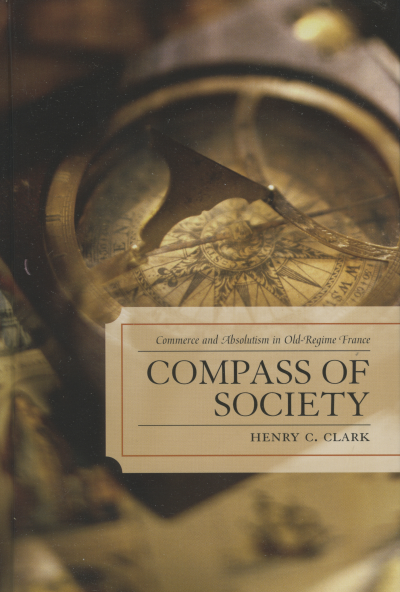
Compass of Society
Commerce and Absolutism in Old-Regime France
Authors:
Publisher:
2006
Summary
Compass of Society rethinks the French route to a conception of 'commercial society' in the seventeenth and eighteenth centuries. Henry C. Clark finds that the development of market liberalism, far from being a narrow and abstract ideological episode, was part of a broad-gauged attempt to address a number of perceived problems generic to Europe and particular to France during this period. In the end, he offers a neo-Tocquevillian account of a topic which Tocqueville himself notoriously underemphasized, namely the emergence of elements of a modern economy in eighteenth century France and the place this development had in explaining the failure of the Old Regime and the onset of the Revolution. Compass of Society will aid in understanding the conflicted French engagement with liberalism even up to the twenty-first century.
Search publication
Bibliographic data
Edition
1/2006
Copyright Year
2006
ISBN-Print
978-0-7391-1482-7
ISBN-Online
978-0-7391-5332-1
Publisher
Lexington, Lanham
Language
English
Pages
389
Product Type
Monograph
Table of contents
ChapterPages
Contents No access
Acknowledgments No access
Introduction No access
1 Social Trust and Nascent Globalism: Commerce in Early Seventeenth-Century France No access
2 Louis XIV and the Two Kinds of Trade No access
3 "Compass of Society": Commercial Sociability in France, 1715–1740 No access
4 Corporatism, Nobility and the "Spirit of Commerce," 1740–1763 No access
5 Friend of French Mankind: Absolute Liberalismin the Physiocratic Moment No access
6 Trust, Information, and the Grain Tradeunder Terray, 1770–1774 No access
7 Local Knowledge, Local Reform: Turgot Towarda New Commercial Republicanism No access
8 Luxury and Commercial Society on the Eve of the French Revolution No access
9 Abbe Sieyes on the Commercial Roots of Representative Government No access
10 "Apostle of Moderation": Morellet on the French Revolution and Commercial Society No access