, to see if you have full access to this publication.
Edited Book No access
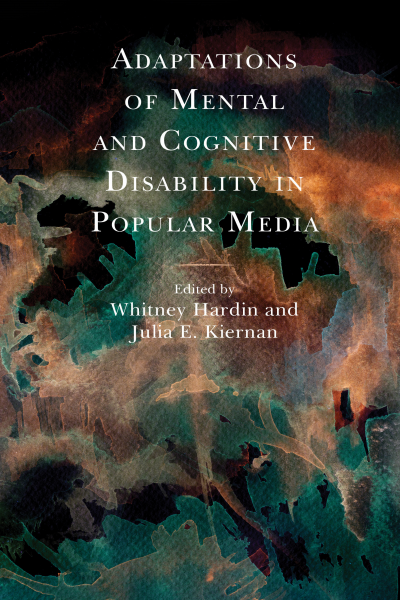
Adaptations of Mental and Cognitive Disability in Popular Media
Editors:
|
Publisher:
2022
Summary
Examining representations of mental difference, this collection focuses on the ways that adaptations (including remakes, reboots, and other examples of remixed narratives) can shape and shift the social contexts and narratives we use to define mental disability. The movement of narratives across media via adaptation, or within media but across time and space in the case of remakes and reboots, is a common tactic for revitalization, allowing storytellers to breathe new life into tired narratives, remedying past inaccuracies and making them accessible and relevant for contemporary audiences. Thus, this collection argues that adaptation provides a useful tool for examining the constraints or opportunities different media impose on or afford narratives, or for measuring shifts in ideology as narratives move across cultures or through time. Further, narrative functions within this collection as a framework for examining the ways that popular media exerts rhetorical power, allowing for deeper understandings of the ways that mental disability is experienced by differently situated individuals, and revealing relationships with broader social narratives that attempt to push definitions of disability onto them.
Keywords
Search publication
Bibliographic data
Edition
1/2022
Copyright Year
2022
ISBN-Print
978-1-7936-4831-0
ISBN-Online
978-1-7936-4832-7
Publisher
Lexington, Lanham
Language
English
Pages
228
Product Type
Edited Book
Table of contents
ChapterPages
Contents No access
Adaptation No access
Disability No access
Narrative, Disability, and Adaptation No access
Chapter Arrangement No access
Works Cited No access
RuPaul Charles No access
Narrative Prosthesis and/as Identity No access
Performance Accentuation and/as Media Adaptation No access
Conclusion No access
Works Cited No access
Stimming as Evidence No access
Casting Eugenics No access
Shooting in Nature No access
White Savior No access
Conclusion No access
Works Cited No access
The Image of Autism in Postal No access
Remaking the Image of Autism: Awareness, Authenticity, and Empathy in The Song Collector No access
Works Cited No access
Disability and the Generic Coordinates of Coming-of-Age No access
Rituals of Dating and Sites of Consumption No access
Ideology of Standardization No access
Displacement No access
Conclusion No access
Notes No access
Works Cited No access
Disability, Narrative, and the Superhero No access
I Am Legion No access
“But Can We Agree that He’s Unwell?” No access
Notes No access
Works Cited No access
Diagnosing Moral Disability in Melodrama, Individually and Collectively No access
Comprehending and Interpreting the Cues of Mental and Moral Disability, Explicitly and Implicitly No access
Interpreting the Implicit Cues of Collective Moral Disability No access
The Involution of Melodrama into Melodramatic Myth No access
The Involution of History into Myth No access
Works Cited No access
Adapting Hamlet and the Feminism Problem No access
The Representation and Rhetoric of Madness in Elsinore and Ophelia No access
Agency, Choice, and Disability Erasure No access
Conclusion No access
Notes No access
Works Cited No access
Representations of Trauma: A Survey of Disability Studies and Comics Narratives No access
Making Trauma Visible No access
The Visibility of Trauma’s Social Expectations No access
Works Cited No access
Works Cited No access
(Not So) Quiet Lives No access
Mental Disability as an Apparatus No access
The Guide to the Apparatus No access
The Aporia of Mental Disability as the Anxiety of Influence No access
Conclusion: Nervousness and Repetition No access
Notes No access
Works Cited No access
The Telenovela as an Adapted Genre No access
Updating Esmeralda: Medical Narratives and Melodrama No access
Narrativizing Autism on LMP No access
Conclusions: Melodrama and Its Adaptation No access
Works Cited No access
Telenovelas and the Ideological Construction of Disability No access
Ableism, Mental Difference, and the Individual Model of Disability No access
The Medical Model of Disability and Autism No access
Gendered Portrayals of Exceptionality No access
Potentials and Limits to Alternative Representations No access