, to see if you have full access to this publication.
Monograph No access
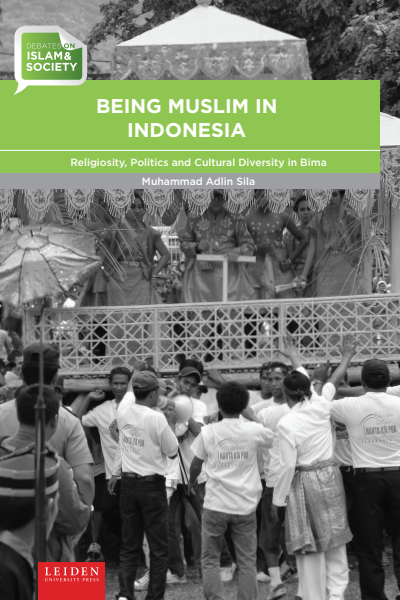
Being Muslim in Indonesia
Religiosity, Politics and Cultural Diversity in Bima- Authors:
- Series:
- Debates on Islam & Society
- Publisher:
- 2021
Search publication
Bibliographic data
- Edition
- 1/2021
- Copyright Year
- 2021
- ISBN-Print
- 978-90-8728-362-9
- ISBN-Online
- 978-94-006-0406-3
- Publisher
- Leiden University Press, Leiden
- Series
- Debates on Islam & Society
- Language
- English
- Pages
- 251
- Product Type
- Monograph
Table of contents
ChapterPages
- Preface No access
- Acknowledgements No access
- Notes on Transliteration and Style No access
- 1.1. Why Bima is important? No access
- 1.2. Sultan and Raja Bicara: Dyadic Leadership No access
- 1.3. Being Muslim as Social Phenomena No access
- 1.4. Outline of the Book No access
- 2.1. Previous Studies on Islam and Muslims in Bima No access
- 2.2. Methodological and Theoretical Framework No access
- 2.3. Bima as a Study Site No access
- 2.4. Choosing the field No access
- 2.5. Methods of collecting data No access
- 3.1. Historical accounts of the festival No access
- 3.2. Dato di Banda and Kampung Melayu No access
- 3.3. The celebration of the Prophet Muhammad’s birthday No access
- 3.4. Mawlid texts: the many versions of written words in praise of the Prophet No access
- 3.5. The Festival of Hanta Ua Pua No access
- 3.6. Majelis Hadat Dana Mbojo and Hanta Ua Pua: the Politics of Festival No access
- 3.7. The local dimensions of the NU and Muhammadiyah in Bima19 No access
- 3.8. Conclusion No access
- 4.1. Imam and Sultan No access
- 4.2. Imam and Royal Foundation No access
- 4.3. Ritual prayer among Muslims in Bima No access
- 4.4. Social dimension of ritual prayers No access
- 4.5. Accommodation during Ramadan ritual prayers No access
- 4.6. The festival of breaking the fast: Idul Fitri No access
- 4.7. Friday congregational prayer: Regional by-laws and politics of ritual No access
- 4.8. Conclusion No access
- 5.1. Sando, spirit possession and spirit mediumship No access
- 5.2. The local belief in supernatural beings and types of sickness No access
- 5.3. Religious reformism and the belief of ancestral spirits: from parafu ro pambora to padasa No access
- 5.4. The power of water and Qur’anic verses in healing rituals No access
- 5.5. Being submissive and healing the sick with the help of God: Karana ala No access
- 5.6. Protecting the village, interceding for salvation: doa dana No access
- 5.7. Healing practice and its relationship to Islamic mysticism No access
- 5.8. Fitua, Silsilah and the Seven Grades (Martabat Tujuh) No access
- 5.9. Conclusion No access
- 6.1. Concepts of solidarity in lifetime rituals No access
- 6.2. Ritual for pregnant mother No access
- 6.3. Birth delivery ritual No access
- 6.4. Hair-shaving and name-giving No access
- 6.5. Circumcision No access
- 6.6. Complete Qur’an recital and veiling No access
- 6.7. Conclusion No access
- 7.1. Village gathering No access
- 7.2. Marriage ceremony No access
- 7.3. Bride-service at the potential parents-in-laws’ residence No access
- 7.4. Marriage payment delivery No access
- 7.5. Henna Night No access
- 7.6. Marriage contract ceremony No access
- 7.7. Commemoration of the deceased No access
- 7.8. Feasting and praying for the deceased No access
- 7.9. Conclusion No access
- 8.1. Religiosity No access
- 8.2. Politics No access
- 8.3. Cultural Diversity No access
- 8.4. Conclusion No access
- Appendix I. The List of Bima Sultans No access Pages 205 - 207
- Appendix II. The List of Raja Bicara No access Pages 208 - 210
- Glossary No access Pages 211 - 216
- Notes No access Pages 217 - 230
- Bibliography No access Pages 231 - 244
- Index No access Pages 245 - 250