, to see if you have full access to this publication.
Monograph No access
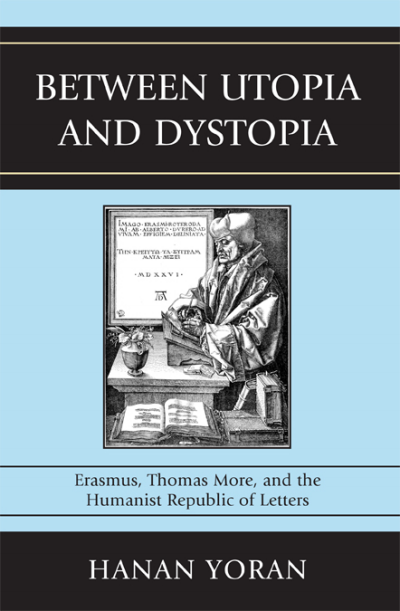
Between Utopia and Dystopia
Erasmus, Thomas More, and the Humanist Republic of Letters
Authors:
Publisher:
2010
Summary
The figure of the intellectual looms large in modern history, and yet his or her social place has always been full of ambiguity and ironies. Between Utopia and Dystopia is a study of the movement that created the identity of the universal intellectual: Erasmian humanism. Focusing on the writings of Erasmus and Thomas More, Hanan Yoran argues that, in contrast to other groups of humanists, Erasmus and the circle gathered around him generated the social space_the Erasmian Republic of Letters_that allowed them a considerable measure of independence. The identity of the autonomous intellectual enabled the Erasmian humanists to criticize established customs and institutions and to elaborate a reform program for Christendom. At the same time, however, the very notion of the universal intellectual presented a problem for the discourse of Erasmian humanism itself. It distanced the Erasmian humanists from concrete public activity and, as such, clashed with their commitment to the ideal of an active life. Furthermore, citizenship in the Republic of Letters threatened to lock the Erasmian humanists into a disembodied intellectual sphere, thus undermining their convictions concerning intellectual activity and the production of knowledge. Between Utopia and Dystopia will be of interest to scholars and students interested in Renaissance humanism, early modern intellectual and cultural history, and political thought. It also has much to contribute to debates over the identity, social place, and historical role of intellectuals.
Keywords
Search publication
Bibliographic data
Edition
1/2010
Copyright Year
2010
ISBN-Print
978-0-7391-3647-8
ISBN-Online
978-0-7391-3649-2
Publisher
Lexington, Lanham
Language
English
Pages
252
Product Type
Monograph
Table of contents
ChapterPages
Contents No access
Acknowledgments No access
Abbreviations No access
Introduction No access Pages 1 - 14
Chapter 01: Humanism as Form No access
Chapter 02: The Construction of the Erasmian Republic of Letters No access
Chapter 03: Erasmian Humanism: The Reform Program of the Universal Intellectual No access
Chapter 04: The Politics of a Disembodied Humanist No access
Chapter 05: More’s Richard III: The Fragility of Humanist Discourse No access
Chapter 06: Utopia and the No-Place of the Erasmian Republic No access