, to see if you have full access to this publication.
Monograph No access
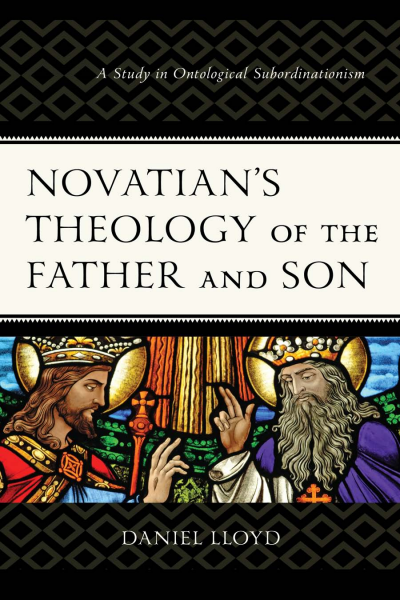
Novatian's Theology of the Father and Son
A Study of Ontological Subordinationism
Authors:
Publisher:
2020
Summary
Early Christian theologian Novatian’s (c. 200-258) work begins with the topic of the unique and supreme Father. The categories he uses to describe the Father include both traditions from Christian sources and articulations of negative theology, especially as seen in Middle Platonism. After establishing the limitations set by philosophical and theological language, Daniel Lloyd turns to the positive categories Novatian chooses for describing the Father, highlighting Novatian’s emphasis on revelation, evaluating the parameters of the uniqueness of the Father, and showing that his theology presents the Father as distinct in attributes such as incomprehensibility, eternality, and inability to change.
Having presented Novatian’s theology of the Father as the center point of his thought, Lloyd next assesses Novatian’s theology of the Son, showing that his categories and terminology, even to the point of calling the Son “God,” do not function against his theology of the unique Father. Novatian has many resources for speaking about the Son’s divinity in a way that does not contradict his theology of the Father. Lloyd presents and analyzes these resources to demonstrate that the Son’s status as ontologically subordinate to the Father is the best reading of De Trinitate.
Keywords
Search publication
Bibliographic data
Edition
1/2020
Copyright Year
2020
ISBN-Print
978-1-9787-1167-9
ISBN-Online
978-1-9787-1168-6
Publisher
Lexington, Lanham
Language
English
Pages
233
Product Type
Monograph
Table of contents
ChapterPages
Contents No access
List of Abbreviations No access
Introduction No access
1 Philosophic Approaches to Divine Transcendence and Negative Theology No access Pages 1 - 24
2 Novatian’s Transcendent God No access Pages 25 - 46
3 Revelation and Theological Epistemology No access Pages 47 - 62
4 The One and Eternal Father No access Pages 63 - 96
5 The Development of Word Christology No access Pages 97 - 142
6 Arguments for the Son’s Divinity No access Pages 143 - 174
7 The Son as Ontologically Subordinate No access Pages 175 - 212
Conclusion No access Pages 213 - 216
Bibliography No access Pages 217 - 228
Index of Names and Subjects No access Pages 229 - 232
About the Author No access Pages 233 - 233
Similar publications
from the topics "Religion und Theologie allgemein"